







Typica is one of the oldest Arabica varieties in the coffee world, known for its clean and balanced flavor. Both Jamaican Blue Mountain and Hawaiian Kona come from this variety. But is it actually Robusta? This article will examine Typica from the perspectives of its botanical characteristics, its origin and spread, its demanding growing requirements, and the unique terroir and flavor expression of Blue Mountain Typica, and will combine cupping notes and pour-over parameters from Front Street Jamaica Blue Mountain No. 1 Coffee to help coffee lovers gain a comprehensive understanding of this classic variety.
For more specialty coffee knowledge, please follow: Front Street Coffee (Frontsteet Coffee)
Typica is recognized in the coffee world as one of the oldest Arabica varieties and has long been regarded in the industry as a representative of high-quality coffee. Both Jamaican Blue Mountain coffee and Hawaiian Kona coffee belong to the Typica variety, and with their clean, bright flavors and balanced, harmonious mouthfeel, they have won the affection of many coffee lovers.
What are the characteristics of the Typica variety?
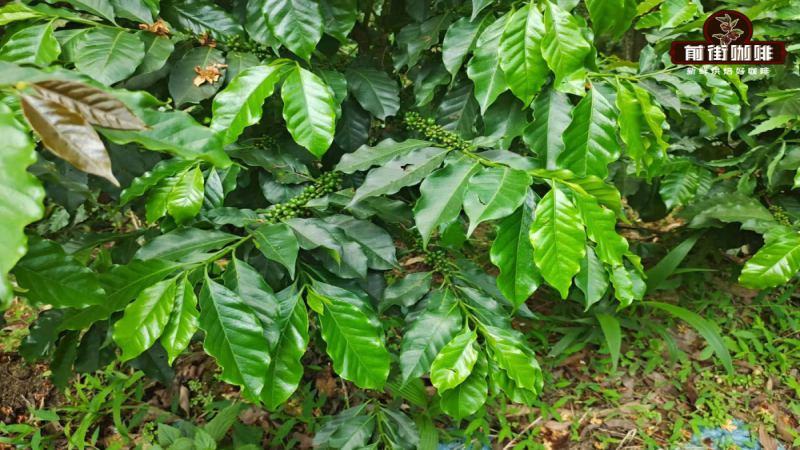
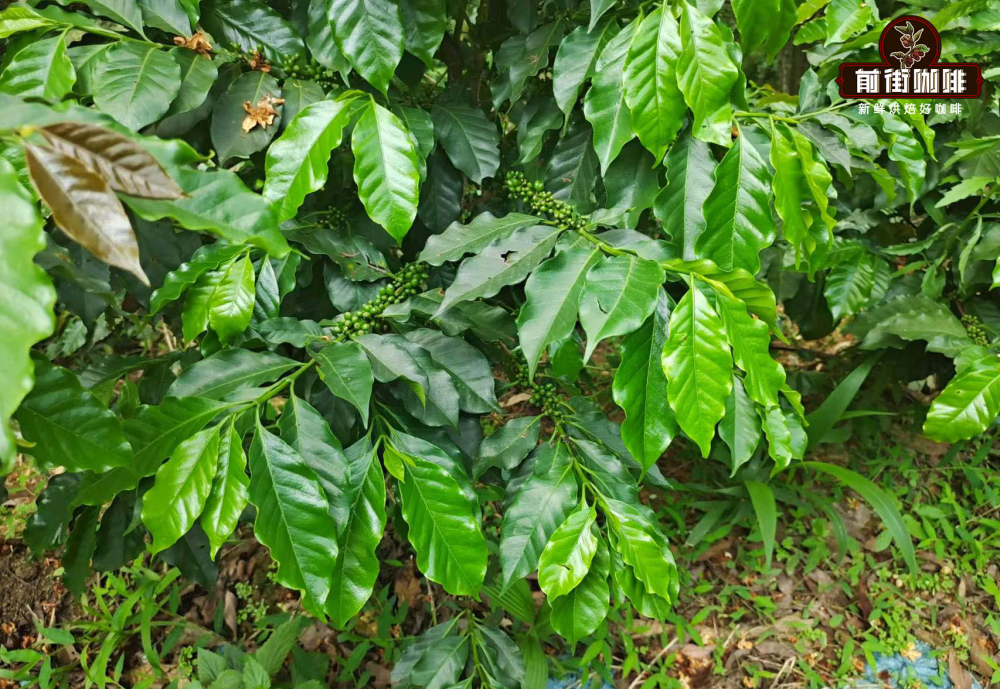
Typica coffee trees grow relatively tall, and the top leaves are bronze-colored. Its coffee beans are on the larger side and elongated, with pointed, slightly upturned ends, somewhat egg-shaped. Typica coffee beans often carry a citrus-like acidity and a sweet finish, and many people praise them for their elegant and clear character. However, the Typica tree is about 5 meters (16.5 feet) tall, making harvesting inconvenient. The tree has a conical shape, with branches sloping slightly outward, and the angle between the lateral branches and the vertical main stem is 50 to 70 degrees. Its trunk is relatively thin, and the branches are also slender. Because the plant is tall and the branches are long, sufficient spacing must be left when planting.
In addition, Typica has quite weak disease resistance and is almost defenseless against common diseases such as leaf rust and coffee berry disease, while its yield is also extremely limited. As a cash crop, it is difficult for it to bring ideal returns, so growers in many origins choose to abandon it and instead cultivate varieties with stronger disease resistance. To grow Typica coffee beans with excellent flavor, more labor and more refined techniques must be invested, which is also one of the reasons Front Street Jamaica Blue Mountain coffee is expensive.
Typica originated in Ethiopia
Around the 15th to 16th centuries AD, Typica was brought from southwestern Ethiopia to Yemen for cultivation due to human collection and processing, and later spread around the world along the pilgrimage journeys of various religions. The earliest batch of coffee trees in Yunnan, China, was cultivated from Typica seeds brought by French missionaries, and only later, in order to increase yield, was large-scale replanting switched to the Catimor variety.
Unlike many coffee varieties, Typica is rather delicate and very particular about its growing environment. It needs to be planted in high-altitude areas without frost. The higher the altitude, the more obvious the temperature difference between day and night, which slows the ripening of the coffee fruit, helping it accumulate more flavor compounds and making the aroma fuller. In addition to high altitude, Typica also requires abundant rainfall, suitable sunlight, loose and well-drained soil, and sufficient fertility, making it highly limited by geography from a cultivation perspective. The reason Front Street Blue Mountain Typica coffee has such a refined aroma is, aside from the careful efforts of Jamaican growers, most critically the unique terroir of the Blue Mountain range.
In 1720, the French naval officer De Clieu endured great hardships to escort Typica seedlings to Martinique in the Caribbean. In 1725, the British governor of Jamaica transplanted 7,000 Typica seedlings from Martinique to the Jamaican Blue Mountains. After more than two hundred years of domestication, Blue Mountain Typica developed relatively good disease resistance, especially stronger resistance to coffee berry disease than ordinary Typica.
After the mid-twentieth century, Typica was transplanted to Papua New Guinea, Kenya, and even Sulawesi in attempts to replicate the clear, sweet, and subtly fragrant qualities of Blue Mountain coffee. High-quality Typica did indeed bring an elegant and positive flavor profile to coffee, but it did not reach the outstanding level of Blue Mountain. Among the Typica variety coffees sold in Front Street stores, the most famous is Front Street Jamaica Blue Mountain No. 1 Coffee Beans, which is based on the Typica variety. Its full aroma and balanced mouthfeel make it a “ceiling” in the minds of many. In addition, Front Street 2013, the coffee Front Street grows itself in Yunnan, also uses high-quality Typica.
What flavor and mouthfeel does Blue Mountain Typica coffee have?
The high quality of Blue Mountain coffee is naturally inseparable from the advantages of its growing environment. The Blue Mountain range is surrounded by the Caribbean Sea, forming a unique island-type tropical rainforest microclimate, with concentrated rainfall in the rainy season and good drainage conditions. Volcanic ash from volcanic activity enriches the soil with nutrients, so coffee trees do not need excessive irrigation and fertilization. Here there is plenty of sunshine year-round, shrouded in mist, and the cool, comfortable high-altitude growing area is very suitable for crop growth. Locals usually plant coffee trees together with banana trees on the slopes of the Blue Mountains.
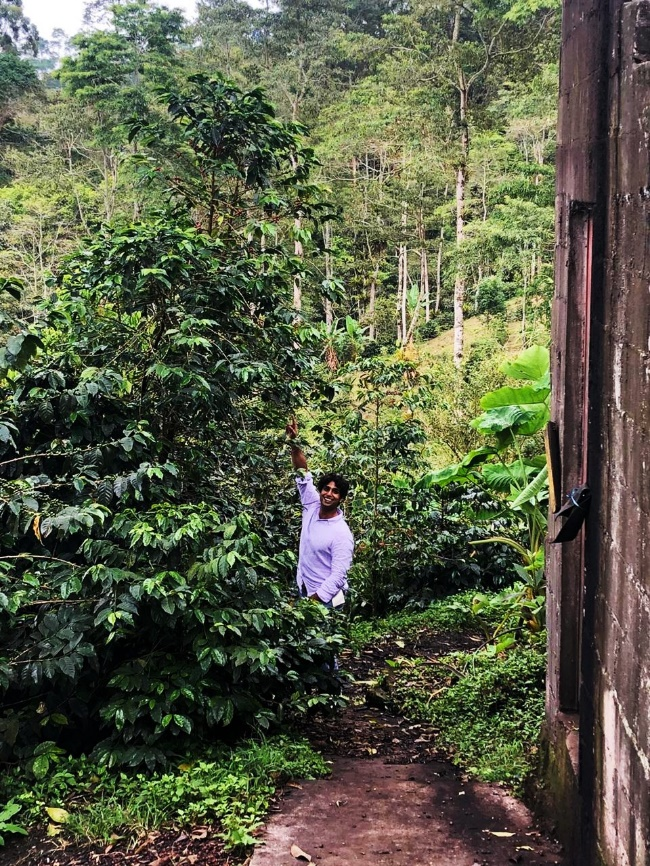
The CIB has demarcated an area of about 6,000 hectares in the Blue Mountain range and strictly stipulates that only Typica coffee produced within this area can be called “Blue Mountain Coffee.” According to the area defined by the CIB, the Blue Mountain coffee growing region is located between 910 and 1,700 meters above sea level. High altitude, combined with just the right climatic conditions, allows the coffee fruit to fully absorb nutrients and convert them into rich aromatic substances. The higher the altitude, the more outstanding Typica’s flavor expression becomes.
However, Typica has poor disease resistance and is highly susceptible to disease, and the fruit yield per tree is also low, so it requires more manpower and careful attention. In addition, the high-altitude terrain of the Blue Mountains is uneven, making management and harvesting quite difficult and demanding a high level of skill from pickers, which further limits production. In recent years, less than 15% of the coffee beans produced in Jamaica, about 900 tons, can bear the Blue Mountain coffee label. After picking, the coffee cherries are immediately sent to the processing plant, where they are washed to remove the skin and pulp and then dried.
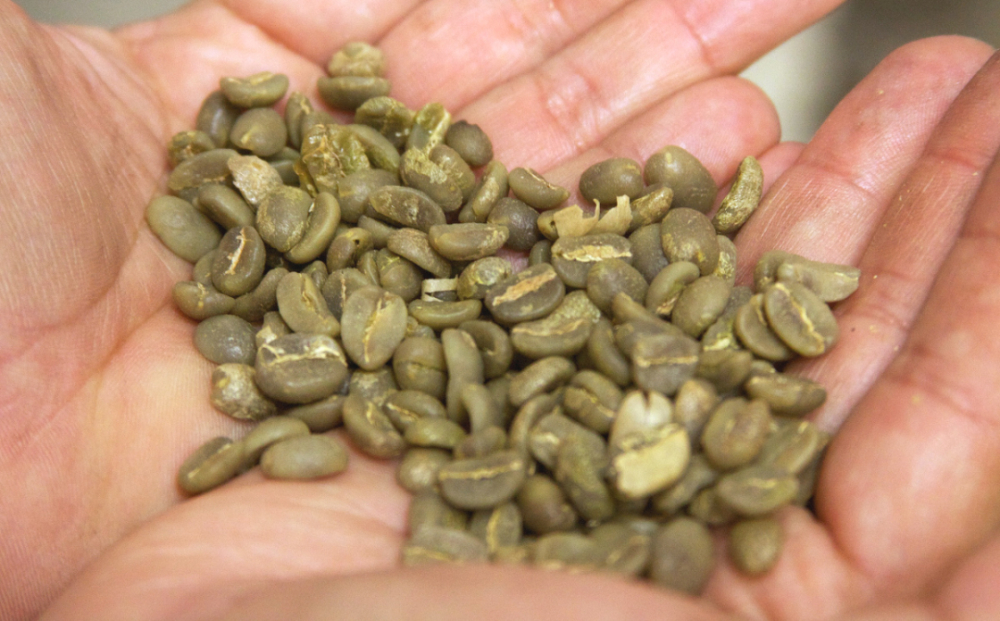
When Front Street receives Front Street Jamaica Blue Mountain No. 1 Coffee green beans, the beans are uniform and plump, consistent in size, and overall show a translucent blue-green color. Front Street uses a medium-dark roast to maximize the chocolate and nut aromas of Front Street Jamaica Blue Mountain coffee while preserving soft acidity and sweetness, bringing the overall mouthfeel into balance.
After freshly roasting Front Street Blue Mountain coffee beans, Front Street immediately conducted a cupping: the dry fragrance had nuts, melon, and chocolate, and after hot water was poured in, oolong tea, caramel, honey, and dark chocolate were smelled. On the palate there were rich dark chocolate, roasted hazelnut, cream, and brown sugar, with a clean and clear flavor, a full body, and a lasting aroma. So that everyone can also experience these aromas, all coffee beans shipped by Front Street are guaranteed to be freshly roasted within 5 days, so they are at their best tasting stage when received. Below, Front Street explains several key factors for pour-over Front Street Blue Mountain coffee according to store serving standards.
Front Street Blue Mountain No. 1 Coffee Pour-Over Reference
Front Street usually uses a KONO dripper to brew medium-dark roasted coffee beans. The upper part of the KONO dripper is a smooth curved surface, which allows the filter paper to fit better. Compared with the v60 dripper, its extraction method is mainly immersion-based, which can increase the overall concentration of the coffee and enhance body. In addition to KONO, commonly seen Kalita trapezoidal drippers, flannel, and other slower-flow devices are also suitable.
In addition, after a certain degree of roasting, the internal structure of medium-dark roasted coffee is fluffier than that of light-roasted coffee, and its water absorption is better. To avoid over-extraction, Front Street chooses a grind size with 75% passing through a No. 20 standard sieve, along with a water temperature of 88°C, paired with Front Street’s usual three-stage pouring.
Pour-over parameters: 88°C water temperature, coarse sugar grind size (75% passing through a No. 20 standard sieve), 15 grams of coffee beans, 1:15 coffee-to-water ratio, three-stage extraction.
In the first stage, gently pour 30 grams of water for blooming, with a blooming time of 30 seconds; in the second stage, pour to about 125 grams of water, circling outward evenly and steadily. Then wait for the coffee liquid to drop, and when it has dropped by half, pour the final stage of water to 225 grams. After all the coffee has dripped through, the total extraction time is generally about 2 minutes.
Front Street Jamaica Blue Mountain No. 1 Coffee flavor: when hot, Blue Mountain No. 1 coffee enters the mouth with a dark chocolate aroma, very full-bodied, with an obvious almond sweetness in the finish. As the temperature drops, roasted hazelnut and cream are sweet and silky, carrying a hint of soft acidity and caramel sweetness, and the aroma lingers in the mouth.
The above content is compiled by CoffeeHunters, a coffee news website.


