







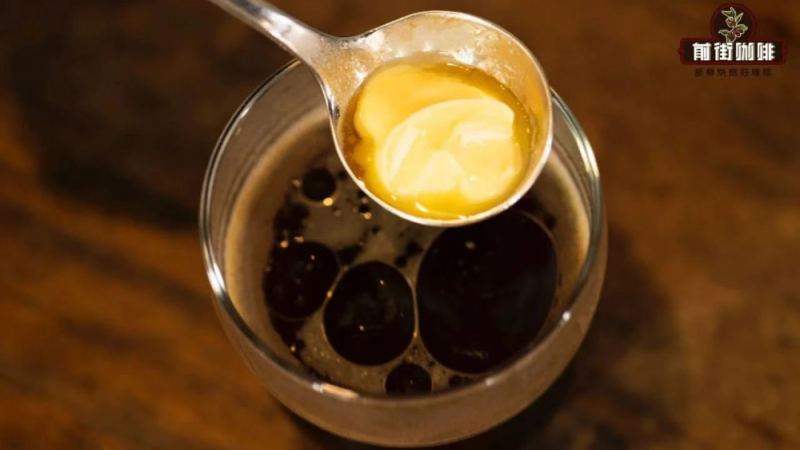
Many people are used to adding a spoonful of "coffee mate" to their coffee to improve the taste, but they don't know that this ingredient, commonly known as creamer, is mainly composed of non-dairy creamer, which generates trans fatty acids in the body after ingestion and may increase the risk of chronic diseases. This article examines coffee with milk, sugar, and creamer from three angles, combining scientific research data to analyze their effects on the active components in coffee and on health, and offers reasonable brewing suggestions. Whether you are a coffee lover pursuing flavor or a daily drinker concerned about health, you can find a coffee preparation plan that suits you.

The so-called "coffee mate" is more commonly called "creamer" in daily life, and its core ingredient is actually non-dairy creamer. After this substance enters the human body, it generates a component that does not exist naturally — trans fatty acids. Studies have suggested that trans fatty acid intake is associated with an increased risk of breast cancer and diabetes, and may also have adverse effects on children's growth and nervous system development. Therefore, from a health perspective, coffee mate is best used as little as possible.
Adding a lot of milk
The "killer" of chlorogenic acid
▼
In a previous article, "Sizzling Aroma, Rich and Mellow Drop by Drop," an important concept was introduced — chlorogenic acid (CGA). This is a highly active antioxidant substance that helps improve insulin resistance and can also reduce fat accumulation in the livers of mice on a high-fat diet, making it one of the effective components in coffee that cannot be ignored. However, when CGA is ingested together with milk, its absorption process is disrupted, because CGA has a low pH and easily causes casein in milk to coagulate.
The Federal University of Rio de Janeiro in Brazil conducted a trial that recruited healthy subjects between 24 and 35 years old (none taking medication or nutritional supplements) and randomly divided them into two groups. The experimental group drank 4 grams of instant coffee with 200 milliliters of milk (containing 9.6 grams of carbohydrates, 6.7 grams of protein, and 7.1 grams of fat), while the control group drank 4 grams of instant coffee with 200 milliliters of hot water. To avoid interference from polyphenols in other foods, subjects did not consume any polyphenol-rich foods (CGA belongs to the polyphenol class) within 48 hours before the experiment. Urine collection began after 48 hours, once every 4 hours, for a total of 4 collections. The final data showed that compared with coffee without milk, the bioavailability of CGA in the human body decreased by 23% in coffee with milk[1].
✔The correct way to add milk: add a small amount of milk
Although milk does lower the bioavailability of CGA, research also shows that if the amount of milk added is controlled within 20% of the total volume of a cup of coffee, this effect is almost negligible[1], so there is no need to worry excessively.
Adding too much sugar
A "great booster" for obesity and metabolic diseases
▼
People who cannot tolerate the bitterness of coffee often like to add sugar to their cup, or pair it with a dessert to neutralize the bitter taste. A small amount of sugar is actually fine, and may even have some benefits, but once it is excessive, it increases the probability of obesity and further induces a series of metabolic diseases. Excess sugar is not just a problem of surplus calories; it also promotes fat storage and sends hunger signals to the brain, making people eat more without realizing it. Excessive sugar intake increases the burden on important organs such as the liver and may trigger diseases such as non-alcoholic fatty liver disease. In addition, excessive sugar can raise uric acid levels, planting hidden risks for gout.
Some people also habitually add honey to their coffee. The sugars in honey are mainly glucose and fructose, and research indicates that long-term metabolism of large amounts of fructose in the human body may increase the risk of serious chronic diseases such as diabetes[2]. The current U.S. dietary guidelines recommend that added sugar intake should be controlled below 10% of total calories. Assuming you consume 2,000 calories per day, the target for added sugar would be less than 200 calories (about 50 grams)[3], and this standard also has reference value for Chinese people. In daily life, cookies, candy, soda, and even condiments such as ketchup and vinegar contain added sugar, so do not add large amounts of sugar just for taste; the harm accumulates over time.
✔The correct way to add sugar: add a small amount of sugar or sugar substitute
Research has shown that a moderate amount of sugar helps improve attention and short-term memory. In one experiment, 40 healthy volunteers participated in MRI brain scans and were randomly divided into 4 groups, drinking equal amounts of sweetened coffee, sugar water, plain coffee, and plain water, then performing tasks related to sustained attention and working memory. Brain imaging results showed that subjects who drank sweetened coffee actually had reduced activity in task-related brain regions, indicating higher processing efficiency in the brain[4]. Glucose is the main energy source for the brain, and the brain consumes about one-sixth of the body's total energy expenditure each day. Each gram of glucose provides about 4 calories. Adding 1 to 2 grams of sugar (about half a teaspoon to one teaspoon) to your first cup of coffee in the morning helps you quickly get into work mode. Of course, other sugary foods should be reduced accordingly.
People worried about weight can also choose sugar substitutes (such as sucralose, aspartame, and saccharin) to satisfy their need for sweetness. Sugar substitutes contain almost no calories and are suitable for weight management. From a physiological perspective, sucrose does not stimulate the release of insulin, glucagon-like peptide 1 (GLP-1), or glucose-dependent insulinotropic polypeptide (GIP), nor can it delay gastric emptying in normal people[5]. Therefore, these artificial sweeteners do not interfere with glucose metabolism. (Click to read 🔗 "Sugar Substitutes: A Harmless Sweetness?")
Coffee mate
A needle hidden in silk floss
▼
The name "coffee mate" sounds as if it were made for coffee, a perfect pairing. But once you see its true face, you will find it is more like a "villain" hiding a needle in silk floss. Coffee mate, commonly known as "creamer," is mainly composed of non-dairy creamer.
Looking at the ingredient list, you can see:
The first ingredient is "glucose syrup," a mixture produced by the hydrolysis of starch;
The second is "hydrogenated vegetable oil," a semi-solid fat formed from soybean oil or rapeseed oil through artificial catalytic hydrogenation;
The third is sodium caseinate;
Finally, there are three types of food additives: stabilizers, emulsifiers, and anti-caking agents.
The reason it is said to hide a needle in silk floss is precisely because it contains a kind of "pseudo-vegetable oil" — hydrogenated vegetable oil — and the trans fatty acids it brings are attracting more and more attention for their health effects.
One study recruited 34 women with an average age of 26 and 25 men with an average age of 25. All volunteers were in good health and had normal blood lipid tests. They were randomly divided into three groups and, while eating a mixed natural diet, additionally consumed oleic acid, trans-isomer oleic acid, and saturated fatty acids at 10% of total energy respectively. After a period of time, high-density lipoprotein cholesterol (HDL) and low-density lipoprotein cholesterol (LDL) levels were measured. The results showed that the HDL in the oleic acid group was 1.42/0.32 mmol/L and LDL was 2.67/0.54 mmol/L; while in the trans-isomer oleic acid group, the average LDL was 0.47 mmol/L higher than that in the saturated fatty acid group, and the average HDL was 0.17 mmol/L lower than that in the oleic acid group. This indicates that trans fatty acids not only raise low-density lipoprotein cholesterol but also lower high-density lipoprotein cholesterol.
In addition, a large number of controlled studies and observational studies have shown that trans fatty acids may increase the risk of coronary heart disease and aggravate insulin resistance, especially in people who already have risk factors such as insulin resistance, visceral obesity, or low physical activity[6].
✔The correct way to add creamer: less, and then even less
The World Health Organization recommends that the energy provided by trans fatty acids through dietary intake should be less than 1% of total dietary energy. Generally, when the trans fatty acid content in food is below 0.3 g/100 g, it can be labeled as 0. The cakes, pastries, cookies, bread, salad dressing, french fries, potato chips, popcorn, chocolate, ice cream, and other foods we commonly eat all contain a certain amount of trans fatty acids. Natural sources are mainly the body fat of ruminant animals; 2% to 9% trans fatty acids can be detected in beef and mutton fat, and milk and dairy products also contain a small amount. These foods already contain trans fatty acids themselves, while creamer is "manually added" trans fatty acid. It was never a good thing to begin with, and there is even less reason to add extra.
Summary
Coffee has many benefits, and as long as it is prepared properly, it can make this beverage even better. Here is a simple recipe for coffee lovers to reference:
Freshly ground plain coffee
+
20% milk (low-fat is best)
1–2 grams of sugar
Zero creamer
=
A perfect cup of coffee!
The above content is compiled by CoffeeHunters, a coffee news website.


