







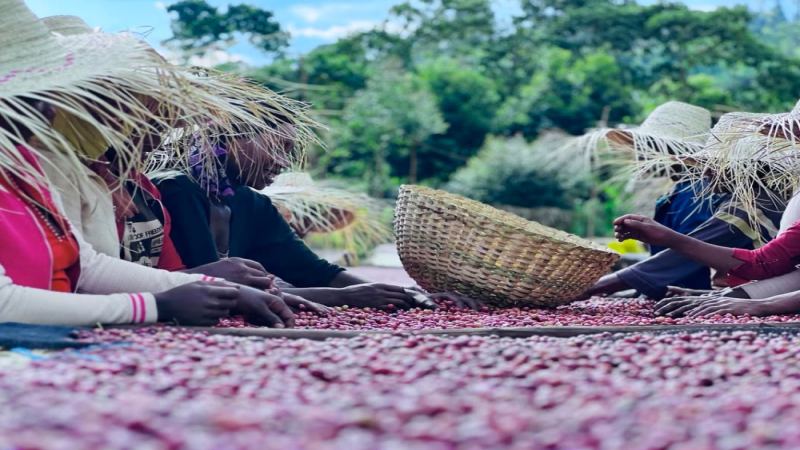
When it comes to the origin of coffee, Ethiopia is a name that cannot be overlooked. This highland nation not only nurtured countless native varieties but also gave rise to world-renowned specialty coffee regions such as Huakui, Gesha Village, Guji, and Sidamo. High altitude, large temperature swings, abundant moisture, and diverse microclimates give coffee from different plots strikingly different flavor profiles. This article, starting from the producing environment, cultivation patterns, and processing methods, sorts out the six most worthwhile Ethiopian specialty pour-over coffees—washed Yirgacheffe, Gedeb Cooperative, sun-dried Red Cherry, sun-dried Huakui, Hamasho 74158, and Kafa Forest—and includes the corresponding flavor descriptions from Front Street Coffee's products, so you can understand the charm of Ethiopian coffee in one go.
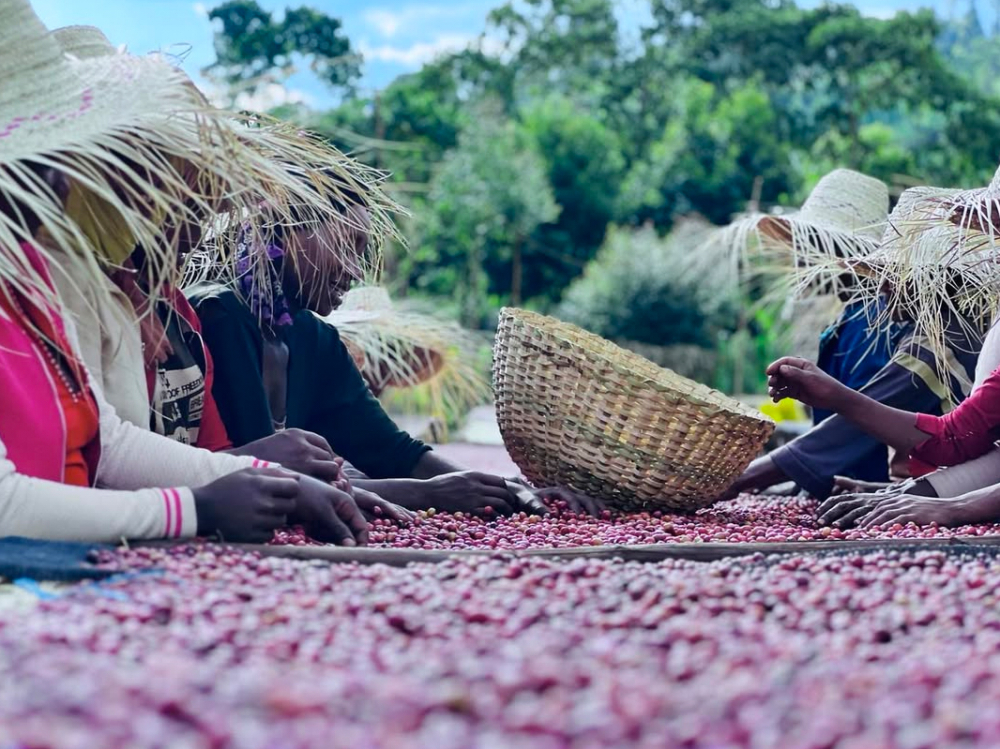
As the globally recognized birthplace of coffee, Ethiopia possesses an astonishing number of native varieties and an extremely high quality standard. Names like Huakui, Gesha Village, Guji, and Sidamo have long become Ethiopia's calling cards on the international stage. Coffee is not only a pivotal economic crop and export commodity for the locals but also deeply woven into the cultural bloodline passed down through generations of Ethiopians, making it one of the country's most proud products.
Ethiopia's terrain is generally high in altitude, with vast highlands shaping ideal climatic conditions and pronounced day-night temperature differences. In the early morning, mountain mist fills the air with cool breezes; the afternoon brings abundant sunshine; and after nightfall, temperatures can drop to the teens, yet frost is extremely rare—such an environment is highly favorable for coffee tree growth. Ethiopia has numerous producing regions, each with inherent differences in soil and microclimate, and combined with different post-harvest processing methods, the resulting coffee flavors vary greatly. Among domestic cafes, the three most frequently mentioned flavor representatives are Yirgacheffe, Sidamo, and Guji, whose distinctive aromas are widely celebrated in coffee circles.
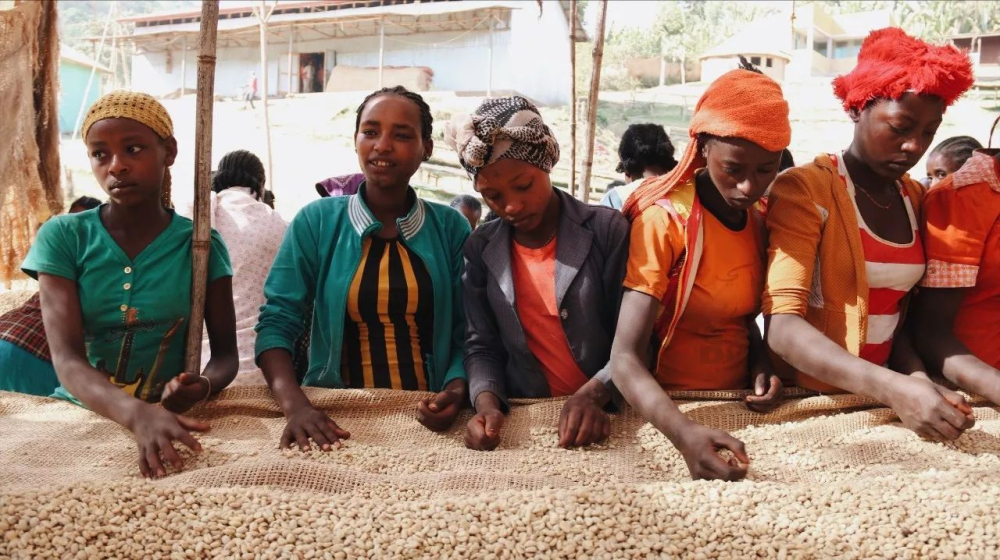
Thanks to its exceptional natural conditions, coffee trees in Ethiopia are almost everywhere, with every household planting them alongside other crops around their homes. Because individual household yields are limited, farmers typically send their harvested coffee cherries directly to processing stations in town for processing, ultimately selling under the name of the processing plant or cooperative. This pastoral style of cultivation is the most common local model and provides a basic income supplement for many Ethiopians.
Six Must-Try Ethiopian Specialty Pour-Over Coffees:
1. Front Street Washed Yirgacheffe Coffee Beans
Yirgacheffe is a small town in Ethiopia, situated at an altitude of 1,700 to 2,100 meters, ranking among the highest coffee-producing regions in the world and serving as a calling card for Ethiopian specialty coffee. Lake Turkana, Lake Abaya, and Lake Chamo supply abundant moisture to this land. The Rift Valley area, represented by the Misty Valley, is shrouded in fog year-round, with spring-like weather all year, gentle breezes, and a cool, humid climate where thousands of coffee trees thrive, creating Yirgacheffe's signature character of intertwined floral and fruity notes with layered complexity. The so-called Yirgacheffe flavor typically refers to bright citrus-lemon acidity, intense jasmine aroma, a light and elegant mouthfeel with a tea-like quality, drinking like a refreshing, clean glass of lemon tea.
2. Front Street Gedeb Cooperative Coffee Beans
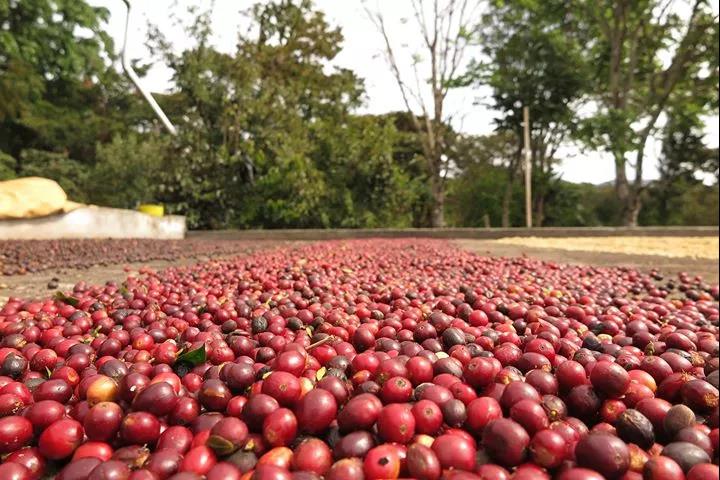
Gedeb Cooperative is located in the Worka producing area southeast of Yirgacheffe, originally part of the Worka Cooperative under the Yirgacheffe Coffee Farmers Cooperative Union (YCFCU). As the industry's demand for traceability of green coffee beans continued to rise, individual single-origin regions were discovered one after another by coffee hunters worldwide, and Gedeb officially became independent in 2012, becoming a cooperative with about 300 farmers. Because the pulp is removed before drying, Front Street Gedeb coffee's inherent aromas are expressed more clearly and thoroughly, presenting citrus and lemon tones with elegant white floral notes, with an overall bright and delicate flavor.
3. Front Street Sun-Dried Red Cherry Coffee Beans
Unlike washed processing, sun-dried coffee first removes damaged or moldy cherries. After about two weeks of sun drying, the sugars and essence of the pulp fully infuse into the coffee beans; once moisture content drops to 12%, the hardened pulp, pectin layer, and pod are cleaned off with a hulling machine. The extracted beans then undergo density and bean color testing to eliminate defective beans, and finally workers visually sort out any missed defects—quality control at every level. The resulting coffee beans are each a gem, clean and refined with an alluring rich fruit aroma. Front Street Sun-Dried Red Cherry Coffee Bean Flavor Description: peach, cocoa, honey, lemon.
4. Front Street Sun-Dried Huakui Coffee Beans
Sidamo is located in southern Ethiopia; in the past, Sidamo coffee beans also covered Yirgacheffe and Guji coffees. However, the ECX trading system has since separated Yirgacheffe and Guji from Sidamo. Sidamo coffee has abundant fruit acidity and intense aroma, in no way inferior to Yirgacheffe in aromatic expression, making it very suitable for those who prefer rich flavors without wanting an overly heavy mouthfeel—it strikes a good balance and harmony between aroma and body. Front Street Sun-Dried Huakui is a typical representative, with pleasant berry and citrus aromas interwoven with sweet mango flavors, combining to create a black tea-like charm.
5. Front Street Hamasho 74158 Coffee Beans
Also in the Sidamo producing region, Hamasho Processing Station, with its excellent quality and unique flavor, has become a frequent winner on Ethiopian green bean competition lists and has attracted the attention of a large number of coffee enthusiasts. Coffee from Hamasho Processing Station is mainly based on the 74 series disease-resistant varieties released by JARC (Jimma Agricultural Research Center); 74158 beans are on the smaller side, with particularly prominent floral and fruity aromas. Front Street Hamasho 74158 has an alluring aroma, with sweet notes reminiscent of perfume lemon, strawberry, and star fruit; on the palate, there are very distinct strawberry, star fruit, and green grape sweetness, followed by a subtle floral fragrance gradually emerging.
6. Front Street Kafa Forest Coffee Beans
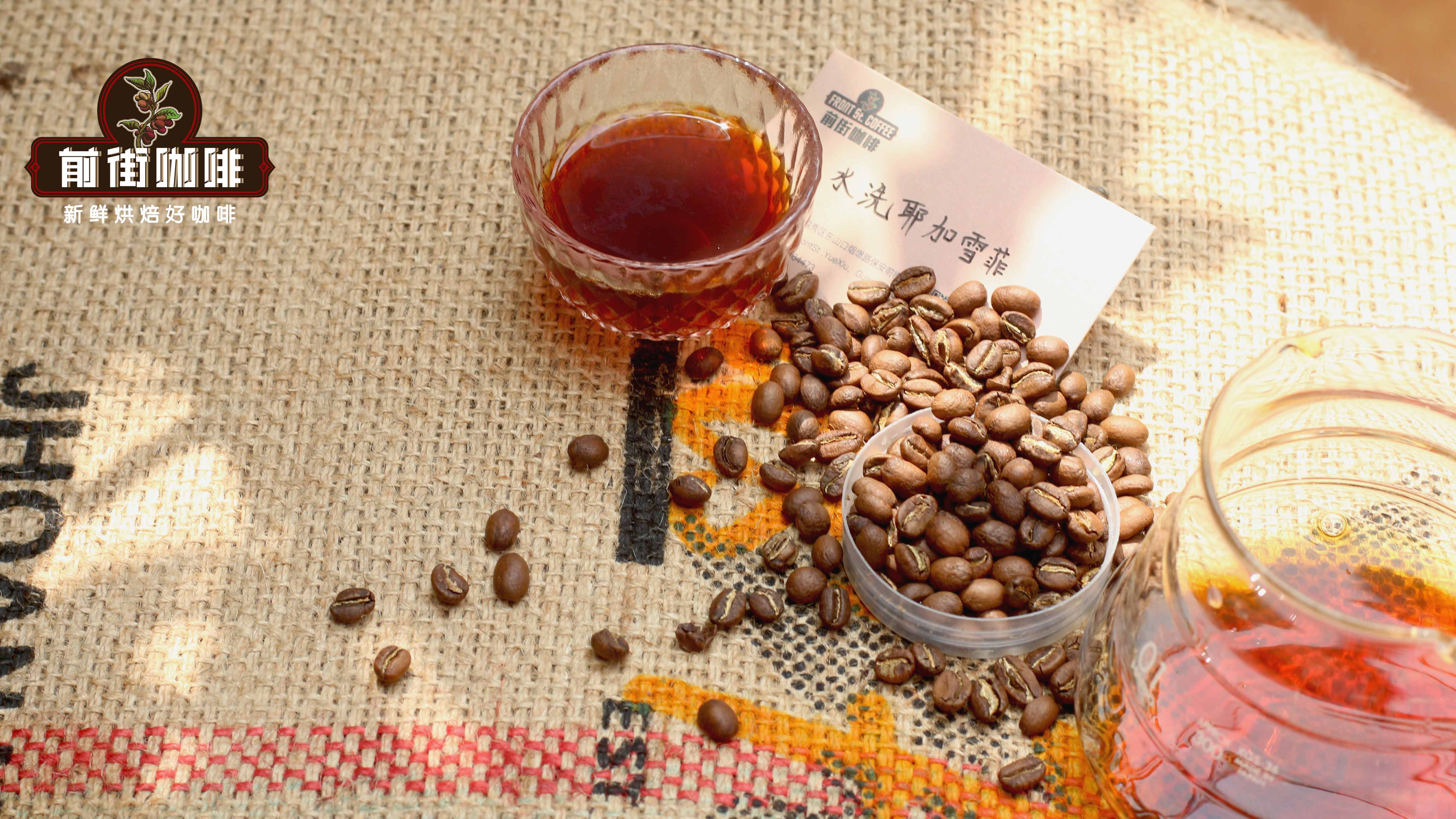
Unlike the pastoral model of farmers planting coffee trees in their backyards, Kafa Forest is most representative for producing wild coffee, with all coffee trees growing under shade at altitudes of 1,400 to 2,100 meters. Favorable conditions such as a pristine ecosystem, microclimate, red clay soil, and abundant rainfall provide an excellent growing environment for coffee trees. Front Street Kafa Forest coffee beans are medium-light roasted; when ground, they carry a distinct white floral aroma; on the palate, there is bright lemon acidity accompanied by sweet orange and bergamot flavors, with a lingering finish of subtle melon and nutty notes and a mouthfeel resembling green tea.
The above content is compiled by CoffeeHunters, a coffee news website.


