







Cold drip coffee is a method of brewing coffee by slowly extracting flavor with low-temperature water, forming a sharp contrast with the high-temperature brewing of conventional pour-over. The low-temperature environment reduces the volatilization of aromas, locking flavor molecules in the coffee liquid; after entering the mouth, as the temperature rises, it brings a concentrated and intense aromatic experience. The whole process takes several hours, and after dripping is complete it still needs refrigeration and fermentation, so the price is relatively high but the taste is outstanding. This article will unfold from the perspectives of the origin of cold drip coffee, its flavor characteristics, suitable types of coffee beans, and the specific operation method of a cold drip pot, to help coffee lovers fully understand this unique brewing method, and will also include Front Street Coffee's bean recommendations and brewing suggestions.
For more specialty coffee knowledge, please follow: Front Street Coffee (Frontsteet Coffee) Cold drip coffee, also called ice-brewed coffee or water-drip coffee, written in English as Ice Drip coffee, is a way of making a coffee beverage. What is usually called cold brew coffee is made by soaking ground coffee beans in room-temperature water for more than ten hours to brew, then separating the water from the coffee components with special filter paper or a filter. There is another kind, cold drip coffee, which uses ice cubes naturally melting into ice water, dripping drop by drop into the coffee grounds to complete extraction. This process is very slow and often lasts several hours, so cold drip coffee is relatively more expensive, but its taste is excellent. It and the pour-over coffee we commonly use daily are completely different brewing paths. Cold drip coffee, as the name suggests, is coffee brewed with low-temperature water, while the pour-over coffee we usually drink is brewed with high-temperature water, and the two are completely different in operation. The advantage of high-temperature extraction is that it can quickly extract the flavor substances from coffee, causing the tannic acid in coffee to rapidly decompose into pyrogallic acid, producing layers of acidity, sweetness, and bitterness, which is what Front Street often calls the process of releasing coffee flavor. The shortcoming of high-temperature extraction is that it easily allows coffee flavor to be over-released, and then begins to extract the taste of the coffee beans' woody fiber, which is what we often call off-flavors, woody notes, and other unpleasant tastes.
Low-temperature coffee extraction uses ice water close to zero degrees for extraction, allowing the coffee's flavor to volatilize less under low-temperature conditions and preserving the coffee aroma in the coffee liquid as much as possible. When it is drunk and the temperature of the coffee liquid rises, the aroma contained in the coffee liquid suddenly bursts out in a concentrated way, allowing the drinker to feel a strong aroma at the back root of the tongue in the mouth. This sudden burst of aroma brings great happiness. The disadvantage is that the production time is longer, and the cold drip coffee after dripping cannot be drunk immediately. It needs to be placed in the refrigerator and left to stand for more than 8 hours, allowing the flavor molecules extracted at low temperature to be fully released.
After slight fermentation, cold drip coffee has a faint fermented aroma, and the mouthfeel also tends to become fuller. Because it has not undergone high-temperature extraction, relatively fewer impurities in the coffee are extracted, and the caffeine is slightly lower; but some friends believe that because the extraction time is relatively long, the caffeine content will be relatively high. In fact, Front Street also agrees with this statement. With long extraction, the amount of caffeine indeed cannot be underestimated. So if you are a friend who is relatively sensitive to caffeine and worry that drinking cold drip coffee will affect sleep, then you can choose decaf coffee. Front Street's Colombia Swiss Water Process decaf coffee is also a very good choice. Origin of cold drip coffee Cold drip coffee originated in Europe. Because the coffee distiller was invented by the Dutch, some people call it Dutch Coffee, distilled coffee, or water-drip coffee. "In the 1600s, Dutch sailors, on their way back to Europe carrying coffee from the then colony of Indonesia, had no hot water on board and could not drink hot coffee, so they came up with cold drip coffee. Coffee extracted with cold water has a mild and smooth taste and a striking aroma. Not only the sailors, but ordinary people also loved it very much."
Although cold drip is called Dutch coffee, it does not actually have deep ties with the Netherlands. Instead, it has deep ties with Japan, so it is also called Kyoto coffee. The owner of Kyoto Hanabusa Coffee, when reading a coffee book, came across the coffee-brewing method of the local people in the then Dutch colony of Indonesia, and became very interested in this method. Then, based on the description in the book at the time, with the help of chemistry students at Kyoto University and a medical device company, he developed a cold drip device, wanting to reproduce the Indonesian brewing method, and thus invented cold drip coffee. Later it became popular in Europe and America, and Europeans and Americans, because they were unclear about this history, directly called it Kyoto coffee. In Western countries including the Netherlands, what is mainly used is not Japan's drip style (an extraction method in which ice water drips drop by drop), but so-called "Cold-Brew," an immersion style (soaking coffee grounds in cold water for a long time) of cold extraction. Moreover, in the West there is also no so-called cold drip coffee (Dutch Coffee).
Drinking coffee is mainly about drinking the taste you like. If you brew it yourself, you will certainly also choose the coffee beans you like to brew. There are many kinds of coffee beans. Although it can be said that all coffee beans can be used for pour-over, if making cold drip, can all coffee beans also be used? Front Street believes that under normal circumstances, yes, but some coffee beans may not taste so good when made into cold drip. Front Street believes that for cold drip coffee, it is better to choose some representative single-origin coffee beans. Cold drip coffee uses a relatively long period of cold-water permeation extraction. Beans with strong character such as Front Street Kenya Little Tomato and Front Street Yirgacheffe will produce coffee with a very distinctive personality. Of course, Front Street sometimes also chooses blends of two or more beans to make cold drip coffee. Compared with cold brew coffee, cold drip coffee has more aroma, and its taste is more delicate and subtle. How to choose coffee beans for cold drip coffee Here are several types of coffee beans with relatively typical flavors introduced by Front Street for your reference: 1. Tropical fruit and fermented wine aroma type Coffee beans with special processing methods: such as Front Street Mozart Coffee, which has the sweet-and-sour taste of dark berries, plus the winey aroma produced by aging at low temperature, making the overall mouthfeel better; Front Street Colombia Flower Moon Night Coffee, Honduras Sherry Coffee, and Costa Rica Strawberry Candy Coffee have very obvious aromas and are likewise suitable for iced pour-over and cold brew methods.
2. Refreshing and clean type The refreshing and clean type belongs to African coffee beans, such as coffee from the Yirgacheffe region of Ethiopia, Kenya Asalia Coffee, etc.; but Panama washed Butterfly Geisha blend beans also have a unique flavor!
3. Sweet and delicious type The above two types of coffee beans are medium-light roasted. Dark roasting may be more intended for espresso. But Front Street has tried using Indonesian Golden Mandheling to make cold drip coffee. After adding ice cubes, it has a rich chocolate sweetness and also a fermented aroma, and is not bitter at all. If you cannot accept the "heavy-flavored" Mandheling coffee, Front Street believes that Brazil's Queen's Estate can also present nutty and chocolate flavor tones, and with dilution by ice cubes it also has a smooth creamy mouthfeel.
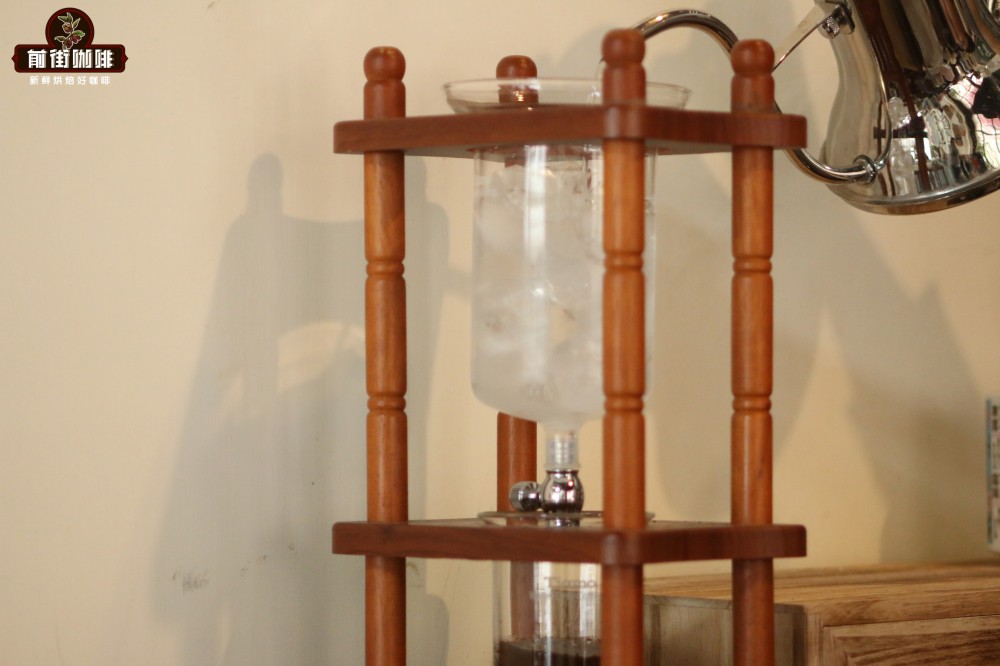
4. Flavor blend type Espresso is mostly made in blend form, and cold drip coffee can likewise be made that way. In addition to using single-origin beans with clear flavors, cold drip coffee can also choose to extract a mixture of two or more single-origin beans. For example, Front Street has tried mixing Honduras Lychee Orchid Coffee and Geisha Village Red Label Coffee. The barrel-treated Lychee Orchid plus sun-dried Geisha Village Red Label, with a faint brandy aroma, plum-like acidity paired with maple syrup sweetness. Made into cold drip, you will feel a faint brandy aroma, rich fruit acidity leading the honeyed sweetness and a creamy smooth mouthfeel. How to use a cold drip coffee pot We can usually see all kinds of cold drip pot devices online, with different materials and shapes, but generally they cannot do without the upper, middle, and lower parts, and are also divided into four main structures: upper pot, valve, powder cup, and lower pot.
The upper vessel is mainly used to hold ice cubes and water. Below it is connected a metal component, which is the valve that can adjust the outlet diameter to change the speed of the water drops, allowing ice water to drip evenly onto the coffee grounds. The middle glass pot, shaped like a cup, is used to hold the ground coffee. There is a filter hole in the middle of the bottom, which can drip out the extracted coffee liquid. The large pot below is for collecting the extracted coffee. Here Front Street chooses a relatively popular store coffee, Costa Rica Mozart Coffee, to make it. Mozart coffee beans use raisin anaerobic honey-processed green coffee beans. The flavor is raisin, osmanthus, and fruity fermented sweetness. Cold drip coffee can make the fermented sensation more obvious.
For grind size, Front Street generally chooses the same grind size as for iced pour-over. Because low-temperature water lowers the extraction rate, the coffee is ground finer to improve extraction. For this bean, choose a 85% passing rate on the Chinese No. 20 standard sieve. According to Front Street store grind size, that is grinding at 9 on the EK-43S grinder. Generally we first calculate the extraction parameters, using a coffee-to-liquid ratio of 1:10, extracting 600g of coffee liquid from 60g of coffee. The ratio of ice-water mixture is 1:1. The valve flow rate is controlled at 7 drops every 10 seconds, and dripping is generally completed within 6-8 hours. (Usually the ratio for cold drip is 1:10-1:12; everyone can adjust according to their own taste.)
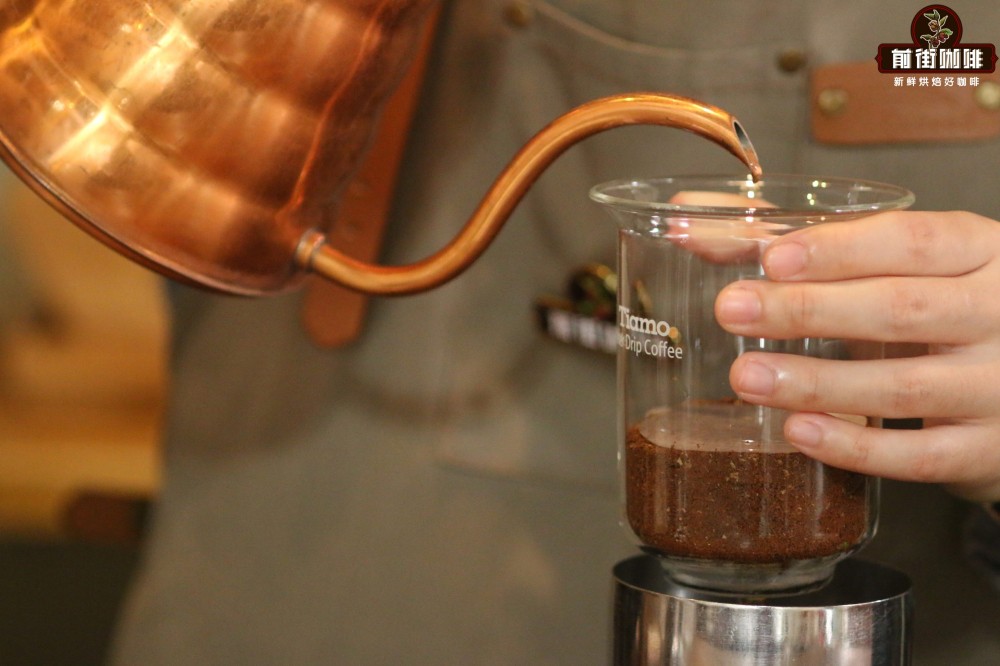
At the bottom of the middle pot, fit a round filter paper with water, then grind the coffee beans into powder and pour them in. Note that it must be leveled to ensure uniform extraction. Also place a round filter paper on the surface of the coffee bed to prevent water droplets from disturbing the coffee bed. Before dripping, the coffee bed needs to be moistened with cold water first. This can both save extraction time and avoid uneven initial extraction.
Place the powder cup on the rack and begin adding the ice-water mixture, usually half ice and half water. Adjust the valve flow rate to 7 drops/10 seconds, mainly aligning the dripping water droplets with the position where the coffee liquid is filtered out. After dripping is complete, pour what is in the lower pot into an airtight container. For example, Front Street uses a glass bottle, places it in the refrigerator to ferment for more than 12 hours, and it can usually be drunk the next day.
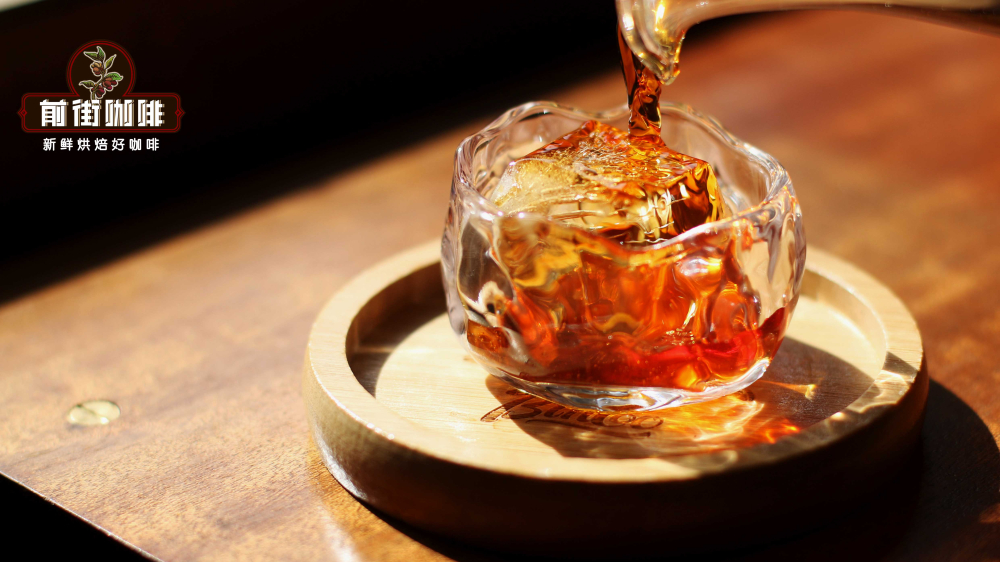
After a night of refrigeration, Mozart coffee will show a wine-like fermented sensation, with the sweet-and-sour taste of berries, pineapple, and other tropical fruits. The flavor is rich but not bitter. After adding ice cubes to dilute it, it is like drinking a refreshing fruit wine. Front Street coffee brewing suggestions: Regarding coffee brewing, Front Street has always believed that the freshness of coffee beans has a great relationship with coffee flavor. Therefore, the coffee beans shipped by Front Street Coffee (FrontStreet Coffee) are all within 5 days of the roasting date. Front Street's roasting purpose is "freshly roasted good coffee," so that every customer who places an order receives the freshest coffee. The resting period for coffee is about 4-7 days, so when the customer receives it, it is exactly at its best flavor.
For friends who need ground coffee, Front Street kindly reminds you: if coffee beans have been ground in advance, there is no need to rest them, because during transportation the pressure produced by carbon dioxide inside the packaging can also make the coffee flavor rounder, so as soon as you receive the coffee grounds you can immediately brew a cup and drink it. But coffee grounds need to be brewed promptly, because after coffee grounds contact air they oxidize relatively quickly, meaning the coffee flavor will dissipate relatively quickly and the coffee flavor will not be as good. Therefore, Front Street recommends buying whole beans and grinding fresh before brewing, so that you can better taste the coffee's flavor.
The above content is compiled by CoffeeHunters, a coffee news website.


