







Yirgacheffe is a renowned coffee region in southern Ethiopia, and Kochere is regarded as one of its micro-regions with the most outstanding flavor expression. Through cupping, Front Street Coffee has found that coffee beans from the Kochere region possess lively citrus acidity, a silky sweet mouthfeel, and rich floral and fruity aromas, with overall flavor intensity noticeably higher than ordinary lots. This article will systematically outline Kochere's geographical location, the logic of its regional division, and the smallholder cooperative production model, and, combined with a specific brewing case of Front Street washed Yirgacheffe Gutingding, share complete pour-over parameters including dripper selection, water temperature, coffee-to-water ratio, grind size, and pouring rhythm, helping coffee enthusiasts reproduce at home a cup of Yirgacheffe that is clean and bright with a tea-like sweet aftertaste.
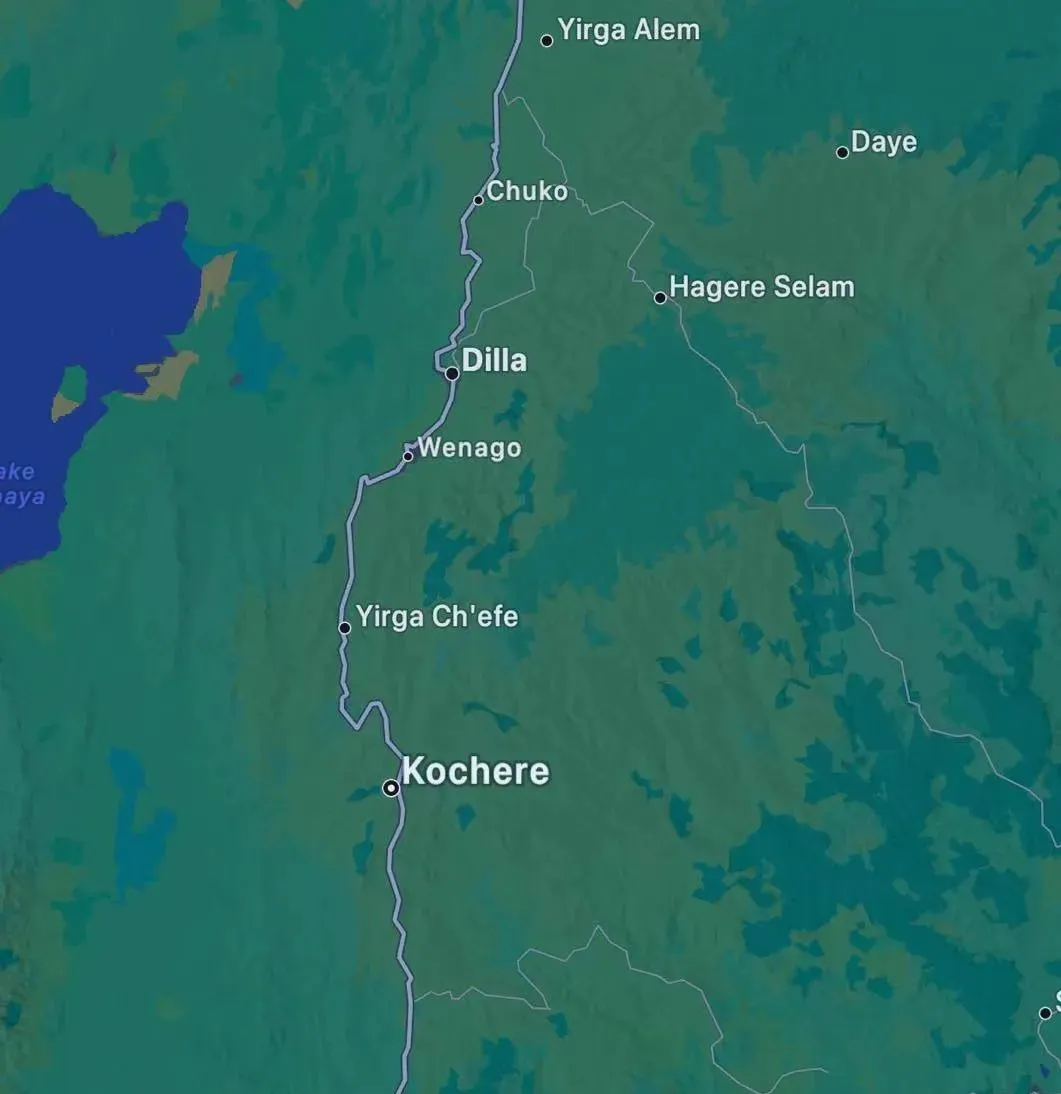
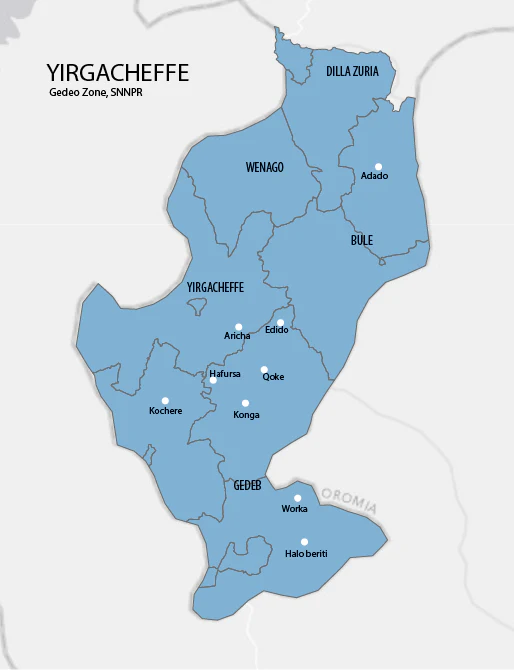
Kochere occupies an extremely core position within the broader Yirgacheffe area. According to ECX's regional classification standards, Kochere is listed as an independent region, which shows just how important it is. In multiple cuppings, Front Street has observed that green coffee beans produced in Kochere differ noticeably from ordinary lots—coffee from this origin has strong flavor expression, outstanding aroma layering and mouthfeel richness, lively citrus acidity, and a silky sweetness and fruity character on the palate.
Kochere Region Kochere
Yirgacheffe itself is a small town with a population of about 20,000. The three neighboring small regions of Wenago, Kochere, and Gelena Abaya are also included under the broader Yirgacheffe regional classification because the flavors of the coffee they produce are almost indistinguishable from Yirgacheffe.
Kochere is located about 25 kilometers southeast of Yirgacheffe, Ethiopia, at an altitude ranging from 1,650 to 1,800 meters. It is a relatively prosperous area thanks to the coffee industry and one of Yirgacheffe's three well-known micro-regions. It has about 100,000 residents, coffee beans are their main source of income, and the local processing equipment is quite advanced. The well-known coffee review website Coffee Review once gave Kochere washed beans a score of 94.
From an administrative perspective, Kochere is one of the 77 Woredas (administrative districts) under Ethiopia's SNNPR. In the coffee field, Kochere belongs to the Gediyo part of Yirgacheffe and is also one of Yirgacheffe's most critical producing areas. Kochere can be further subdivided internally into several micro-regions. Coffee produced in the area is sometimes labeled more precisely by source town name (such as Chelelektu or Teklu Dembel), washing station name (such as Teklu Dembel Station and, for this lot, Alim Station), or micro-region name (such as Banko Gutiti), which aligns with the coffee industry's current pursuit of traceability. The stronger the traceability of a lot, the more specific its source, and the higher its annual flavor stability and reproducibility, naturally making the price higher as well.
Coffee Production Model in the Kochere Area
Kochere's production model is mainly based on local smallholders delivering their lots to cooperatives for centralized processing. In the local village of Chalalacktu, about 100,000 people make a living from coffee, and related production activities constitute their main source of income. Thanks to the income brought by the coffee industry, local living standards are better than in many Ethiopian villages, and supporting facilities such as health facilities and higher schools are relatively complete. Advanced processing equipment has allowed the Kochere region to maintain a high standard in washed processing over the long term, with coffee carrying complex notes of molasses and citrus, clean and sweet.
FrontStreet Coffee's Yirgacheffe Kochere is a top-specification G1-grade lot, different from ordinary green coffee beans. The origin's flavor characteristics are distinctive, with a clean and fresh lemon aroma, as well as rich aromas and flavors such as delicate and elegant jasmine, melon, citrus, ginger, and spiced tea.
Washed Process
Washed
The washed process is a traditional method of processing coffee cherries with the help of water. The usual steps include flotation, removal of pulp, soaking and fermentation followed by removal of mucilage, then washing or further soaking, drying, and finally hulling to obtain the desired coffee beans. Compared with the natural process, coffee farmers using the washed method must be equipped with a depulper, build washing channels or tanks, and have a continuous source of fresh running water, so it is not suitable for all origins and is generally most common in places such as Colombia, Costa Rica, Panama, and Kenya. But the washed method does have multiple advantages: on the one hand, it reduces the defect rate of green beans and makes quality more stable; on the other hand, it greatly shortens drying time, making production more efficient; at the same time, it also allows the coffee to retain a unique "washed flavor."
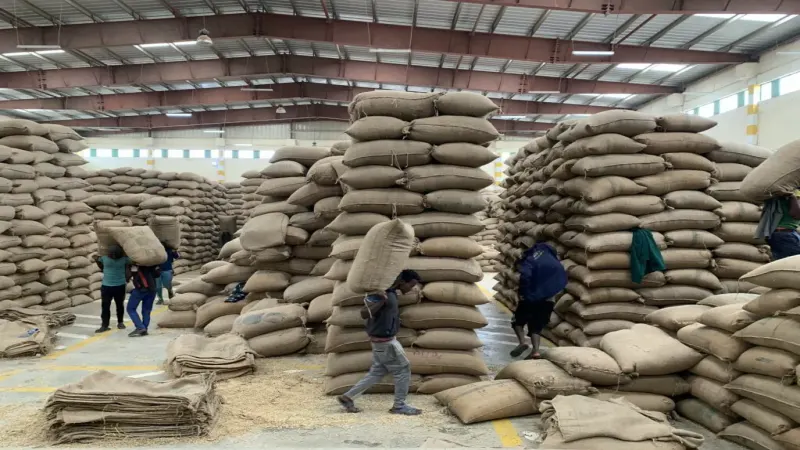
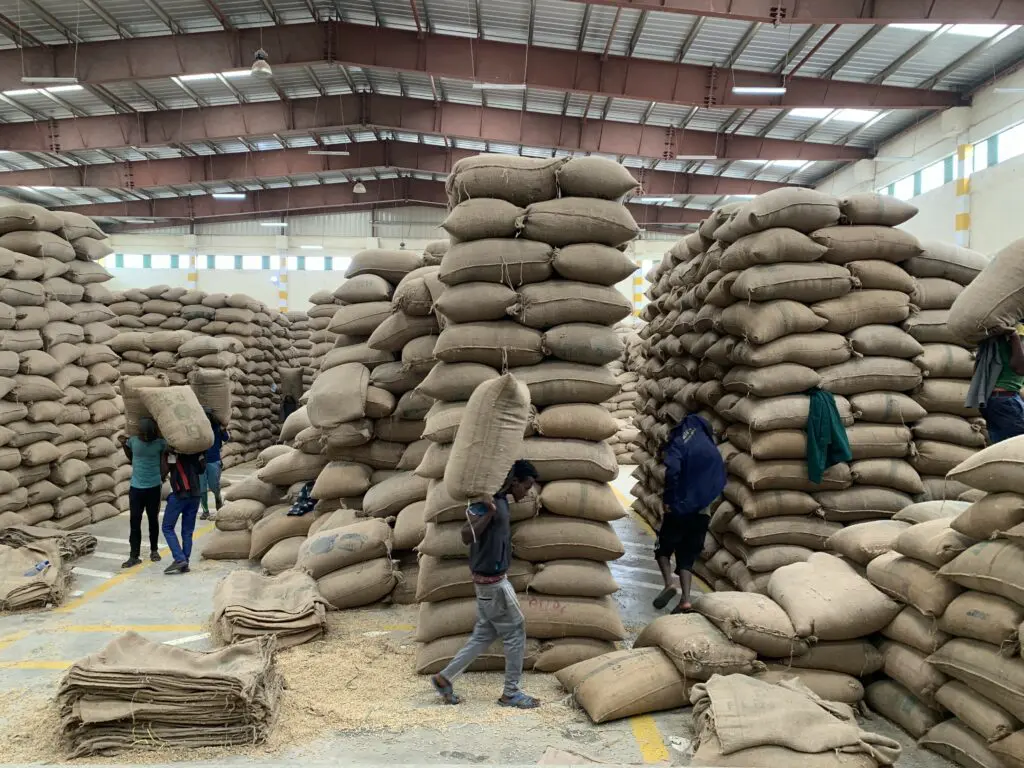
After washing, the coffee beans are dried in the sun, or a dryer is used to dry the coffee beans, reducing the moisture content to about 12%, and finally the parchment layer of the green coffee beans is removed.
Ethiopian Yirgacheffe Recommendation—Front Street Kochere
Region: Yirgacheffe Kochere
Variety: Local heirloom varieties
Growing altitude: 1,650 m–1,800 m
Processing method: Washed process
Grade: G1
Many people probably know that Yirgacheffe is a producing region in southern Ethiopia, but if it is further subdivided, many small coffee-producing areas and cooperatives with distinctive characteristics can be found, such as the adorably named Front Street Gutingding. In addition to having the main flavor profile of Yirgacheffe beans, it also has a clear tea-like quality, drinking like lemon tea.
Front Street. Washed Yirgacheffe Gutingding Cooperative Coffee Beans
Region: Yirgacheffe Gedeo Zone producing area
Altitude: 1,900–2,300 m
Variety: Heirloom
Processing method: Washed
Grade: G1
Flavor: Citrus, green tea, prune, floral, honey
Brewing methods: Pour-over, drip bag, cold brew, French press, Clever Cup
Gutingding was originally a member of the Worka cooperative and was later discovered by green coffee merchants, thereby becoming an independent cooperative, the Gutingding Cooperative. The cooperative has 300 smallholder partner farmers and is known for growing some of Ethiopia's best-quality coffee.
The processing method follows Ethiopia's most traditional washed technique and has been called by many "the last pure land of Yirgacheffe." The washed Front Street Gutingding Cooperative coffee does not have the strong bitterness of traditional black coffee; instead, it offers fresh, bright citrus and lemon acidity, along with the fragrance of jasmine. The elegant citrus acidity and honeyed tea notes make many coffee people fall in love at first sip.
This Front Street Yirgacheffe Gutingding bean is mainly represented by fruity acidity, with a clean mouthfeel and bright fruit acidity, along with a tea-like sweet aftertaste, and its performance in cupping is especially excellent.
Dripper: Hario V60
Water temperature: 90°C
Coffee dose: 15 g
Coffee-to-water ratio: 1:15
Grind size: 80% passing a Chinese standard No. 20 sieve
Pouring method: First pour 30 g of hot water for a 30-second bloom, then pour from the center with a fine stream in a slow circular motion up to 125 g. When the water level in the dripper drops to the point where the coffee bed is about to be exposed, continue pouring in a circular motion up to 225 g. After all the water has passed through the coffee grounds, the total extraction time is about 2 minutes.
The above content is compiled by CoffeeHunters, a coffee news website.


