







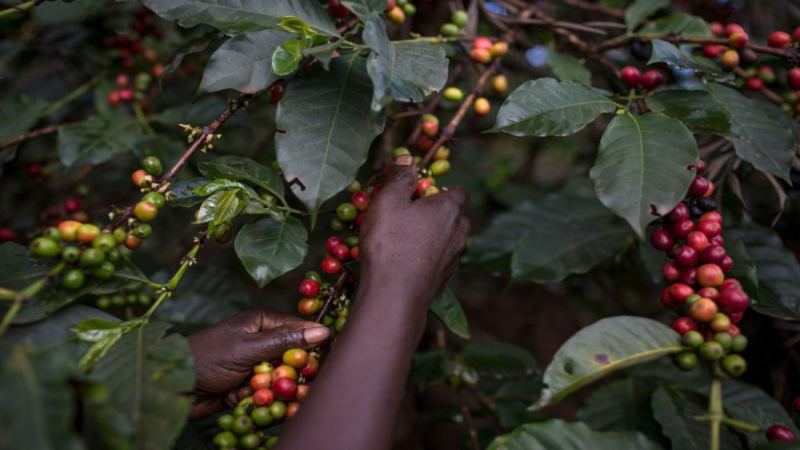
Blue Mountain coffee is hailed as a classic in the coffee world, and only the Typica variety grown above 910 meters in elevation can truly bear the name "Jamaica Blue Mountain." This article starts from the terroir conditions of the Blue Mountains, tracing the varietal evolution of Typica in Jamaica, the CIB grading standards, and how the washed process shapes the balanced, clean flavor of Blue Mountain No. 1. It also draws on Front Street Coffee's roasting and brewing practices to share specific parameters and techniques for extracting Blue Mountain No. 1 with the KONO dripper, helping coffee enthusiasts understand the unique charm of this national treasure of a coffee.
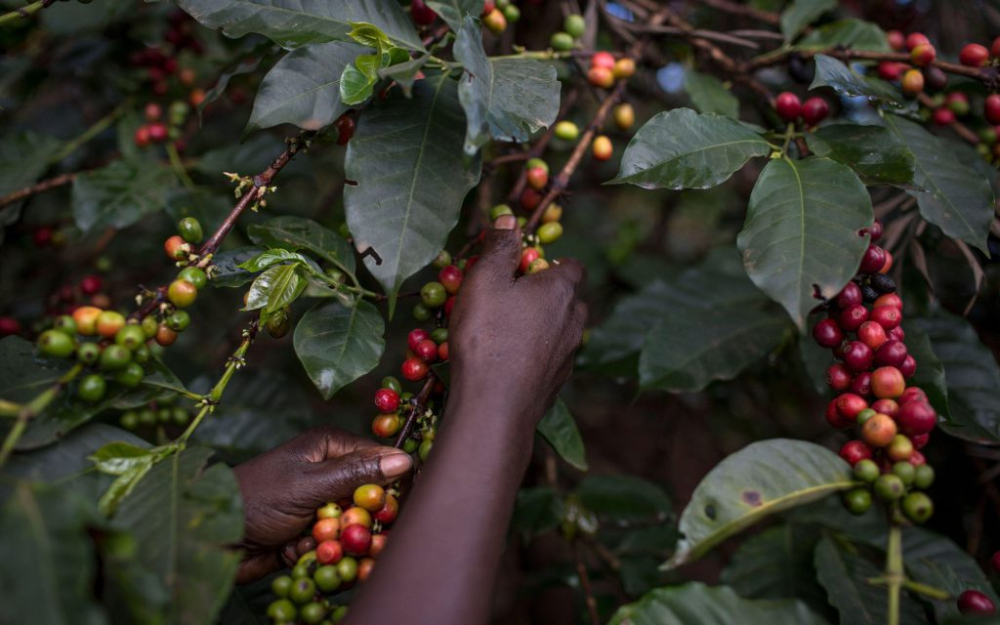
Among the coffees produced in Jamaica's Blue Mountain region, the highest grade is the specialty-level Blue Mountain coffee, commonly known as Blue Mountain No. 1 coffee beans. With their rich aroma and balanced acidity, bitterness, and sweetness, these beans have earned high praise from many coffee lovers and thus occupy an irreplaceable position in the global coffee landscape.
Jamaica Blue Mountain No. 1 coffee comes from the Blue Mountains
The Blue Mountains are largely surrounded by the Caribbean Sea. On clear days, sunlight refracting off the sea surface onto the mountain range gives the peaks a captivating blue hue, which is how the Blue Mountains got their name. Its highest peak stands at 2,256 meters and is a popular scenic destination in the Caribbean, attracting large numbers of tourists. The local government has designated the area above 1,700 meters as a nature reserve where all crop cultivation is strictly prohibited. As a result, the Blue Mountain region has very little pollution and clean air, providing an ideal environment for coffee cultivation.
Like many well-known specialty coffees, the distinctive aroma of Blue Mountain coffee beans comes both from the variety itself and from the terroir in which it takes root.
The variety of Blue Mountain No. 1 coffee is Typica
Typica is one of the oldest Arabica varieties, having been spread to coffee-growing regions around the world very early on and evolving into numerous variant types. Influenced by different geographical factors, Typica grown in various parts of the coffee belt shows differences in flavor expression.
Typica's young shoots are a reddish-copper color, which is why it is also called red-top coffee. Typica coffee beans are slender and oval in shape, the tree is relatively tall with branches growing diagonally upward, and the fruit aromatics are layered and complex, often performing excellently in cupping.
However, as a commercial crop, Typica has a low yield per plant and poor tolerance to leaf rust, coffee berry disease, and other ailments, making it prone to withering or even dying. So even though it was the first variety introduced to producing regions, because its yield cannot guarantee returns, it is still often abandoned by coffee farmers.
The Typica planted in the Blue Mountains, however, has undergone long-term genetic evolution and adapted to Jamaica's high-altitude terroir, developing new characteristics. As such, Blue Mountain Typica can be regarded as a new coffee variety. After about two hundred years of "adaptation," Blue Mountain Typica has greater adaptability than the original Typica introduced in the eighteenth century, becoming an Arabica variety with relatively good disease resistance and possessing a refined flavor that other producing regions find difficult to replicate.
Not all coffee produced in the Blue Mountains can be called Jamaica Blue Mountain coffee
In the Blue Mountains, coffee is grown at elevations ranging from a few hundred meters to 1,700 meters, but to truly be called Jamaica Blue Mountain coffee, it must come from Typica coffee trees grown above 910 meters. As mentioned earlier, the area above 1,700 meters is a nature reserve, so the growing region for Blue Mountain coffee is the mere 6,000 hectares within this range.
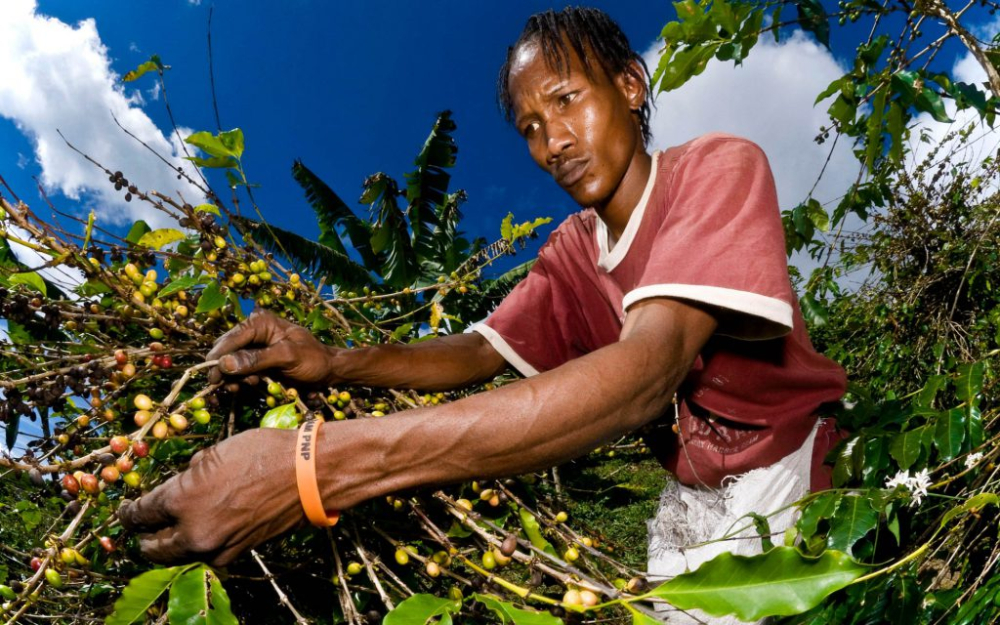
Coffee grown at lower elevations is classified by the CIB as "Jamaica High Mountain" and "Jamaica Supreme." The flavor developed under low-altitude conditions falls far short of the excellent quality of high-altitude Blue Mountain coffee beans, and the price is correspondingly lower.
The CIB has established strict standards, classifying Jamaica Blue Mountain coffee into four grades based on green bean screen size and defect ratio. The highest grade, regarded as Jamaica's national treasure coffee, is Blue Mountain No. 1 coffee beans, NO.1, requiring beans of 17–18 screen size with a maximum defect ratio of only 2%. It is precisely under such rigorous screening that the quality of rare Blue Mountain coffee is maintained at an excellent level. Front Street Coffee once acquired Blue Mountain coffees from several well-known local Jamaican estates. After comparative cupping, it ultimately decided to select Blue Mountain No. 1 coffee beans from the Clifton Mount Estate, the estate with the longest history.
On Front Street Coffee's bean menu blackboard, a corner is often reserved for the classic Jamaica Blue Mountain No. 1 coffee beans. Front Street Coffee baristas rarely recommend it proactively, but there are always friends who love the classic Blue Mountain flavor and come specifically for it.
Blue Mountain No. 1 coffee beans are washed processed
Front Street Coffee believes that the washed process not only ensures the consistent quality of Blue Mountain coffee but also presents its flavor in a clearer and brighter way.
Traditionally, Blue Mountain coffee has only used the washed process. After the skin and pulp are removed, the coffee cherries are fermented in tanks for 12–18 hours. The fermented beans are then placed in clean water tanks and moved back and forth, using the friction of the beans and the force of running water to wash the coffee beans until smooth and clean. Finally, the parchment beans are dried until the moisture content reaches 12–14%. Because the coffee pulp and mucilage have already been removed before drying, there is no excessive fermented acidity to influence the cup, making the coffee's flavor more balanced and clean.
What does the classic Blue Mountain flavor taste like?
The classic Blue Mountain flavor features rich aromas of chocolate and roasted nuts, with soft acidity and a full-bodied mouthfeel. To recreate the classic taste, Front Street Coffee's roaster chooses a medium-dark roast, highlighting the roasted aromas while retaining some acidity.
In cupping Blue Mountain No. 1 coffee beans, Front Street Coffee found a balanced combination of acidity, sweetness, aroma, bitterness, and body. Accordingly, Front Street Coffee baristas developed their brewing approach along these flavor lines.
Before brewing, Front Street Coffee recommends using freshly roasted coffee beans — especially specialty beans like Blue Mountain No. 1, where freshness largely determines the fullness of flavor in the cup. That is why all beans shipped by Front Street Coffee are freshly roasted within 5 days, so that every customer receives them at their peak flavor. We hope everyone can finish them within the optimal tasting period, so as not to waste precious specialty beans.
When brewing coffees with a predominantly bitter profile, Front Street Coffee usually prioritizes the KONO dripper in order to highlight the coffee's full-bodied mouthfeel. The upper part of the KONO dripper allows the filter paper to fit better. Compared with the V60 dripper, its extraction method is mainly immersion-based, increasing the overall concentration of the coffee and enhancing its body. Likewise, the KONO dripper is also suitable for brewing Brazil Queen Estate coffee beans and Golden Mandheling coffee beans.
Front Street Coffee's in-store brewing parameters for Blue Mountain No. 1 are: KONO dripper, 88°C water temperature, 1:15 coffee-to-water ratio, 15g coffee grounds, grind size (75% passing a No. 20 standard sieve), three-stage extraction.
Front Street Coffee first rinses the KONO dripper with hot water, then aligns and places the filter paper so it fits the dripper more closely. After pouring out the water in the server, add 15g of coffee grounds, bloom with 30g of water for 30 seconds, then begin pouring in a small stream in circles from the center. At 125g, begin the next stage; when the coffee bed drops to halfway down the dripper, start pouring the second stage using the same technique until reaching 225g. Once all dripping is complete, remove the dripper.
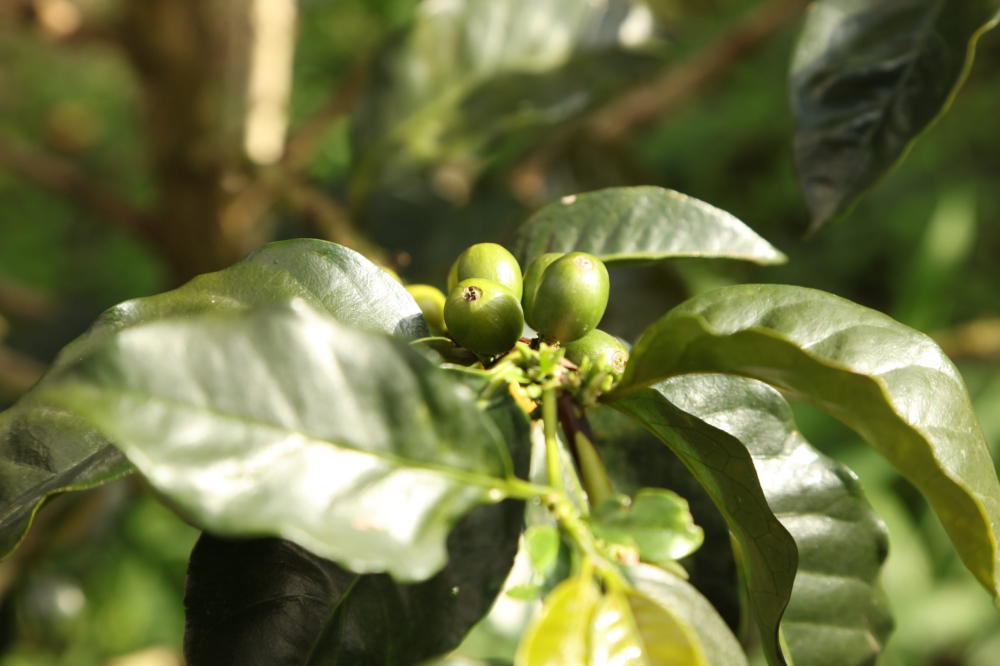
Blue Mountain No. 1 coffee drinks with the sweet aroma of dark chocolate, the sweetness of caramel, and a soft, elegant acidity. Each flavor is balanced in harmony, and the mouthfeel is smooth and rich — a very typical Blue Mountain flavor.
For professional coffee knowledge exchange and more coffee bean information, please follow Coffee Workshop (WeChat public account: cafe_style)
For more specialty coffee beans, please add the private WeChat of Front Street Coffee: qjcoffeex
The above content is compiled by CoffeeHunters, a coffee news website.


