







Nowadays, walking into a café, the presence of Yunnan beans is no longer rare; when chatting with friends about where the coffee tastes good, the answer has shifted from uniformly imported beans to domestic Yunnan and Vietnamese coffee. As China's largest coffee-producing region, Yunnan's planting story is far longer than we might imagine. From the first coffee tree planted by a French missionary in Zhukula Village in 1892 to the large-scale development of production areas such as Lujiangba in Baoshan and Lincang, Yunnan coffee has traveled a unique path. This article will review the planting history of Yunnan coffee, analyze the terroir conditions of the two core production areas, Baoshan and Lincang, introduce the characteristics of major varieties such as Typica, Bourbon, and Catimor, and share the brewing parameters and flavor performance of Front Street's daily beans.
Nowadays in coffee shops, Yunnan coffee is already commonplace. When friends discuss where the coffee is worth drinking, the answers are no longer limited to imported products; more and more people mention domestic Yunnan coffee and Vietnamese coffee. As the province with the largest coffee planting area in China, what exactly is Yunnan's heritage?
Perhaps you've only recently heard of Yunnan coffee, but that doesn't mean it's a newly developed industry. In fact, Yunnan has a very long history of coffee cultivation, and this land happens to lie in the golden latitude band for coffee growing. Today Front Street will talk about the planting origins of Yunnan coffee.
The Origins of Yunnan Coffee
The discovery of coffee is accompanied by the legend of an Ethiopian shepherd boy; its origin was originally in the tropical regions of Africa, and since the fifteenth century it has gradually spread across the globe. Currently, more than seventy countries and regions worldwide engage in coffee cultivation. China is famous for tea, and coffee has not been popular for long. Yet Yunnan's coffee planting history can be traced back to the early twentieth century—in 1904, the French missionary Tian Deneng introduced and planted the first coffee tree, thus opening the prelude to Yunnan coffee cultivation.
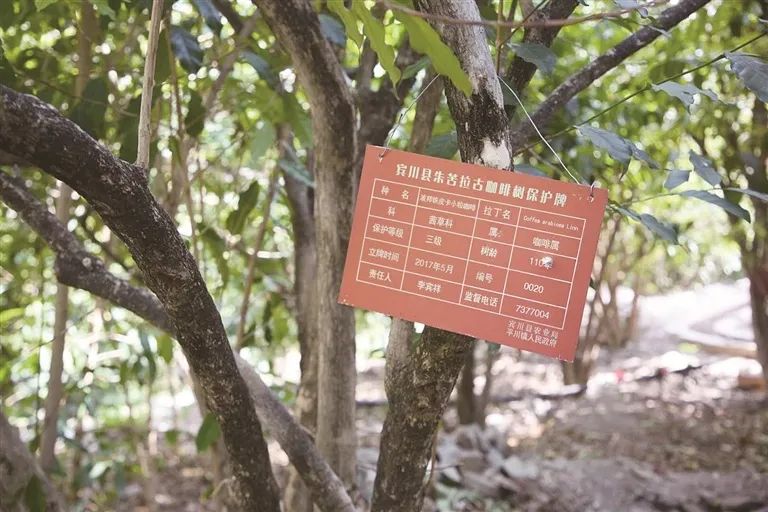
In 1892, Father Tian, a French missionary, tried planting coffee in a village in Yunnan called Zhukula and succeeded. To this day, Zhukula Township still retains 24 coffee trees over ninety years old. The village of Zhukula is quiet and full of legendary charm, under the jurisdiction of the Zhukula Village Committee, Pingchuan Town, Binchuan County, Dali Prefecture. It sits by the Yupao River, a tributary of the Jinsha River, at the junction of Dali, Chuxiong, and Lijiang.
Over a hundred years ago, Zhukula was called "Ruo Ke Lai" in the Yi language, meaning winding mountain roads. After Father Tian arrived in 1892, the Yi language heritage and French-style romance blended together, giving rise to the name "Zhukula," later interpreted as "paradise on earth."
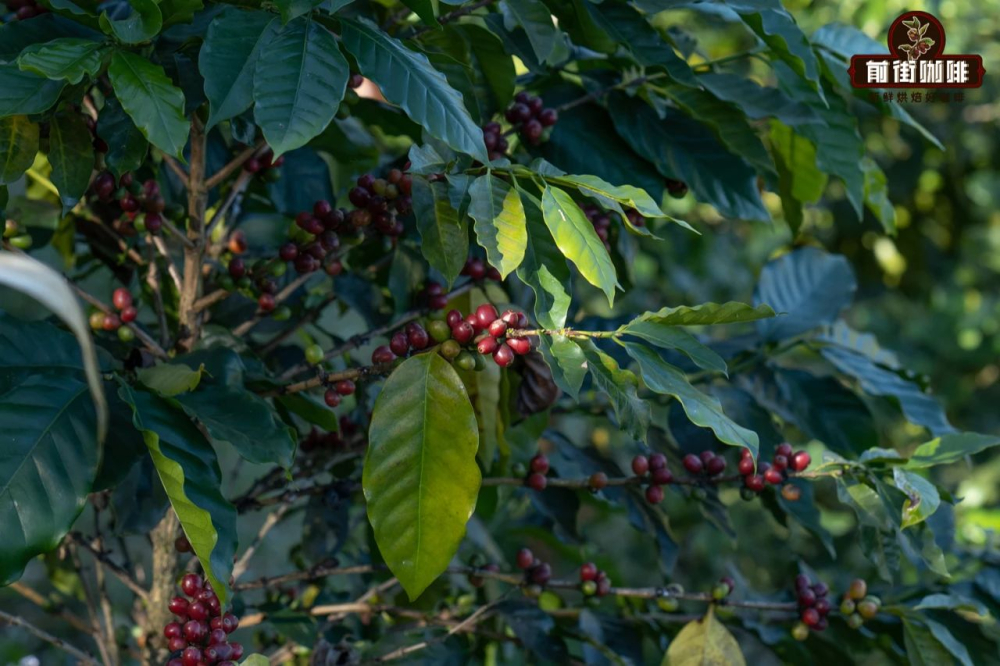
According to records, in 1892 Father Tian, to satisfy his own need to drink coffee, used coffee cherries to propagate the first coffee tree outside the church door, and afterward cultivated more saplings and planted them around the church. From then on, Zhukula Village has been tied to coffee, and the village has always been surrounded by coffee trees. The two oldest villagers, Qi Guanghui and Li Fusheng, both over eighty, witnessed the formation of China's oldest coffee forest.
Although Zhukula is economically backward, it has a deep bond with coffee. Besides every household planting coffee, the villagers also maintain the tradition of drinking coffee: they grow it themselves, grind it themselves, and brew it themselves. Today, regardless of age or gender, everyone in the village has the habit of drinking coffee. The locals hold special affection for coffee trees; even though coffee beans have never brought considerable economic returns, they cannot bear to cut down a single one.
Zhukula Village entertains guests with local coffee and walnuts. Although coffee brewed in an earthen pot may not be the best flavor, this primitive way of drinking precisely reflects the villagers' love for coffee and is also the highest courtesy to guests. The unique and rich original coffee culture makes everyone who learns about Zhukula sincerely exclaim: this place deserves the title of China's No. 1 Coffee Village. The Zhukula coffee forest belongs to the Arabica varieties Yunnan small-bean Bourbon and Typica.
Yunnan Coffee Planting Environment
Yunnan's geographical conditions are superior, which is also why Pu'er tea is renowned far and wide. But now Yunnan is famous not only for tea; coffee is equally hot. As a crop, coffee has extremely demanding requirements for its growing environment. Yunnan is located in mountainous areas, with terrain high in the northwest and low in the southeast; the drop between western peaks and river valleys can reach 3,000 meters. The province is rich in natural resources and is the region of China with the most abundant plant species.
Western and southern Yunnan lie between 15°N and the Tropic of Cancer, at elevations mostly 1,000 to 2,000 meters, with mountainous and sloping terrain, belonging to the golden zone for coffee planting. Front Street believes it is precisely these unique natural conditions—fertile soil, abundant sunshine, ample rainfall, and significant temperature differences between day and night—that create the flavor characteristics of Yunnan small-bean coffee: "strong but not bitter, fragrant but not harsh, with a hint of fruitiness." Its taste and quality are similar to Colombian coffee, though Front Street finds Yunnan small-bean coffee also somewhat resembles Mandheling, perhaps because they both belong to Asian beans?
Yunnan Coffee Production Areas
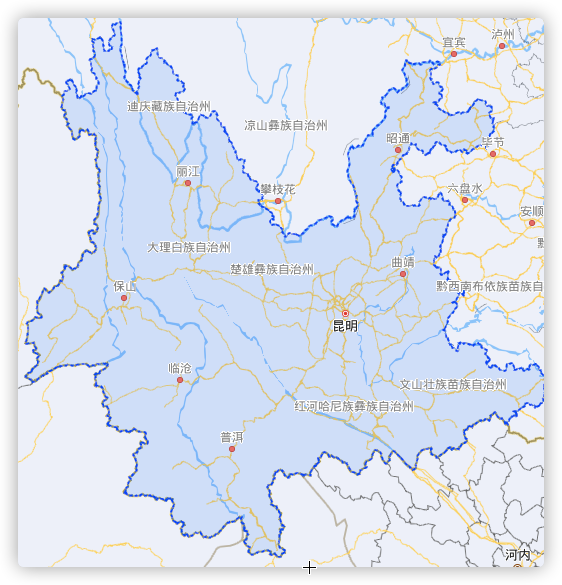
Yunnan's coffee-growing areas are mainly distributed in Lincang, Baoshan, Simao, Xishuangbanna, Dehong, and other places. Baoshan is the most important production area for Yunnan small-bean coffee, with an annual average temperature of 21.5°C, extreme highs reaching 40.4°C, and basically no frost year-round; it is recognized as the best small-bean coffee producing area. Front Street's daily bean Yunnan small-bean coffee comes precisely from the Baoshan production area.
Dehong
Dehong Prefecture's coffee is planted at elevations above 1,000 meters, with 30,000 mu distributed in mountainous areas above 1,600 meters. Local coffee cultivation mainly uses organic fertilizers and organic pesticides; the coffee produced is outstanding in quality, making it one of the rare high-quality coffee producing areas in the world, enjoying the reputation of "China's Hometown of Coffee."
Baoshan
Baoshan is the most important production area for Yunnan small-bean coffee. Local coffee planting began in the mid-1950s, with the first batch of coffee seedlings introduced from Southeast Asia by the late patriotic overseas Chinese Mr. Liang Jinshan. In recent years, with the expansion of international trade, Lujiangba's small-bean coffee has become widely renowned; merchants from Europe, America, and Arab countries, especially those from Britain, the United States, Egypt, and Hong Kong and Macau, regard it as a premium coffee, and the product is in short supply. In December 2010, after review by China's General Administration of Quality Supervision, Inspection and Quarantine, "Baoshan Small-Bean Coffee" officially implemented national geographical indication product protection.
"Strong but not bitter, fragrant but not harsh, with a mellow aroma; rich in oils, with a full-bodied fruit acidity and a lasting sweet aftertaste; this is a premium coffee." This is the evaluation by domestic and international coffee experts after cupping Baoshan small-bean coffee. Baoshan Lujiangba has Yunnan's uniquely distinctive dry-hot valley climate, with an annual average temperature of 21.3°C and no frost on the mountains, very suitable for planting Arabica varieties, though most currently planted is Catimor. Front Street's daily bean Yunnan small-bean coffee comes from the Baoshan production area, washed processed, with soft nutty aromas and plum acidity, making it an introductory choice for many friends to get to know Yunnan coffee.
Lincang
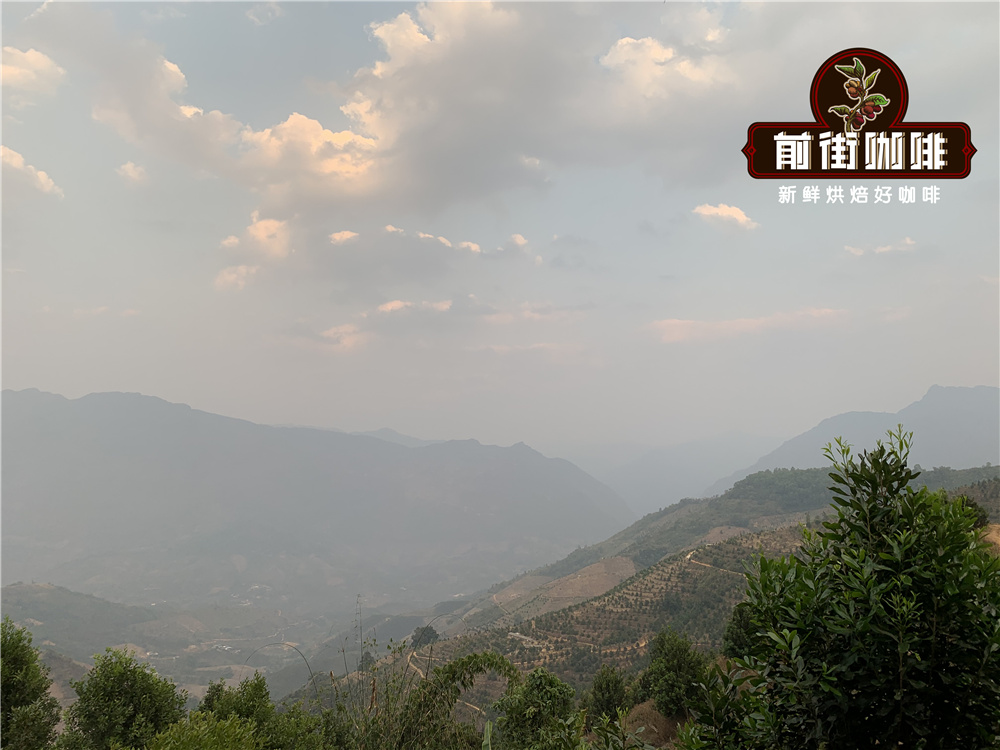
Lincang is located in southwestern Yunnan Province, with the Tropic of Cancer running through its south. Lincang borders Pu'er to the east, Dali to the north, Baoshan to the west, and Myanmar to the southwest; it is named for being near the Lancang River and is a pearl on the southwestern frontier of the motherland. The local annual average temperature is between 16.8°C and 17.2°C, with distinct dry and wet seasons and ample sunshine. Its unique geographical location and climate conditions have made Lincang a hotspot for many coffee enterprises; successively, 200-mu and 100-mu high-quality coffee seedling bases were established in Mengding Town of Gengma Autonomous County and Lincang Happiness Farm, and coffee planting was promoted in Gengma, Zhenkang, Yunxian, Cangyuan, Yongde, and other places.
Front Street Coffee has established its own estate in the Lincang production area of Yunnan. In 2021, Front Street Coffee produced its first self-produced coffee bean—Front Street 2013 Sun-Dried Typica Coffee.
Pu'er
The tea hometown Pu'er has a 150-year history of coffee cultivation. In the early 1990s, Pu'er City began to cultivate coffee as an advantageous backbone industry for adjusting the industrial structure and increasing farmers' income.
Yunnan Coffee Bean Varieties
Yunnan small-bean coffee was initially planted with Arabica varieties, but after leaf rust spread through coffee-producing countries worldwide, with the assistance of international organizations, producing countries vigorously promoted Catimor to resist leaf rust and increase productivity. Catimor is a combination of Arabica and Robusta; Robusta has good leaf rust resistance and rich oils, high yield, and is easy to cultivate. After hybridizing with the Arabica variety Typica, Catimor obtained 25% Robusta genes, which improved leaf rust resistance, retained rich oils, and inherited some of the flavor of the original Typica variety. Therefore, almost all Yunnan small-bean coffee on the market today is the Catimor variety, and Typica's planting range is very limited.
Typica coffee beans: the most classic high-quality Arabica variety, from which many commercial improved varieties originate. Typica has excellent flavor performance and is recognized as a specialty coffee variety, but its yield is extremely low and it is susceptible to rust disease, requiring more manpower for management. Typica originated in Ethiopia and southeastern Sudan and is the most widely cultivated coffee variety in the Western Hemisphere. The plant is relatively robust but not tolerant of light, and yields higher in Hawaii. Typica's top leaves are copper-red, hence the name red-top coffee.
The variety planted at Front Street Coffee Estate is precisely Typica, namely Front Street 2013 Sun-Dried Typica Coffee.
Bourbon coffee beans: this variety originated from Typica and spread after being planted by the French on Bourbon Island (now Réunion) in 1708. Bourbon also has beautiful aromas and rich flavors, with higher yield and growth vigor than Typica; it is suitable for planting at 1,200 to 2,000 meters but has weaker resistance to pests and diseases and is more sensitive to strong winds and heavy rainfall. Bourbon is the variety second only to Typica among small-bean coffees. The main branches initially grow upward at 45 degrees to the trunk, drooping as they bear fruit; the side branches have denser nodes and bear more fruit, with higher yield, but the berries are smaller and ripen more slowly.
Catimor coffee beans: Catimor is not purely Arabica lineage but a hybrid of Timor (belonging to Robusta) and Caturra (a variety of Bourbon), thus carrying 25% Robusta lineage. This lineage also determines its flavor flaws: the aroma is not rich enough, the overall bitterness is heavier, and it is prone to astringency and a rather pungent musty taste. Front Street's daily bean Yunnan small-bean coffee is the Catimor variety.
Yunnan Coffee Bean Processing Methods
Yunnan coffee beans also use the washed processing method, and there is also sun-dried processing. However, Front Street believes that washed processing better highlights the local coffee flavor and best reflects the original taste of coffee, so almost all of Front Street's daily beans use washed processing. For Yunnan coffee beans, Front Street has sun-dried Yunnan Catimor coffee, Front Street 2013 Sun-Dried Typica Coffee, and washed Yunnan small-bean coffee.
Front Street Coffee Brewing Recommendations:
When brewing coffee, Front Street recommends using freshly roasted coffee beans, as this allows you to experience the coffee's rich flavors to the greatest extent. The coffee beans shipped by Front Street Coffee are all within 5 days of the roast date, because Front Street deeply understands that freshness greatly affects flavor. Front Street's roasting philosophy is "freshly roasted good coffee," so that every customer who places an order receives the freshest product when they get their coffee. Coffee's resting period is about 4 to 7 days, so when customers receive it, it is precisely at its best flavor.
Front Street's parameters for brewing Yunnan small-bean coffee:
Dripper: Kono dripper
Water temperature: 88°C
Dose: 15 grams
Coffee-to-water ratio: 1:15
Grind size: fine granulated sugar coarseness (75% passing through China standard No. 20 sieve)
Use staged extraction: first bloom with twice the coffee dose in water, i.e., 30 grams of water for 30 seconds; starting from the 31st second, pour in a slow circular stream until 125 grams, then pause, continue pouring until 225 grams and stop. After the water in the dripper has dripped through, remove the dripper; timing from the start of pouring, the extraction time is 2 minutes 00 seconds. Then swirl the entire cup of coffee to mix evenly, pour into a cup, and taste.
Washed Yunnan small-bean coffee flavor: smells of nutty aromas; on the palate, herbal, chocolate, and caramel notes; the aftertaste carries a slight, faint fruit acidity.
Front Street 2013 Yunnan Sun-Dried Typica Coffee flavor: carries nutty tones; the mouthfeel is more substantial than washed Yunnan coffee; the acidity is slightly lower than washed Typica, but the sweetness is more pronounced, with greater balance, berry-like acidity, interwoven with brown sugar notes and a slight tea sensation.
The above content is compiled by CoffeeHunters, a coffee news website.


