








How exactly does the washed process shape the underlying character of a coffee bean? This article starts with Ethiopia's Yirgacheffe and systematically sorts through the origins and background of the washed process, the six-step processing flow, and the bright acidity and clean mouthfeel it gives coffee. It also compiles the flavor differences between two washed beans, Front Street Yirgacheffe and Front Street Blue Mountain No. 1, and includes Front Street's recommended pour-over grind size, water temperature, coffee-to-water ratio, and staged pouring scheme, helping coffee lovers consistently reproduce a cup of washed Yirgacheffe with clear layers at home.

When you mention the washed process, which producing region's beans do you think of first? Probably quite a few people immediately think of the name "Yirgacheffe." In the 1970s, the Ethiopian government introduced washed processing technology from Latin America to improve coffee quality. At that time, the small town of Yirgacheffe, still part of the Sidama region, used the washed process to reveal bright acidity, white floral notes, and a tea-like quality, quickly winning the favor of a large group of seasoned coffee lovers. Front Street has always believed that the washed process best reflects the basic flavor direction of a coffee bean, and is also the most intuitive way to judge the quality of the beans.
What is the washed process?
No matter which processing method is used, ultimately everything depends on drying in the sun. Coffee fruit itself is very high in sugar. If it is exposed to high temperatures for a long time, the sugar will over-ferment, causing the coffee beans to develop a sharp fermented acidity. Moreover, natural processing depends heavily on the weather. Once the wet season arrives or there is continuous rain, the fruit cannot dry in time or dries unevenly, and it begins to rot, giving the coffee beans a spoiled note.
To solve this problem, people began trying to first use large amounts of water to remove the skin, pulp, and mucilage, reducing the moisture content of the fruit before it entered the drying stage. This also greatly shortened the sun-drying time, and thus the washed process was born. Before honey processing became popular, Costa Rica had long relied mainly on washed processing. In 1821, the country began vigorously developing the coffee-growing industry, introduced the washed process in 1830, and by 1905, more than a hundred years ago, Costa Rica already had more than two hundred washed processing plants within its borders.
The process and steps of the washed method
① Cleaning, collection, flotation, and sorting
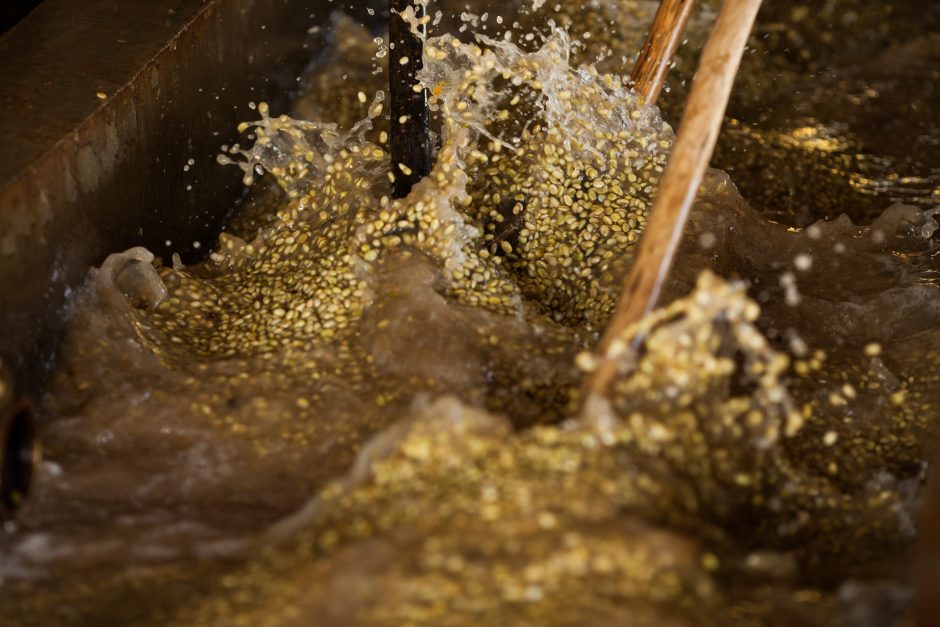
After the coffee fruit is picked, it must be transported to the processing plant within 6 to 12 hours and weighed, then soaked and washed. The purpose is to remove the "little bad ones" that float on the surface because of insufficient density, while also clearing out mixed-in twigs, sand, stones, and other impurities.
② Removing the skin and pulp
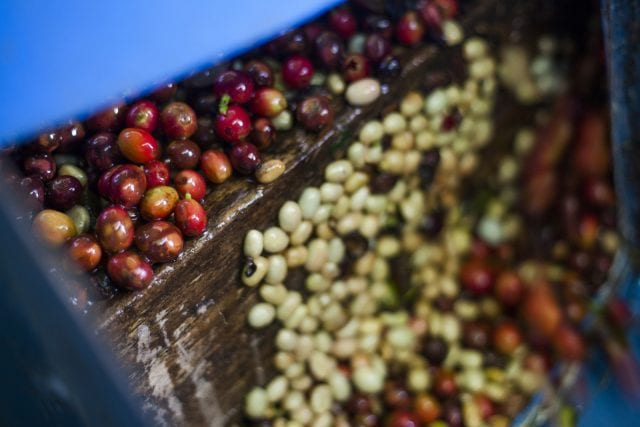
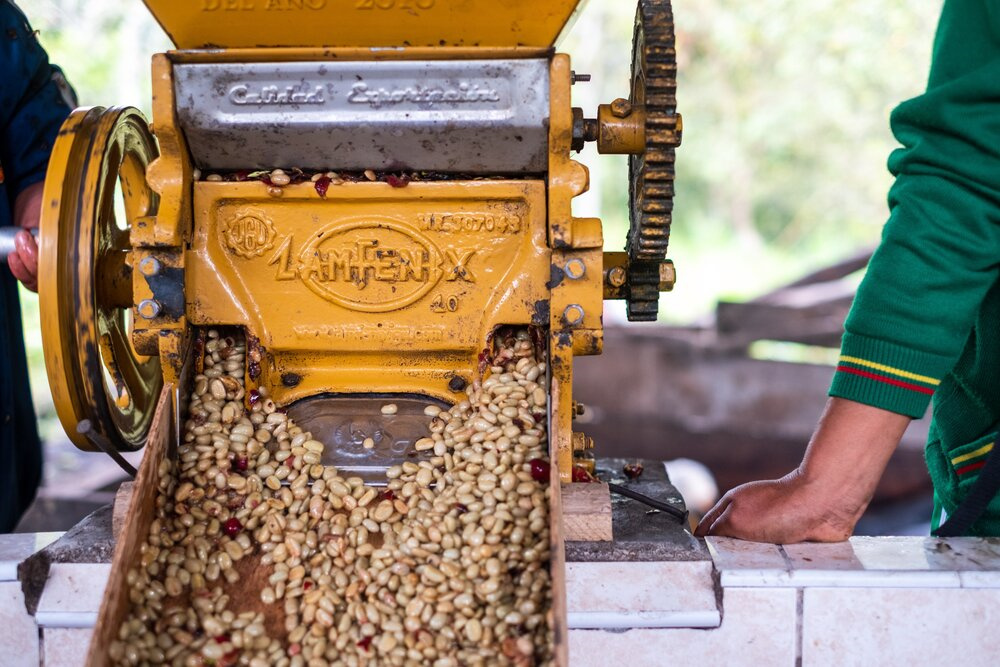
A machine is used to strip away the skin and pulp, leaving only the coffee beans wrapped in parchment. A layer of mucilage still clings to the surface of the beans, and the acidity produced by fermentation is needed to make it fall off.
③ Fermentation and demucilaging
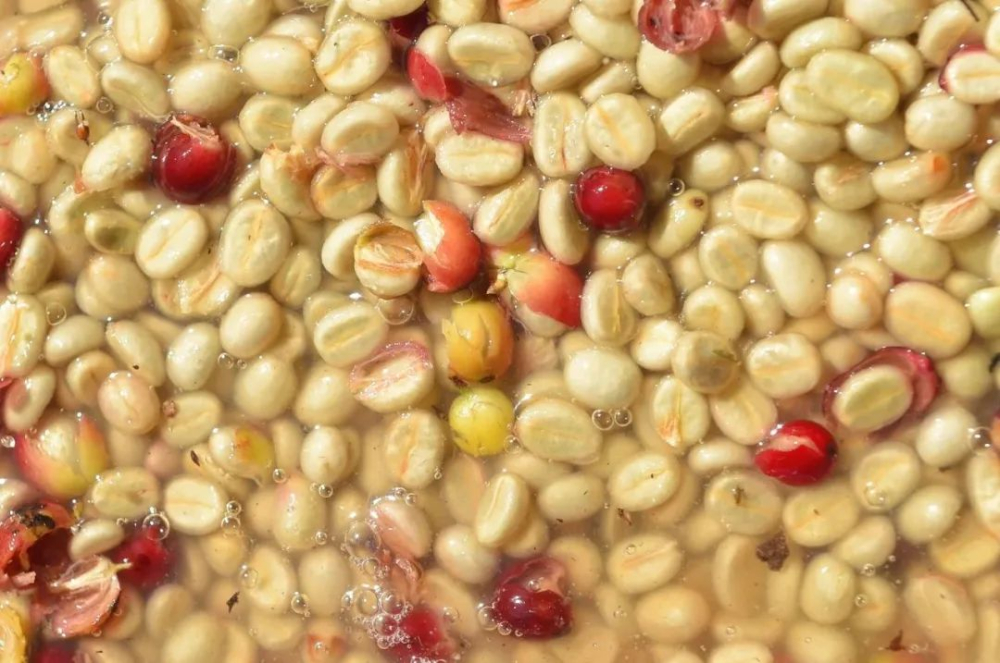
This layer of mucilage is the pectin part. Pectin mucilage has very strong adhesion and is not easy to remove directly, so it is placed in a clean tank and left to sit for about 18 to 36 hours, allowing the pectin to ferment and produce acidic substances that break down the mucilage.
④ Washing off the mucilage
After the mucilage has broken down, a small amount of clean water is added and stirred to make the mucilage breakdown products fall off the surface of the coffee beans. After washing is completed, coffee beans wrapped in parchment and hard shell are obtained.
⑤ Sun drying
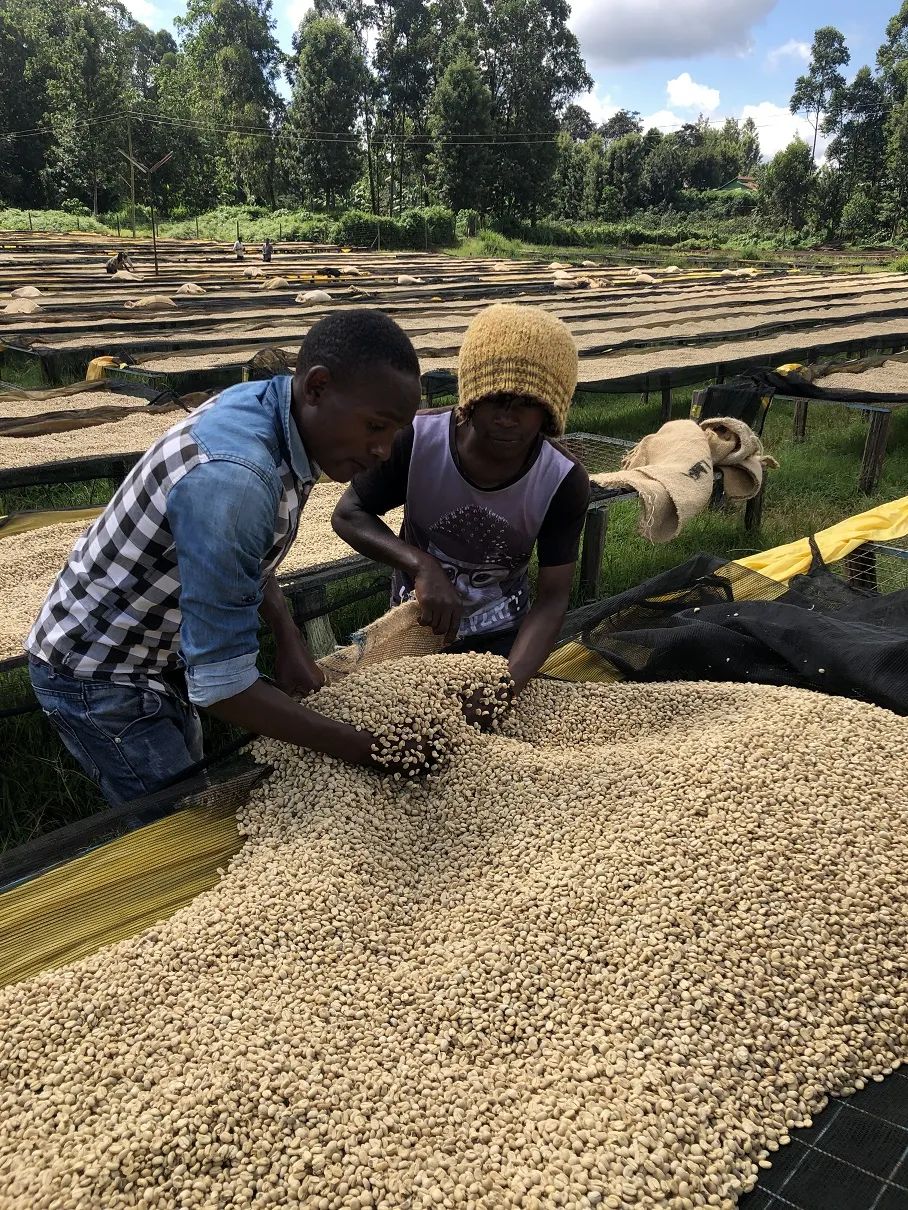
After washing, defective beans are picked out, and then the beans are spread on concrete patios, tarps, or drying beds for sun drying. The drying time depends on the weather, usually ranging from 5 to 14 days. After drying is completed, the moisture content of the coffee beans drops from 55% to 11%.
⑥ Storage
After drying is complete, the coffee beans are stored together with the parchment, and the parchment is not removed until just before export.
Recommended list of washed coffee beans
To taste the classic washed flavor, the first choice is Front Street Yirgacheffe. After medium-light roasting, it shows fresh notes of jasmine, citrus, lemon, and green tea. It is suitable for pour-over and cold brew, offering good cleanliness and a lasting finish;
If you prefer washed coffee with a balanced mouthfeel, you can choose the world's most famous coffee bean, Front Street Blue Mountain No. 1. It is medium-dark roasted, with aromas of chocolate, cream, almond, and caramel, moderate body, and a rounded mouthfeel. Because it has been washed, its flavor is clean and clear.
Flavor and mouthfeel characteristics of the washed process
Because the "little bad ones" have already been largely removed before all processing steps begin, and defective beans are picked out again before sun drying, and because the tank fermentation process gives the coffee beans brighter acidity, Front Street believes that the greatest flavor characteristic of the washed process is bright fruit acidity, with the coffee as a whole clean, fresh, and richly layered.
How should Front Street washed Yirgacheffe be brewed to taste better?
In terms of grind size, Front Street recommends medium-fine grinding (78% passing through a Chinese standard No. 20 sieve). If it is too coarse, the rich substances cannot be extracted, and the brewed coffee will seem thin; if it is too fine, it is easy to over-extract at high water temperature, leading to bitterness. The water temperature can be 90 to 91°C, so that the bright fruit acidity can be expressed more fully. Because the acidity is relatively high, the brewing ratio can be 1:16 to dilute the acidity and allow light flavors such as floral notes and tea-like qualities to show. As for the brewing technique, Front Street recommends staged pouring, so that different flavor substances can present themselves better as the coffee bed rises in temperature in stages.
Brewing method: First pour in 30g of water and bloom for 30 seconds; at this point the coffee expands fairly fully. In the second stage, pour in 120g of water in small circles from the center, with the pouring height at 5cm, gently, without deliberately stirring. When the water level drops to 1/2 of the coffee bed, begin the third stage of pouring. In this stage, gently circle from the center outward, with a flow rate of about 4g/s, until pouring reaches 240g and then stop. End extraction after all the coffee liquid in the dripper has dripped through, with a time of 2'00" to 2'10".
The above content is compiled by CoffeeHunters, a coffee news website.


