







Espresso is an indispensable part of Italians' daily life and the common base of many classic coffee drinks. This article starts from the extraction principle and explains in detail the three core conditions required for Espresso—high pressure, high temperature, and fine grinding—and, combined with the actual serving parameters of Front Street Coffee stores, demonstrates the production process of a standard espresso. At the same time, the article also introduces how the iconic Crema layer on the surface of espresso is formed, as well as the whisky aroma, vanilla-nut, and tropical fruit fermentation notes presented by Front Street Warm Sun Blend espresso, helping coffee beginners build a systematic understanding of Italian coffee.
For more specialty coffee knowledge, please follow the WeChat public account: Front Street Coffee (FrontStreet Coffee)
In Italy, coffee has long transcended the drink itself and become a cultural symbol rooted in daily life. Locals drink a cup of strong espresso almost every morning before they truly begin a new day. For Italians, this small cup of coffee carries a sense of life ritual. Next, Front Street will talk about what exactly makes espresso so particular.
The operation method of espresso is to use a fully automatic or semi-automatic espresso machine, under the simultaneous conditions of high temperature and high pressure, to let hot water penetrate the finely ground coffee powder layer with great pressure, thereby extracting in a short time a coffee liquid rich in oils, aromatic, and full-bodied in taste. Because espresso has a strong flavor impact, its single-cup output in coffee shops is often the smallest, but an excellent cup of Italian coffee always depends on a high-quality espresso base. The iced Americano we drink daily is refreshing and thirst-quenching, hot lattes have beautiful latte art, and flat whites are rich and silky. All of these drinks take espresso as the core and are made by adding water, milk, and other ingredients in certain proportions.
According to the definition given by Front Street above, to quickly obtain an espresso, the three conditions of high temperature, high pressure, and fine grinding are indispensable. Among them, "quickly" is the ultimate goal pursued in espresso extraction, while high temperature, high pressure, and fine grinding are the means relied upon to achieve this goal.
1. High pressure
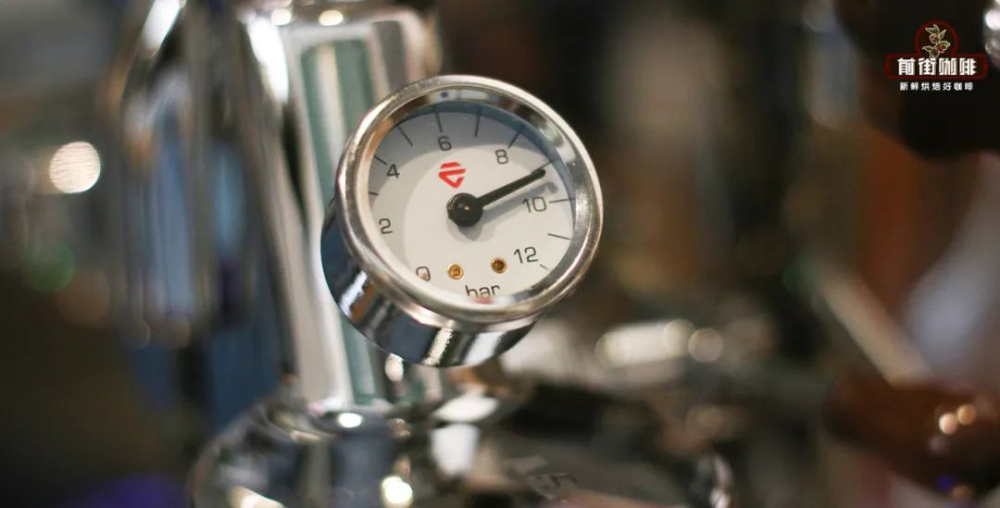
Espresso machines accelerate the dissolution of flavor substances in coffee by applying additional pressure, which is the most fundamental difference from other extraction methods—for example, pour-over coffee relies on drip extraction under normal pressure. To turn coffee powder into a rich and mellow espresso liquid within 20 to 30 seconds, sufficient pressure must be applied to force hot water to quickly pass through the powder layer and complete extraction. Commercial-grade espresso machines usually have a pressure of 9 bar or above, and the coffee machine used in Front Street stores can be adjusted to 9 to 10 bar.
2. High temperature
Anyone who has made pour-over coffee knows that the higher the water temperature, the easier it is for soluble substances in coffee to be released. The same principle applies to espresso. To fully extract the rich aromas in coffee, the water temperature needs to be high enough and kept stable, generally requiring above 90°C. The hot water temperature of the coffee machine in Front Street stores is stably maintained at 94°C.
3. Fast extraction
Front Street also mentioned earlier that the word Espresso comes from Italian and originally means "fast," so fast extraction is naturally one of its hallmarks. The entire extraction process is usually controlled between 20 and 35 seconds: in less than 20 seconds, the coffee taste tends to be thin; once it exceeds 35 seconds, it is easy to bring out burnt bitterness due to over-extraction. Most of Front Street's espresso output falls within the range of 28 to 30 seconds.
4. Fine and even grinding
To fully extract the coffee aroma in such a short time, the coffee powder must be ground fine enough and with even particles, which requires an electric grinder designed specifically for espresso extraction. The grind size needs to be adjusted to the appropriate range—if the particles are too coarse, it will cause under-extraction, with a bland and somewhat sour flavor; if the particles are too fine, it is easy to over-extract, resulting in a bitter taste.
Next, Front Street will demonstrate the extraction operation of an espresso according to the store's serving parameters. First, Front Street selects Sunflower Warm Sun Blend coffee beans that are within their best flavor period. This bean is a blend of Honduras Sherry Barrel coffee and naturally processed Yirgacheffe Red Cherry coffee.
Front Street uses the capacity of a double basket, with a dose of about 18 to 20 grams. In actual service, Front Street weighs 20 grams of coffee powder. The ratio of coffee powder to coffee liquid is usually controlled within the range of 1:1.5 to 1:2.5, and the specific adjustment can be made according to the parameters provided by the coffee bean supplier. Front Street adopts an extraction ratio of 1:2, that is, 20 grams of coffee powder extracts 40 grams of coffee liquid. The extraction time is related to the flow rate of the coffee powder, and a single extraction is generally controlled at 20 to 35 seconds, because in less than 20 seconds the taste is usually weak, while over 35 seconds it is easy to over-extract and produce burnt bitterness. Most of Front Street's espresso is completed within the range of 28 to 30 seconds.
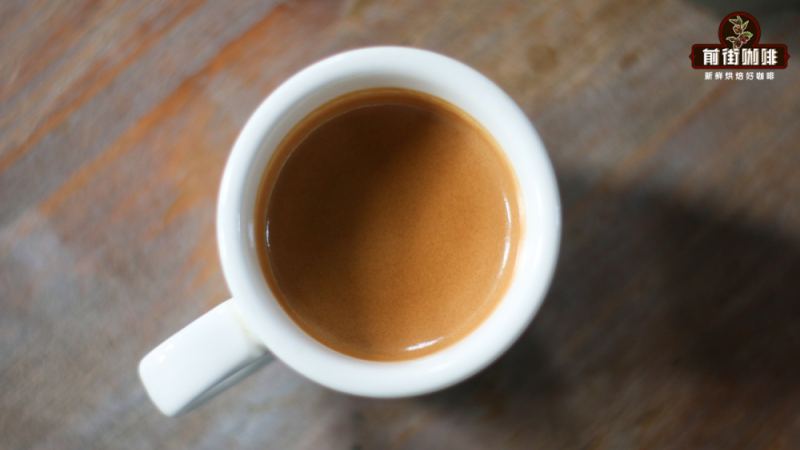
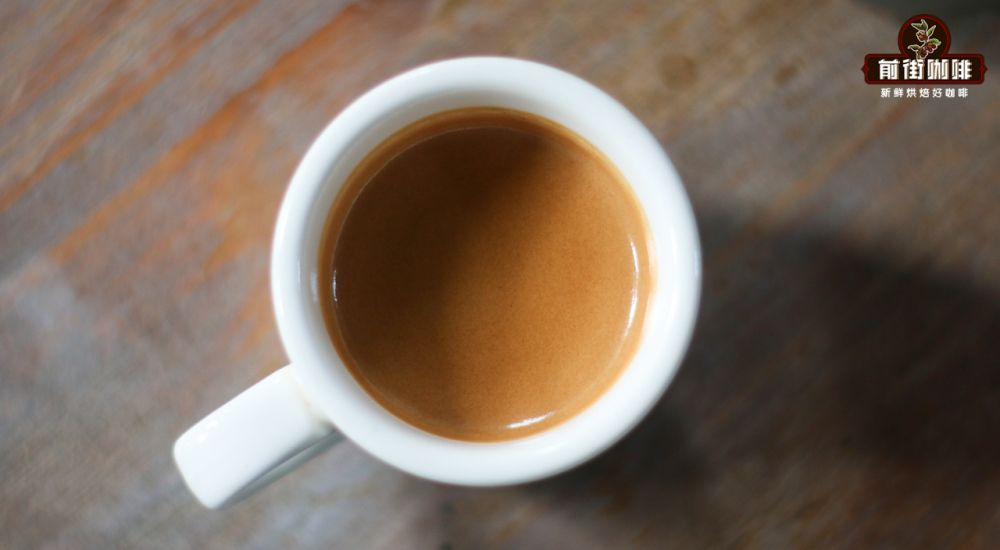
Upon careful observation, it can be found that the freshly extracted espresso is covered with a delicate and dense golden-brown foam. This is what is commonly called coffee oil, also known as Crema, and it is one of the iconic features of espresso.
After coffee beans are freshly roasted, they release a large amount of gas (mainly carbon dioxide). When the espresso machine applies 9 bar of pressure, this carbon dioxide is squeezed out from the surface of the cell walls under the effect of thermal expansion and contraction. The coffee liquid extracted by the hot water also contains some oil-based substances, which wrap the squeezed-out gas in an emulsified manner, thereby forming a dense bubble structure. The lighter bubble groups float up to the surface.
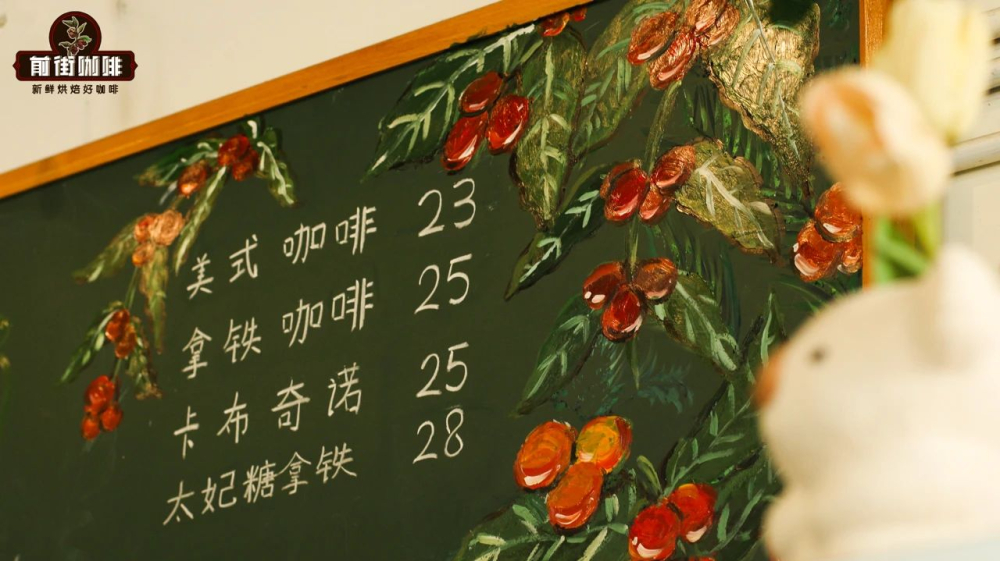
Front Street's Warm Sun espresso has a distinct whisky aroma on the palate, while also presenting vanilla, nutty flavors, and a tropical fruit fermentation note. The various tastes are rich and balanced, with obvious sweet aftertaste and long-lasting aroma. Drinkers can also dilute and soften the strong taste by adding water or milk according to personal preference—after dilution with water, it becomes the common Americano on the menu, full of fresh fragrance; when milk is added, it becomes a latte, showing a chocolatey and creamy sweet aroma.
The above content is compiled by CoffeeHunters, a coffee news website.


