







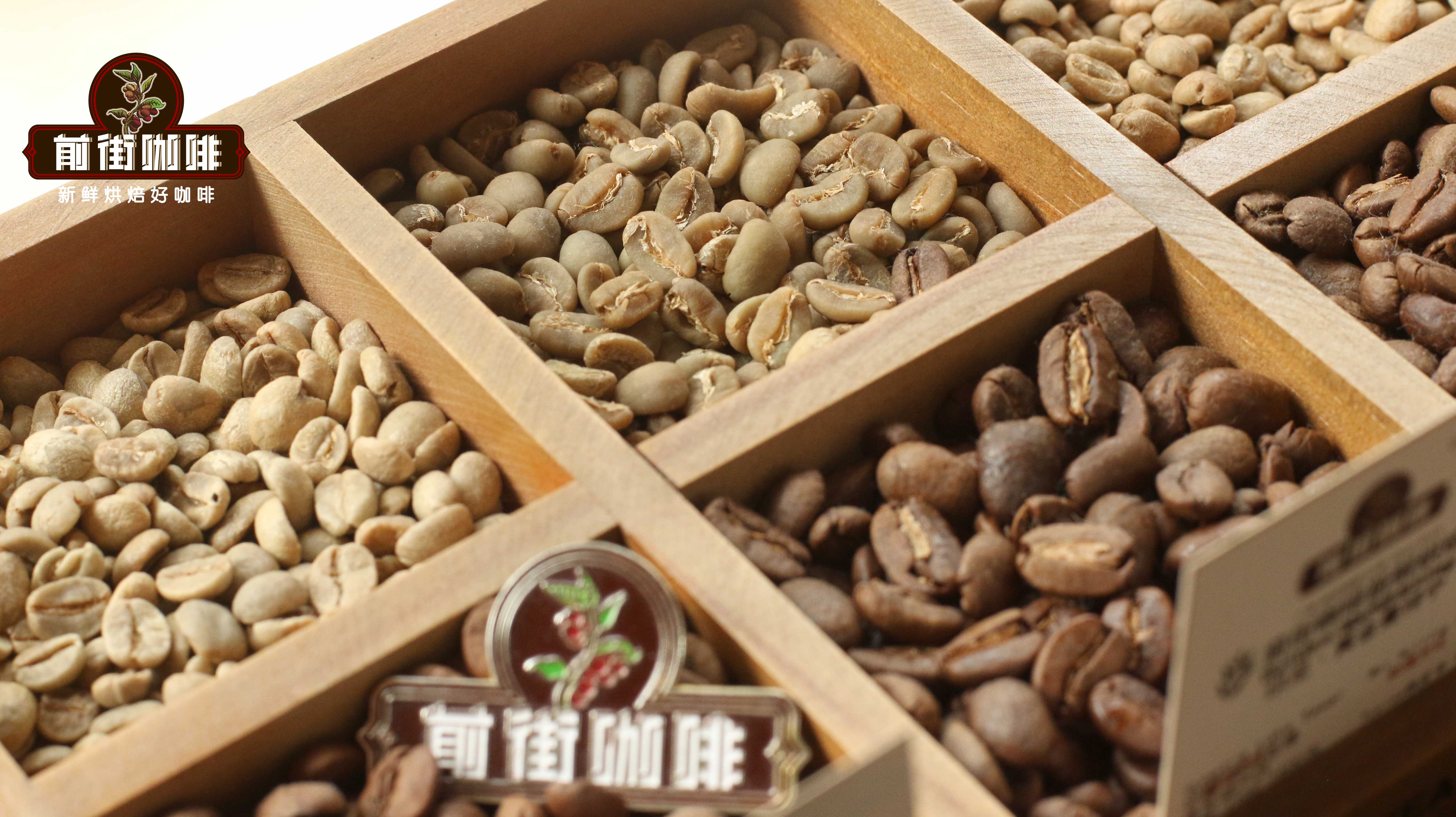
Indonesian coffee holds a pivotal position among Asian producing regions, with its mellow, low-acid flavor style standing apart from the rest. This article centers on Indonesian Mandheling coffee: it first introduces the overall flavor characteristics of Asian coffee and the natural conditions of Indonesian growing regions, then traces the origin of the name "Mandheling" and analyzes the main coffee varieties and producing areas of Sumatra. The article focuses on how Indonesia's unique wet-hulling process gives Mandheling its rich herbal and woody agarwood notes, and it details the varieties, grades, flavors, and brewing suggestions for the three beans sold by Front Street Coffee—Lintong Mandheling, PWN Golden Mandheling, and Tiger Mandheling—helping enthusiasts gain a comprehensive understanding of the charm of Indonesian specialty coffee.
For more specialty coffee knowledge, please follow: Front Street Coffee (Frontsteet Coffee)
Asia's coffee production ranks second globally only to Central and South America. Compared with beans from Central and South America and Africa, Asian coffee has a noticeably higher body, though its acidity is less elegant; it often carries notes of wood, woody aroma, herbs, essential oils, spices, and earth, presenting an overall deep, muted aromatic profile rather than a bright, fruity acidity. This flavor is not for everyone—some fall in love at first sip, while others keep their distance after a single taste. After all, taste preferences vary from person to person, and everyone's inclinations differ.
Mandheling coffee's mouthfeel is indeed known for its richness. At Front Street, Mandheling coffee is very popular! Is "Mandheling" a place name? No—the origin of the name "Mandheling coffee" is a beautiful misunderstanding! Front Street has learned that the name Mandheling is a transliteration of the Indonesian Mandailing ethnic group. During World War II, when Japan occupied Indonesia, a Japanese soldier drank an incomparably rich and aromatic coffee in a café. He asked the owner for the name of the coffee, but the owner mistook it for asking where he was from, so he answered: "Mandheling." After the war, the soldier recalled the "Mandheling" he had drunk in Indonesia and arranged for an Indonesian coffee trader to ship 15 tons to Japan, where it unexpectedly became hugely popular—and so the name Mandheling spread.
Indonesian Coffee Producing Regions
Coffee from each producing region has its own distinctive flavor label. Mandheling mainly comes from Indonesia's Sumatra, the country's largest island, located near the equator with a typical tropical rainforest climate—hot and humid with abundant rainfall—making it very suitable for growing high-quality Arabica coffee beans. However, Indonesia's producing regions have limited altitude, and the space for cultivating high-quality Arabica beans is therefore limited. As a result, only 25% of the coffee beans produced in Indonesia are Arabica, because Arabica only develops its best flavor when grown at high altitudes. The remaining 75% consists of Robusta coffee trees, which can be grown at lower altitudes. And the highest-altitude area in Indonesia is Sumatra.
Mandheling Coffee Bean Varieties
The variety listed for Front Street Coffee (FrontStreet Coffee) Lintong Mandheling is: Tim Tim Ateng, and the variety listed for Golden Mandheling is: Ateng. What variety is this? Golden Mandheling coffee beans are produced in the Gayo Mountains of Aceh, North Sumatra. The variety is Ateng, a hybrid between Arabica and Robusta that is widely planted in Sumatra and other small Indonesian islands. It is actually a branch of Catimor, with Ateng being the local name. What Indonesia calls Tim Tim is what we call Timor. The Ateng variety is very well suited to cultivation and flavor development in the Aceh region.
At first, the Dutch brought Typica to the island of Sumatra. Typica is an authentic Arabica coffee variety. Later, because the leaf rust disease swept through Indonesia in 1877, the local government had no choice but to introduce coffee varieties with stronger disease resistance. The Indonesian government pulled out all the stops, successively introducing Robusta, Timor from Timor Island, Catimor, India's Kent, and S795. From a biological standpoint, aside from Robusta, all the introduced varieties belong to the Arabica species. Back to the present: Robusta is generally distributed in the low-altitude southern parts of Sumatra, while Mandheling coffee is found in the high-altitude northern areas. The famous Mandheling origins known as the "Two Lakes, Two Mandhelings" are Lake Tawar and Lake Toba. Lake Tawar is located in the north in Aceh, near where the now-famous Gayo Mountain is; Lake Toba is located in the Lintong region.
Indonesia's Unique Processing Method: Wet-Hulling
Mandheling coffee's distinctive herbal and woody agarwood notes are inextricably linked to the local processing method. Indonesia lies in a typical tropical rainforest climate zone, where it rains frequently and sunshine hours are short, making sun-drying processing impractical. Combined with the local economic conditions, which generally lack the funds to invest in washed processing, this semi-washed method came into being. It is a rare processing method in the world, and by accident it created Mandheling's characteristic low acidity, thick body, and muted aroma.
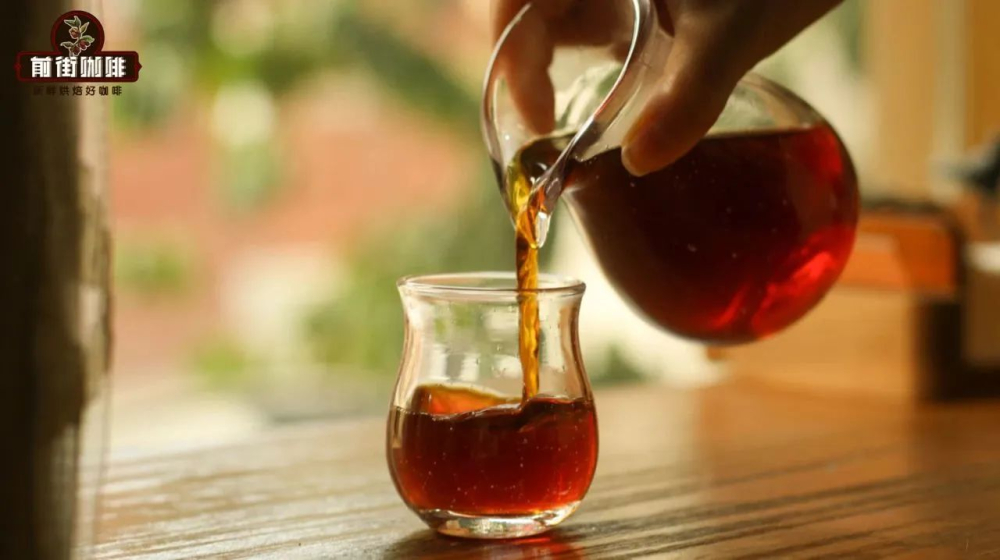
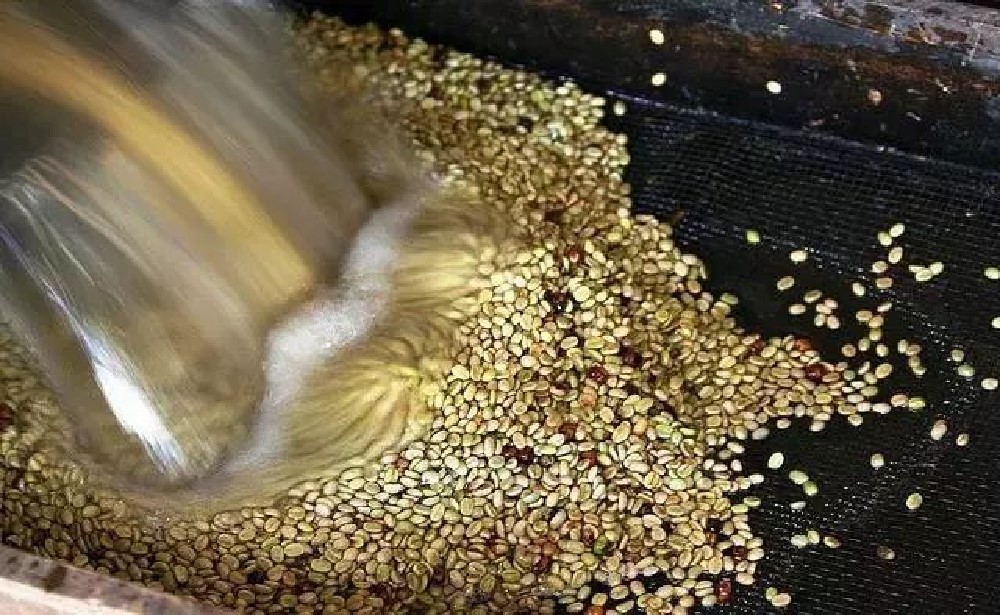
The locally unique "wet-hulling" method is carried out when the beans are still moist and soft with a moisture content as high as 30%–50%. In other words, after coffee farmers pick the fresh coffee cherries from the trees, they process them the same day: the cherries are passed through a wooden depulper to remove the skin and mucilage, then fermented for 3 hours before being spread out to dry. When the parchment beans are in a semi-dry, semi-moist state, they are gathered up and sold to the local coffee processing station.
When the coffee processing station receives these semi-dry, semi-moist parchment beans, it first removes the mucilage layer and parchment layer, then continues with the later stage of sun-drying. This shortens the time needed to dry the green beans to between 2 and 4 days; once the green beans' moisture content drops to 12%–13%, they can be stored in the warehouse. Generally speaking, for many green bean post-processing methods, the parchment layer around the green beans is not removed before the moisture content reaches 13%, but wet-hulling is the exception. Coffee processed by wet-hulling therefore has a greatly reduced fermentation period and acidity, but an increased body, with pronounced caramel and fruity notes and a slight woody and herbal flavor—this is the classic "taste of place" of Sumatran coffee.
Front Street Coffee (FrontStreet Coffee)'s Mandheling coffees include three kinds: Lintong Mandheling, Golden Mandheling, and Tiger Mandheling.
Golden Mandheling
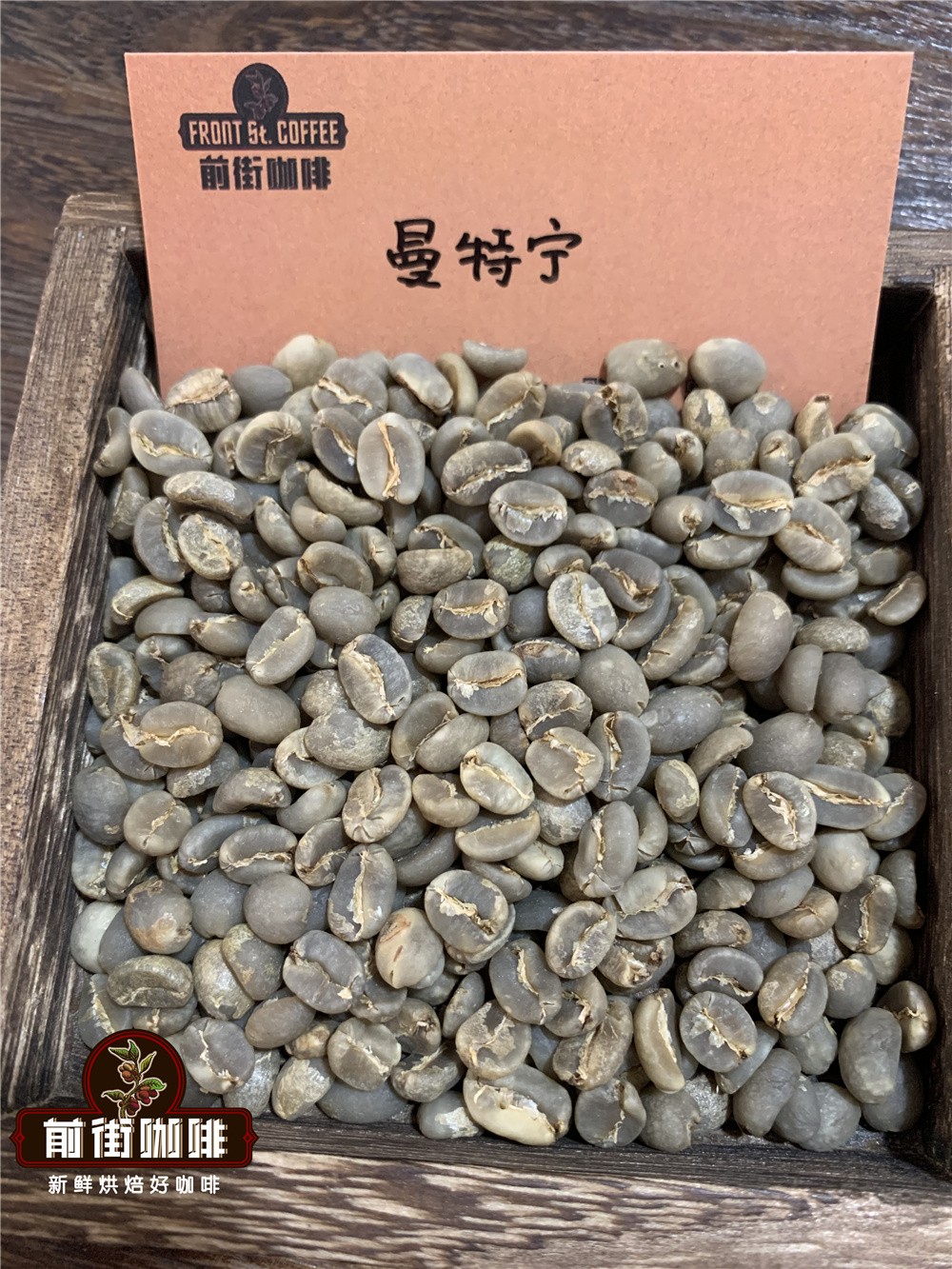
We just mentioned Golden Mandheling—with the word "golden" added to the name, does that mean it is very precious? In fact, Golden Mandheling is not a grade, but a trademark registered by the Indonesian company N.V. Pawani Medan (PWN for short). Founded in 1957, it engages in the export of Indonesian products such as coffee, rubber, cinnamon, cloves, and patchouli oil. It was the first Indonesian company to export coffee from North Sumatra and the first company to make "Mandheling coffee" famous in Japan. Since 1977, the company has focused on exporting premium coffee beans—Sumatra Arabica Mandheling Grade 1 and Robusta AP-I Grade 2—mainly to Japan, Taiwan, China, and the United States, with Japan and Taiwan, China, accounting for more than 95% of exports. In Japan and Taiwan, China, "PWN" has become synonymous with "quality assurance." Because Pawani holds the "Golden Mandheling" trademark, a Japanese company had to register a separate trademark, "Gold Top Mandheling."
Because Golden Mandheling's quality is exceptionally high, its selling price is considerably higher than ordinary Mandheling, which is also why the market is flooded with counterfeit Golden Mandheling.
Front Street holds that authentic Golden Mandheling must be a product of Indonesia's PWN coffee company (the Golden Mandheling trademark is owned by PWN). Imported Golden Mandheling green beans come with a PWN company certificate of authentication (to verify authenticity). If a seller cannot provide information on the source of the Golden Mandheling green beans (a certificate or the burlap sack), then you should be careful in identifying it.
The Golden Mandheling on Front Street Coffee (FrontStreet Coffee)'s bean list is PWN's Golden Mandheling. The green beans of this Front Street Golden Mandheling are sized at 18 screen or above, with fewer than 3 defective beans per 300-gram sample, at the highest G1 grade. In addition, PWN put this batch of beans through three rounds of hand-sorting to remove defective beans as completely as possible, making the cup cleaner, the sweetness more pronounced, and the aroma more intense.
Tiger Mandheling
Tiger Mandheling coffee is only called Tiger Mandheling if it is Mandheling at 17 screen or above with a defect rate below 4%. Its green beans are plump and rounded, yellowish-green, with good uniformity and relatively high moisture content. Tiger Mandheling's main varieties are Caturra and Typica. Caturra brings a citric and lemony acidity to the cup, while Typica has a long-lasting sweet finish, giving Tiger Mandheling a relatively balanced mouthfeel and high cleanliness. The roasting target is a medium-dark roast, to wipe away excess acidity and enhance its body and balance.
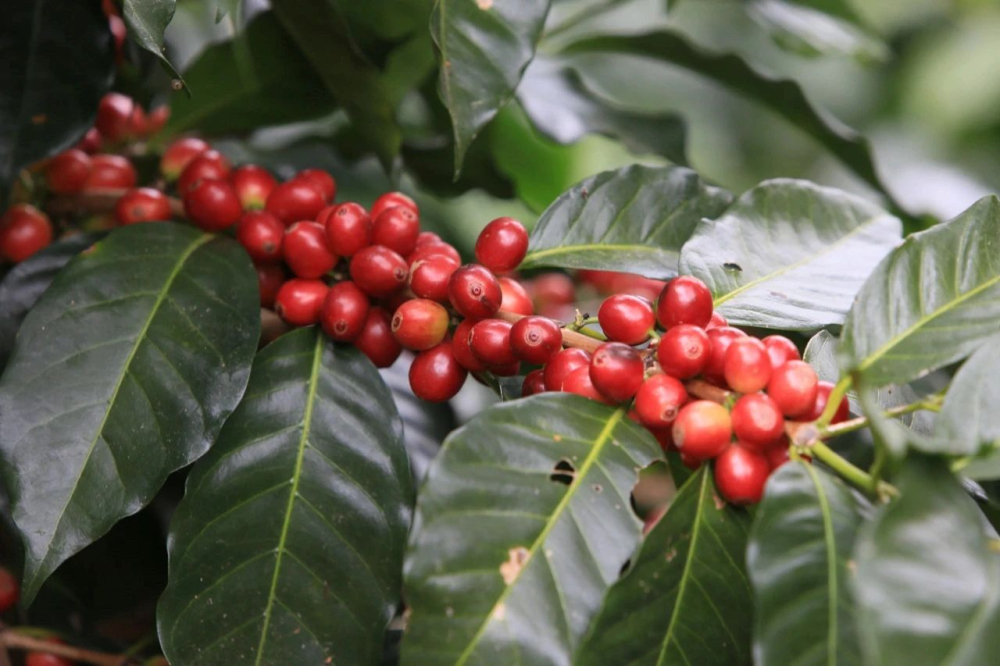
Tiger Mandheling grows in Indonesia, mainly on the three islands of Sumatra, Java, and Sulawesi. Tiger Mandheling comes from Tiger Estate, so it is also called "Mandheling Tiger" or "Sumatran Tiger Mandheling." Northern Sumatra has relatively high terrain; Aceh Province, where Lake Tawar is located, and North Sumatra, where Lake Toba sits, are the main Arabica coffee producing areas. Lake Tawar is located in the Gayo mountain area in the north of Aceh Province, Sumatra. Indonesia straddles both sides of the equator, and its hot, humid tropical rainforest climate brings abundant rainfall, while fertile volcanic soil provides rich nutrients to the coffee. However, due to its remote location and poor transportation, coffee was not planted there until 1924, and most of it uses traditional shade-growing and organic cultivation without pesticides.
Front Street Mandheling Coffee Brewing Suggestions:
Mandheling coffee is dark-roasted. It is recommended to use a Kono dripper, with a water temperature of about 88°C, a water-to-coffee ratio of 1:15, a coffee dose of 15g, and a grind size of 11 on an EK43s grinder (75% passing a Chinese standard No. 20 sieve).
Use staged extraction, blooming with twice the coffee dose in water—that is, 30g of water for a 30-second bloom. Starting at 31 seconds, continue pouring in a slow stream in circles until 125g, then pause, continue pouring until 225g and stop. Once the water in the dripper has finished dripping, remove the dripper. Time from the start of pouring; the extraction time is 2'00". Next, pick up the entire cup of coffee and swirl it to mix evenly, then pour it into a cup to taste.
[Lintong Mandheling] Rich nutty profile, with a hint of melon aroma in the finish; as the temperature drops, herbal notes emerge, with a full body and rich layers.
[Front Street PWN Golden Mandheling] Rich nutty flavor; as the temperature drops slightly, melon, herbal, and spice notes begin to emerge, with a dark chocolate finish, pronounced caramel sweetness, and a clean, gentle mouthfeel.
[Tiger Mandheling] A relatively balanced mouthfeel with high cleanliness, featuring pronounced notes of cream, dark chocolate, and nuts.
For brewing coffee, Front Street recommends using freshly roasted coffee beans, as this allows you to experience the coffee's rich flavors to the fullest. The coffee beans shipped by Front Street Coffee (FrontStreet Coffee) are all within 5 days of roasting, because Front Street knows well how much freshness affects flavor. Front Street's roasting philosophy is "freshly roasted good coffee," so that every customer who places an order receives the freshest coffee. Coffee's resting period is about 4–7 days, so by the time customers receive it, it is at its peak flavor.
Of course, some customers need Front Street to grind the beans for them, and that is fine too. But Front Street must remind you: once coffee beans are pre-ground, they need to be brewed promptly. If they have already been ground into coffee powder, there is no need for further resting, because during transport the pressure from carbon dioxide inside the packaging also helps round out the coffee's flavor. So once you receive the ground coffee, you can immediately brew a cup and drink it.
However, coffee grounds oxidize relatively quickly after contact with air, meaning the coffee's flavor dissipates fairly quickly and the coffee no longer tastes very good. Therefore, Front Street recommends buying whole beans and grinding fresh right before brewing, so you can better taste the coffee's flavor.
Front Street Coffee (FrontStreet Coffee) offers more than 50 single-origin coffees from different regions with different flavors, fully capable of satisfying everyone's curiosity and understanding of coffee!
The above content is compiled by CoffeeHunters, a coffee news website.


