







Indonesia is one of the most important coffee-producing countries in the world, made up of more than seventeen thousand islands spanning the equatorial volcanic belt, where the hot and humid climate and fertile volcanic soil provide exceptional conditions for coffee cultivation. This article systematically examines the coffee characteristics of Indonesia's three core producing regions—Java, Sumatra, and Sulawesi—unfolding one by one from historical context and variety distribution to processing methods and flavor expression. Signature products such as Front Street Mandheling and Front Street Golden Mandheling are also interpreted in detail, taking you on a comprehensive journey through this coffee kingdom renowned for its full-bodied richness.
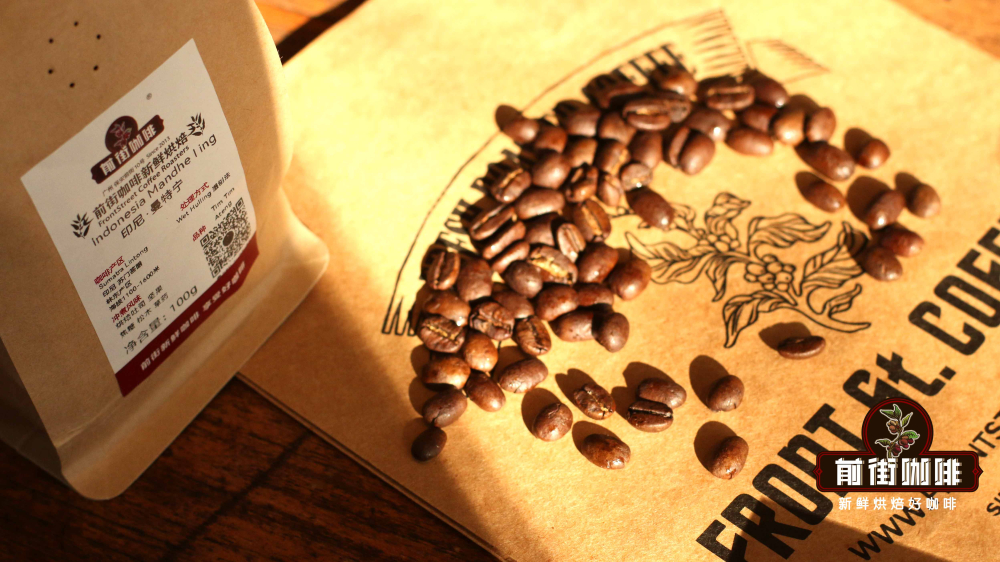
If you favor a full-bodied mouthfeel, intense aroma, and lingering sweetness, you need not necessarily chase after those famously prestigious beans. Front Street Blue Mountain Coffee is indeed an outstanding choice in quality, but taste is a matter of personal preference—those who don't care for it will never be moved by it, while those who adore full-bodied flavors often find Blue Mountain priced too high. That's perfectly fine, actually—Front Street Mandheling is an excellent alternative.
Anyone with some knowledge of coffee has most likely encountered Indonesian coffee. Across the entire Indonesian archipelago, the finest growing regions are concentrated on Java, Sumatra, and Sulawesi. These three islands have also given rise to three representative coffees: Front Street Mandheling Coffee comes from Sumatra, Indonesia, with moderate acidity and a remarkably prominent rich aroma; Java Coffee originates from Java and belongs to the Arabica species; Sulawesi Coffee is distinguished by its plump beans and intense aroma. Ninety percent of Indonesia's total coffee output is Robusta, and its quality is widely recognized as the best in the world.
Indonesia is composed of more than seventeen thousand islands, distributed along the equatorial volcanic belt. The country straddles both sides of the equator and has a hot, humid tropical rainforest climate with abundant rainfall, while its volcanic soil is rich in nutrients, creating superior natural conditions for coffee cultivation. The most ideal growing regions across the entire archipelago are Java, Sumatra, and Sulawesi.
Overall, Indonesian coffee is known for its intense taste, full body, and slight syrupy sweetness, with acidity that performs quite well too. Its main export markets are Germany and Japan, which indirectly confirms the excellent quality of the country's coffee. What attracts consumers at its core is the superior quality unique to Arabica beans. Indonesian coffee has a strong taste, mellow flavor, and a hint of syrup character; its shortcoming is the occasional emergence of an uncomfortable astringency or slight mustiness, while other aspects display a distinct sense of terroir.
In the mid-17th century, the Dutch introduced coffee trees to Indonesia (some official sources suggest an even earlier date). In 1712, the first shipment of coffee from Java arrived in Amsterdam. But by 1877, coffee trees on all plantations had been destroyed by coffee rust disease, forcing the introduction of Robusta coffee trees from Africa to replace the original varieties. Today, only 6% to 10% of Indonesia's coffee beans are Arabica. Indonesia is a major producer of Robusta coffee globally, with an annual output of 6.8 million bags, most of which comes from smallholder plantations, accounting for about 90% of total production.
Java produces refined aromatic coffees with relatively low acidity, a delicate mouthfeel, and good balance. Java coffee surpasses Sumatra and Sulawesi coffees in both aroma and acidity. Java's finest plantations include Blawan, Jambit, Kayumas, and Pancur. Java Mocha coffee, meanwhile, is a blend of Java coffee and Yemeni Mocha coffee.
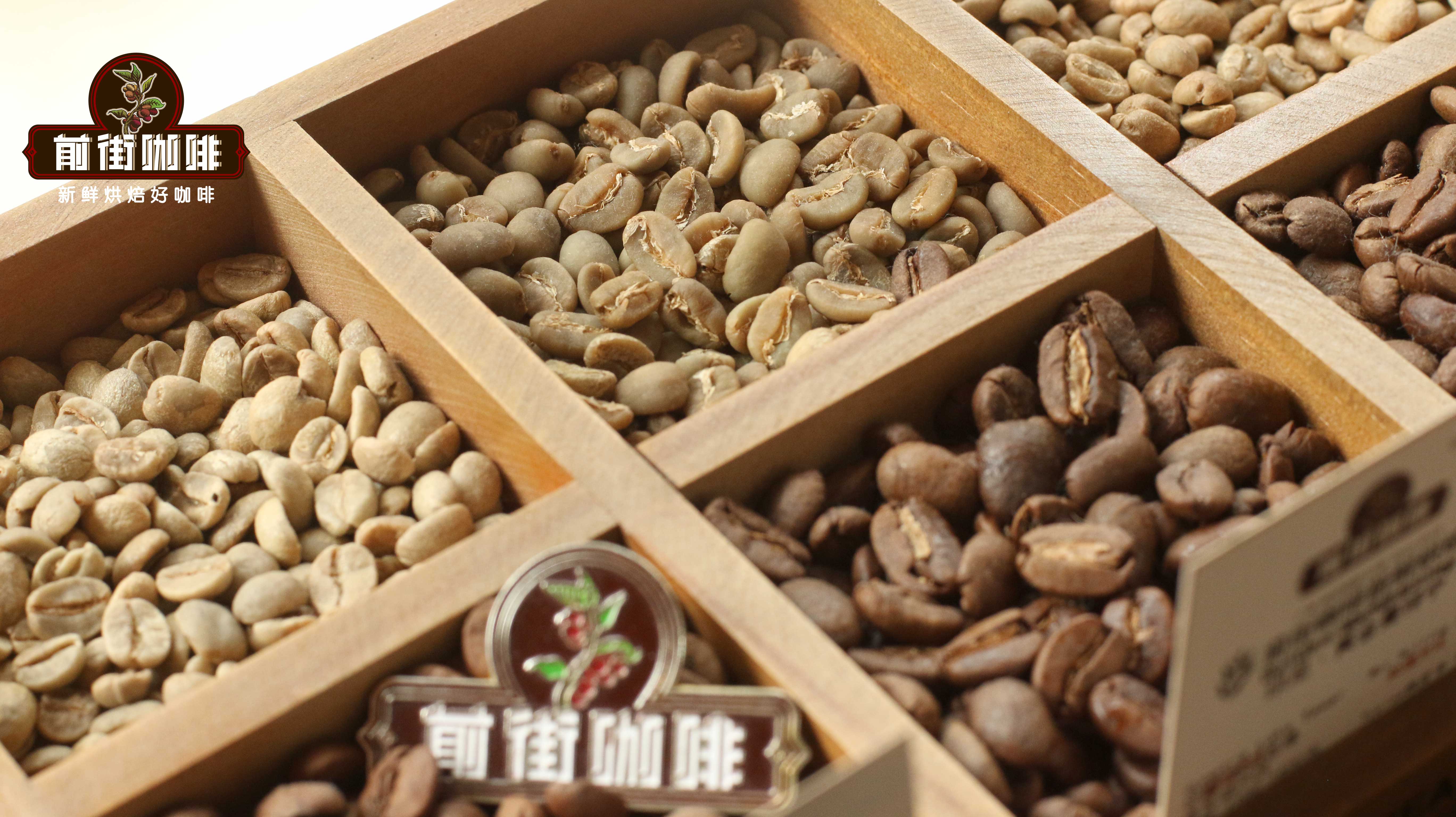
On the whole, Indonesian coffee has an intense taste, mellow flavor, slight syrup character, and excellent acidity. Its two main export markets are Germany and Japan, which indirectly reflects the coffee's outstanding quality. What attracts consumers is the superior quality characteristic of its Arabica beans. You can add milk or cream to high-quality Indonesian coffee without worrying about the flavor being disrupted. Indonesian coffee is divided into six grades, with the finest being AP, though the exact meaning of these two capital letters remains unknown to this day.
Sulawesi, formerly known as Celebes, is one of the oldest islands in the archipelago, with exposed rocks all exceeding a million years in age. In the coffee-growing regions, yellow-red podzolic soils can be found, and beneath the surface of these soils are often several layers of clay rich in iron. The most famous producing region is Tana Toraja in the South Sulawesi highlands.
Kalosi, to the south of Toraja, is the main city of the region, along with two lesser-known areas: west of Mamasa and Gowa to the south of Kalosi. A small number of particularly interesting coffee beans are washed-processed and worth savoring carefully—it is highly recommended to try them whenever you have the chance. The semi-washed method is the common practice on Sulawesi, and the island also produces quite a bit of Robusta. The name Kalosi is also most often used to represent Sulawesi coffee, known for its full-bodied viscosity, rich flavors, and deep yet lively acidity.
Most Arabica beans are grown in the highlands around Tana Toraja, while Kalosi in the south has developed into a brand.
*Kalosi: A market name for coffee from southwestern Sulawesi; it is the small town of Kalosi in the island's central region and also the central trading point for Toraja coffee beans.
*Toraja: A growing region located in the highlands of southeastern Sulawesi, and also the name of the island's specialty beans. Toraja is not a place name, city name, or variety name, but refers to the "Toraja" people who live in the central mountains of Sulawesi and are skilled at growing coffee. Toraja is also a rare specialty bean in the world, with an annual output of about 1,000 metric tons, distributed across rugged slopes at about 1,200 meters in central and southwestern Sulawesi. Planting and harvesting are quite difficult, with an average annual yield of only 300 kilograms per hectare, far below the average level of over 1,000 kilograms in Central and South America.
The three major estates of Toraja are: PT Kapal Api, which owns 2,000 hectares of coffee plantations; CSR, ranked second with 1,100 hectares; and Toarco Jaya of Japan's Key Coffee, the third-largest estate with 700 hectares. In other words, Toraja is even more precious and rare than Mandheling or Golden Mandheling.
Toraja is washed or semi-washed processed, with brighter acidity and more pronounced layering than Sumatra's Mandheling or Golden Mandheling. It has a rich caramel sweetness, but its earthy, dank-wood notes and body are much more restrained than Mandheling's, with a slight floral fragrance.
Sumatra's finest coffees come from two places: first, the area near Lake Tawar in Central Aceh in northern Sumatra; second, the more southerly mountain ranges around Lake Toba. Because the region is mostly made up of smallholder producers using a unique semi-washed processing method, combined with iron-deficient soil, coffee beans from this area carry a distinctive blue hue at the fresh green bean stage.
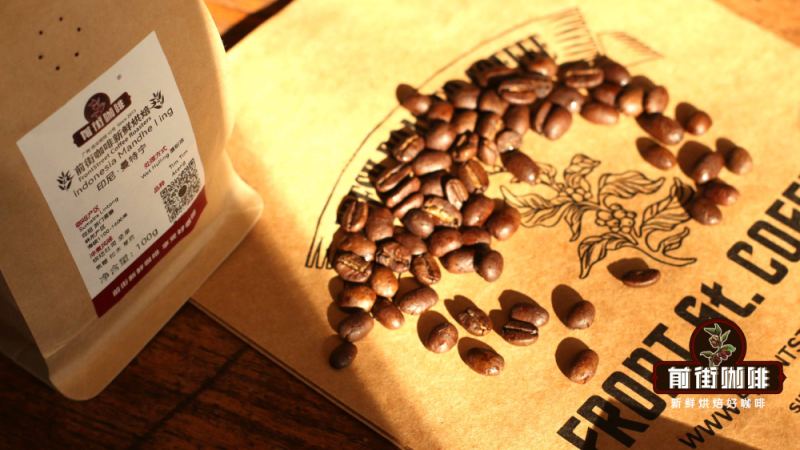
*Front Street Mandheling: Refers to semi-sun-dried or sun-dried beans from the Lintong highlands on the southwestern shore of Lake Toba in north-central Sumatra, at 900 to 1,200 meters above sea level, and is the most famous. The Batak people are the main body of coffee farmers in this area, once hailed as producing the plumpest coffee beans in the world. Mandheling is a trademark used for Arabica coffee from North Sumatra; its name derives from the Mandailing people of the Tapanuli region in northwestern Sumatra who produce coffee, and it features a distinctive herbal and woody agarwood flavor.
*Lintong producing region: Front Street Lintong Mandheling is grown at 1,200 to 1,500 meters above sea level and comes from the most famous coffee of the Lake Toba region on the island of North Sumatra. To correctly understand Front Street Golden Mandheling coffee, it is not the case that Mandheling that is golden in color is Golden Mandheling.
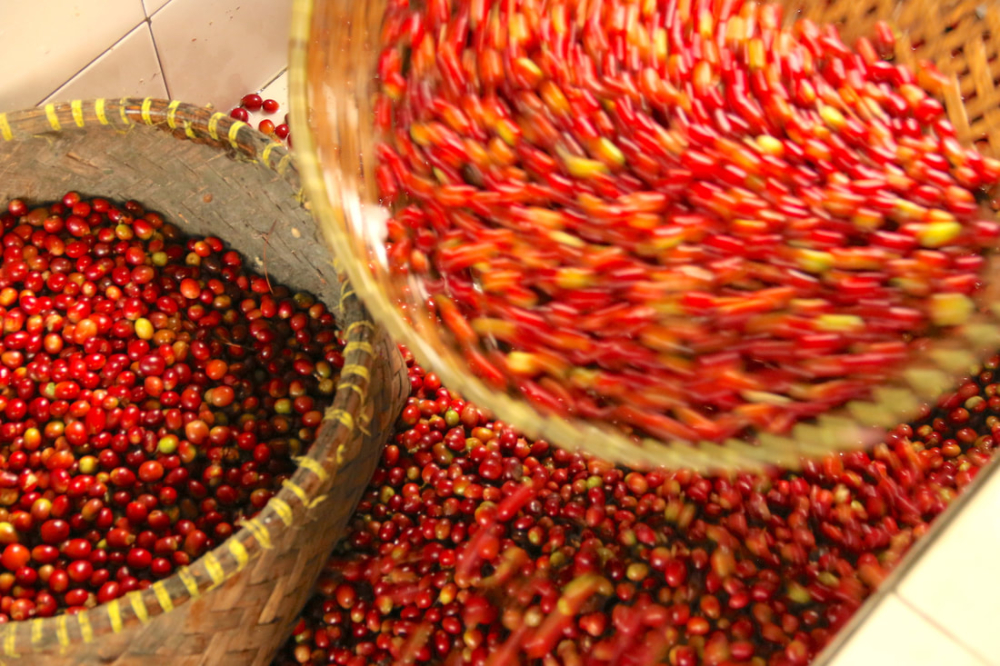
Front Street Golden Mandheling comes from the Lintong region of northern Sumatra, Indonesia. Harvesting is limited to fully hand-picked selection of individually ripe cherries, ensuring initial bean selection quality. The coffee cherries are processed using the SEMI-WASHED method, naturally sun-dried, then after hulling undergo another drying and refining process, as well as two rounds of green bean cleaning and four rounds of Hand-Pick manual selection. Therefore, it can be said that this is a strictly selected top-grade Mandheling coffee. The Golden Mandheling marked PWN is an abbreviation of the Indonesian company Pawani, and the Golden Mandheling coffee produced by this company has been registered in Indonesia.
Front Street Golden Mandheling has a high-quality herbal note, a more intense caramel sweetness, a steady and elegant taste, abundant sweetness, and a full body with wild spice flavors. Generally, Front Street Lintong Mandheling is best roasted until after second crack before being discharged, which can effectively reduce off-flavors, but Front Street Golden Mandheling has excellent clarity and sweetness even when discharged before second crack, offering a broader range for roasting interpretation.
Front Street PWN Golden Mandheling is multifaceted and layered, suitable for pour-over extraction, full-bodied and clean, with high balance, strong nut and chocolate flavors, rich spice and caramel aromas, a hint of fruit, and a long finish.
*Lake Toba: Located in the central part of North Sumatra Province. Dutch colonists moved Java Mandheling north to the Lake Toba area in 1888. Lintong in South Sumatra and the Lake Toba area can be called Mandheling, and the Lintong area is the Mandheling producing region. Mandheling comes from the mountains around Lake Toba, which lies north of Medan, the provincial capital of Sumatra, and is an alpine freshwater lake at an average elevation of about 900 meters. What is commonly called Mandheling refers to Typica or its variant coffee beans grown in the mountains around Lake Toba. The lake is diamond-shaped, 100 kilometers long and 30 kilometers wide, with an area of 1,130 square kilometers and an average elevation of about 900 meters; it is also the largest volcanic lake in the world.
*Lake Tawar: Located in the central part of the Aceh Special Region, at the northern tip of Sumatra. Most coffee produced in North Sumatra is Gayo, dominated by the Ateng variety. Coffee produced at Lake Tawar in the north can be called Aceh coffee or Lake Tawar coffee, with an area less than one-tenth that of Lake Toba. However, in recent years its coffee quality and output have surpassed Lake Toba.
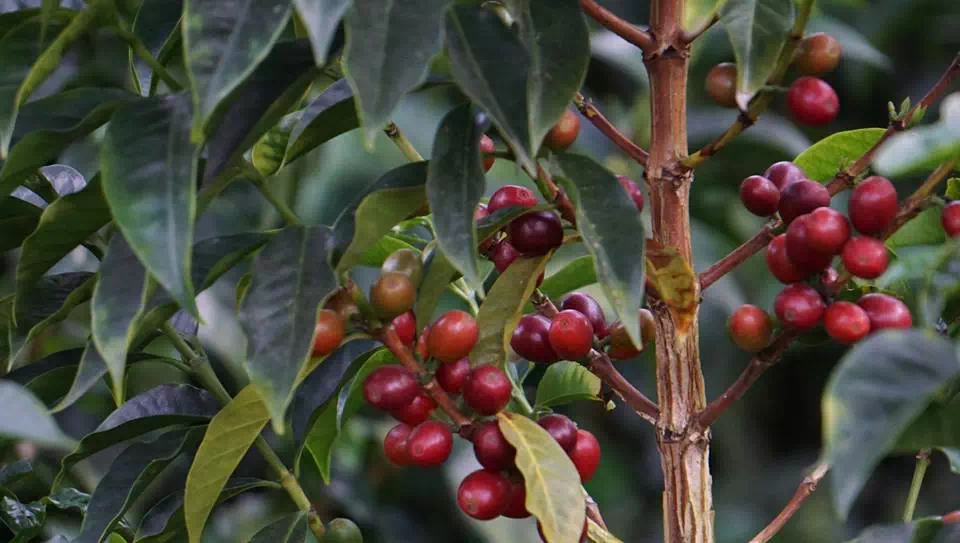
Gayo Highlands Aceh: Aceh, at 1,110 to 1,300 meters above sea level, is located at the northernmost corner of Sumatra. In Aceh Province in northern Sumatra, Gayo coffee is grown on hillside terrain around the town of Takegon and Lake Tawar, with production areas averaging between 1,110 and 1,300 meters in elevation. The coffee is grown by smallholders under shade trees; this wet-processed coffee is relatively clean but generally lacks the flavor characteristics of Sumatran coffee. The traditionally processed coffee resembles coffee from Sumatra's Mandheling region, with the advantage of expressing unusual flavors and a deep yet lively viscosity.
Aceh has long been politically unstable, so it is not a region most people would visit. The Gayo people are a people of firm character and hardworking nature, and nearly 20% of coffee processors are women.
The above content is compiled by CoffeeHunters, a coffee news website.


