







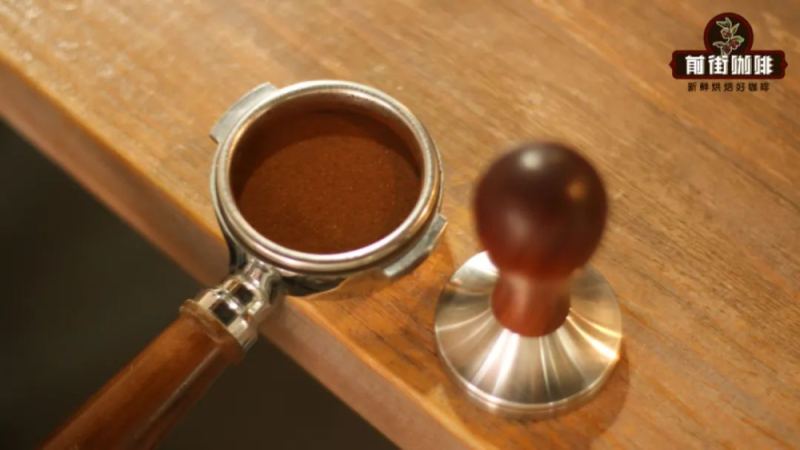
Tamping is a seemingly simple yet highly controversial step in espresso extraction. Some people give the tamper a gentle twist, just enough to make contact, while others put their whole body into it, determined to compress the puck to the extreme. Exactly how much force should be used? Do different grind sizes correspond to different tamping strategies? Front Street Coffee conducted two sets of comparative experiments using coarse and fine ground coffee, tamping with a regular force of 1.5kg and a full-force press of about 9kg respectively, and recorded the difference in time required to extract 40ml. The results showed that fine grinds are quite sensitive to changes in tamping force, while coarse grinds are almost unaffected. This article will use experimental data to help you understand the true role of tamping force and find the right tamping method for different grind states.
For more specialty coffee knowledge, welcome to follow: Front Street Coffee (Frontsteet Coffee)
Watching a barista tamp is actually quite interesting. Every barista has a different understanding of tamping, so their movement styles naturally vary.
On the point of "leveling the coffee bed," everyone basically agrees. Once the coffee bed is tilted or uneven in height, it easily causes channeling, and the extracted flavor will naturally be uneven as well. What truly divides baristas is this: exactly how much pressure should be applied to the coffee grounds to be considered appropriate?
The Two Major Schools of Tamping
One school of baristas believes that as long as the puck is leveled and compacted, that is enough. They usually just gently rotate the tamper and add a little pressure, with the whole motion smooth, elegant, and unhurried. In their view, no matter how hard you press, compared with the high-pressure water flow of the espresso machine, this tiny difference in compactness is negligible.
The other school firmly believes that great force must be used to press the puck completely solid. You will see their entire arm bulging with veins, pressing down with enough force as if trying to lift themselves off the ground, as if declaring: only one of the table and the coffee grounds can be flat. Their logic is that tamping force can directly affect flow rate, and the harder you press, the more even the extraction.
So, exactly how much force should be used for tamping?
Tamping Experiment
Front Street prepared to use two grind settings, coarse and fine, each for a set of comparative experiments, applying different pressure in each set to tamp the puck, to see whether tamping force really needs to be deliberately controlled.
The experiment used Front Street Classic Espresso Blend coffee beans, which have excellent crema performance. This blend is composed of beans from three origins: Brazil, Indonesia, and Vietnam. It uses a dark roast, which maximizes the coffee's rich aroma and also makes it easy for everyone to extract abundant, dense crema. Whether making an Americano diluted with water or a latte paired with milk, it is very suitable. It can be purchased from the Front Street Taobao store or the Front Street Tmall flagship store.
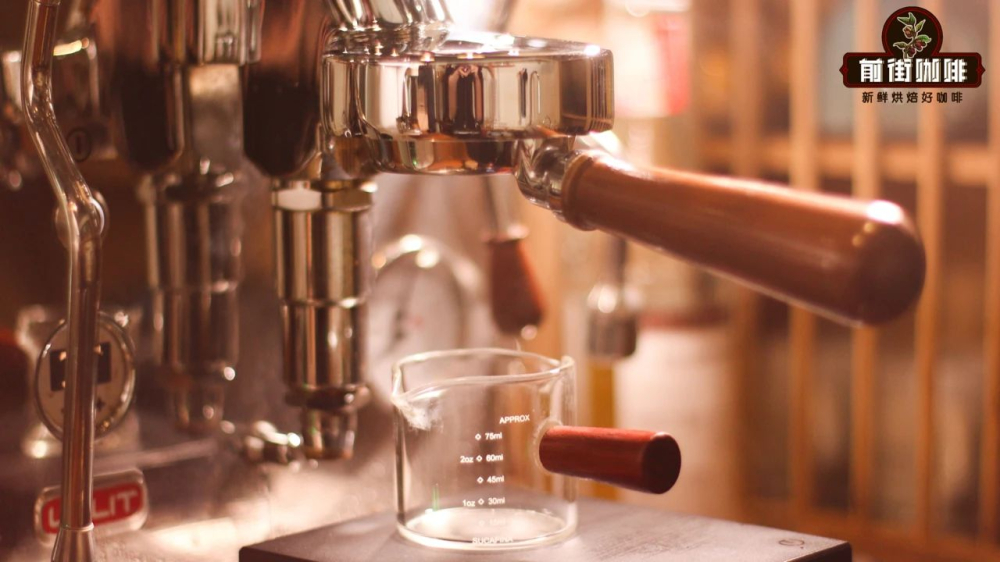
The grinder used in the experiment was the Galileo Q18, with a dose of 20g and a target yield of 40ml. The fine grind setting was set to 1.5, and the coarse grind setting was set to 2.5. By comparing extraction times, we can determine whether tamping force changes the extraction result.
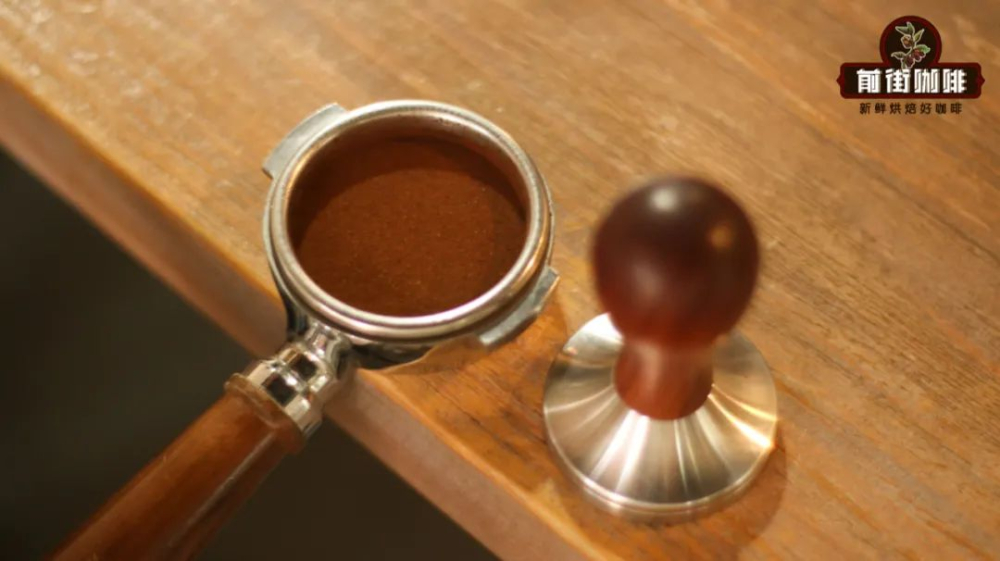
(The left side of the image shows coffee grounds ground at setting 1.5, and the right side shows coffee grounds ground at setting 2.5.)
Fine Grind Tamping Comparison
Using setting 1.5, 20g of coffee grounds were ground. After distributing the grounds, tamping was performed with 1.5kg (regular) force and full force respectively.
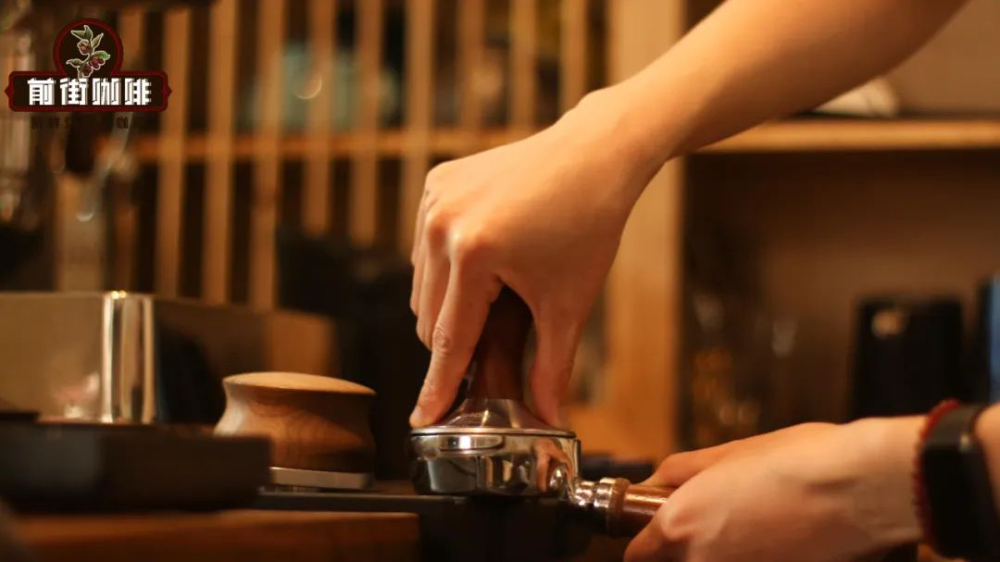
(The maximum capacity of the electronic scale is 3kg, so a neighbor's body weight scale was borrowed. The weight during full-force tamping was about 9kg.)
The 20g puck tamped with 1.5kg force took 30 seconds to extract 40ml of liquid, while the puck tamped with full force took 33 seconds. To prevent changes in the coffee grounds' condition from affecting the results, the extraction was repeated once, and the time was still 33 seconds. It can be seen that a fine-grind puck indeed produces extraction differences due to different tamping forces.
Coarse Grind Tamping Comparison
Likewise, after distributing the grounds, tamping was performed with 1.5kg and full force respectively. The results were surprisingly consistent: the time to extract 40ml of liquid remained at 20 seconds (because the grind is coarser, the extraction time is naturally shorter).
Experimental Conclusion
From the above experiments, it can be seen that differences in coffee grounds density lead to different amounts of force being required for the puck to reach a compacted state.
Specifically, in the fine grind experiment, different tamping forces produced different results. The reason is that the coffee particles are smaller, so greater force is needed to press them into a compacted state. A tamping force of 1.5kg is clearly not enough; greater force is needed to press the puck to its most compact state.

If we slightly increase the force to 2kg, then the extraction time will be consistent with that of the full-force tamped puck. This is because at that point the two pucks have reached the same degree of compactness, so the required extraction time is naturally the same.
The coarse grind group confirms this well. Because the gaps between coffee particles in the puck are larger, 1.5kg of pressure is already enough to make the puck very compact, so even if you use full force to tamp, the final extraction result is almost the same as with 1.5kg. Therefore, we can appropriately adjust tamping force according to different grind sizes—the finer the grind, the slightly greater the force that can be applied.
The above content is compiled by CoffeeHunters, a coffee news website.


