







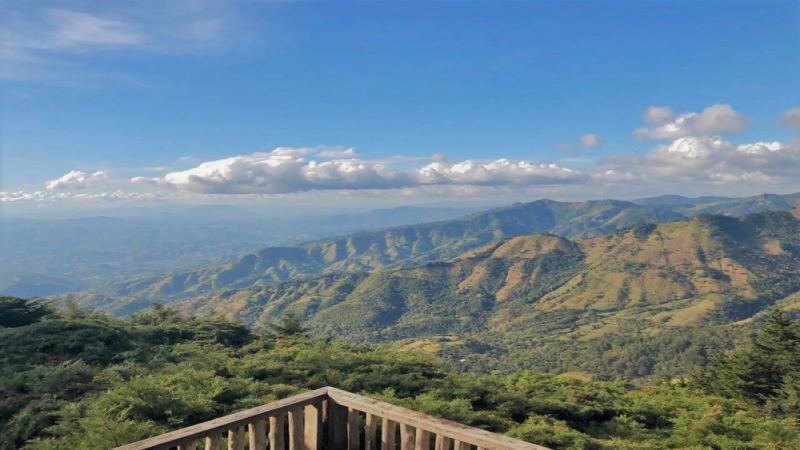
Although El Salvador is the smallest country in Central America, it boasts nine major coffee-producing regions and a rich diversity of varieties. From its introduction in the 18th century to the present day, the coffee industry has weathered the shift away from indigo, the impact of civil war, and the onslaught of leaf rust. Today it is renowned in the specialty coffee world for Bourbon, Pacas, and the hybrid variety Pacamara. This article will guide you through the historical trajectory of Salvadoran coffee, its main producing regions, and the characteristics of its varieties. Using Pacamara as an example, we will share Front Street Coffee's pour-over brewing parameters and flavor experience—perfect for coffee enthusiasts who want to gain a deeper understanding of this Central American origin's unique charm.
For more specialty coffee knowledge, please follow: Front Street Coffee (Frontsteet Coffee)
Although El Salvador is the smallest country in Central America, it has no shortage of coffee-producing regions. In recent years, outstanding specialty coffees from El Salvador have continually appeared on the market, leaving a lasting impression on many. Next, Front Street will take you into the world of Salvadoran coffee.
El Salvador's Coffee History
After reviewing the available information, Front Street has learned that coffee cultivation in El Salvador can be traced back to the mid-18th century, and the country's coffee industry has been closely intertwined with the nation's development trajectory.
During the colonial era, indigo was the first agricultural product in El Salvador's history. It is a natural dye, typically processed and extracted from the leaves of a plant called "Jiquilite." For most of the 18th century, indigo production was almost entirely dominant. However, the European Industrial Revolution gave rise to the synthetic dye industry, and this traditional craft quickly lost its competitiveness.
According to relevant records, coffee was introduced to El Salvador between 1779 and 1796, with the earliest coffee trees planted on the land of two farmers from Ahuachapán. Although coffee arrived in this land in the 18th century, it was not until the mid-19th century that the government began to introduce measures to support and promote domestic coffee cultivation. In the 1930s and 1940s, driven by credit policies favorable to coffee growers, the entire industry gained strong momentum, and coffee once accounted for more than ninety percent of El Salvador's total agricultural exports.
From 1857 onward, coffee-growing areas gradually expanded across all of El Salvador. The spread began in Ahuachapán, then extended to Santa Ana and Sonsonate, and was subsequently introduced to western San Vicente, the Berlín mountains, and the area around Volcán Chaparrastique in San Miguel. To this day, vast coffee plantations have spread throughout El Salvador, becoming the primary crop for many farmers.
The modernization of Salvadoran coffee cultivation began with the high prices of the 1950s. Farmers began intercropping coffee trees with other crops to create shade, while applying fertilizers and moderately increasing planting density to concentrate on boosting productivity. As a result, El Salvador rose to become the world's fifth-largest coffee producer and fourth-largest coffee exporter by the mid-1970s, with a harvest reaching 5 million quintals.
However, from the 1980s to the 1990s, civil war broke out in El Salvador. Large numbers of individual farmers suffered violent oppression from both guerrilla forces and the military. Coffee sales and exports were forced into nationalization, and farmers had to halt investment in their farms. This led to a sharp decline in Salvadoran coffee production and prices between 1997 and 2001. According to ICO data, the country's coffee production fell by more than 34% during this period. In 2013, coffee leaf rust spread nationwide, and only 3% of the coffee trees planted in El Salvador were resistant to rust, causing production in the 2014 harvest season to plummet by nearly 60%.
It was not until 2014 that the agricultural administration led by Minister of Agriculture and Livestock Lic. Orestes Ortéz decided to revitalize coffee cultivation, establishing a dedicated CENTA coffee department to strengthen scientific and technological support. This department assembled a team of 80 technicians. Under the guidance of Dr. Adán Hernández, a Salvadoran coffee cultivation expert, they not only provided fungicides to address the coffee tree rust problem but also developed new rust-resistant varieties to supply to farmers, helping coffee growers renovate their plantations and improve both quality and yield.
El Salvador's Coffee Regions and Varieties
According to statistics, El Salvador's coffee planting area currently exceeds 130,000 hectares, of which about half consists of low-altitude coffee farms, 33% is mid-to-high-altitude coffee, and only the remaining 16% is high-altitude coffee. Among all growers, 85% are smallholders operating less than 7 hectares, with only a small portion cultivating more than 7 hectares.
El Salvador has nine major coffee-producing regions: Apaneca, Apaneca Llamatepec, El Balsamo-Quetzaltepec, Cacahuatique, and Santa Ana in the southwest; Chalatenango, Chichontepec, and Metapan in the north-central area; and Tecapa-Chinameca scattered among the river valleys.
Although Typica was the first Arabica variety planted on a large scale in El Salvador, due to the impact of leaf rust, most farms later switched to Bourbon coffee in the 19th century. By the mid-20th century, Bourbon mutated into Pacas. After ISIC conducted pedigree tracing and vigorously promoted its cultivation, Bourbon and its variant Pacas have now become the mainstay varieties in Salvadoran coffee farms. Among them, Bourbon accounts for more than sixty percent of the planting area, while Pacas accounts for nearly a quarter of the country's coffee production.
However, compared to these two common varieties, the one that has truly earned a place in El Salvador's COE through high-quality flavor is the increasingly famous Pacamara. This is a large-bean variety developed and released by the Salvadoran Coffee Research Institute (ISIC) through crossbreeding Pacas from El Salvador with Maragogype, a Typica variant from Brazil. This variety retains the excellent cup quality of Pacas while inheriting the large bean size of Maragogype. Its flavor features lively and bright acidity, sometimes presenting biscuit-like notes, sometimes a juice-like texture, with excellent body and creamy mouthfeel.
Front Street Coffee (FrontStreet Coffee): El Salvador Pacamara Coffee Beans
Region: Sonsonate Izalco Farm: Finca Ataisi Grade: SHG Altitude: 1,800 meters Variety: Pacamara Processing Method: Washed Flavor: Nuts, chocolate, cream, strawberry jam, passion fruit
Flavor Characteristics of Salvadoran Coffee
Front Street Brewing Recommendations
Dripper: V60
Water Temperature: 90°C
Coffee-to-Water Ratio: 1:15
Grind Size: Fine granulated sugar coarseness (80% passing rate on Chinese Standard No. 20 sieve)
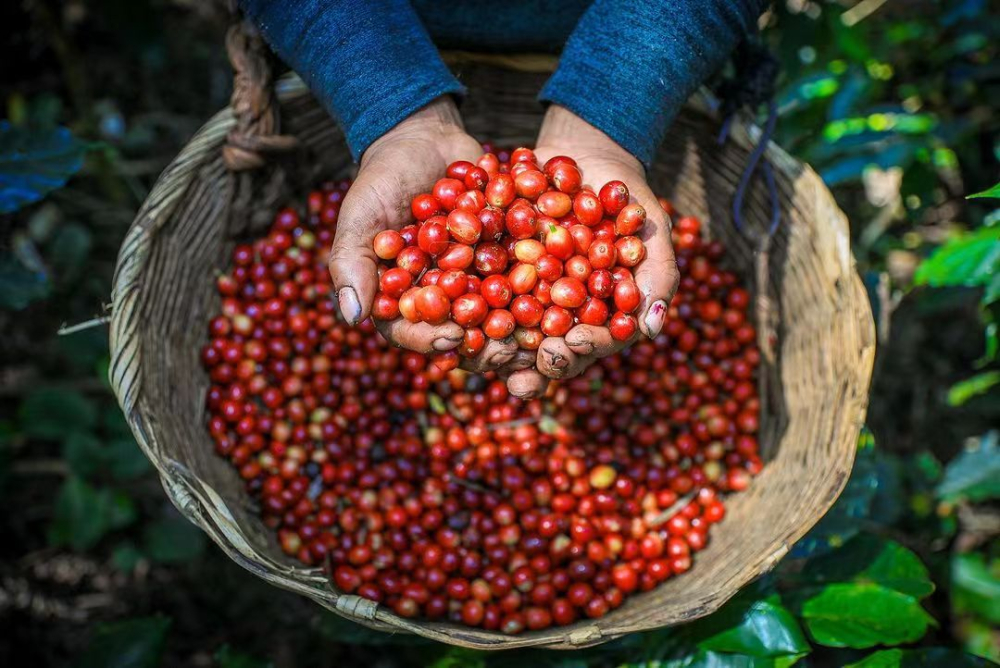
Pour the coffee grounds into the V60 dripper. Wet the coffee bed with water at twice the weight of the coffee grounds to form a dome shape and let it bloom for 30 seconds. Then, using a slow stream of water, pour in a circular motion from the inside outward until reaching 125g, then pause. Wait for the coffee bed to drop to the halfway point of the dripper, then continue with the same slow stream of water for the third pour until reaching 225g. Wait until all the coffee liquid has finished filtering, then remove the dripper. Total time is approximately 2 minutes.
Front Street tasted this Pacamara coffee through pour-over extraction: the entry is very delicate and silky, with clear and gentle fruit acidity gliding across the tongue. Like all Pacamara characteristics, it is quiet and soft. The mid-palate has the fruit acidity of fresh wild berries and the nutty aroma of hazelnuts. The finish shows distinct caramel sweetness, with a long, delicate, smooth sweetness in the aftertaste and a lasting lingering sweetness.
The above content is compiled by CoffeeHunters, a coffee news website.


