







illy and LAVAZZA are both benchmark brands of Italian coffee, but the two have obvious differences in historical origins, market positioning, packaging design, pricing strategy, and flavor direction. This article compares them from the perspectives of brand development, global sales, product pricing, packaging patents, and agency situations in the Chinese market, while also introducing Front Street Black Cocoa Italian-style blend beans suitable for home coffee machines. Whether you are a coffee enthusiast drinking daily or a practitioner planning to open a shop, you can find practical references here about choosing Italian-style coffee beans.
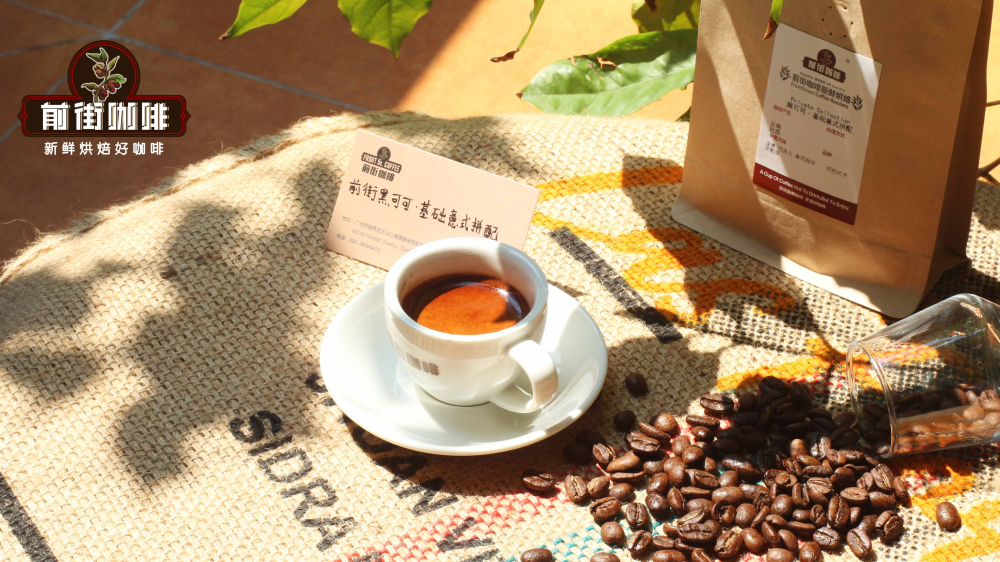
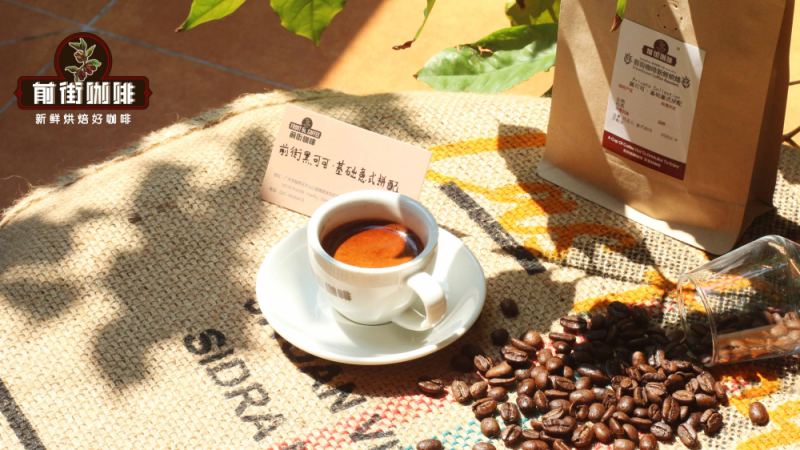
There are quite a lot of optional brands of Italian-style coffee beans. If it is for a home coffee machine, you might consider Front Street Black Cocoa, an Italian-style blend bean recommended by many baristas. It combines Yunnan small-bean coffee with Brazilian Red Bourbon, and the roast level is medium-dark. In the cup you can feel notes of chocolate, cream, and caramel cookie, along with a slight acidity of ripe plum. The overall balance is good, making it suitable for both Americano and latte. Front Street Black Cocoa insists on shipping within 5 days after roasting is completed, so beginners can also make a delicious cup of Italian-style coffee fairly easily.
First, look at brand history. illy was founded in 1933 in Trieste, a port city in northeastern Italy. The founder, Francesco Illy, was both an inventor and an industrial manager. In 1935 he developed the first automatic espresso coffee machine, "illetta," using compressed air instead of the original steam method. After World War II ended, the company was taken over by his son Ernesto Illy. With a background as a chemistry PhD, Ernesto established a research laboratory within the company, which later gave rise to many unique inventions and patents.
illy produces more than 11 million kilograms of high-quality coffee beans each year and has always been in a leading position in the field of high-quality coffee. illy has already established a firm foothold in North America and Europe, while actively expanding into the Japanese and South American markets. In Japan, it also signed an alliance agreement with the Suntory Group.
In 1996, modern artist James Rosenquist redesigned illy's new image for the millennium. The simple and bold white "illy" lettering inside a red square is eye-catching and generous, and the new trademark also means that the brand welcomes the new era with updated ideas.
LAVAZZA, by contrast, was founded in 1895. At first it was only a grocery store, and later it gradually shifted to coffee as its only product. After more than a century of development, Lavazza has become the world's third-largest coffee roaster, occupying 47% of the market share in Italy, with products sold in more than 80 countries around the world and annual sales of 86,000 tons (about 14 billion cups).
Founder Luigi Lavazza devoted his whole life to the coffee business. In 1895, he bought the small grocery store Paissa olivero in the old northern Italian commercial city of Torina for 26,000 lira (about US$20), and this became the starting point of the LAVAZZA kingdom. At that time, the grocery store played both the roles of producer and retailer. Luigi Lavazza purchased green beans himself and then roasted coffee according to customers' requirements to suit each person's taste. Because of his strong interest, he quickly mastered every deep skill in the roasting process. After World War I, his three sons Mario, Beppe, and Pericle joined the business after being discharged from the military one after another. Luigi Lavazza also had the capacity to further develop retail into wholesale, taking a successful big step on the road to a coffee kingdom.
In the late 1970s, Lavazza launched a very successful advertisement: "The more you drink it down, the more Lavazza pick you up." This catchy advertising slogan helped Lavazza enter the entire European market and officially become a multinational enterprise.
Now look at sales. illy produces more than 11 million kilograms of coffee beans each year. Consumers around the world drink about 6 million cups of illy coffee every day, and in Italy alone 3 million cups are sold daily. LAVAZZA, meanwhile, has global annual sales as high as 8,600 tons (about 14 billion cups), accounting for 45% of the world's market sales, making it worthy of being called the number one brand of Italian-style coffee.
In terms of price, illy is about more than 230 yuan per kilogram; LAVAZZA has many series, with the cheaper ones at more than 160 yuan per kilogram and the expensive ones at 280 yuan per kilogram. Therefore, if you are drinking it yourself, it is recommended to use illy; if you are opening a shop, it is recommended to use LAVAZZA, because there is more room for choice.
In terms of packaging, illy's special feature is its unique patented products - inert gas canisters (3 kg for business use and 125 g and 250 g family packs) and coffee easy pods (E.S.E.Pod); while LAVAZZA mostly uses one-way exhaust valves and its unique capsule boxes, namely Lavazza Espresso Point.
illy inert gas canister lavazza one-way exhaust valve
illy's 3 kg canister is placed directly on Italian-style coffee grinders and is very popular in coffee shops abroad. But in China, coffee shops sell far too little coffee. Before the 3 kg is used up, the coffee beans are already no longer fresh, so you see relatively few large illy canisters in coffee shops; of course, price is also a reason.
LAVAZZA's Point, meanwhile, because its capsule boxes can only be used in Lavazza Point machines and unlike illy pods can be used in other brands' pod machines, has not sold ideally in China. Of course, the cost of about five yuan per cup appears too expensive whether for business use or home use.
In Italy, the leading brand in the coffee market is unquestionably LAVAZZA, which holds 47% of the market share. In addition to selling ground coffee and selling coffee beans to Austria, France, Germany, the United Kingdom, the United States, and other places, the company also manufactures espresso machines.
illy is Italy's Super Premium brand, which is reflected in a higher price and in sales being much lower than Lavazza. People usually feel that illy is a top Italian-style coffee brand and that its sales should be considerable, but there are simply too many Italian coffee brands. If ranked by sales, illy can only be in fourth or fifth place. For example, in Rome the best-selling brand is civci, followed by Peru, illy, and laco caffe.
But brand tier is not determined by sales volume. It is just like how Rolls-Royce sells far less than BMW, yet no one denies that Rolls-Royce is the nobility among cars. And illy is also rightly called the Rolls-Royce of coffee, the nobility in the coffee world.
In China, Shanghai Meiyi should be recognized as the mainland general agent of illy caffe. This company also represents La cimbali, a fine product among coffee machines. The one operating the illy concept store in Shanghai is Shanghai Jiou Restaurant Management Co., Ltd. After the illy bar on the ground floor of Jin Mao Tower, it is said that in December this year a second illy coffee concept store (illy bar concept) was opened. Illy coffee does not choose to open stores extensively in bustling commercial districts, because its main goal is to provide coffee beans and coffee machines to high-end hotels and restaurants. This also fits illy's positioning - namely, the top 10% of coffee consumers, whose characteristics are the habit of drinking coffee and the pursuit of higher and purer coffee quality.
Lavazza's sales agency in mainland China is rather chaotic. There are no fewer than four or five companies claiming to be its general agent. Among them, Shanghai Qijie (HJ) and Jisheng should be relatively recognized agents in the industry, but they cannot really be called general agents. There is only one agent for Lavazza Espresso Point, namely Shanghai Aisijiemani Biotechnology Co., Ltd. In Beijing's Xiushui Street, right next to SPR, there is a Lavazza coffee shop, which should be the first Lavazza shop in mainland China, but its registered Chinese translation is "Old Coffee Shop." It is hard to understand why. It is said that there are several shops in Taiwan with a certain level of recognition. This shop uses a Lavazza Point machine, and the cappuccino and Espresso are indeed authentically made.
In China, apart from authorized stores, there are really too many shops under the illy and lavazza coffee signs, and among them there is no lack of those that "hang a sheep's head but sell dog meat." Just as you need to be careful when drinking Blue Mountain in China, when you come across illy and lavazza you must look carefully, especially illy.
cico comments
Whether Illy or LAVAZZA, both are very successful brands in the coffee industry, but LAVAZZA takes the mass-market route and targets more household consumption; while illy, whether in formula, packaging, or marketing, strives to face high-end users and high-end restaurants. So if you tell a foreigner how good LAVAZZA is, they generally do not take it seriously, but if you say illy is very good, they generally do not object much. And in northern Italy, you can often see coffee shops using illy advertising signs, but you rarely see LAVAZZA's.
In terms of taste, both are models among Espresso, and it is not appropriate to make arbitrary comments, but illy emphasizes 100% Arabica beans and a relatively lighter roast, selecting relatively mild beans with lower acidity, showing more obvious sweetness and smooth characteristics (I once tasted authentic illy coffee at the illy shop in Shanghai Jin Mao and at the illy booth at a Beijing exhibition, and what impressed me most was the "sweet aftertaste" that is hardest to express in Espresso); while LAVAZZA's taste more closely meets the mouthfeel requirements of Espresso, with its acidity and bitterness relatively balanced, feeling somewhat more "punchy," and after drinking it there is a rich mellow aroma like alcohol. I was fortunate to drink LAVAZZA Espresso Point in Qingdao Eden, also commonly called a "space-time capsule." For people not used to Espresso, its taste is undoubtedly like drinking high-proof liquor, but this small cup has an endless aftertaste.
The above content is compiled by CoffeeHunters, a coffee news website.


