







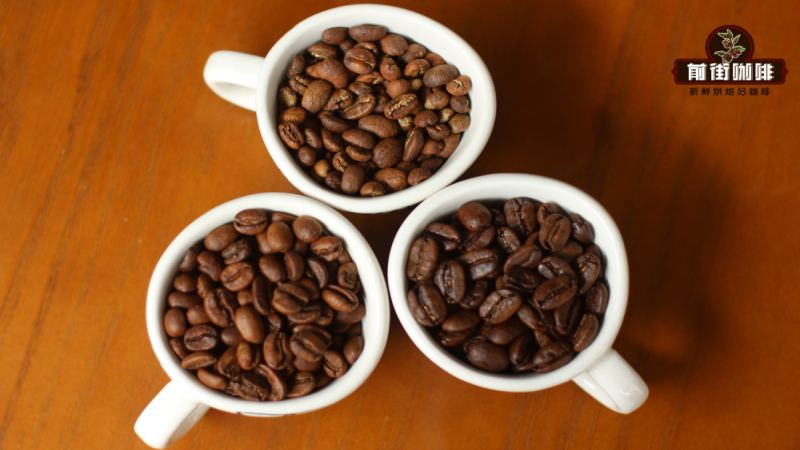
Mandheling coffee originates from Sumatra, Indonesia. It is a rare Arabica variety in Indonesia, famous for its rich aroma, full body, and unique herbal flavor. This article systematically reviews the history of this coffee, from the origin of the name Mandheling, the Typica and Catimor varieties of Sumatra, the wet-hulling process, to the differences between Lintong Mandheling and Golden Mandheling. At the same time, Front Street Coffee combines brewing practice to share suggestions on the dripper choice, grind size, water temperature, and coffee-to-water ratio for Mandheling, helping coffee lovers better present its caramel sweetness and chocolate-nutty flavors.
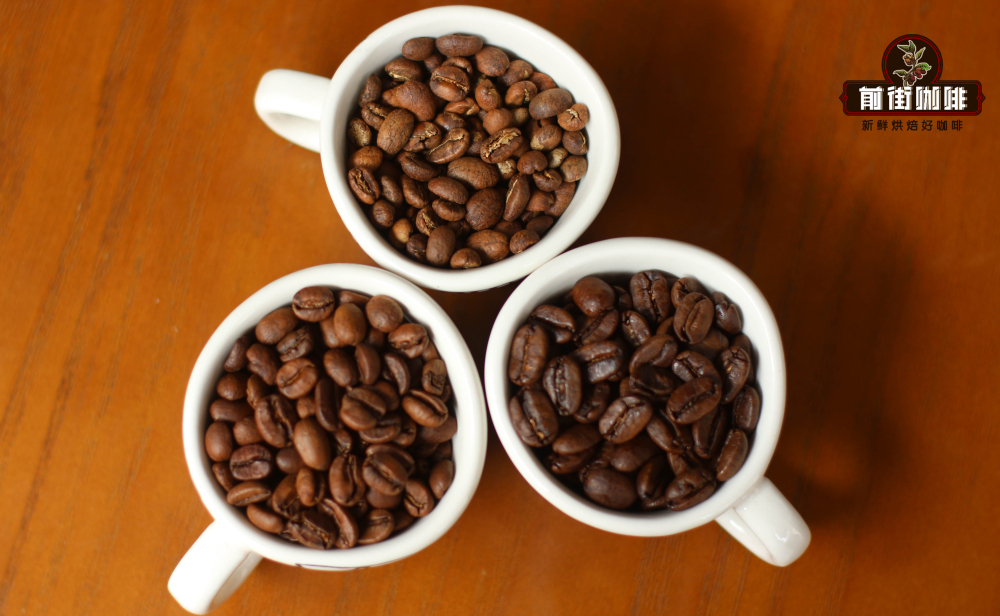
Many people, because pour-over coffee often gives a refreshing impression, conclude that medium-dark roasted Mandheling is not suitable for pour-over, and think that only medium-light roasted beans are worthy of pour-over. This view actually does not hold up. Although pour-over coffee did not originate in Japan, it was indeed organized into a relatively complete system in Japan, and the time and place where pour-over began to become popular exactly correspond to the Japanese dark-roast style. The ability to form a large dome-shaped coffee bed during the blooming stage is also exactly what medium-dark roasted Mandheling is best at presenting.
Mandheling coffee originates from Sumatra, Indonesia, in Asia, so it is also called "Sumatra coffee." Mandheling is a high-quality Mandheling coffee bean grown on plateaus and mountains at an altitude of 750 to 1,500 meters. It belongs to a rare Arabica variety in Indonesia, among which the first-grade Mandheling produced in Takengon and Sidikalang is the best. Its flavor is very rich, combining aroma, bitterness, and full body, with a slight sweetness as well. Most coffee lovers drink it as a single origin, but it is also an indispensable bean in coffee blends.
In the 17th century, the Dutch first brought Arabica seedlings to Ceylon (today's Sri Lanka) and Indonesia. In 1877, a large-scale disaster swept through the Indonesian islands. Coffee leaf rust almost destroyed all coffee trees, and people had no choice but to abandon the Arabica they had cultivated for many years and instead introduce more disease-resistant Robusta coffee trees from Africa. Today Indonesia is a major coffee-producing country, with production mainly concentrated in Java, Sumatra, and Sulawesi, and Robusta accounts for 90% of total production. Sumatra Mandheling , however, belongs to the scarce Arabica category.
The name Mandheling is very different from other coffee beans. It is neither a producing region, a place name, a port name, nor the name of a coffee variety, but simply a mispronunciation of the Indonesian Mandailing (mandheling) ethnic group name.
Varieties
Sumatra Typica
This is the variety with the longest planting history in Indonesia. As early as the late 17th century, the Dutch introduced it from India to Java for cultivation. As Java cultivation succeeded and spread widely, it then expanded northward to Sumatra. The Typica planted in Indonesia at that time performed excellently in flavor. After a long period of integration with the local growing environment, it formed Indonesia's low-acidity, high-sweetness flavor with herbal aromas.
After leaf rust swept through Indonesia in 1877, most Typica throughout the country became infected and withered, and the Indonesian government could only introduce disease-resistant varieties as replacements. Today, Sumatra Typica is mainly distributed in the Lake Toba and Lintong areas. The Lintong Mandheling regional beans launched by Front Street contain this excellent Typica variety.
Locally in Indonesia, you generally will not hear the term "Sumatra Typica." They use names such as Bergendal, Sidikalang, and Rambung to refer to Sumatra Typica. It is also the finest coffee bean variety of Indonesian Mandheling .
Catimor
In 1959, the Portuguese moved the Brazilian Bourbon mutation Caturra to East Timor and crossed it with Timor, which carries Robusta bloodlines, to breed Catimor. It has extremely strong disease resistance, and its productivity is three times that of Typica. During the leaf rust crisis, the Indonesian government not only introduced Robusta (whose flavor is very different from Arabica), but also introduced Timor from East Timor, hoping to replace Typica. Later, expert investigations found that a batch of Timor seeds introduced by the Indonesian government in 1980 was mixed with some Catimor seeds. This batch of seeds was planted in Aceh in northern Sumatra, and the area where Catimor was first noticed in Indonesia was Central Aceh, so locals also call Catimor Ateng, taken from Aceh Tengah (Central Aceh).
Ateng's disease resistance and productivity are both superior to Typica. After many years of local adaptation, the wild flavor of Catimor in Ateng was also tamed, making it popular among coffee farmers, and it spread from Aceh to Lake Toba. Aceh's Ateng also attracted the attention of Pawani, Indonesia's largest green bean merchant. The coffee variety of the latest 2020 crop Golden Mandheling currently launched by Front Street comes from Ateng on Mount Gayo in Aceh.
Processing Method
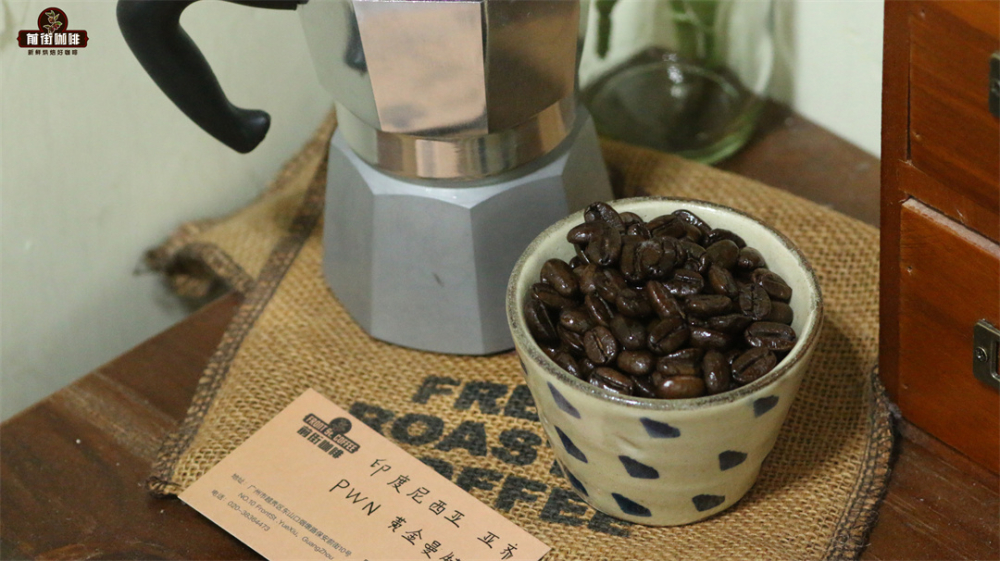
Mandheling coffee mostly uses Sumatra's unique wet-hulling process. Due to the lack of water resources, Mandheling was initially mainly sun-dried, but the disadvantage was unstable quality. Later, Brazil's semi-washed method was also tried, but the local weather is often rainy, with constant typhoons and year-round humid and rainy conditions, unable to achieve the good weather required for sun-drying.
The local economy is likewise limited, making it impossible to use the relatively expensive washed method, which eventually led to the development of the highly local wet-hulling process. During processing, wet-hulling is characterized by rapid drying in stages and removing the parchment before drying. Teacher Han Huaizong described it as "this is also a rare processing method in the world, accidentally creating Mandheling's special low-acidity, thick, and stuffy-aromatic flavor." Now Indonesia's coffee industry is no longer as poor as it once was, and there are quite a few estates and companies with enough conditions to use the washed method. But why has wet-hulling not been abandoned? Front Street Coffee (FrontStreet Coffee) believes that wet-hulling is one of the factors that made Mandheling coffee known to the world.
When it comes to Mandheling coffee , Front Street Coffee (FrontStreet Coffee) likes its rich aroma, full body, and intense taste, and its unique herbal spice flavor is also a hallmark of Mandheling coffee. Front Street Coffee's (FrontStreet Coffee) two Mandheling coffees are very representative, namely Lintong Mandheling and Golden Mandheling .
Lintong Mandheling
Lintong Mandheling comes from the Lintong mountain area in north-central Sumatra, near Lake Toba. Front Street Coffee's (FrontStreet Coffee) entry-level daily-drinking bean from the Indonesian Mandheling producing region comes from here. Lintong Mandheling also uses the unique wet-hulling process, which creates its characteristics of low acidity and high body.
It is worth noting that when using the wet-hulling process, because the semi-hard, semi-soft wet green beans are prone to being crushed when the mucilage parchment layer is removed, the beans become damaged and split open like goat hooves, commonly known as goat hoof beans. Front Street Coffee (FrontStreet Coffee) considers this a very prominent characteristic of Mandheling, not a defective bean.
Golden Mandheling
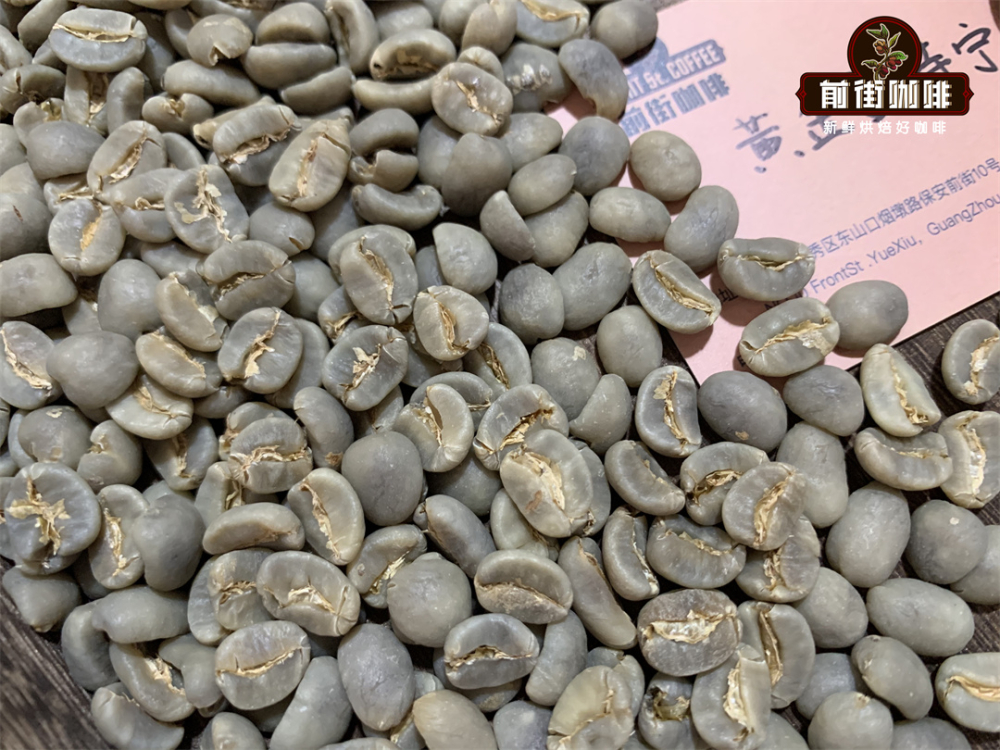
Golden Mandheling coffee beans are produced from Lake Tawar on Mount Gayo in northwestern Sumatra. The specification standard for Golden Mandheling is 18 screen or above, with fewer than 3 defective beans (in a 300g green bean sample). It belongs to the highest grade, G1, is darker green in color, and has a neat flat-bean shape. After strict screening, Front Street Coffee (FrontStreet Coffee) found that Golden Mandheling not only no longer has the earthy miscellaneous flavors unique to ordinary Mandheling, but also tastes cleaner and more transparent.
Why did the concept of Golden Mandheling come about? We just learned that the wet-hulling process can produce conditions similar to goat hoof beans, so in order to improve the problem of many defective beans, Japanese companies began cooperating with local green bean merchants and established a strict screening system. After processing, the green beans undergo density and color sorting, and then are also hand-sorted four times, finally presenting Mandheling with uniform color and uniform bean shape. It is said that when processing the green beans, Mandheling under sunlight gives off a golden luster, hence the name Golden Mandheling.
However, the company that registered Golden Mandheling as a trademark was not a Japanese company, but the local Indonesian company that cooperated with the Japanese company to export Mandheling green beans—PWN (Pawani Coffee Company). The Japanese company could only register "Gold Top Mandheling" separately, which is Ding Shang Golden Mandheling. Front Street Coffee (FrontStreet Coffee) believes that in terms of flavor performance, there is actually little difference between the two. But Golden Mandheling was registered as a trademark by PWN, and the five Chinese characters "Golden Mandheling" became exclusive to PWN. Some time ago, Front Street Coffee (FrontStreet Coffee) also purchased PWN's Golden Mandheling from the new crop, produced in the Gayo Mountains of Aceh, North Sumatra, and its variety is Ateng. (Ateng is a hybrid between Arabica and Robusta and is widely planted in Sumatra and other small Indonesian islands.)
Front Street Mandheling Brewing
When brewing Mandheling and other dark-roasted coffee beans, Front Street recommends choosing the Kono dripper. This is because it can enhance the coffee beans' full body. If you do not have one, you can also use a V60 dripper.
In terms of coffee grind size, the grind for brewing Mandheling coffee should be slightly coarser than for light-roasted coffee beans, because Mandheling uses a deep roast, and its structure is looser, making it easier to absorb water and release coffee substances. If it is ground to the fineness of light-roasted beans, it is easy to brew out burnt bitterness; if it is ground even coarser, the coffee will become thin and tasteless, with a body as thin as water. The coarseness level is a 70% pass rate on a No. 20 sieve.
For water temperature, Front Street recommends brewing at 87-88°C. Many cases of brewing out burnt bitterness come from water temperature being too high. Of course, water temperature that is too low will also make the coffee dull and tasteless.
For the brewing coffee-to-water ratio, Front Street recommends using 1:15. Although some brewing methods suggest using 1:13 or a smaller coffee-to-water ratio, which tastes richer, part of the reason for reducing the coffee-to-water ratio is also to avoid bitterness and miscellaneous flavors in the tail end. Correspondingly, it also affects the aftertaste. Front Street believes that as long as the relationship between water temperature and grind size is well controlled, using a 1:15 coffee-to-water ratio can better express the overall flavor experience of Yellow Mandheling.
The final pour is a gentle centered pour of 95 ml, which can enhance the coffee's sweetness and overall present a substantial, full body, with caramel sweetness and chocolate, nutty flavors.
The above content is compiled by CoffeeHunters, a coffee news website.


