







Mandheling coffee is often labeled as "heavy and bitter," yet in the specialty coffee wave, it still retains a loyal following. This article begins with the origin of the Mandheling name, explores the cultivation landscapes of Sumatra's two major specialty regions—Lintong and Aceh Gayo Mountain—introduces the evolution of Indonesian coffee varieties, the wet-hulling process, and the grading system, and focuses on Front Street Coffee's recommended Front Street PWN Golden Mandheling along with its roasting and brewing parameters. Whether you're a newcomer just discovering Mandheling or a seasoned coffee lover who prefers a full-bodied taste, you'll gain a complete picture of this Indonesian coffee bean.
For professional coffee knowledge exchange and more coffee bean information, please follow the Coffee Workshop (WeChat public account: cafe_style)
For more specialty coffee beans, please add the private WeChat of Front Street Coffee (FrontStreet Coffee), WeChat ID: qjcoffeex
When it comes to Mandheling coffee, the first thing many people think of is often its intense bitterness. Before the rise of the third wave coffee movement, Mandheling was popular for a long time thanks to its almost acid-free profile and extremely full body. Even today, when bright fruity and refreshing styles are more sought after, Mandheling still firmly holds a place on the regular rotation of many veteran coffee enthusiasts, which also shows that Mandheling coffee beans are not as hard to drink as rumors suggest.
What exactly are Mandheling coffee beans?
The usual naming convention for coffee beans is region plus estate plus processing method, because specialty coffee consumers increasingly care about the traceability of the beans. But Mandheling is an exception—it is neither a region name, a place name, nor an estate or variety name, but rather a mistransliteration of the name of the Mandheling ethnic group in Indonesia.
Legend has it that during World War II, a Japanese person drank a cup of particularly full-bodied and solid coffee in a coffee shop on the Indonesian island of Sumatra and asked what beans these were. Because of the language barrier, the locals mistakenly thought he was asking which ethnic group they belonged to (Indonesia has many indigenous ethnic groups), so they answered "Mandheling."
After World War II ended, this Japanese person recalled the taste of that cup of coffee and managed to ship 15 tons of coffee beans produced on Sumatra back to Japan, where they proved very popular with Japanese consumers. To help more people remember this bean, he borrowed the name of the Mandheling people to name coffee beans from the Sumatra region.
In 1995, Japan's UCC partnered with the well-known Sumatran coffee company PT Gunung Lintong to operate its first coffee plantation in Asia, which shows just how beloved Mandheling is.
Introduction to the Sumatra Region
Only Arabica coffee beans grown on the island of Sumatra can be called Mandheling coffee beans. Sumatra is one of the few regions in Indonesia where specialty Arabica varieties are grown. Mandheling grows in highland mountains at altitudes of 750 to 1,500 meters. Currently, specialty-grade Mandheling coffee beans mainly come from the Lintong region and the Gayo Mountain region (specialty coffee beans generally require a growing altitude above 1,200 meters, with island-type coffees being the exception).
Coffee trees in the Lintong region are scattered across undulating, fern-covered clay plateaus and are not grown under shade. No chemicals are used locally, and the coffee gardens are almost entirely owned by smallholders, so the coffee trees receive more careful attention and more meticulous processing. The flavor presents unique herbal, forest agarwood, and spice notes, with a full-bodied and solid mouthfeel.
Therefore, Front Street Coffee (FrontStreet Coffee) lists Lintong region Mandheling coffee beans as "entry-level selected coffee beans" and "Front Street daily ration coffee beans," sold in 100g small packages at a high cost-performance price, hoping to let more people experience the regional flavor of the Indonesian growing region at a lower cost.
The fame of the Aceh Gayo Mountain region is inseparable from the Golden Mandheling coffee beans launched by the well-known Indonesian green bean company PWN Puwani. Unlike ordinary Mandheling, Front Street PWN Golden Mandheling coffee beans undergo at least three rounds of purely manual sorting after harvesting and drying, ensuring that the bean size reaches 18 mesh or above and that there are fewer than 3 defective beans in a 300g green bean sample, belonging to the highest grade G1. PWN Golden Mandheling is darker green in color and has a neat, flat bean shape.
One thing to note: as Golden Mandheling's popularity continues to rise, many beans appear on the market that are not produced by PWN yet are sold under the Golden Mandheling name—these can actually only be considered specialty Mandheling. The Front Street PWN Golden Mandheling sold by Front Street Coffee (FrontStreet Coffee) is Golden Mandheling coffee beans certified with a certificate issued by PWN. Both the certification certificate issued by PWN and the green bean burlap sacks printed with the PWN logo for Golden Mandheling can be seen at the Front Street Coffee (FrontStreet Coffee) store.
When Front Street Coffee (FrontStreet Coffee) cupped the Front Street PWN Golden Mandheling coffee beans, it detected high-quality herbal notes, caramel sweetness, and a rich, mellow chocolate flavor, making it the ultimate choice for coffee connoisseurs.
The Varieties of Mandheling Coffee
Mandheling coffee does not specifically refer to a single coffee variety. Indonesia's coffee-growing history dates back to the 17th century, when Typica was transplanted from India to Indonesia. However, after hundreds of years of cultivation, the Sumatra region had long since developed a mutated Typica with a smaller plant size that also lost the original Typica variety's serene flavor characteristics.
In fact, the Arabica varieties currently grown on the island of Sumatra are mainly two types: Ateng and TimTim. TimTim refers to Timor, an Arabica variety with Robusta lineage; Ateng is Catimor, a cross between Caturra and Catimor. Because these varieties all carry Robusta coffee bean genes, and because the growing altitude is not high, it is difficult to create strong day-night temperature differences to accumulate more refined flavors, so whether TimTim or Ateng, both naturally carry unique herbal, forest agarwood, and spice flavors.
The Processing Method of Sumatra Mandheling Coffee Beans
Indonesia is humid and rainy year-round, making traditional coffee bean drying methods difficult to promote locally. In addition, the lack of unified coffee bean processing stations to purchase coffee cherries means that local smallholders mostly use traditional wet processing themselves, processing to the hulled, semi-dry state before reselling to traders for drying and packaging. Unexpectedly, it was precisely this process that created the world-famous Mandheling coffee.
Indonesia lies on the equator with hot weather, and combined with the humid island climate, a short drying method must be used. After picking the coffee fruit, local coffee farmers first carry out wet fermentation. Once fermentation is complete, the fruit is immediately poured into a depulper to remove the pulp and husk. At this point the moisture content is about 30% to 40%, after which it is sun-dried or artificially dried to bring the moisture content down to around 13%. This method can save at least 30% of processing time, allowing coffee beans to be turned into cash quickly and reducing costs.
However, when the green bean moisture content is between 30% and 50%, the texture is not yet hard enough, and machine hulling at this stage easily crushes the green beans, so goat-hoof-shaped green beans often appear. Removing the endocarp (parchment) too early also greatly increases the probability of mold contamination in green coffee beans. Based on Shunan's own experience, the defect rate of wet-hulled coffee beans is nearly 30% higher than in other regions, so when purchasing Mandheling, vendors mostly indicate the number of hand-sorting passes to show green bean quality, such as the PWN green bean company mentioned earlier.
Such a complex green bean variety system has also produced a complex set of Indonesian coffee grading standards, roughly based primarily on defect count and secondarily on bean size.
Indonesian Mandheling Coffee Bean Grading System
Based on defect rate, it is divided into 6 grades from G1 to G6.
Bean Size Indicator Some higher-quality Indonesian coffees also indicate the mesh size, for example Front Street Coffee's (FrontStreet Coffee) Golden Mandheling is labeled as 18 mesh.
Sorting Passes In addition to the above grading standards, some specialty-grade Indonesian coffees also undergo manual sorting, indicated on the label as Double Picked or Triple Picked. The reason is that Indonesia mostly uses wet-hulling, during which defective beans easily occur; the more hand-sorting passes, the better the coffee quality.
How to Roast Indonesian Mandheling Coffee Beans?
The most widely known characteristic of Mandheling is its extremely full body and almost non-acidic flavor, with a rich, sweet coffee aroma and a faint herbal note in the finish. Therefore, Front Street Coffee (FrontStreet Coffee) uses a medium-dark roast level so that every Mandheling coffee bean can express a full-bodied, solid flavor and mouthfeel.
The darker the roast, the more carbon dioxide is produced inside the coffee bean. After roasting is complete, the abundant carbon dioxide inside the coffee bean keeps being released, and at the same time the coffee bean's own oils come to the surface along with the carbon dioxide, so 3 to 4 days after roasting is completed, the surface of darker-roasted coffee beans will appear oily—this is a normal phenomenon.
How to Brew Indonesian Mandheling Coffee Beans for a Great Cup?
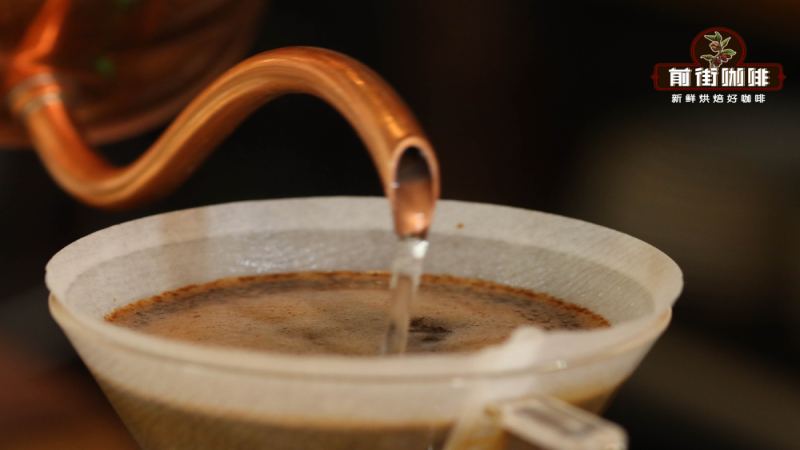
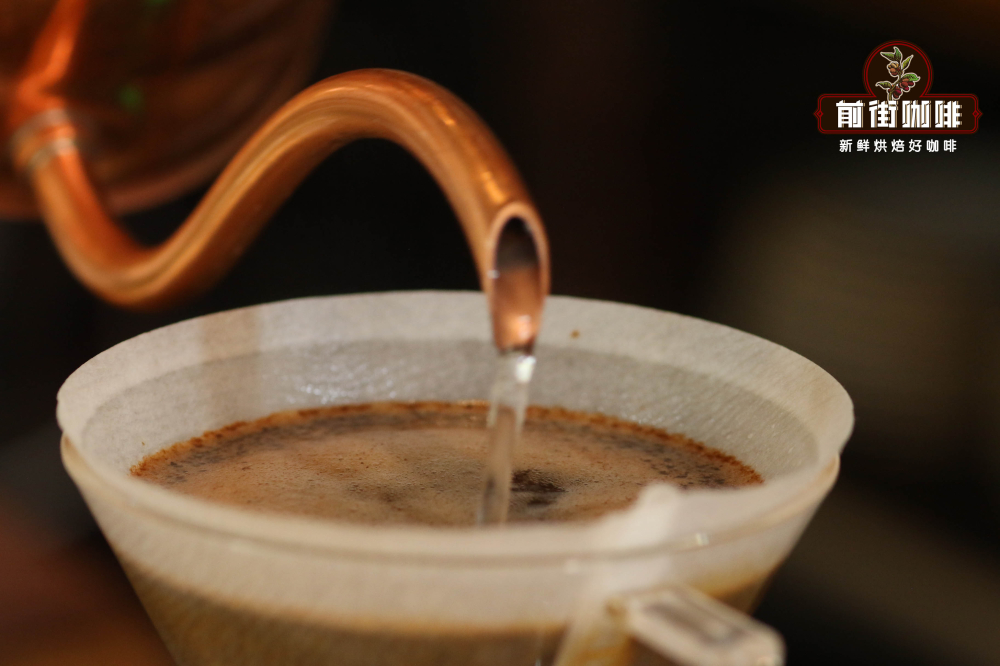
To highlight the high body of Golden Mandheling, Front Street Coffee (FrontStreet Coffee) uses a KONO dripper for brewing. The reason for choosing KONO is that its unique conical design ensures even water distribution, dripping at a steady rate throughout the filter. The grooves in the lower half of the cone fit tightly against the filter, thereby reducing sediment and improving airflow, ultimately producing a cup with concentrated flavor and greater body.
Dripper: KONO
Dose: 15 grams
Water-to-coffee ratio: 1:15
Grind size: 70% passing rate on China standard No. 20 sieve
Water temperature: 88℃
Specific brewing method: First pour 30g of water for a 30s bloom; in the second stage, pour in a small stream in circles up to 125g, wait until the water level in the coffee bed drops to half before pouring again, then continue pouring in a small stream in circles up to 225g. After all dripping is complete, the total extraction time is about 2 minutes 10 seconds.
Front Street Coffee (FrontStreet Coffee) - Lintong region Mandheling coffee flavor profile: rich herbal aroma on the palate, black chocolate, caramel, sweet finish.
Front Street Coffee (FrontStreet Coffee) - Front Street PWN Golden Mandheling coffee flavor profile: the coffee is multi-layered overall, full-bodied and clean. Rich nut and caramel aromas, with chocolate notes, a long-lasting finish, and high balance.
The above content is compiled by CoffeeHunters, a coffee news website.


