







Indonesian Mandheling and Jamaican Blue Mountain both belong to the chocolate and nutty-toned bitter coffee category, but their origin environments, variety choices, and processing methods are entirely different, creating their own unique flavor expressions. From the perspective of Front Street Coffee, this article systematically sorts out the origin background, variety characteristics, grading standards, and processing methods of Blue Mountain No. 1 and Golden Mandheling, and combines cupping experience with brewing suggestions to help coffee lovers understand the core differences between these two specialty coffees and find the cup that suits them.
For more specialty coffee knowledge, please follow: Front Street Coffee (Frontsteet Coffee)
Indonesian Mandheling and Jamaican Blue Mountain both belong to the chocolate and nutty-toned bitter coffee category. If you prefer a balanced and gentle mouthfeel, Front Street Coffee (FrontStreet Coffee) baristas usually recommend Jamaican Blue Mountain No. 1; if you prefer a rich coffee with herbal spice notes, Front Street suggests trying Indonesian Golden Mandheling. Below, Front Street will compare the characteristics of these two specialty coffees.
Blue Mountain No. 1 coffee comes from the high-altitude Blue Mountain Range in Jamaica.
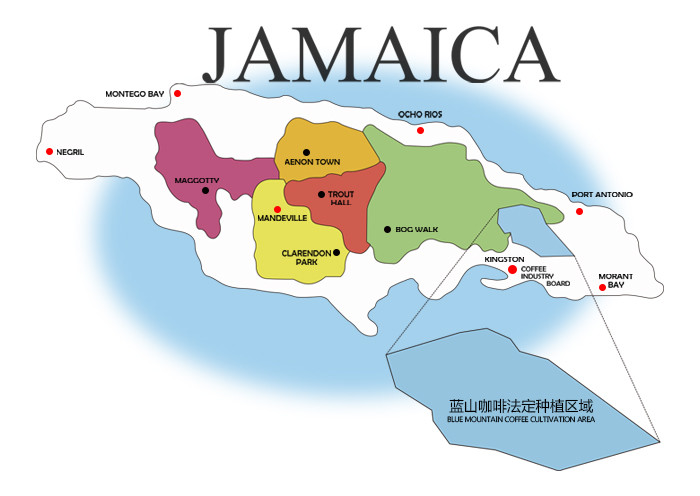
The Jamaican Blue Mountain Range is the highest terrain area in the Caribbean region and has a tropical rainforest climate. Annual rainfall during the rainy season is abundant, reaching 1800 to 2000 millimeters. The steeply sloping land helps drainage and allows vegetation to receive sufficient irrigation. The Blue Mountain area has beautiful scenery and fresh air, and the fertile volcanic soil allows crops to bear full-flavored fruit. Locals also intercrop coffee trees with banana trees and avocado trees. The high-altitude Blue Mountains are shrouded in clouds and mist all year round, providing natural shade for coffee trees. To protect the Blue Mountain environment, Jamaican law stipulates that crops may only be planted below 1700 meters above sea level, and strictly limits only Arabica coffee grown in specific areas from 910 meters to 1700 meters to be named Jamaican Blue Mountain coffee. It is divided into four production areas: Saint Mary, Saint Thomas, Saint Andrew, and Portland, with a total area accounting for only one third of the entire Blue Mountain growing region.
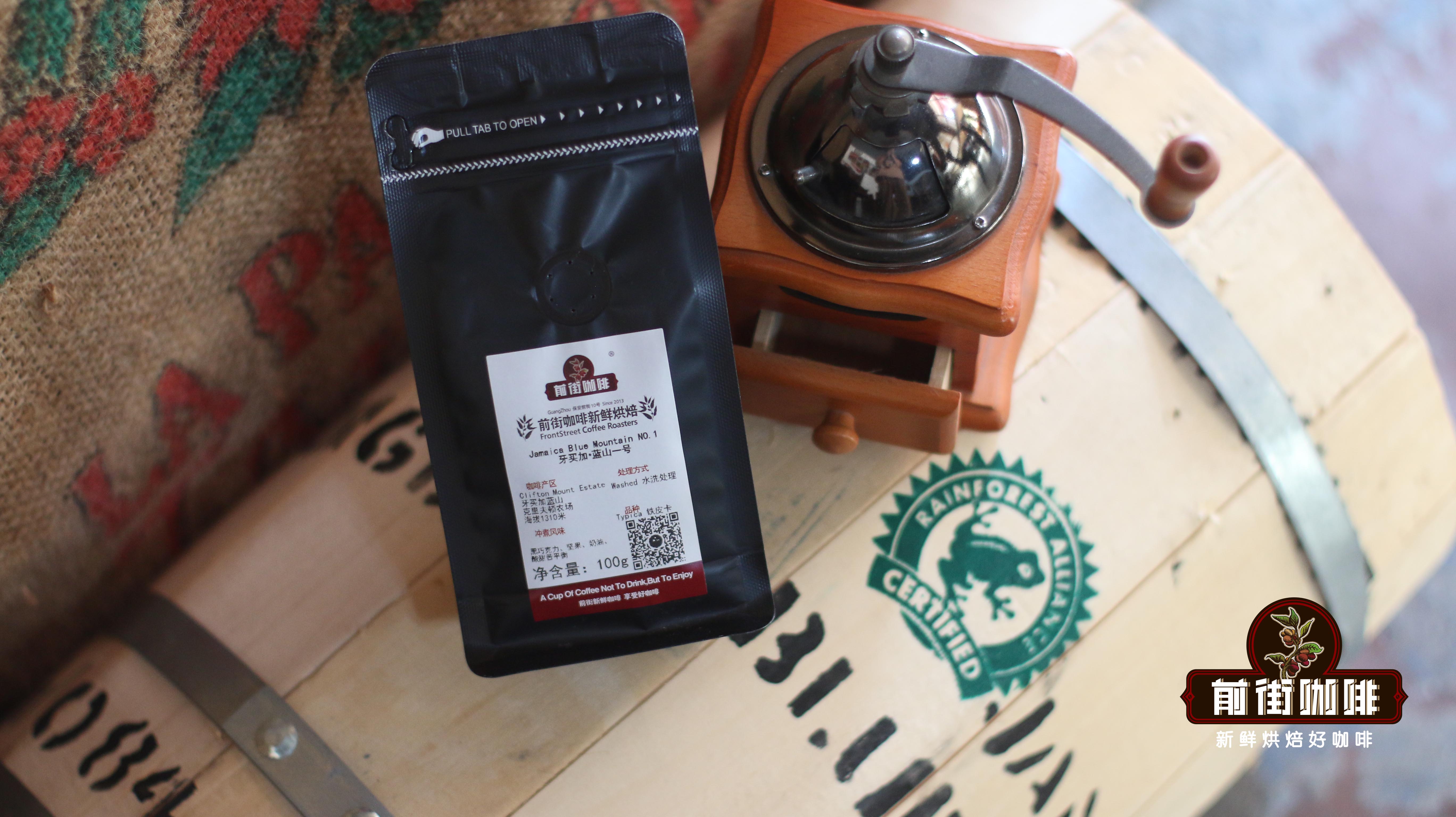
Unlike many production areas that switch to high-yield coffee varieties to increase output, Blue Mountain has always adhered to the recognized high-quality old variety—Typica. After nearly three hundred years of adaptation and propagation, Blue Mountain Typica has not only integrated into the local island terroir but also evolved strong disease resistance, especially far surpassing ordinary Typica in resistance to coffee berry disease. Front Street believes that the refined and clean flavor of Blue Mountain is inseparable from Jamaica's careful cultivation of the Typica variety. Front Street's Blue Mountain No. 1 coffee is produced by Jamaica's historic Clifton Estate and uses traditional washed processing.
Clifton Estate places freshly picked coffee cherries into a water tank for flotation, removes the skin and pulp before fermentation, and ferments overnight to produce a large amount of acidic substances, causing the pectin layer to detach from the surface. The parchment beans are then dried in sunlight, and once the moisture content reaches the standard, they are packed and stored, then sent for quality inspection. The washing process makes Blue Mountain coffee beans' flavor cleaner and more transparent, and the quality more stable.
Indonesian Golden Mandheling comes from the mysterious island of Sumatra.
Mandheling comes from Indonesia's mysterious island of Sumatra. The entire island is divided into eight provinces, among which only the high-altitude Aceh Province and North Sumatra Province grow Arabica coffee on a large scale. Sumatra has a tropical rainforest climate, and the mountains and forests are shrouded in clouds and rain all year round, casting a mysterious color over this land. Locals plant coffee trees around two major volcanic lakes—Lake Tawar and Lake Toba. The Gayo Mountains around Lake Tawar have ideal coffee-growing conditions, widely adopt organic farming models, and, together with a long planting history, make the coffee produced here superior in both quality and yield. Many green bean traders also place special importance on this area, including the well-known local Pwani Coffee Company (PWN). The Golden Mandheling on Front Street's bean list comes from PWN and uses Indonesia's unique wet-hulling processing method.
The wet-hulling processing method first removes the skin and pulp of the coffee fruit, briefly ferments it, then dries it. While still semi-dry, the parchment layer is removed, and drying continues until the moisture content drops to 12%. Because every step is completed in a humidity environment of 70% to 90%, and because the parchment layer has already been removed before final drying, the "exposed" green beans easily absorb moisture from the air. Therefore, the resulting coffee has a deep, heavy aroma of wood, herbs, and spices, which is also a unique flavor characteristic of Indonesian production areas.
The green bean grades of Blue Mountain No. 1 and Golden Mandheling both belong to the highest local level.
Jamaica grades Blue Mountain coffee according to indicators such as green bean specifications, defect rate, and cupping flavor, and divides it into four grades: Blue Mountain No. 1, Blue Mountain No. 2, Blue Mountain No. 3, and hand-selected Blue Mountain Peaberry. Among them, Blue Mountain No. 1 is the highest grade, with green bean specifications above 17 screen size and a moisture content of about 10% to 12.5%. After roasting, it presents just the right acidity, sweetness, bitterness, body, and aroma, making it an extremely precious Blue Mountain lot. To ensure that Blue Mountain coffee beans maintain better quality before roasting and avoid moisture infiltration during transportation, Jamaicans insist on using handmade wooden barrels to hold Blue Mountain green beans. The wooden barrel has therefore become one of the important symbols of Jamaican Blue Mountain coffee.
Golden Mandheling is PWN's exclusive signature product. Because the "Golden Mandheling" trademark was registered early on, only Mandheling produced by PWN can be called "Golden Mandheling." Its characteristic is that the green beans undergo multiple screenings, resulting in extremely high overall quality. PWN purchases Mandheling green beans of 18 screen size and above, G1 grade with fewer than 3 defective beans in a 300-gram sample, which is the highest grade of Indonesian green beans. Afterward, it strictly follows the standard of 1 mechanical sorting plus 3 manual handpickings of defective beans to ensure that the Mandheling coffee beans are uniform in color, shape, and size. Therefore, Front Street PWN Golden Mandheling tastes cleaner and more transparent, with more prominent body and sweetness.
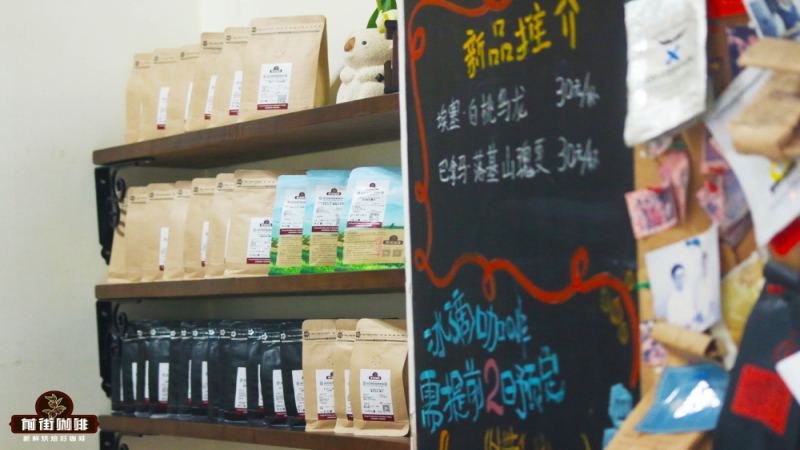
These two Front Street coffees both come with corresponding certification documents. The wooden barrels and green bean burlap sacks used for the green beans are also displayed at Front Street's Dongshankou store, so everyone can observe them while enjoying coffee.
Cupping flavors of Blue Mountain No. 1 and Golden Mandheling
Before launching a coffee bean, Front Street tastes that coffee in the form of cupping. Since both coffees highlight a rich nutty aroma, Front Street uses a medium-dark roast to retain some acidity; Golden Mandheling has a more prominent body, so its roast level is darker than that of Blue Mountain No. 1.
Cupping is an evaluation of coffee bean quality and flavor. A unified standard can more objectively identify the pros, cons, and characteristics of the flavors presented by the beans. After cupping, Front Street PWN Golden Mandheling not only has the aroma of dark chocolate, nuts, and caramel, but also the flavors of herbal spices and pine wood. It has a dark chocolate sweetness that returns in the finish, a full aftertaste, high cleanliness, and a gentle fruit acidity as the temperature drops.
When Front Street received the Blue Mountain No. 1 green beans, the beans were uniform and plump, consistent in size, and overall a translucent blue-green. After roasting, Front Street conducted cupping. The dry aroma had nuts, melon, and chocolate. After pouring in hot water, oolong tea, caramel, honey, and dark chocolate could be smelled. On the palate, there were rich dark chocolate, roasted hazelnut, cream, and dark brown sugar. The flavor was clean and clear, the mouthfeel full, and the aroma long-lasting.
Front Street brewing suggestions
Front Street believes that the biggest characteristics of these two coffees are body and roundness, so Front Street Coffee (FrontStreet Coffee) baristas consistently use the KONO dripper for extraction. The only exhaust area of the KONO dripper is that one-quarter of the ribs. When the water level rises above the rib area, the water volume inside the dripper continuously increases, and pressure is increased by the weight of the water. Because the outlet is relatively small, the contact time between coffee grounds and water can be extended. As water is poured, soluble substances are more effectively brought out, thereby enhancing the coffee's full and rich mouthfeel. Front Street hopes that every customer who places an order can taste the full aroma in the coffee, so it only ships coffee beans freshly roasted within 5 days, allowing everyone to enjoy the coffee's complete peak flavor period when they receive it.
Dripper: KONO
Water temperature: 87 degrees Celsius
Dose: 15 grams
Coffee-to-water ratio: 1:15
Grind level: 70% passing rate on China standard No. 20 sieve
Pouring method: three-stage pouring
First pour 30 grams of hot water and bloom for 30 seconds, then pour from the center point in a thin stream while slowly circling to 125 grams. When the water level in the dripper drops to the point where the coffee bed is about to be exposed, continue circling and pouring to 225 grams. Total extraction time is about 2 minutes. Before starting to taste, gently swirl the coffee liquid to mix it evenly.
The above content is compiled by CoffeeHunters, a coffee news website.


