







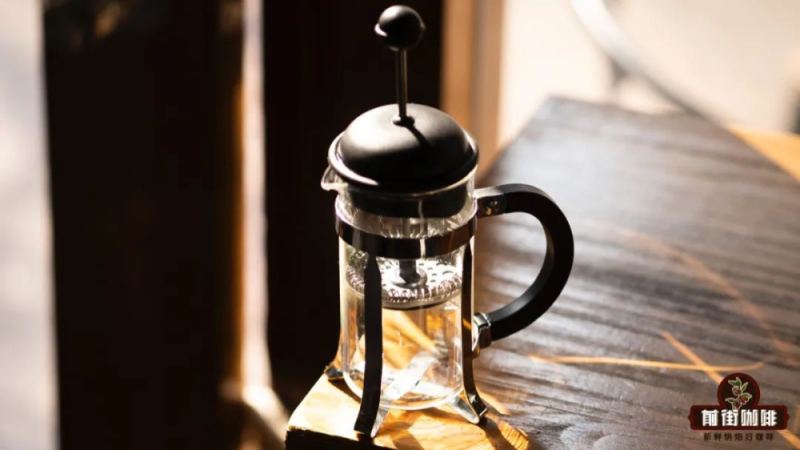
The French press has a low barrier to entry, but if you want to consistently brew a good cup of coffee, the key still lies in parameter control. This article starts with the origin and structure of the French press, sorts out the approach to bean selection, and offers specific suggestions around four variables: grind size, water temperature, coffee-to-water ratio, and steeping time. It uses the medium-light roasted Front Street Granada Geisha as an example to illustrate the yellow peach, apricot, citrus, and lemon notes brought by the natural process, as well as its refreshing performance whether served hot or cold. It will also mention the pros and cons of a fine grind, the trade-off between body and clarity brought by the metal filter, and the key points for disassembly and cleaning after use.
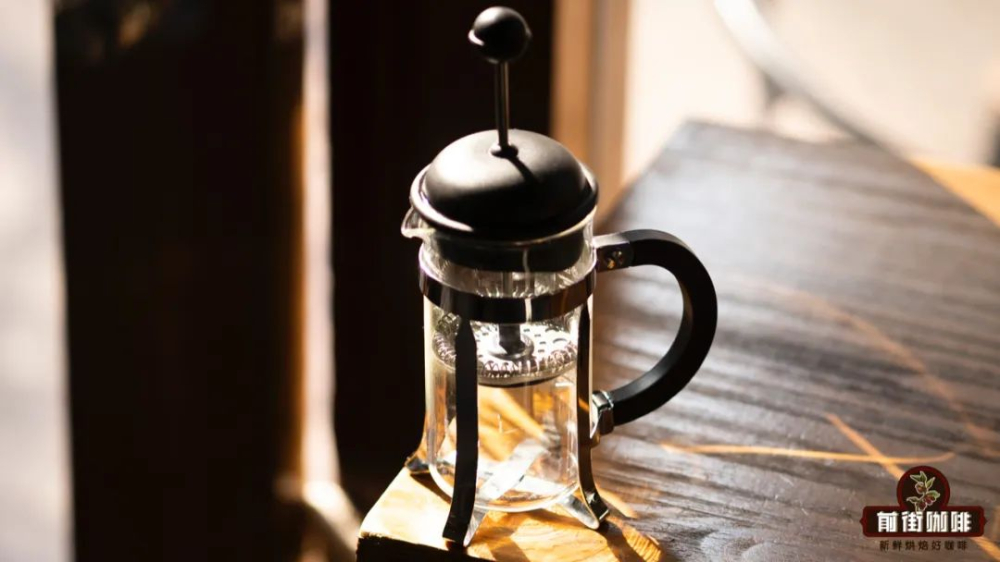
Brewing coffee with a French press may seem like it requires some skill at first glance, but in practice it is truly effortless!!! There is no need to pursue a highly precise pouring technique—just put the ingredients in according to the measured amounts and let them steep, and a delicious cup of coffee will naturally come out. Precisely for this reason, in "lazy-person" coffee gear lists like Front Street's, the French press is almost never absent.
French press
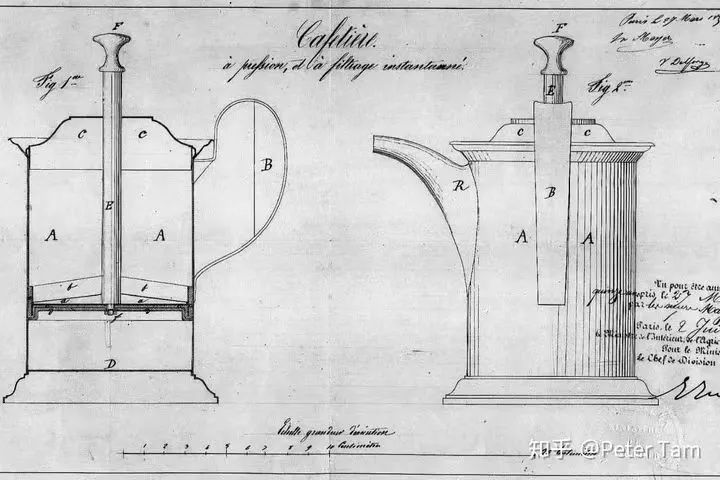
Tracing the history of the French press, it can be dated back to 1850s France. At that time, two Frenchmen, Mayer and Delforg, jointly designed a "piston filtration coffee device." After securing the patent, it was officially brought to market under the name French press.
However, the early version had an obvious flaw: during pressing, the filter could not maintain balanced centering, and coffee grounds easily slipped out through the gaps around the edge. A sip of coffee often came with a mouthful of grounds, which kept sales poor for a long time.
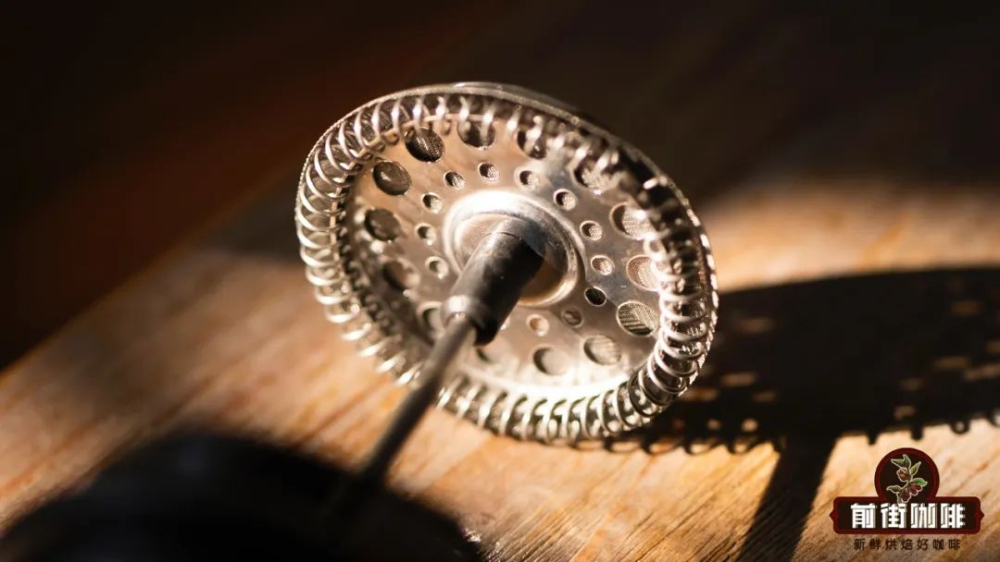
In the twentieth century, the Italians fixed this "bug"—they added a set of springs to the filter, which not only kept the filter stable during pressing but also improved its smoothness of movement. With this change, coffee made with a French press was no longer full of grounds, and its advantages of convenience and speed quickly made it popular—this is the version we are familiar with today.
From its appearance, one can see that the structure of the French press is quite simple: a carafe for the coffee, plus a plunger with a metal filter and spring plate. The production process is not complicated either: add grounds → pour water → wait → press down → done~ Yet many beginners find that the French press coffee they brew always leaves something to be desired.
Since the entire process involves no large motions that can significantly affect extraction, once human operation factors are ruled out, the problem is basically pinned down to the parameters.
Recommendations for choosing coffee beans for the French press
Unlike the drip method of pour-over, the French press belongs to immersion extraction, relying on hot water remaining in contact with coffee grounds for several minutes to dissolve flavor substances. As a result, the final cup often has more prominent caramel notes and a tea-like finish. If you want French press coffee with clear floral and fruity aromas and a good mouthfeel, you can choose Front Street Granada Geisha. The natural process gives this Geisha coffee bean flavors of yellow peach, apricot, citrus, and lemon. Whether served cold or hot, it can show a refreshing character.
Grind size
Let's talk about grinding first! Most French press tutorials available online recommend a coarse grind. Front Street also suggests that beginners use a coarser grind for the French press: a passing rate of about 70% through a No. 20 sieve is a grind size relatively suitable for immersion extraction. If compared to everyday things, it is about the coarseness of coarse granulated sugar.
Of course, a fine grind is not unusable either; it is just that a coarse grind leaves more room for error and can reduce the probability of over-extracted flavors caused by steeping too long! A fine grind is like a double-edged sword—brew it well and the flavor is extremely full, brew it poorly and it is a mouthful of bitterness!
Besides being prone to over-extraction, a fine grind has another shortcoming—too many fines. The pore size of a metal filter is larger than that of filter paper, and these fines can easily pass through the filter into the coffee liquid. The result is that the coffee's body increases somewhat, but clarity is also greatly compromised.
Water temperature
With a French press, the water is poured all at once, and during the steeping period there is no stirring action to increase the extraction rate, so the water temperature needs to be raised slightly to compensate—just 1~2°C higher than the usual pour-over temperature. For medium-light roasted coffee beans, a water temperature of 92~94°C is recommended; for medium-dark roasted coffee beans, a water temperature of 89~90°C is recommended.
Coffee-to-water ratio
If you want to adjust the coffee's strength, you cannot avoid the coffee-to-water ratio! 1:16 is a relatively commonly used ratio for the French press, and the extracted strength is also fairly palatable.
Coffee brewed at this ratio has a strength of about 1.1~1.2%. If, like Front Street, you prefer a rich mouthfeel, you might try a 1:15 coffee-to-water ratio; the brewed coffee will taste stronger and fuller.
Steeping time
Finally, steeping time! As mentioned earlier, in the absence of manual stirring, if you want to extract coffee substances, you have to increase the extraction rate through other aspects, and steeping time is another key variable! Under the same conditions, the longer the steep, the higher the extraction rate—and of course, the risk of over-extraction rises with it.
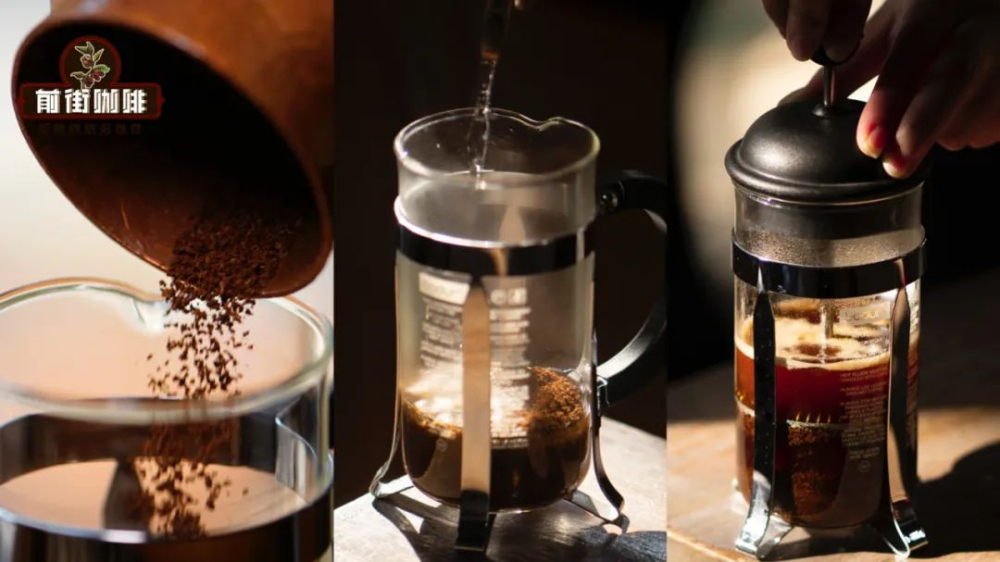
Front Street found through testing that if using medium-light roasted coffee beans, together with the other parameters above, a steeping time of about 4 minutes is more suitable; if using medium-dark roasted coffee beans, a steeping time of about 3 and a half minutes is sufficient. These two time points can both fully bring out the flavors that the corresponding roast level should have and avoid bitterness caused by steeping too long~
Final notes
After using a French press, do not forget to clean it thoroughly! After steeping, coffee oils and other substances will adhere to the metal filter, and if not cleaned in time, they can easily oxidize!
So Front Street recommends that after use, you must disassemble it for cleaning and take apart all the parts to clean them one by one. This not only ensures the flavor of the next cup of coffee but also provides better assurance for your health~
Besides brewing coffee, a French press can also be used to brew tea or froth hot and cold milk for latte art. It combines many advantages in one, and the price is also very friendly—it is practically too competitive!!
The above content is compiled by CoffeeHunters, a coffee news website.


