







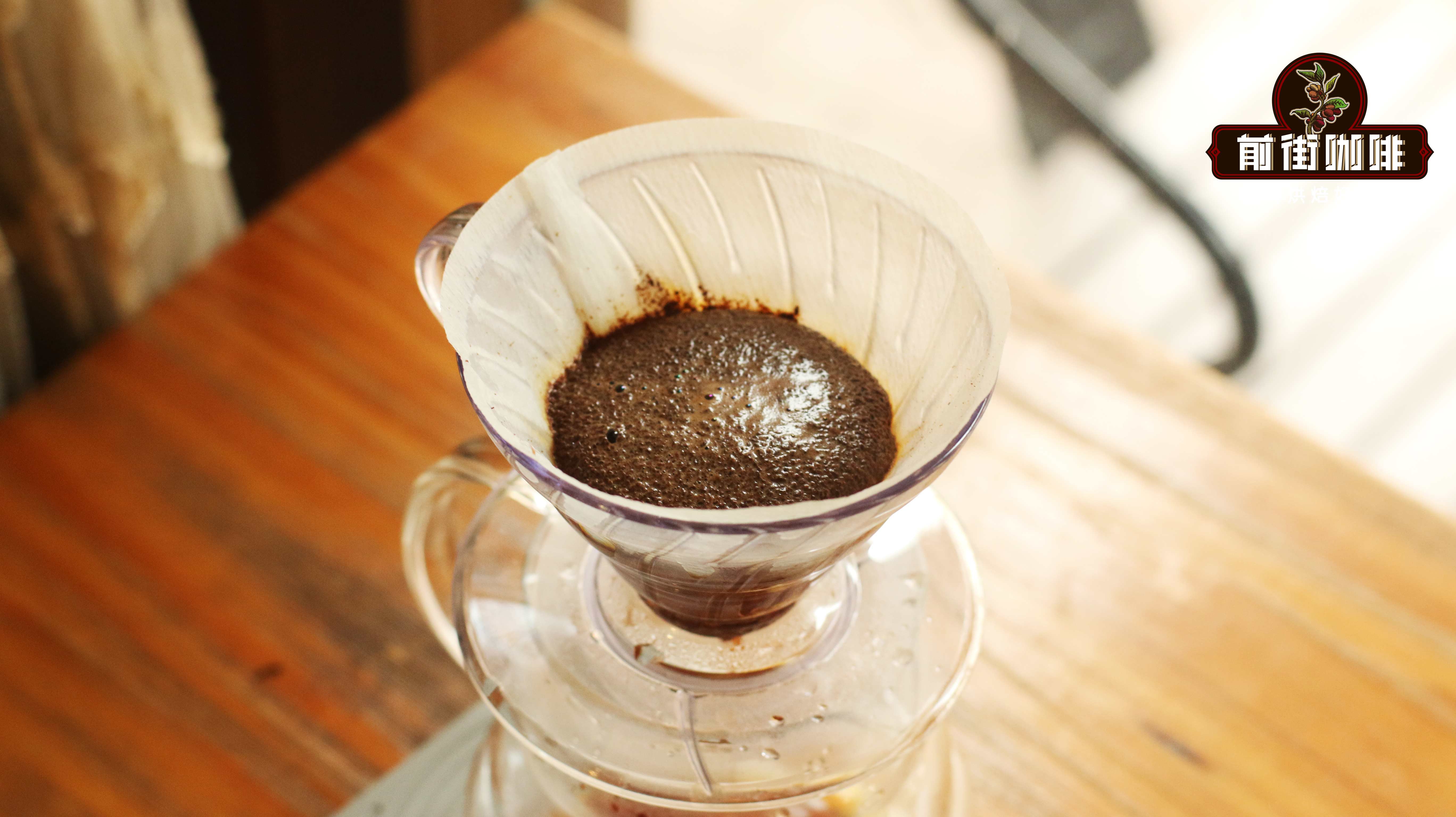
To make a clean, well-layered pour-over coffee at home, you don't actually need complicated equipment, but every step affects the final taste. From the grinder, digital scale, dripper, filter paper, gooseneck kettle, and thermometer, this article introduces home-friendly pour-over gear one by one following the brewing process, and gives specific brand models and reference prices. At the same time, for daily drinking needs, it recommends several single-origin beans from the Front Street Coffee staple series with different styles, covering different flavor directions such as full-bodied, floral, nutty, and chocolate, making it easy for coffee lovers to choose according to personal preference.
Hot water is poured over the coffee grounds, the powder gradually expands, wets, and releases gas, the aroma spreads with it, and finally drops fall into the cup one by one, gathering into a satisfying cup of coffee—the whole process is truly fascinating.
Before formally getting started, let's first fill in a little basic coffee knowledge in the most straightforward way. In the cafes on street corners and in alleys, the vast majority serve espresso coffee, that is, using a machine to extract espresso liquid under high temperature and high pressure, and from this come derived drinks such as lattes, mochas, and cappuccinos.
What this article discusses, however, is the brewing method for single-origin coffee. Since I came into contact with those single-origin beans named by "origin + processing method" (such as washed Yirgacheffe), many of my fixed ideas about coffee were overturned—coffee is not necessarily bitter; it is entirely possible, like tasting wine, to drink floral and fruity aromas from different beans; and the simplest pour-over method, with no milk or sugar added, is precisely the best way to showcase the true flavor of single-origin beans.
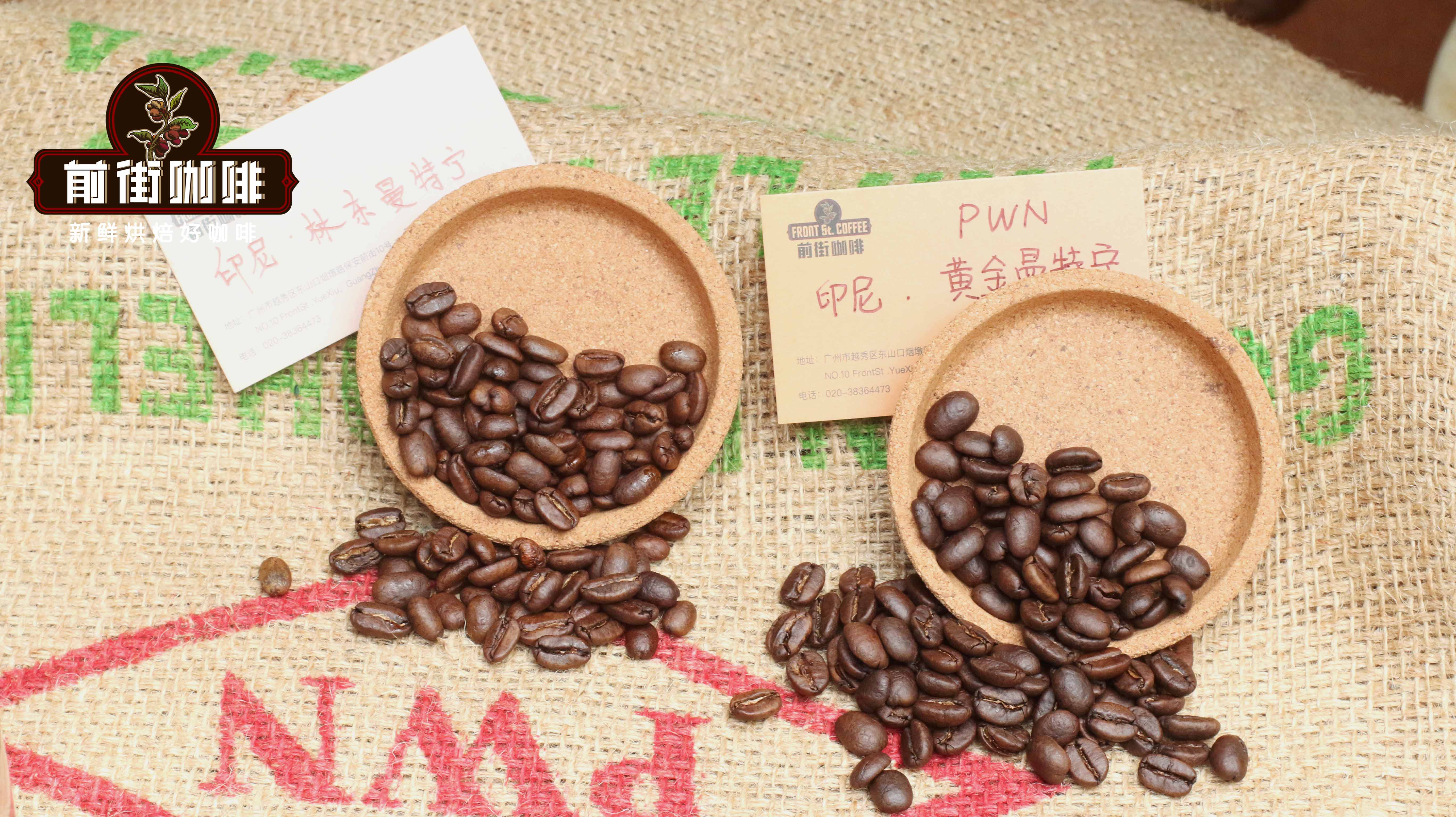
There are many types of beans that can be used for pour-over, but if the goal is daily drinking at home, the Front Street Coffee staple series would be the first choice: for those who prefer a full-bodied mouthfeel and spicy notes, you can choose Front Street Indonesia Mandheling; for those who love floral aromas and citric acidity, try Front Street Yirgacheffe; for those who want creamy and nutty tones, Front Street Brazil Cerrado is very suitable; for those pursuing dark chocolate flavor, Front Street Colombia Huila will not disappoint; in addition, there are Front Street Yunnan small bean and Front Street Costa Rica Tarrazu, with soft acidity and nutty aroma, available for selection.
Next, I will introduce the pour-over equipment I use most often, one by one, following the process of making a cup of pour-over coffee.
1. Grinder
If you have ever been captivated by the aroma of coffee filling a room, then you must understand how crucial freshness is to coffee flavor. Whether coffee is fresh depends on the roast date, storage method, and whether it is ground on the spot. Therefore, I strongly recommend grinding at home fresh, especially during the first pour and bloom, when the difference between fresh-ground and pre-ground coffee is obvious at a glance.
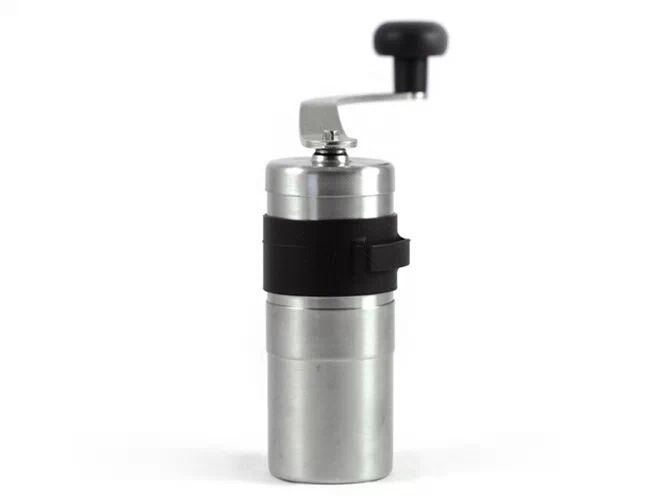
Porlex manual coffee grinder
Compact in size, easy to carry, the stainless steel shell feels solid in hand, and the internal spring and mechanical structure can be cleaned directly with water.
The ceramic burr supports grind size adjustment. Generally speaking, the finer the grind, the easier it is to produce bitterness, but grinding too coarse will lead to under-extraction.
The Porlex is already quite excellent among manual coffee grinders, but based on my actual experience, making a cup of coffee requires about 15 grams of beans, grinding coarse requires about 60 turns, and grinding fine requires up to 100 turns. A full load is only enough for one to one and a half servings. If you lack patience or arm strength, it is recommended to directly buy pre-ground coffee, or get an electric grinder.
About 270 yuan
2. Digital scale
When drinking coffee at a specialty cafe, you will notice that the barista precisely controls the dose of beans according to the flavor characteristics of each coffee, and the entire extraction process is completed on a scale, because the water-to-coffee ratio needs to be calculated accurately, so the weighing step absolutely cannot be ignored.
Of course, the strength of the brew can be flexibly adjusted according to your own preferences and understanding of the beans. Usually, a single serving is between 15 grams and 18 grams of coffee beans.
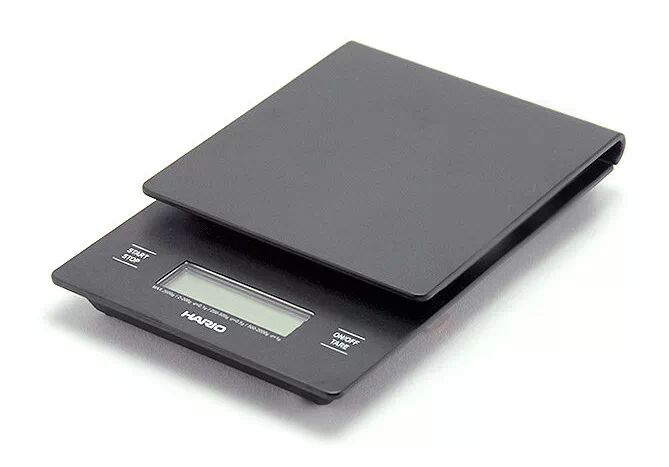
Hario digital scale

High precision, weighing range from 2 grams to 2000 grams, with a minimum increment of 0.1 grams, far more accurate than an ordinary kitchen scale.
It comes with a stopwatch timing function, which helps accurately grasp the brewing ratio and time. Usually, after the bloom (that is, the first pour that lets the coffee grounds release gas), wait 15 seconds before the second pour, and the entire extraction process is best controlled within 2 to 3 minutes.
The response speed is a bit slow, but it has little impact on operation.
About 420 yuan
3. Dripper
Choosing a dripper is mainly considered from three dimensions:
1) Material: Dripper holders come in choices such as glass, resin, ceramic, and stainless steel. Personally, I think glass is the most attractive, ceramic has the best heat retention but is somewhat heavy, while resin is practical, lightweight, and not easy to break.
2) Holes: The holes at the bottom of traditional oval drippers are divided into single-hole, double-hole, and three-hole. A single-hole dripper has the fastest extraction flow, placing higher demands on the brewer's water flow control and timing.
3) Grooves: Those uneven grooves on the wall of the dripper are not decorative; the design is very particular. These intentionally formed gaps between the filter paper and the dripper wall facilitate air circulation, thereby improving extraction quality.

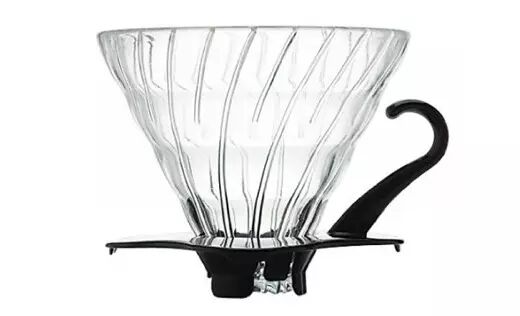
Hario V60 dripper (available in ceramic, glass, and resin materials)
Ceramic texture
Glass texture

Resin texture
Hario is the brand that invented the dripper, and the V60 is the most widely used pour-over drip brewing device in the world.
That it is the most classic and best-selling needs no further explanation. The V60 conical dripper has a relatively large round hole at the bottom, and the wall has spiral groove patterns. This design has obvious advantages over traditional drippers—not only does it greatly increase the thickness of the coffee bed, making it convenient to pour in circles, it also improves the extraction balance of the first bloom pour.
With enhanced permeability, both water flow and airflow channels become smoother, making the coffee taste closer to the effect of a flannel cloth filter, balanced and layered.
The equipment is simple, easy to maintain, and the purchase cost is not high.

Because the coffee comes into full contact with air during the drip process, some aroma will be lost. This is probably the only shortcoming of the drip method.
Prices vary by material. Buying ceramic or glass alone is about 100 yuan, resin is about 40 yuan, and a set is around 150 yuan.
4. Filter paper
What is there to know about filter paper?
1) Material: Broadly divided into flannel cloth and ordinary filter paper. As for the final extracted flavor, paper more easily absorbs oils, so flannel cloth can retain more of the mouthfeel brought by coffee oils, but cleaning is more troublesome and it needs to be replaced often. Filter paper is disposable, cleaner and more convenient, and is recommended for home use.
Flannel cloth
2) Shape: Just make sure it matches the dripper you bought. First, choose the filter paper size according to size, and second, choose flat-bottom or cone-shaped filter paper according to the dripper shape.
Flat-bottom filter paper
Cone-shaped filter paper
Melitta filter paper (it is recommended to choose an unbleached paper type)
Once again, the filter paper must be purchased to match the shape and size of the drip brewing device.
Melitta is the world's first brand to invent coffee filter paper, and it has been more than a century since 1908.
Made with patented Aromafleece aromatic wool paper technology, the entire surface is covered with perforations, able to retain the essence of the coffee while fully filtering out residue.
No pulp taste—this is its notable advantage over most filter papers on the market. (Here I will also share a small tip: when pouring, avoid letting water fall directly onto the paper, and make sure the water flow always lands on the coffee grounds; this can also reduce the pulp taste.)
No obvious shortcomings found so far.
About 15 yuan
5. Pour-over kettle
Is there also something to know about pour-over kettles? Can I just use a regular kettle? Of course you can... but a dedicated pour-over kettle has several advantages: the slender spout design makes it easier for you to control the water flow, and pouring in circles is smoother; if the water temperature is too high, you can add cold water to the kettle to adjust it, which is surely more suitable than adding water directly to a regular kettle!
Kalita colorful stainless steel narrow-spout pour-over kettle
Kalita pour-over kettle
As long as it is a pour-over kettle produced by a coffee brand, they are generally all similar, and when purchasing, you can simply follow your own aesthetic. I personally use the Hario stainless steel model more often, but here I also recommend a Japanese coffee equipment brand, Kalita. Its pour-over kettles come in rich styles and colors and are deeply loved by utensil enthusiasts.
Hario pour-over kettle
The advantages of the slender spout have already been explained earlier. Although the body is made of stainless steel, the design is clever, and it will not scald your hand even when hot water is poured in.
Compared with ceramic models, this stainless steel body is lighter. Of course, in actual operation you also have to consider the weight of the water, and it is not recommended to fill it completely when brewing. As for how handy it is, practice makes perfect.
Indeed, it is hard to find any fault with it. If I had to mention one, it would probably be that the price is a bit high?
About 500 yuan
6. Digital thermometer
Once I visited a barista, and when he opened his "treasure box," I saw a device with several wires sticking out, and I was stunned on the spot—this thing was clearly a multimeter used to measure voltage and current in high school physics lab class, and now it had become a thermometer!
The one in the lower left corner is the multimeter being used as a thermometer...
Of course, there is no need to buy such a precise thermometer at home. As long as it is a digital thermometer (more accurate than a dial type), that is enough. The water temperature for brewing specialty coffee should not be too high; 85 to 90 degrees is fine.
Dretec/ Doriko Japanese kitchen cooking food thermometer
Dretec digital thermometer
Accurate to 0.1 degrees Celsius, and it can also meet other needs such as kitchen cooking and baking.
Each to their own needs, I suppose. Some pour-over kettles have a small thermometer built into the lid. Although it is not very accurate, its advantage is convenience.
About 140 yuan
At this point, the complete set of pour-over equipment has been introduced! Let's watch a video, so you can more intuitively understand how a cup of stylish coffee is born.
That said, if you are purely pursuing a visually elevated feel, cold brew drip coffee and siphon pots are actually more pleasing to the eye.
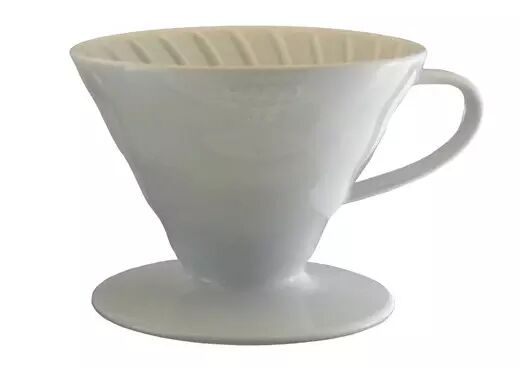
Image source: http://www.dzcj.com/
Cold brew drip coffee
Image source: http://pic.66wz.com/
Siphon pot
There is also the moka pot, whose principle is similar to the siphon, but its operation is more simplified, allowing boiling water to extract coffee by moving in the opposite direction of gravity through distillation. Currently on the market there are plug-in models and models that require open-flame heating.
Coffee made with a moka pot is stronger than drip pour-over, but it still cannot compare with Espresso, and cleaning it is similarly troublesome. As for brands, you can consider Bialetti moka, the originator that invented the moka pot.
Bialetti moka pot
Perhaps the writer is an office worker pursuing efficiency. Here it is not recommended to use the above advanced equipment as daily home pour-over tools. Especially the siphon pot—with an alcohol lamp and all those glass bottles and jars, it is really time-consuming and laborious. And the cold brew drip pot is generally only seen in cafes.
Having said so much, if you still feel that drinking a cup of coffee at home requires buying so much equipment and is too much trouble, then I will recommend the simplest pour-over solution—the French press. Just put in coffee grounds, pour water, filter, and it is done. However, because the French press uses a metal filter, it will inevitably let some fine coffee grounds through, so the mouthfeel is not delicate enough, and the taste is not easy to control precisely.
Bodum French press
To sum up, compared with all other coffee equipment, pour-over has the highest technical demands on the operator, and the large pile of equipment listed earlier is basically all necessary. Pour-over is also the most time-consuming and laborious, and details such as temperature, water flow speed, coffee grind size, and filter paper (or flannel cloth) quality will all affect the taste of the coffee.
When all is said and done, we should still live happily. For people who truly love coffee, what are these troubles, really?
The above content is compiled by CoffeeHunters, a coffee news website.


