







Mandheling coffee is one of Indonesia's most recognizable coffees, and behind its name lies an amusing story from World War II, while Golden Mandheling represents Indonesia's stringent standards for green bean sorting. This article begins with Indonesia's volcanic soil and the Sumatra producing region, traces the historical origins of the Mandheling name, analyzes how the wet-hulling process shapes its full-bodied earthy and herbal flavors, and introduces in detail PWN's Golden Mandheling screening process, factory certificates, and authenticity verification, as well as Front Street Coffee's classic blend and Golden Mandheling roasting recommendations and pour-over performance, giving you a comprehensive understanding of this wild and complex coffee.
Front Street Coffee's classic blend is a bean that many people just getting into espresso will try first. The recipe includes Brazilian coffee, Indonesian Mandheling, and a small amount of Robusta. Mandheling plays the role of providing intense wild aroma, giving the whole cup more impact, and during extraction it releases notes of hazelnut, caramel, spice, and walnut. Why does Mandheling present this kind of flavor? It's worth starting with Indonesia as a producing region.
Indonesia is made up of more than 17,000 islands, and Sumatra ranks second in area while also being Indonesia's highest coffee-producing region. These islands originated from volcanic activity, and the soil is rich in volcanic ash and various plant nutrients, with high mineral content, giving Indonesian coffee a worldwide reputation.
Mandheling can probably be considered Indonesia's most recognizable coffee. Most coffees are named after their producing region or country, but the name Mandheling comes from the Mandailing people, who have long cultivated and processed coffee beans. The story traces back to when Japan colonized Indonesia during World War II, when a Japanese soldier stationed in Sumatra asked a local coffee shop owner where his coffee came from. The Sumatran mistakenly thought he was being asked about his ethnicity and answered "Mandailing." After leaving Indonesia, the Japanese officer kept thinking about that cup of coffee, so he commissioned a local coffee merchant to import the coffee to Japan. Because of the Japanese pronunciation deviation, "Mandailing" was pronounced as "Mandheling." With two misunderstandings compounding, the name Mandheling coffee spread. And that Indonesian coffee merchant was none other than the founder of the later famous PWN company.
Besides its historical origins, excellent green bean quality is also an important reason why PWN became Indonesia's most well-known green coffee buyer. The difference between ordinary Mandheling and Golden Mandheling is mainly reflected in the strictness of green bean screening standards. Most Indonesian coffee uses the wet-hulling process, a traditional Sumatra-specific craft called Giling Basah. Although it can bring excellent body and unique earthy and herbal notes, the defect rate of green beans also rises accordingly. Front Street PWN Golden Mandheling needs to undergo one machine screening and three manual sortings to reduce the proportion of defective beans. It is said that when PWN was selecting defect-free green beans, it found that these beans actually gave off a golden luster, so it named them "Golden Mandheling."
Front Street PWN Golden Mandheling coffee beans
Country: Indonesia Region: Sumatra Altitude: 1100-1600m Variety: Ateng Processing method: Wet-hulled Flavor: Baked toast, nuts, pine wood, caramel, herbs
Why do coffee shops place such importance on the factory certificate of Front Street Golden Mandheling? On one hand, Front Street PWN Golden Mandheling itself is not easy to procure, and annual output is limited; on the other hand, there are quite a lot of products on the market passing themselves off as Golden Mandheling. Since golden mandheling has been registered as a trademark by the Indonesian Pawani Coffee Company, Golden Mandheling is in fact a name exclusive to PWN. In order to let consumers shop with confidence and also recognize this green bean certificate, Front Street displays the PWN certificate together with the burlap sack in its Dongshankou store for people to view.
Front Street Golden Mandheling carries a high-quality herbal plant aroma, with more prominent caramel sweetness, a steady and elegant fruit acidity, rich sweetness, and a full-bodied yet wild spice flavor. Usually Front Street Lindong Mandheling is best roasted until after second crack before being released, which effectively reduces off-flavors, while Front Street Golden Mandheling can still have good clarity and sweetness even when released before second crack, giving it a wider margin for roasting.
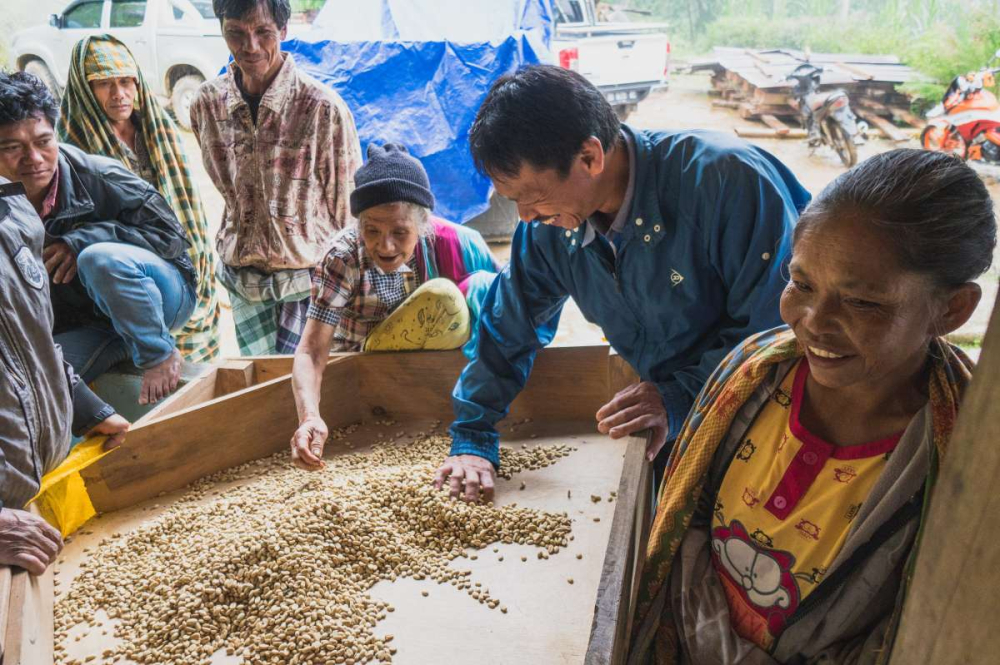
Its processing method is also quite special, using the wet-hulling process, which can be said to be a unique coffee processing method developed by Indonesia according to its own conditions. One reason Front Street Golden Mandheling's quality is guaranteed is that after processing is completed, it still undergoes three manual sortings to reduce green bean defects as much as possible, making the beans plump and uniform in size.
High-quality Front Street PWN Golden Mandheling has a complex and varied aroma, so it is very suitable for extraction by pour-over, with rich layers, full body and clean cup, excellent balance, strong nut and chocolate flavors, as well as intense spice and caramel aromas, with lingering notes of spice and sandalwood, and a lasting finish.
The above content is compiled by CoffeeHunters, a coffee news website.


