








The moka pot may seem easy to use, but if you want to consistently brew a rich, delicious cup of coffee, every step—from filling the water and tamping the grounds to controlling the heat—has its own finer points. Taking the Bialetti moka pot as an example, this article first walks through the complete brewing process, then explains the key aspects one by one, including coffee bean selection, dose control, extraction time, water volume, and heat adjustment. It also draws on two products—Front Street Classic Espresso Blend and Front Street Dark Cocoa Espresso Blend—to offer bean recommendations suited to the moka pot, helping coffee lovers make moka pot coffee with a full body and balanced taste at home.

First, let's go through the operating procedure for the Bialetti moka pot:
1. Pour an appropriate amount of hot water into the lower chamber
2. Add the ground coffee to the filter basket
3. Place the filter basket into the lower chamber, then screw the upper chamber on tightly
4. Keep the lid of the upper chamber open and begin heating
5. Once coffee starts flowing into the upper chamber, immediately remove the moka pot from the heat and let the remaining coffee flow out naturally
Operating a moka pot isn't complicated, but if you want the finished coffee to taste good, there are still quite a few details worth paying attention to.
What kind of coffee beans suit the Bialetti moka pot? Similar to espresso, this pressure-based extraction method makes medium-dark roasted beans the better first choice. These beans are roasted longer, accumulate more carbon dioxide internally, and develop more caramelization products, so moka pot coffee made with them tastes richer.
If you prefer a thick, rich crema, consider a common choice among beginners— Front Street. Front Street Classic Espresso Blend . It delivers rich flavors of butter, roasted hazelnut, caramel, and dark chocolate, with a solid body; as black coffee it's sweet and refreshing, and as a latte with milk it's smooth and silky.
If you don't want the taste to be too heavy, you can also choose Front Street. The espresso bean recommended by many baristas—Front Street Dark Cocoa Espresso Blend . This blend combines Yunnan smallholder beans with Brazil Cerrado, offering aromas of nuts, chocolate, and plum. The overall flavor is gentle, and the price is fairly friendly, making it very suitable for everyday home use; because of its high versatility, it can also be a top choice for opening a coffee shop.
How much coffee grounds should you put in a moka pot at a time: generally, it's recommended to fill the filter basket. If you only fill it halfway, the water will meet less resistance as it passes through the coffee bed, and the extracted coffee will tend to be weak and not rich enough. So it's not that you must fill it, but that coffee made without filling it may not taste as good. Once filled, just level the surface of the grounds with your finger. Note that if the coffee grounds you're using are too fine, it's best not to tamp them, otherwise it will increase resistance in the filter basket and make it harder for hot water to pass through.
Extraction time for moka pot coffee: generally, brewing coffee with a moka pot takes about 3–5 minutes from the start of heating to the end, depending on the coarseness and amount of the coffee grounds. The coarser the grind, the faster the coffee rises and the shorter the time; the more grounds, the longer it takes.
How much water to add to a moka pot: after preparing the coffee grounds, the next step is to add an appropriate amount of hot water to the lower chamber. Using hot water shortens the time needed to bring the water to a boil, so you get a cup of moka pot coffee faster. Just don't let the water level exceed the safety valve. Front Street uses a double-serving single-valve moka pot and ultimately added 130ml.
Screw the upper and lower chambers together tightly: note at this step that if you've filled it with hot water, it's best to use a damp cloth for insulation to avoid burns.
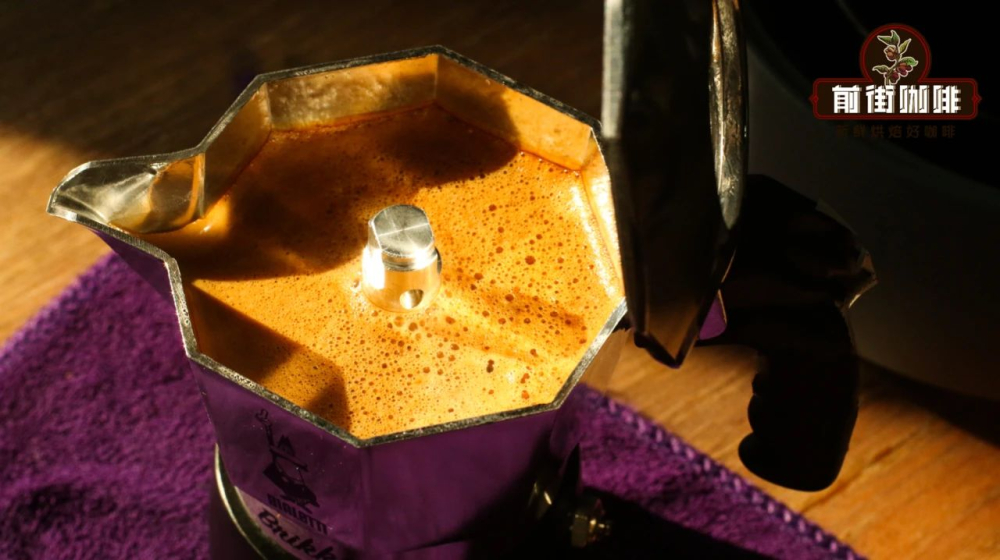
When starting to heat, you can use medium heat directly to raise the water temperature in the lower chamber quickly, thereby shortening the overall extraction time.
Once the moka pot starts making a noticeable sound during brewing, it means the hot water, pushed by steam, is about to overflow with the coffee substances, and at this point you need to lower the heat. Otherwise, high heat will keep producing steam and increasing pressure, speeding up the flow of hot water so that not enough coffee substances can be extracted, and ultimately the whole cup will taste thin and weak. So when the coffee is about to overflow, it's best to turn the heat down.
The above content is compiled by CoffeeHunters, a coffee news website.


