







Matcha lattes have recently become popular again, which reminds Front Street of a unique coffee-making method we shared in the early years—whipping coffee liquid with a matcha whisk to create a dense foam. This method was created by actor Hiroshi Fujioka, inspired by his mother's tea ceremony, transplanting the whisking action from matcha preparation to coffee, which not only enhances the aroma and mouthfeel but also carries a distinct Japanese local flavor. This article will fully introduce this method: from the background of matcha and the tea-whisking method, to coffee bean selection, brewing parameters, whisking technique, and finally a tasting comparison. Front Street uses Blue Mountain coffee beans and a Kono dripper for the brewing demonstration, and records the noticeable flavor differences before and after whisking, suitable for trying at home.
To learn more about specialty coffee, welcome to follow: Front Street Coffee (Frontsteet Coffee)
Recently, matcha lattes seem to have become popular again, appearing so frequently that Front Street can't help but recall a rather special coffee-making method we introduced a few years ago. This trick is quite interesting, so today we're bringing it out to talk about again. If you have nothing to do at home, you might as well give it a try.
Since the entire process involves matcha preparation techniques, before we officially begin, Front Street will first briefly talk about matcha and how it is prepared.
Matcha originated from the tea-whisking method of China's Song Dynasty, and later through localized evolution, formed the uniquely characteristic Japanese tea ceremony culture. Compared with the tea-whisking method, matcha places more emphasis on the tea ceremony spirit of "harmony, respect, purity, and tranquility." In traditional matcha preparation, a small amount of matcha powder is first taken, a small amount of warm water is added to the bowl, and a tea whisk is used to mix it evenly first; then a certain amount of warm water is poured in, and by whisking to create foam, a thick, delicate layer of foam is brushed up.
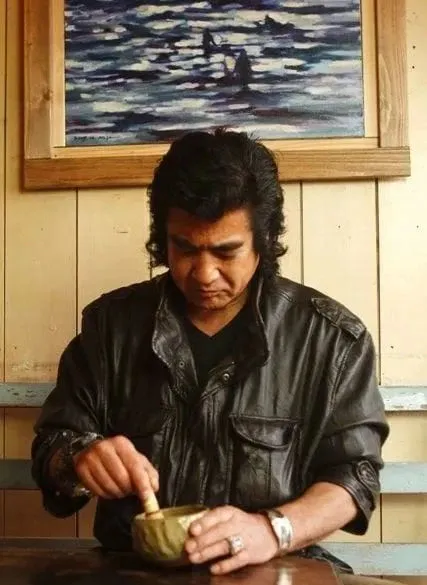
And the method Front Street wants to share today is precisely borrowing the whisking action from matcha preparation to stir coffee. With this step added, the coffee can obtain a fine, rich foam, the aroma is amplified, and the mouthfeel is improved as well. Interestingly, the inventor of this unique method is not a professional barista, but Hiroshi Fujioka, whose main profession is acting.
It is said that his initial interest in coffee came from needing to travel all over the world for work and volunteer activities. Wherever he went, most people would invite him to taste the local specialty coffee. This gave him the opportunity to come into contact with all kinds of coffees with very different flavors, and his interest was ignited from there. After returning to Japan, he began to think about how to make coffee with Japanese local characteristics.
In the end, inspired by his mother's tea ceremony, Mr. Fujioka came up with the idea of applying the whisking technique from matcha preparation to coffee. In this way, the texture of the coffee is improved, while Japanese local elements are incorporated at the same time—achieving two goals at once. Now, Front Street will demonstrate how to carry out this unique coffee-making method specifically.
First, the coffee needs to be extracted. In the video, Mr. Fujioka used traditional Japanese dark-roasted beans, and the brewing method was the drip method. It is easy to imagine that this cup of coffee would perform quite well in both strength and mouthfeel. Therefore, Front Street chose a plan that can also brew a rich mouthfeel, and for the coffee beans used a somewhat lighter-roasted Blue Mountain, because Blue Mountain performs more prominently in aroma. The parameters are as follows:
Dose: 15g
Coffee-to-water ratio: 1:12
Grind size: Ek43 setting 10.5, No. 20 sieve passing rate 75%
Water temperature: 88°C
Dripper: kono
First, bloom with twice the coffee dose in water, with a bloom time of 30 seconds.
After the bloom ends, use a small water stream throughout. Divide the remaining 150ml of water into three pours, 50ml each. After the previous pour of hot water has fully drained through, then proceed to pour the next.
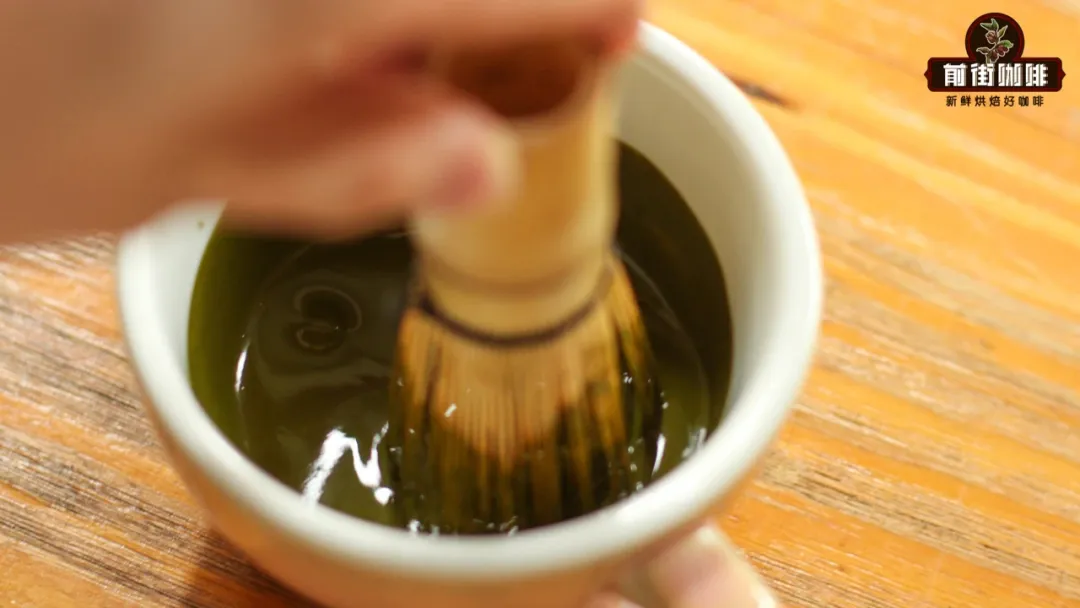
After extraction is complete, pour the coffee into a bowl with a larger diameter and greater depth. Since the Front Street store does not have a professional matcha bowl, here we use the "all-purpose" cupping bowl as a substitute.
The amount of coffee poured depends on the size of the bowl. The cupping bowl has a small capacity, so Front Street only poured 80ml. Then, use a tea whisk to whisk the coffee.
Note that here you cannot stir clockwise or in circles. Because the goal is to create foam, you need to whisk back and forth in a front-to-back or up-and-down direction to bring air into the coffee; only then can foam form.
When the foam can completely cover the surface of the coffee, and you can feel obvious resistance while whisking, it is basically about done. Of course, you can also continue whisking; the longer you whisk, the thicker and finer the foam.
Front Street first tasted the coffee that had not been whisked. Because the strength was rather high, the flavor on entry was quite intense. For those who do not prefer strong flavors, if it is not diluted with water, it is not very easy to drink.
With the impact of the former as a setup, Front Street drank the whisked coffee almost with the mindset of testing poison. Unexpectedly, hey! It was pretty good. Although the strength was still relatively high, this cup of coffee did not taste as intense as the former; instead, it was very soft. As mentioned earlier, the aroma was very rich, the mouthfeel was thick and full, and the texture was fine and silky—a very good experience.
So if you have nothing to do at home, you can try making it~ But to be honest, this is a bit hard on the hands. If Front Street were to make it again, we would definitely, definitely choose an electric milk frother!
The above content is compiled by CoffeeHunters, a coffee news website.


