







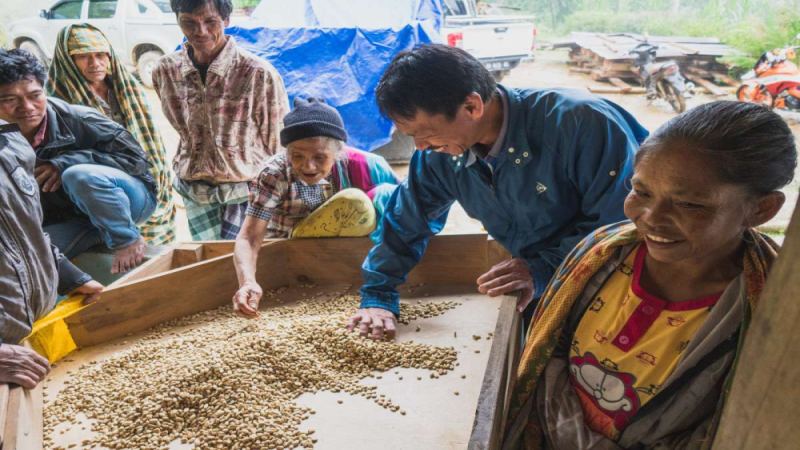
Mandheling is the representative coffee of Indonesia, and Golden Mandheling is the finest among them. This article starts with the classification of coffee-producing regions in Sumatra, sorting out the flavor differences between Mandheling, Golden Mandheling, Lake Tawar coffee, Aged Mandheling, and Java Old Brown. It focuses on PWN Pwani Coffee Company's trademark registration and strict screening standards for Golden Mandheling, and analyzes the seven steps of the wet-hulling process. The article also explains in detail the producing region, grade, altitude, and roasting strategy of the Golden Mandheling sold by Front Street Coffee, helping you understand why this coffee, while retaining a soft acidity, presents a classic flavor profile with high sweetness and a rich, full body.
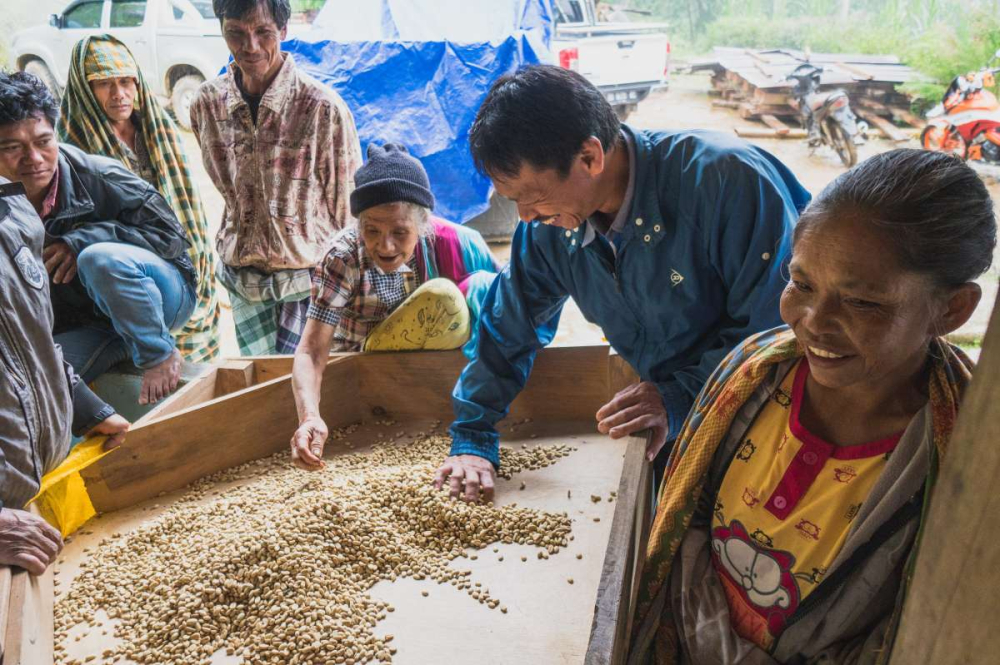
Sumatra is the main producing area of Indonesian specialty coffee, and the local coffee system is quite complex, but it can be roughly simplified into four categories: Mandheling, Golden Mandheling, Lake Tawar coffee, Aged Mandheling, and Java Old Brown. Mandheling has a unique herbal and woody agarwood note, Golden Mandheling is known for its bright body and excellent sweetness, and Aged Mandheling shows a syrupy texture and sweet aftertaste. Among them, Front Street G1 Mandheling from Lintong and the high-quality-focused Front Street PWN Golden Mandheling attract the most attention.
When talking about Front Street Golden Mandheling, PWN must be mentioned first. This abbreviation often appears together with the name Mandheling coffee, and it is actually the abbreviation of Pwani Coffee Company.
This company is very well known locally in Indonesia and mainly engages in coffee purchasing, especially Mandheling coffee. Almost all of Indonesia's highest-quality producing regions fall within its purchasing scope, so most beans produced by PWN are distinctive specialty coffees.
Front Street Golden Mandheling is precisely a product of this company. After the green beans are purchased, they first undergo one round of machine sorting, then more than three rounds of manual hand sorting. Only plump, defect-free beans can enter the Golden Mandheling grade. This layered screening process is as strict as a talent audition.
The purpose of machine sorting is first to ensure that the bean size reaches 18 mesh or above, and the subsequent multiple rounds of manual sorting are to remove defective beans with irregular shapes. Reducing the defect rate significantly improves the overall quality of Mandheling coffee.
However, PWN has registered Golden Mandheling as a trademark, which means that in the future only Golden Mandheling produced by PWN can be considered true Golden Mandheling in the strict sense. Many beans on the market that are not produced by PWN but carry the name Golden Mandheling should actually be called specialty Mandheling.
The Golden Mandheling coffee beans sold by FrontStreet Coffee all come from PWN. In Front Street's offline stores, you can see the certification certificate issued by PWN, as well as green bean sacks printed with the PWN logo.
02 | Processing Method
Wet Hulling, also called wet shelling, is known in the local language as Giling Basah and is a traditional Indonesian coffee processing method. Judging only by the name, wet hulling seems similar to the washed process, but the cup flavors of the two are completely different. Coffee processed by wet hulling is usually full-bodied and intense, with a very distinct character.
If you want to experience the unique charm of wet hulling, you can buy Front Street Lintong Mandheling. On the basis of wet hulling, it uses a medium-dark roast and shows notes of caramel, spices, herbs, dark chocolate, and nuts. It represents the characteristics of this producing area very well and is suitable for many brewing methods such as pour-over, French press, moka pot, and home coffee machines.
Steps of the Wet Hulling Process
① Remove the skin and pulp, keeping the parchment and mucilage
② Fermentation in a water tank
③ Wash off the mucilage
④ Sun-dry with the parchment for 2-3 days, to a moisture content of 20-24%
⑤ Remove the parchment
⑥ Dry the green beans to a moisture content of 12-13%
⑦ Prepare for export
In order to restore the classic Mandheling flavor of the last century, Front Street chooses to drop the beans before second crack, retaining a hint of soft acidity. This gives Front Street PWN Golden Mandheling high sweetness, a rich and full body, and an intense taste, with flavor notes of baked toast, pine wood, caramel, cocoa, and a slight herbal earthiness.
Front Street PWN Golden Mandheling Coffee Beans
Producing region: Gayo Mountain, Aceh Province, Sumatra, Indonesia
Company: PWN Pwani Coffee Company
Altitude: 1100-1600m
Grade: G1, triple hand-sorted
Processing method: wet hulling
The above content is compiled by CoffeeHunters, a coffee news website.


