







Espresso and Americano both belong to the Italian coffee system, but the drinking experience is completely different. Espresso uses pressurized extraction to condense the essence of coffee into a 30ml small cup. The flavor is rich and aromatic, but it is often misunderstood by first-time tasters because of its bitterness. This article starts from the sources of espresso's bitterness and the difference between Italian blend beans and SOE, sorts out the correct tasting approach, and explains Americano's position as an espresso-plus-water drink. Combining specific products such as Front Street Coffee's commercial blend coffee beans and Sunflower Warm Sun Blend, it helps coffee lovers understand the impact of different roast levels and bean choices on espresso flavor, and find the cup that suits them.
To learn more about specialty coffee, welcome to follow: Front Street Coffee (Frontsteet Coffee)
"This bitter stuff, what on earth is good about it?" This is probably many people's first reaction to espresso. Many people's first encounter with espresso happens in a cafe, when they open the menu, glance at the prices, quietly gasp, and then cautiously order the cheapest item.
But what arrives is a tiny cup of coffee, and they think to themselves: for this little amount, it still costs this much, while the milk tea next door is several times larger and cheaper. So they decide to down it in one gulp, "Pff! Why is it so bitter!"
Is espresso really that bitter?
Front Street Coffee has noticed that if a cafe lists espresso on its menu, it is probably the worst-selling item. Very few people are willing to explore the wonders of espresso. But in Italy, espresso is a national-level drink, and locals feel that only that rich, roasted aroma deserves the name "coffee." In reality, however, quite a few people just treat it as a functional beverage for staying awake, adding creamer and sugar without any fuss, doing whatever makes it go down easily.
The bitterness of espresso is perhaps something only Cantonese people who have drunk Liangcha can truly understand. Liangcha is a bitterness many people cannot accept, but there are still some who prefer its taste, and espresso works the same way.
Guests who love espresso can naturally taste the bitterness in it, but at the same time, they can also perceive the coffee aroma hidden behind the bitterness.
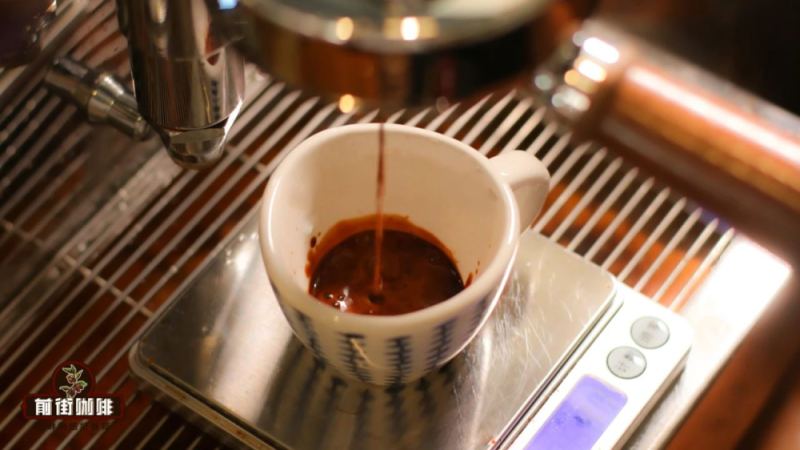
The characteristic of espresso lies in using pressure to squeeze out the essence from the coffee grounds, so this 30ml cup concentrates the essence of coffee. It is both rich and aromatic, an effect difficult for other brewing methods to achieve.
If a classic Italian blend coffee is used (such as Front Street Coffee's commercial blend coffee beans), the espresso produced will have a thick golden crema and nutty aroma. On the palate there is a roasted coffee bitterness, but it is accompanied by a more prominent creamy, full-bodied texture. After swallowing, the bitterness immediately fades, leaving a lasting aroma between the lips and teeth.
Espresso's bitterness mainly comes from the coffee beans
Much of the espresso people drink uses blend coffee beans with a relatively dark roast level. Coffee shops do this mainly to balance the flavor performance of espresso-based Americano and latte, and do not give much consideration to the palatability of espresso itself (after all, pitifully few people order it).

Under this trade-off, the fact that Americano and milk coffee taste good does not mean the espresso used as the base is suitable for drinking on its own. For example, you may think concentrated fruit juice mixed with green tea tastes good, but you would not actively taste the concentrated fruit juice itself.
Due to the historical origins of Italian coffee, people long believed that the stability and flavor of dark-roasted blend beans were more suitable for making espresso. Today, with the emergence of single-origin espresso (SOE), more and more medium-light roasted Italian coffee beans are coming into view, and this will also change the fixed impression that "espresso is only bitter."
For example, a well-selling Italian-style bean from Front Street Coffee - Sunflower Warm Sun Blend - presents a flavor that has nothing to do with pure bitterness. When smelled, the vanilla and sherry aromas make people feel that this is not ordinary espresso. Stir the espresso evenly with a small spoon, and the golden crema on the surface remains delicate and rich. On the palate it is a very rich dark chocolate flavor, carrying a strong caramel note, and the aroma released after swallowing leaves a long, pleasant aftertaste. (Dark chocolate refers to cocoa solids content between 70% and 99%, slightly bitter.)
Some coffee shops also select coffee beans with special flavors to make espresso. In order to highlight the beans' own flavors, the roast level will not be too dark. The flavor presented by such espresso is mainly a gentle acidity and the beans' distinctive aroma.
Americano, on the other hand, belongs to the Italian coffee system and is made by adding a large amount of water to espresso. It does not taste as rich and concentrated, and the cup volume is larger. For people who do not like it too strong or too bitter but still need caffeine intake, Americano is a good choice.
The above content is compiled by CoffeeHunters, a coffee news website.


