







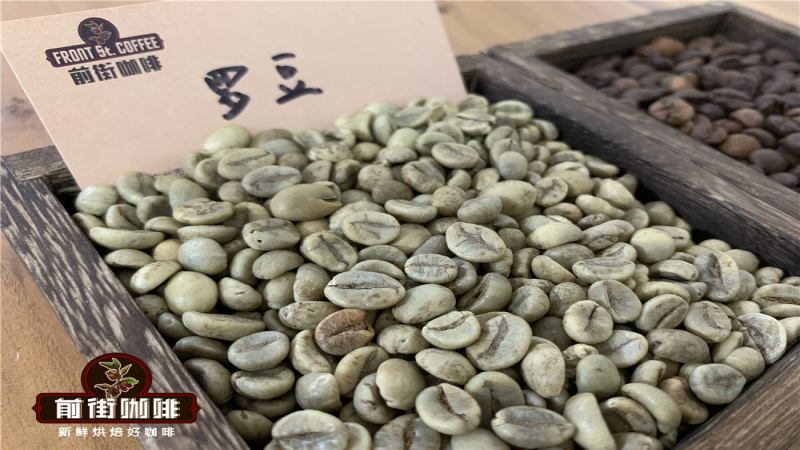
In the discourse of specialty coffee, Robusta is almost always sidelined, even labeled "cheap" and "rough." But do you really understand it? It originated in the Congo Basin of Africa, with the scientific name Canephora. It once saved global coffee regions due to its strong disease resistance, and it also held an important position when espresso swept the world. Today, Robusta is mostly used in instant coffee and blends, but the emergence of specialty-grade Robusta such as India's "Coffee Royal" has shown people the flavor potential brought by improved cultivation standards. This article will help you rediscover this misunderstood coffee bean from the perspectives of plant classification, historical rise and fall, flavor performance, and practical uses.
For more specialty coffee knowledge, please follow: Front Street Coffee (Frontsteet Coffee)
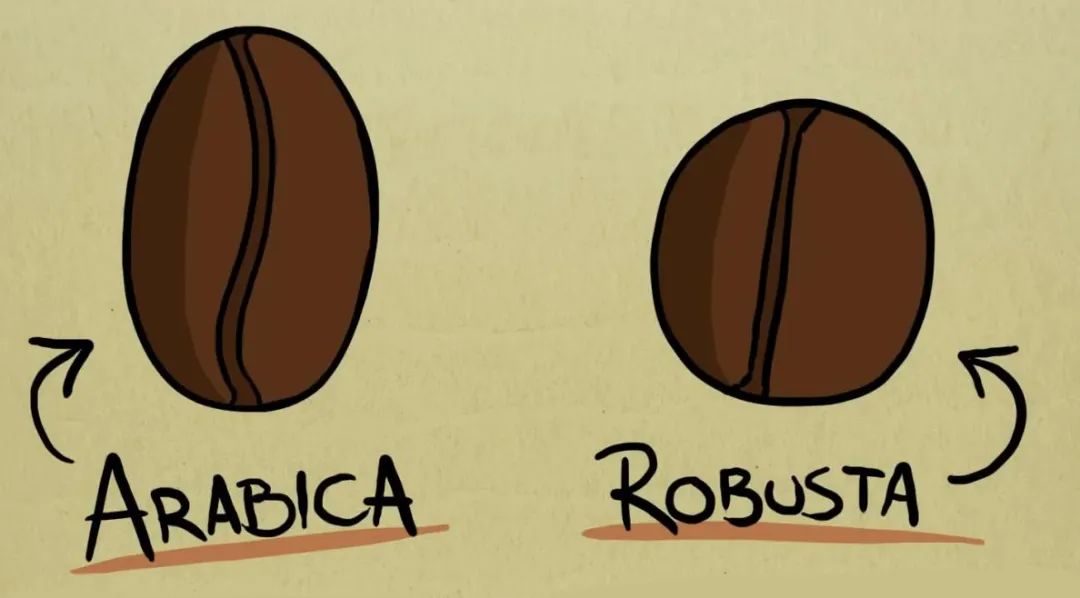
The coffee family is mainly divided into three major original species: Arabica, Robusta, and Liberica. Among them, only Arabica and Robusta truly have commercial scale. In discussions of specialty coffee, Robusta is almost nowhere to be seen; in daily life, businesses advertising "100% Arabica" are everywhere. This situation seems to imply that Arabica is the beloved daughter of a noble family, while Robusta is the poor, dusty child.
The birthplace of Robusta
Both Arabica and Robusta originated in Africa. Arabica belongs to the small-bean species and is native to the Ethiopian highlands at higher altitudes. After leaving Ethiopia, the seeds spread around the world through the port of Mocha. After centuries of cultivation, they differentiated into many varieties such as Typica, Bourbon, Geisha, and Caturra, all classified under the Arabica species.
Robusta belongs to the medium-bean species and originated in the Congo Basin area on the west coast of Africa. If classified strictly according to botany, it should be called "Canephora coffee species" (Congo species), on the same level as "Arabica coffee species." Robusta is merely a variety under the Canephora species, just as Typica is a variety under the Arabica species.
The reason the name Robusta is far more prominent than Canephora is that most other subspecies under Canephora have not lived up to expectations. Only Robusta has been commercially cultivated on a large scale by humans, while the rest remain wild. Therefore, people now usually use Robusta to refer to medium-bean coffee.
However, in terms of domestication time, Arabica predates Robusta by several centuries. Robusta was not discovered in Congo by a Belgian scholar until 1898, and was subsequently introduced to disaster-stricken regions because of its excellent disease resistance when global leaf rust was rampant.
Robusta also once had its glory days
Robusta has high caffeine content and rich oils. In the era when espresso swept the world, it was often used in espresso blends. At that time, a large part of the reason people drank coffee was to consume caffeine.

Later, as the concept of specialty coffee emerged, people began to focus on origin flavors. Robusta's inherent bitterness, as well as flavors such as walnut, peanut, hazelnut, and smoke, are often regarded as negative characteristics in coffee. More importantly, after Arabica was organized by origin, its flavor performance far surpassed Robusta. This can be considered an innate gap—Robusta's flavor is far less appealing than Arabica's, which is also why people tend to choose Arabica.
Innate deficiencies, acquired disorders
Front Street believes that in the realm of specialty coffee, flavor always comes first, and caffeine is no longer the sole purpose of drinking coffee. Robusta's advantages therefore instantly become disadvantages. Light-roasted Arabica can display floral and fruity aromas and acidity that linger in the memory; while if Robusta is light-roasted, its grain and almond notes and messy acidity are hard to accept. Overall, given the current state of Robusta, there is no hope on the light-roast path.
Looking at the dark-roast track, Robusta's bitterness is fully amplified by dark roasting. Hmm, too bitter, but also very aromatic. Vietnam is a country that frequently drinks Robusta. They like Robusta's aroma but cannot stand its bitterness, so they add condensed milk or eggs to black coffee to neutralize it.
Some people also say that Robusta's growing environment is inherently worse than Arabica's, and low-altitude Arabica does not taste good either. So some have tried planting Robusta at high altitudes and taking careful care of it, attempting to remove that tormenting bitter and mixed taste.
India's "Coffee Royal" Robusta is a representative known as specialty Robusta. It uses the standards for growing specialty Arabica to grow Robusta, showing a fairly clean flavor without the annoying shortcomings of cheap Robusta. The mouthfeel is thicker and more steady, as if tasting the strong walnut, peanut, hazelnut, and wheat flavors of peanut butter or hazelnut spread.
Indeed, improving cultivation standards can improve coffee flavor, but Robusta is still Robusta, and its genes determine that its flavor cannot be like Arabica's. It is not that Robusta necessarily tastes worse than Arabica; it is just that while popular taste still leans toward Arabica, it is very difficult for Robusta to stand out. The public will only measure Robusta by Arabica standards. Although this is unfair, it is the reality.
Since it does not taste good, what is Robusta used for?
Robusta's advantage lies in being cheap. Taking Brazilian coffee as an example, the price of ordinary Robusta is only half that of ordinary Arabica. Next is body and caffeine, both of which are superior to Arabica. When these three advantages are combined, serving as the raw material for instant coffee becomes its best destination.
Of course, some higher-quality Robusta also appears in the form of espresso blends or single-origin Robusta coffee beans. To be honest, Front Street once tasted a Robusta produced in Vietnam. The aroma of milk and cream was very rich and pleasant, but the bitterness was truly shocking. (Better just add milk honestly! 😓)
The above content is compiled by CoffeeHunters, a coffee news website.


