







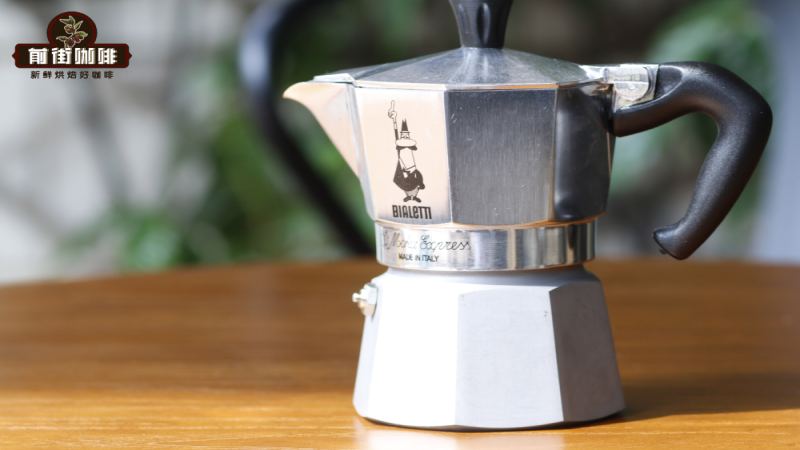
As an iconic device for Italian home coffee, the moka pot has a legendary history of nearly a century behind its brand Bialetti. This article will guide you through an in-depth understanding of the birth background of the Bialetti moka pot, the continuation of its classic design, the origin of the brand logo, as well as the extraction principle and detailed usage steps of the moka pot. Whether you are a beginner just getting acquainted with moka pots or a coffee enthusiast looking to refine your skills, you can gain practical knowledge from it. The article also particularly combines the brewing experience of Front Street Coffee to recommend coffee beans and grinding parameters suitable for moka pots, helping you easily brew a rich and authentic Italian coffee at home.
For more specialty coffee information, welcome to follow our WeChat public account: FrontStreet Coffee
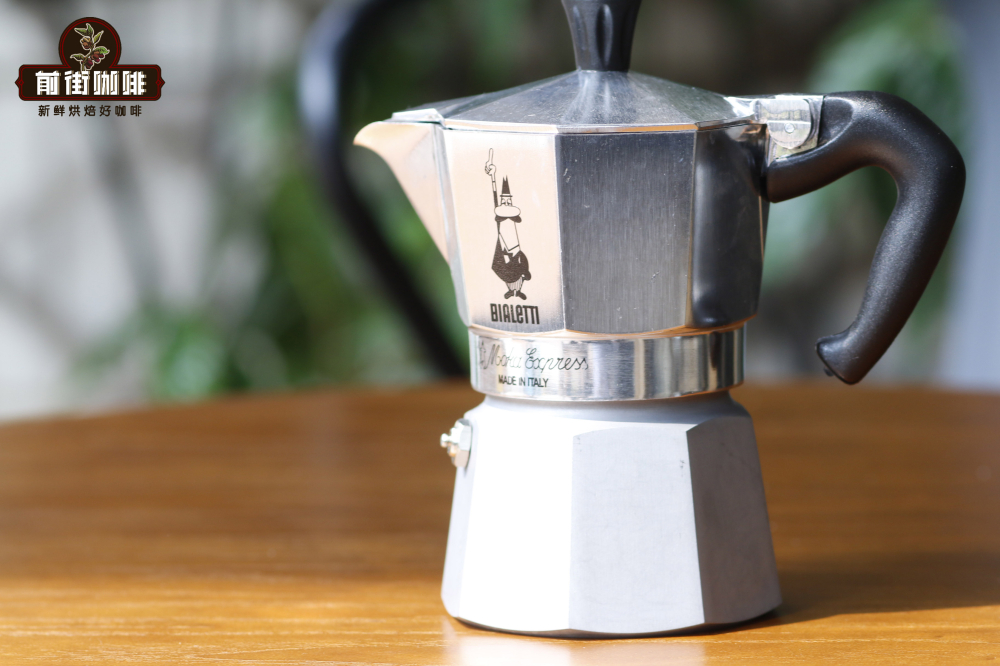
Among the many moka pot brands, Bialetti is undoubtedly the most well-known one. The moka pots produced by this brand still maintain the original classic appearance to this day. If you have ever visited Front Street's physical store, you must be impressed by the octagonal pot on the display shelf—it is precisely the iconic moka pot created by Bialetti.
The Origin of the Bialetti Moka Pot
In the early stages of coffee drinking, people used to place coffee grounds and water together on the fire to boil, and then filter it. After entering the 19th century, some began to explore the use of steam to extract coffee, hoping to obtain a cup of strong coffee in a very short time. In the early 20th century, the wave of the Industrial Revolution swept the world, and Italians manufactured an espresso machine that resembled a steam locomotive boiler in both appearance and momentum. Its shiny metal body paired with brass components created a strong visual and auditory impact when brewing coffee. The steam locomotive itself was a groundbreaking invention, allowing people to quickly travel between different places. Applying it to coffee brewing was equally outstanding, perfectly blending modernity with coffee aroma. Coffee shops seemed to attract Italian men like magnets, providing them with a reason to go out at any time.
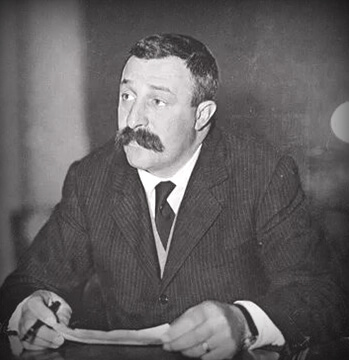
Compared to the coffee served in coffee shops, the quality of coffee that women drank at home was much worse. This situation continued until 1933, when Alfonso Bialetti invented the first device that truly improved the home coffee experience, completely changing the situation. This device is what we now know as the moka pot. Even more remarkable is that this moka pot has never undergone any changes since Bialetti designed it—whether in material, structure, or appearance, what we see today is exactly the same as the first moka pot born in 1933. Its unique shape even made it onto the list of the most influential designs in 20th-century Italy, alongside the 1946 Vespa scooter and the 1957 Fiat 500.
Bialetti cleverly invented the moka pot, allowing people to brew coffee close to coffee shop quality in their own kitchens. However, this octagonal moka pot truly shone after his son Renato inherited the family business.
After World War II ended, Renato returned to Italy from Germany and reactivated the machinery and equipment his father had packed and sealed during the war. With his outstanding marketing talent—from billboards, newspapers, and radio, to large three-dimensional product sculptures outside exhibition halls—the production of the Moka Express moka pot surged from 10,000 units per year in his father's era to 1,000 units per day, and even set an astonishing record of cumulative global sales of 300 million units between 1950 and the end of the 20th century!
As times changed, the material of moka pots also evolved from aluminum into various variations, but the Moka Express moka pot produced by Bialetti, apart from some parts being mass-produced using industrial technology, still adheres to the handcrafted method for the bottom chamber used for holding water since its founding in 1933. This explains why its internal surface appears to have the rustic texture of handmade products. Authentic original Italian Bialetti moka pots all bear a cartoon image—a man with a mustache pointing upward, as if ordering a coffee. This is the Bialetti moka pot logo created by Renato based on his father's image. Today, it not only appears in 90% of Italian households but also firmly holds a place in the hearts of coffee lovers worldwide.
The Extraction Principle of the Moka Pot
The moka pot generally consists of three parts: the bottom layer for holding water, the middle layer for holding coffee grounds, and the top layer for collecting the coffee liquid. When operating, first fill the bottom layer with water, fill the middle layer with coffee grounds, then assemble and tighten the three parts. After that, heat is applied to generate pressure, causing water to rise along the central metal tube, pass through the coffee grounds in the middle layer for extraction, and finally the coffee liquid surges into the upper chamber.
How to Brew Coffee with a Moka Pot
Previously, friends often asked Front Street how to use a moka pot to brew coffee, so here Front Street gives a unified reply. First, you need to choose the right coffee beans and matching grind size. Since the moka pot uses pressure extraction, it is more suitable for pairing with darker roasted coffee beans. For example, the Warm Sun blend used by Front Street for espresso, or medium-roasted Papua Paradise Bird and Brazil Queen's Estate coffee beans, are all worth considering.
The grind size is equally crucial for the moka pot. If ground too fine, it will most likely prevent the coffee liquid from rising smoothly, while also increasing the pressure in the bottom chamber. If pressure is not released in time, there is even a risk of explosion. Therefore, once you encounter a situation where the water has boiled but the coffee liquid does not come out for a long time, you should immediately cut off the heat source. Grinding too coarse is also not good, because the resistance is too small, and the coffee liquid will spray out violently, easily causing splashing and burns. Front Street recommends a grind size of EK-43s #3-3.5 setting (fine powder-like).
Specific Operating Steps
1. Pour hot water into the bottom chamber, up to 0.5 cm below the pressure relief valve. Using hot water can effectively shorten the coffee brewing time.
2. Pour the ground coffee into the filter basket, tap it lightly left and right a few times to let the coffee grounds settle naturally and level the surface. This is done to distribute the spaces between the particles evenly. Not tamping is to avoid excessive resistance in the coffee bed.
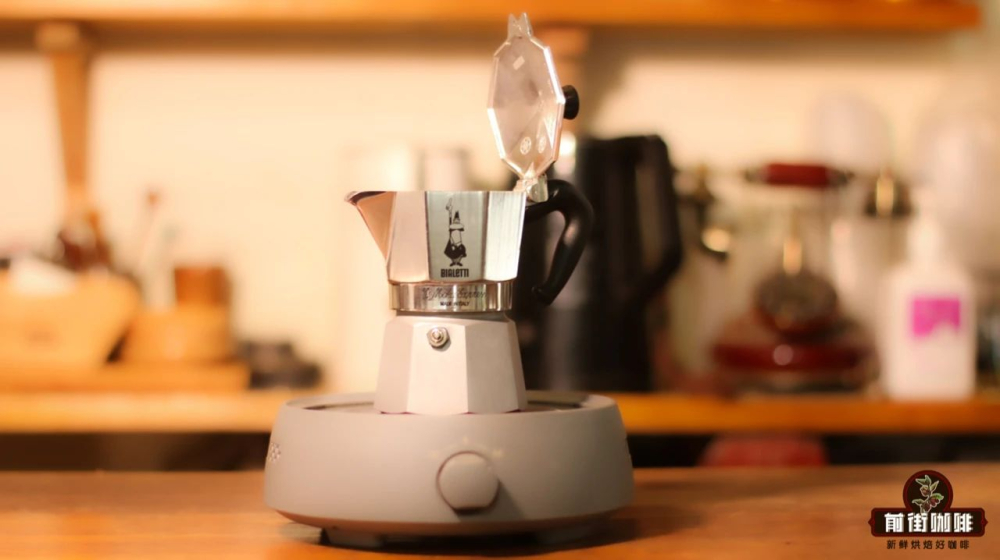
3. Place the filter basket into the bottom chamber, and screw the upper chamber and lower chamber tightly together. Place it on an electric ceramic stove, turn on the power, and begin heating.
4. When the moka pot reaches a certain temperature and emits a distinct "whooshing" sound, turn the electric ceramic stove to low heat and open the lid of the upper chamber. The coffee liquid and oils begin to flow out.
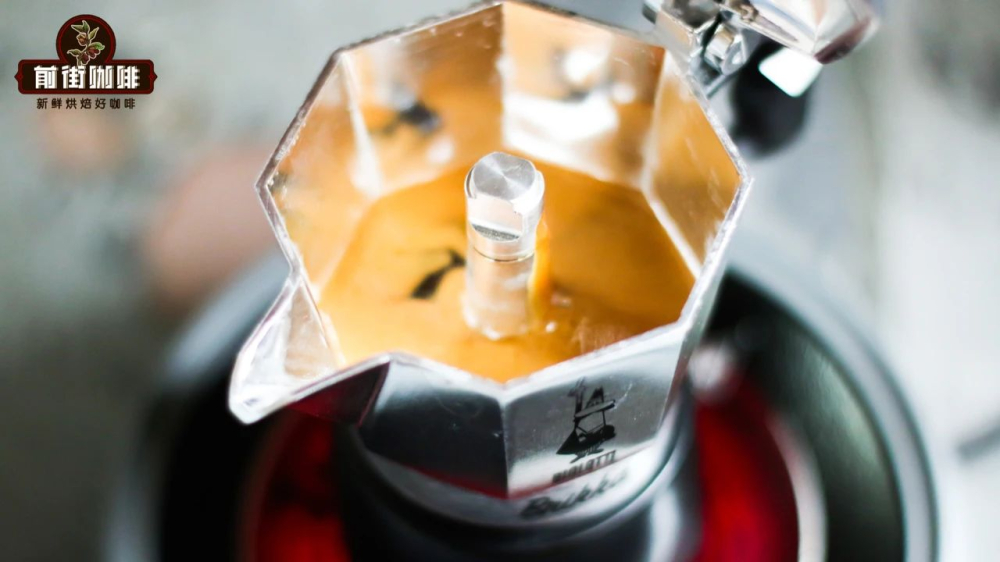
5. When half of the coffee liquid in the upper chamber has flowed out, turn off the electric ceramic stove and move the moka pot to the table. The residual heat and remaining pressure inside the pot will "push" the remaining coffee liquid into the upper chamber.
The above content is compiled by CoffeeHunters, a coffee news website.


