







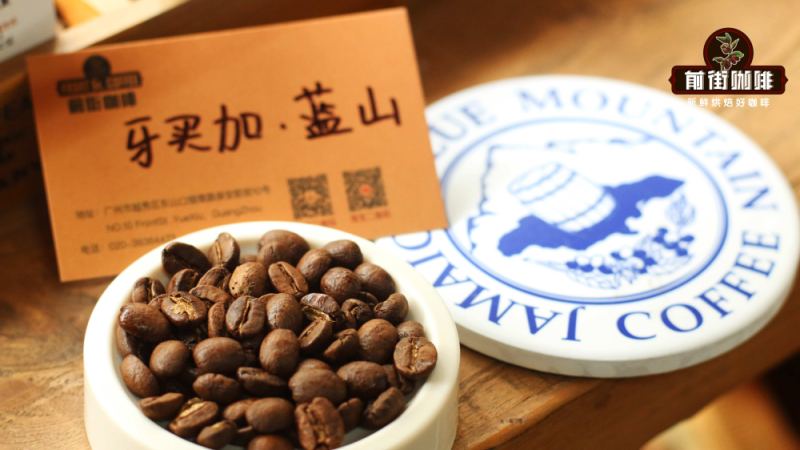
Jamaican Blue Mountain coffee has long been regarded by many coffee lovers as the epitome of top-tier coffee, thanks to its exquisite balance of aroma, body, and acidity, along with its unique rounded sweetness. The Blue Mountain region is strictly regulated by the Jamaica Coffee Industry Board (CIB), and only beans that meet the standards within specific administrative districts may bear the Blue Mountain name, with Blue Mountain No. 1 being the most commonly available grade on the market. Among the many estates, Clifton Mount Estate is one of the oldest origins still in operation today and the only farm in Jamaica to have received Rainforest Alliance certification. The Blue Mountain No. 1 sold by FrontStreet Coffee comes from this estate and is roasted to a medium-dark level and brewed at a lower water temperature to showcase a balanced flavor of dark chocolate, nuts, and creamy smoothness. This article will provide a complete introduction to Blue Mountain regional grading, the history and current status of Clifton Estate, as well as Front Street's roasting approach and pour-over parameters.
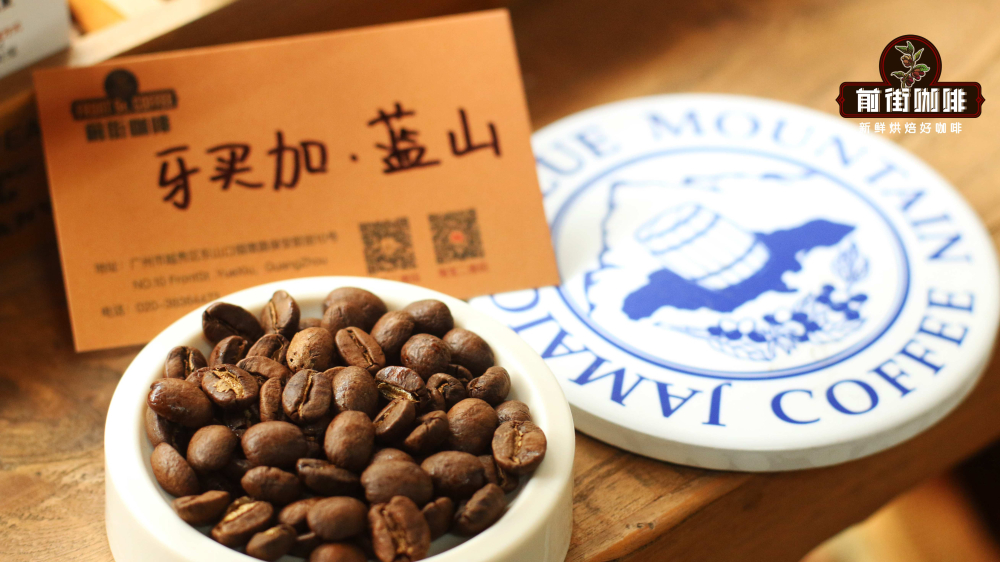
In the eyes of many seasoned coffee enthusiasts, Jamaican Blue Mountain coffee is regarded as one of the finest coffees in the world. Its aroma, body, and acidity achieve a stunning balance, and combined with its uniquely rounded sweetness, Blue Mountain coffee stands out among the many producing regions.
Blue Mountain Coffee Producing Region and Origin Introduction
To ensure the consistent quality of Blue Mountain coffee year after year and to give consumers a way to distinguish genuine from counterfeit, the Jamaican government established the Jamaica Coffee Industry Board (CIB) in 1953, responsible for supervising and safeguarding the quality of Jamaican coffee. This body classifies Blue Mountain coffee into four grades, in order: No. 1, No. 2, No. 3, and PB (hand-sorted peaberry). Among them, Blue Mountain No. 1 is the highest grade, requiring beans of 17 screen size or above, a defect rate below 3%, and a moisture content of about 13%. When people in China refer to Blue Mountain coffee, they usually mean Blue Mountain No. 1 coffee beans; the other grades are rarely seen domestically.
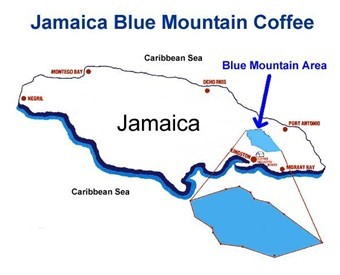
The authentic Blue Mountain coffee producing region certified by the Jamaica Coffee Industry Board covers four administrative districts: St. Andrew, St. Thomas, St. Mary, and Portland.
These areas are home to numerous coffee estates and farms of varying sizes. Currently, the most recognized coffee plantation in the Blue Mountain region is Clifton Mount Estate. It is also one of Jamaica's oldest coffee origins still in normal operation, and it is Jamaica's only Clifton farm to hold Rainforest Alliance certification.
Introduction to Clifton Estate
As early as the mid-18th century, around 1750, Clifton Farm had already begun planting and producing coffee. According to a survey conducted by the Institute of Jamaica in 1810, the owner of the farm at that time was Robert Hamilton. A map shows that Clifton Mount was divided into two parts: at the summit, 80 acres of coffee land and 427 acres of pasture; at the foot of the mountain, 111 acres of coffee and 264 acres of pasture.
In 1872, the renowned British painter and writer Marianne North visited Jamaica and stayed at Clifton Mount for five months. In her autobiography titled "Recollections of a Happy Life," she mentioned having stayed at the Clifton hotel: this hotel belonged to a local widowed gentleman. He was unwilling to continue living in the hotel himself, and instead rented it out by the week to different people, giving more people the chance to experience the cold air at an elevation of 1,524 meters and to stroll through Jamaica's finest and oldest coffee plantation.
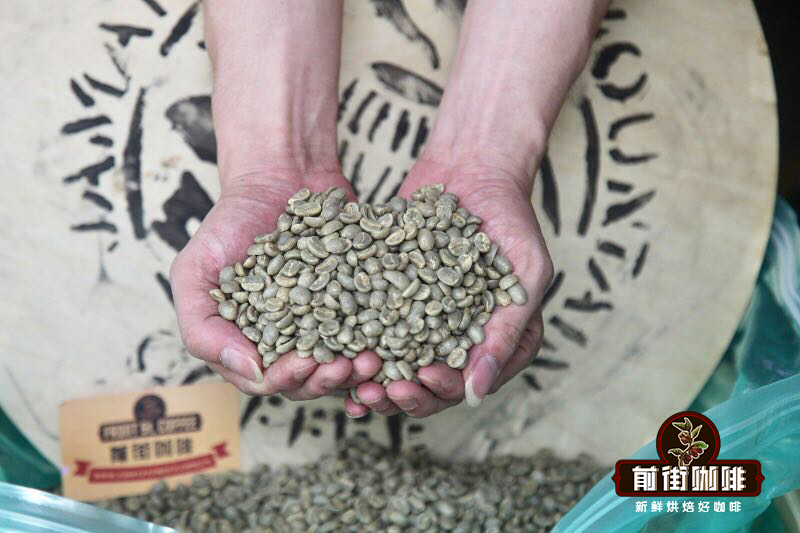
The basic information of Clifton Farm is as follows:
Owner: Sharp family
Location: Newcastle area
Total area: 250 acres
Coffee planting area: 180 acres
Average elevation: 1,310.64 meters
Variety: Arabica Typica
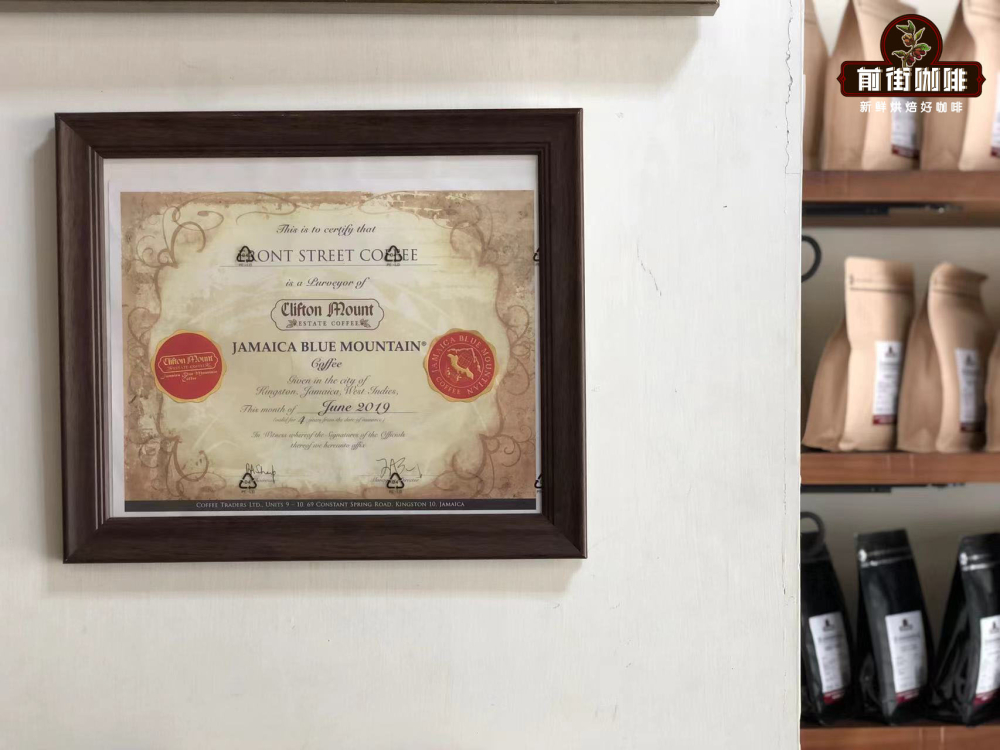
The Blue Mountain No. 1 coffee beans currently sold by FrontStreet Coffee all come from Clifton Estate. The decision to offer Blue Mountain coffee is because it possesses a balance that is hard to replicate in other regions—rich and aromatic, with sourness, sweetness, and bitterness in harmony—making it an excellent coffee with outstanding performance.
How Are Blue Mountain Coffee Beans Roasted?
To highlight the balanced characteristics of Blue Mountain coffee, FrontStreet Coffee roasts the beans to a medium-dark level, making the overall mouthfeel more full-bodied and presenting a solid depth reminiscent of dark chocolate, followed by a slight citrus acidity that brings a touch of liveliness. The sweet aftertaste is especially memorable.
The darker the roast, the faster the coffee substances dissolve. To avoid over-extraction, Front Street uses a lower water temperature for extraction, while choosing the slower-flowing Kono dripper so as to extract as much coffee substance as possible under low-temperature conditions.
The following are the extraction parameters and brewing (pouring) technique used at FrontStreet Coffee's store: Kono dripper, 88°C water temperature, 1:15 coffee-to-water ratio, 15g coffee dose, grind size (70-75% passing through a No. 20 standard sieve).
Three-stage pouring technique steps: First, bloom with 30g of water for 30 seconds; in the first stage, pour in a circular motion with a small stream until 125g, then stop; when the liquid level drops to the point where the coffee bed is about to be exposed, continue with the second stage of pouring until 225g to finish extraction, with a total extraction time (including bloom) of 2 minutes 00 seconds.
The flavor performance of FrontStreet Coffee's pour-over Blue Mountain No. 1: rich dark chocolate and nutty flavors, a creamy smooth mouthfeel, and a balance of sourness, sweetness, and bitterness.
The above content is compiled by CoffeeHunters, a coffee news website.


