







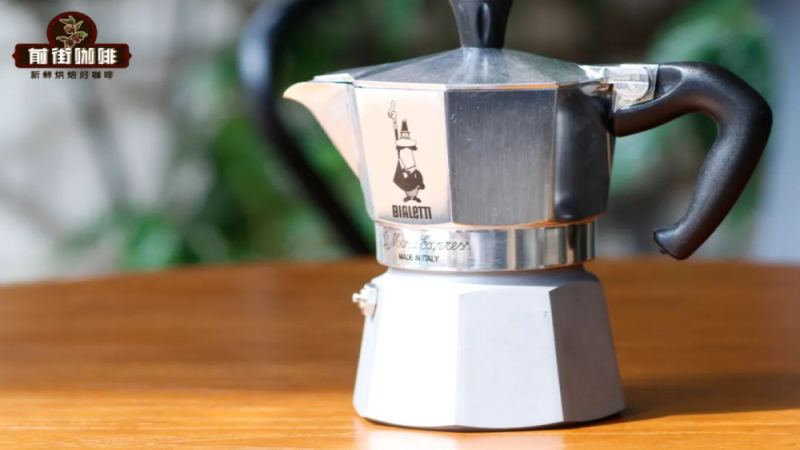
The moka pot is an extremely common classic coffee device in Italian households, with almost every home keeping one. It relies on the steam pressure generated by heating the lower chamber to push hot water through the coffee grounds and up into the upper chamber, producing a cup of rich coffee with crema. However, in China, not many people truly understand its correct usage. This article will start with the invention history, structural composition, and extraction principle of the moka pot, then explain in detail the key steps such as water filling position, coffee distribution method, heating rhythm, and grind size. Combined with a brewing example using Front Street PWN Golden Mandheling, it will help readers avoid splashing, explosion hazards, and the problem of the pot seizing shut and being impossible to open after use due to improper operation, so that the moka pot can produce consistent results.
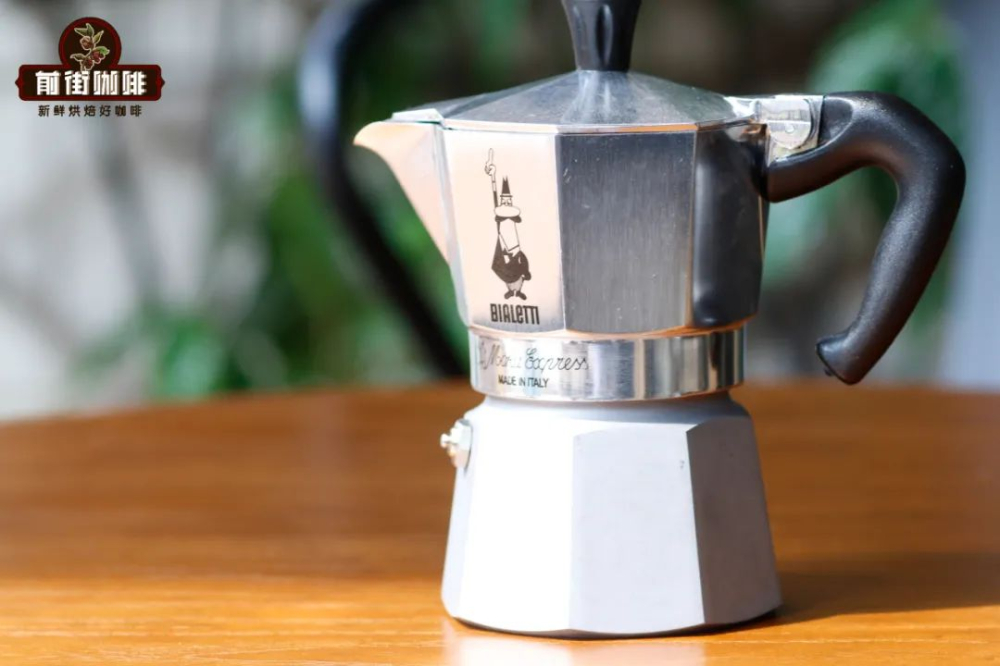
The moka pot originated in Italy and is a highly representative classic coffee device there, with astonishing popularity. Some say that eight out of every ten households have one. In contrast, in China, the number of people using moka pots is not large, so many lack a systematic understanding of how to operate them.
A Brief History of the Moka Pot
In 1933, the Italian Alfanso Bialetti invented the moka pot. It extracts coffee by heating the base and belongs to the category of distillation-style devices. It is also the most affordable type of equipment for making espresso-style coffee and is widely used in Italian households.
Alfonso Bialetti was both an inventor and a designer. After completing his studies in France and returning home, he entered the then-thriving aluminum metal industry in Italy. In 1918, he founded his own factory and established the Bialetti company, beginning to sell aluminum metal products, including household cleaning utensils and other items.
The Structure and Extraction Principle of the Moka Pot
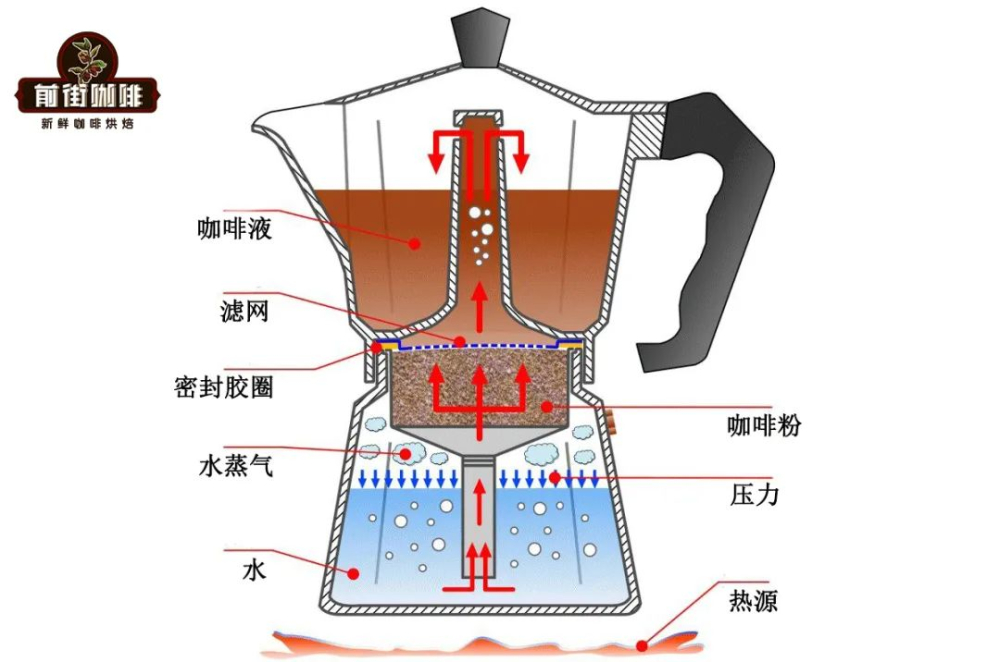
The structure of the moka pot is not complicated. It mainly consists of three parts: the upper chamber, the filter basket, and the base. The lower chamber holds water, the filter basket is used for coffee grounds, and the upper chamber receives the extracted coffee liquid.
The mechanism by which a moka pot extracts coffee is: heat the lower chamber so that the water inside boils and generates steam pressure; when the pressure accumulates to a certain level, the hot water penetrates the coffee grounds in the filter basket and then rises into the upper chamber. In this way, a pot of aromatic coffee with crema is obtained.
How to Properly Use a Moka Pot
Because coffee made with a moka pot has a relatively heavy body, and dark-roasted beans better highlight this rich texture, this brewing demonstration uses Front Street. Front Street PWN Golden Mandheling, which has obvious caramel and dark chocolate notes and no acidity.
Front Street. Front Street PWN Golden Mandheling coffee beans
Country: Indonesia
Region: Gayo Mountain, Aceh, Sumatra Island
Altitude: 1100-1600m
Variety: Ateng
Processing Method: Wet-hulled
Grade: G1
The equipment needed for brewing with a moka pot includes: a moka pot, a device that can provide a heat source (induction cooker, electric ceramic stove, etc.), coffee beans, a grinder, and water.
In the first step, pour an appropriate amount of clean water into the lower chamber of the moka pot, keeping the water level about 0.5 cm below the pressure relief valve. The role of the pressure relief valve is crucial: it can prevent dangerous explosions caused by excessively high internal pressure due to reasons such as coffee grounds being too fine. Once the water level rises above the opening of the pressure relief valve, the pressure relief function may fail, and the risk of bursting increases accordingly.
Next, slowly pour the ground coffee into the filter basket and tap it gently to distribute it evenly. If the coffee grounds form a small mound, you can use a distribution technique to level it. Filling the filter basket with coffee grounds is intended to avoid extracting undesirable defective flavors as much as possible.
After the lower chamber is filled with water and the filter basket is loaded, screw the upper and lower parts of the moka pot tightly together in order, then place it on the heating device and heat over high heat.
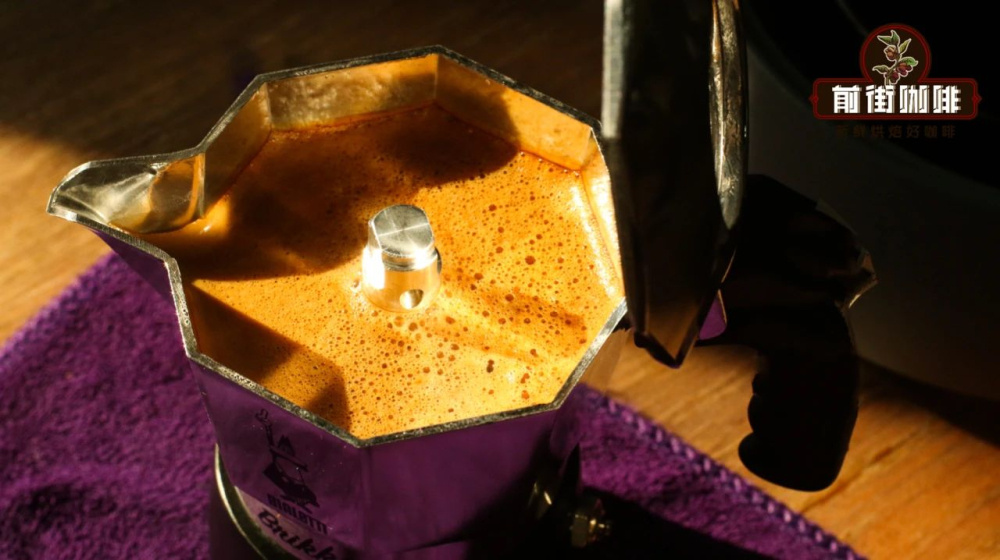
As the temperature of the moka pot gradually rises, when you hear a clear "whooshing" sound, it indicates that the suitable extraction temperature range has been reached. At this point, turn the heat source to low and lift the lid of the upper chamber.
When the coffee flowing out into the upper chamber reaches about half, you can turn off the heat source. At the same time, move the moka pot to the table (you can place a damp cloth under the base to prevent burns). The residual heat and pressure inside the pot will continue to "push" the remaining coffee liquid into the upper chamber, completing the entire extraction.
After extraction is complete, pour the coffee into a cup and dilute it with water or milk according to preference; the flavor is refreshing and smooth. If you have a milk frother at home, you can even try latte art.
It is especially important to note that the grind size of the coffee beans used in a moka pot is very particular. It should be coarser than the grind required for an espresso machine, because the extraction pressure of an espresso machine (9 bar) is enough to break through the resistance of the puck, while the pressure of a moka pot is far lower. If the grind is too fine, the coffee liquid will struggle to flow out, and the pressure in the lower chamber will rise. If pressure is not released in time, an explosion hazard may occur.
Therefore, if the coffee liquid does not flow out for a long time after heating has ended, stop heating immediately. Of course, grinding too coarse is also not advisable, because too little resistance will cause the coffee liquid to spurt out violently, easily causing burns. The recommended coffee powder size for a moka pot is controlled at the level of fine salt. For the electric grinder EK-43s, this corresponds to setting 3-3.5; for the hand grinder, using the C40 as a reference, this corresponds to 22 clicks.
Finally, when brewing coffee with a moka pot, extraction is completed by using pressure in the lower chamber to push water up into the upper chamber. However, after use, the pressure inside the lower chamber increases, and the internal and external pressures become unbalanced. A moka pot that has just been used is not only hot to the touch but also especially difficult to unscrew; after it cools down and the pressure in the lower chamber is released, it can be opened easily.
The above content is compiled by CoffeeHunters, a coffee news website.


