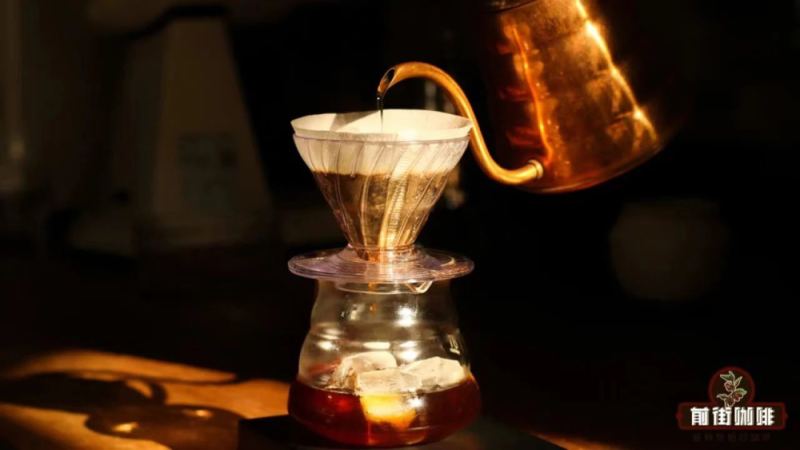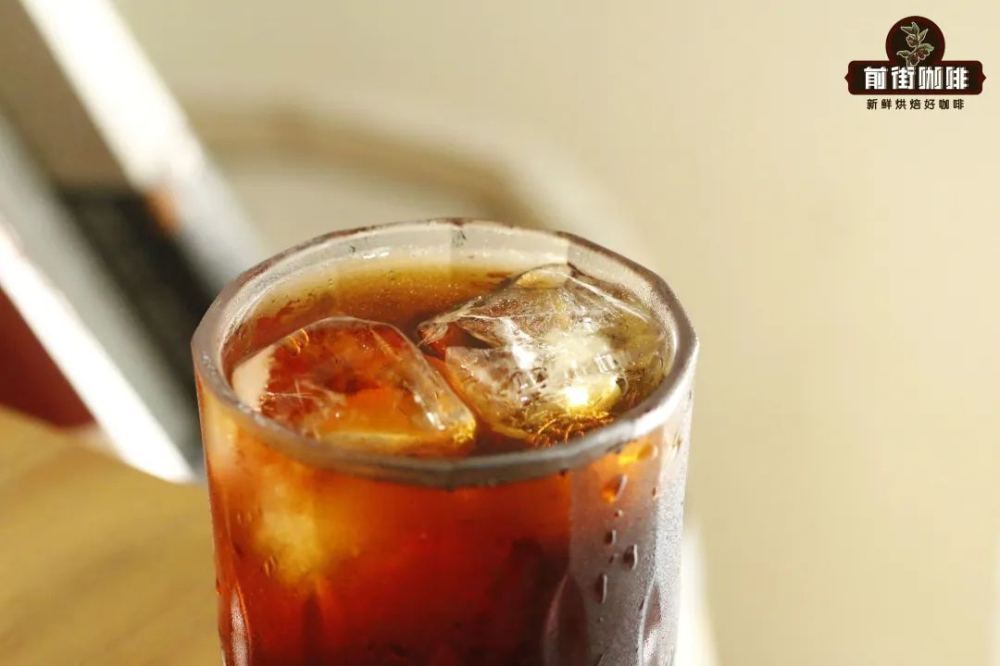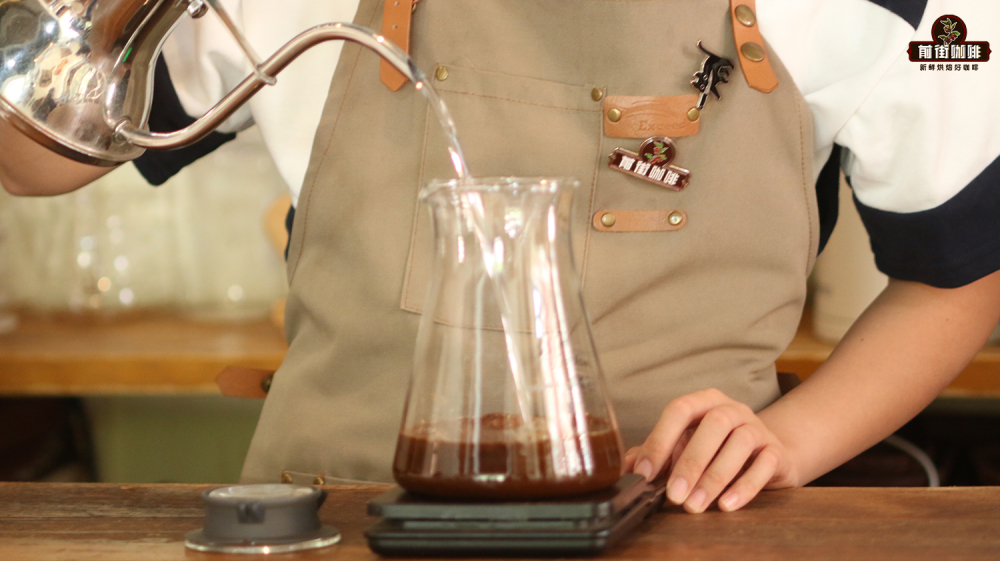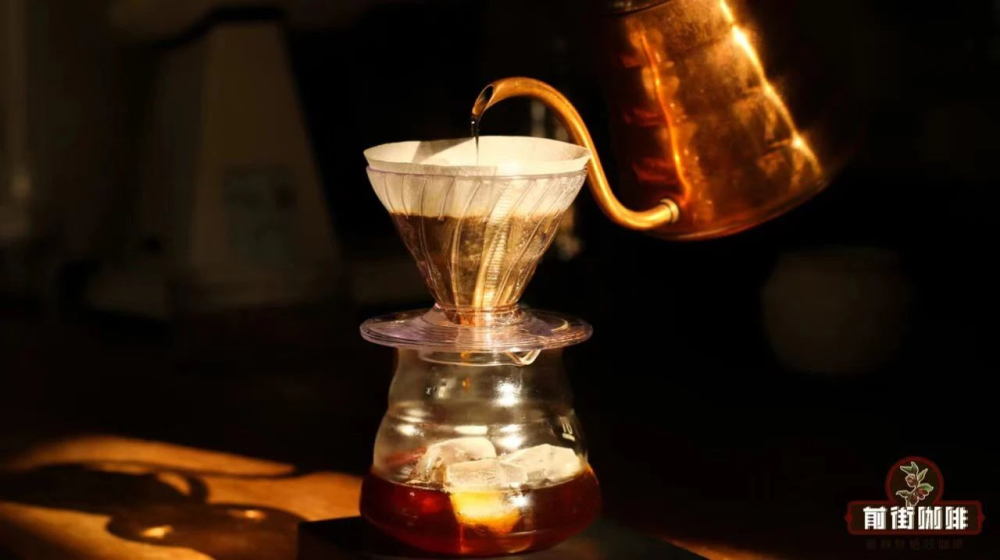
As the temperature gradually heats up, the popularity of iced coffee is slowly rising. Common types of iced coffee include iced pour-over coffee, iced espresso, cold brew coffee, and ice drip coffee, etc.But what are the differences between these four types of iced coffee? And how do they differ in taste? Today, Front Street Coffee is here to share about the four types of iced coffee and how the baristas at Front Street Coffee make each of them.Pour-over coffee became popular with the third wave of specialty coffee and has now become an important part of the offerings at many independent cafés, including Front Street Coffee. The characteristic of pour-over coffee is that it uses a dripper to filter out the coffee grounds and obtain the coffee liquid, and the extraction process of pouring water while filtering is also very visually appealing.When making iced pour-over coffee, the baristas at Front Street Coffee choose 15 grams of coffee beans. Unlike hot brewing, the ratio for iced pour-over coffee is 1:10, meaning that in the end, 150 grams of hot water is poured to extract about 120 grams of coffee liquid. This ratio is chosen because 100 grams of ice cubes will be added afterward for dilution. The ice cubes will begin to melt into water upon contact with the freshly extracted coffee liquid, so choosing a lower coffee-to-water ratio is to avoid excessive dilution by the ice.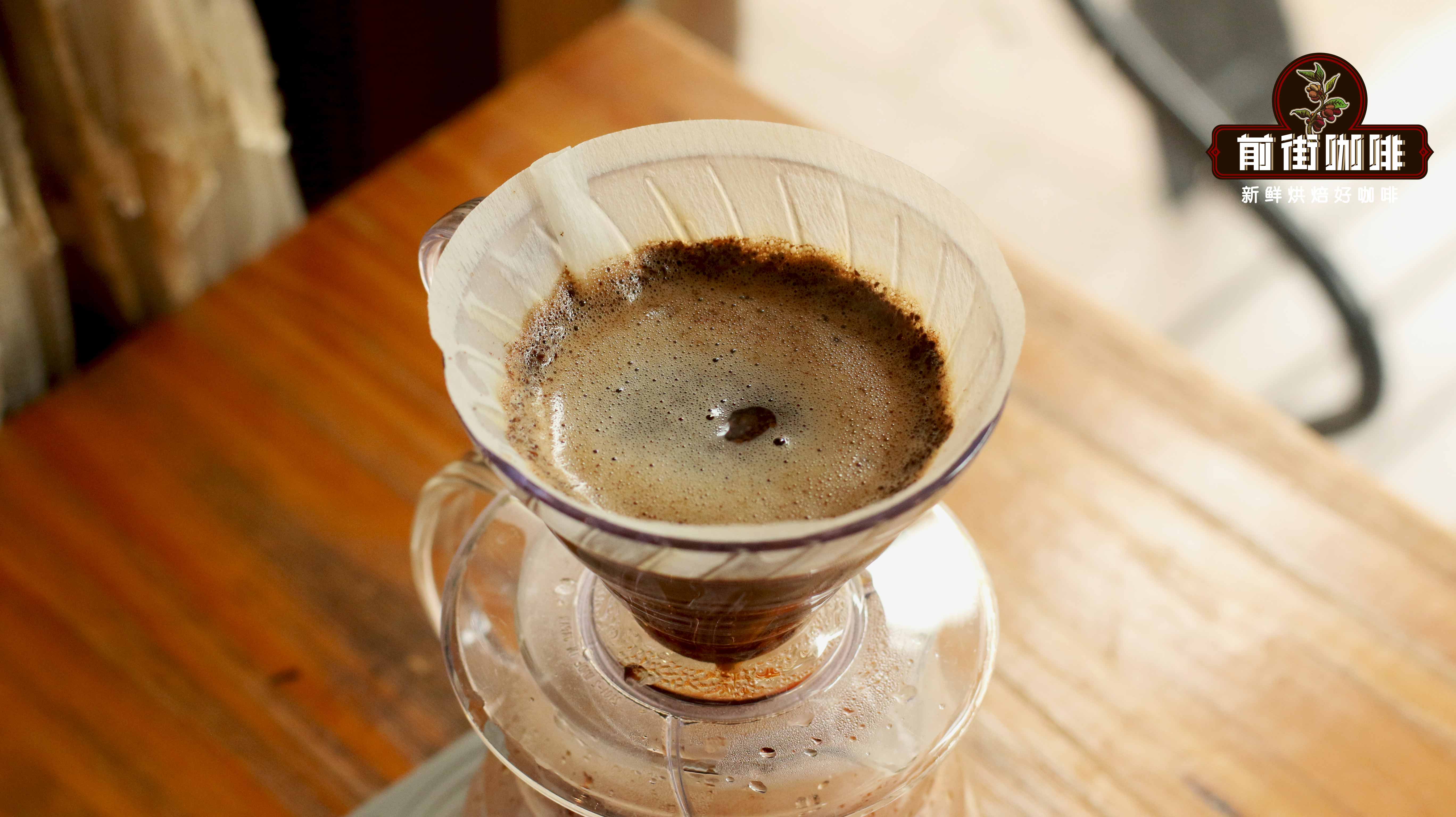 When brewing, the baristas at Front Street Coffee divide it into two stages. In the first stage, 30 grams of water is poured for blooming. The purpose of blooming is to properly release carbon dioxide. Freshly roasted coffee beans often contain a large amount of carbon dioxide, and too much carbon dioxide will prevent the water flow from contacting the coffee grounds during brewing, so a small amount of water is poured in the first stage of pour-over brewing to release carbon dioxide.In the second stage, water is poured directly until reaching a total of 150 grams. The pouring method is a gentle circular pour, with the aim of extracting enough flavor. The brewing water temperature throughout is 90 degrees Celsius, and the grind size is slightly finer than for hot brewing, with about 85% passing through a 0.85mm standard sieve. The total extraction time is about 1 minute and 30 seconds.The brewed coffee liquid is poured into 100 grams of ice cubes, and the barista shakes it to fully mix the coffee liquid—on one hand to fully blend the coffee liquid from the beginning, middle, and end stages, and on the other hand to let the ice dilute the coffee liquid and bring the temperature down low enough.The approach to making iced Americano is actually quite similar to iced pour-over coffee: both involve extracting a more concentrated coffee liquid and diluting it with ice cubes. The difference, however, is that iced Americano uses espresso extracted by a coffee machine. Espresso was originally a coffee beverage for Italians to quickly replenish caffeine. It is simple and fast to make, and its 1 to 2 ounce volume also allows people to finish a cup of espresso in two or three sips. Americano is made by adding a large amount of water to espresso, making the coffee easier to drink.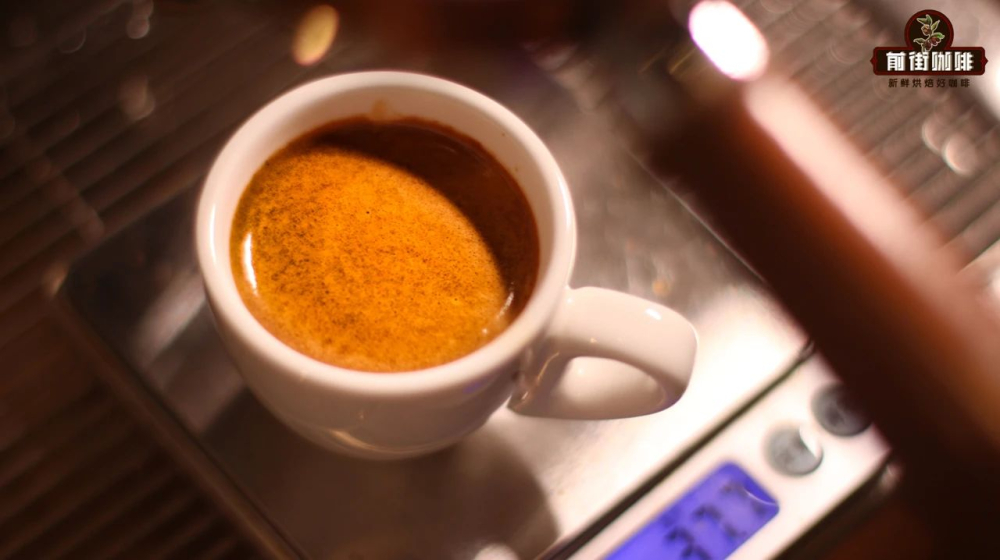
When making iced Americano, the baristas at Front Street Coffee use an espresso machine. The method for making Americano is relatively simple, with only espresso, water, and ice cubes as ingredients. The baristas at Front Street Coffee adjust the espresso extraction parameters every day according to the condition of the beans. The espresso extraction parameters are 20 grams of coffee grounds, extracting 40 grams of coffee liquid, with an extraction time of about 26 seconds.
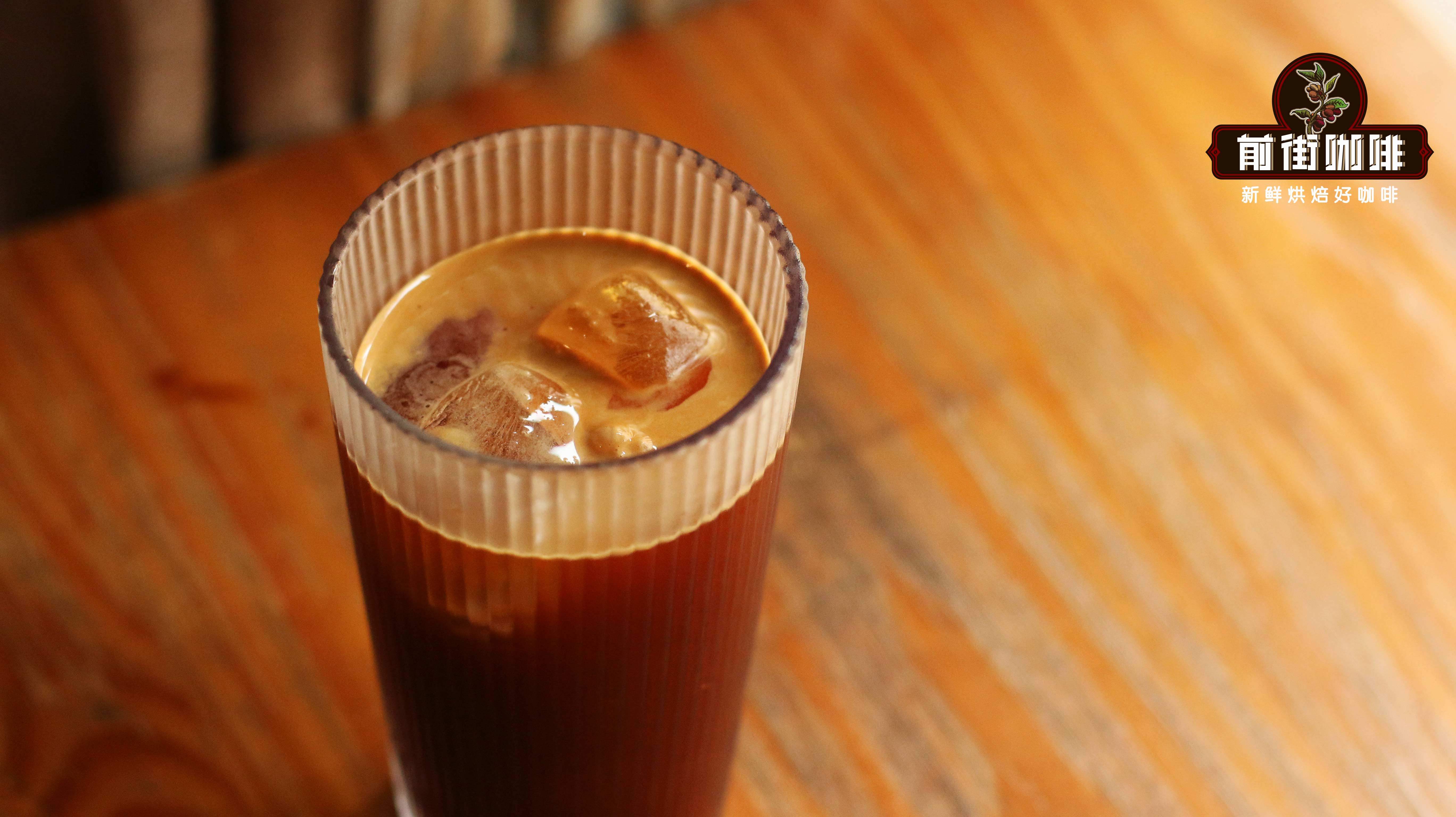
At this point, 300 grams of ice-water mixture is added, and the ratio of ice water to espresso is 7.5 to 1.Cold brew coffee and ice drip coffee are just the opposite of iced Americano and iced pour-over coffee: they are extracted entirely with ice water or in a low-temperature environment over a long period. The gentle low-temperature extraction reduces the loss of flavor and aroma.
Although Front Street Coffee does not yet offer cold brew coffee in its stores, the baristas at Front Street Coffee are also very fond of cold brew coffee. When we make cold brew coffee, we choose 50 grams of coffee grounds and add 500 grams of ice water, with a coffee-to-water ratio of 1:10 and a coarser grind size, with a 75% pass rate through a 0.85mm standard sieve.
When making cold brew coffee, you need to prepare a container with sufficient capacity. For example, for 500 grams of cold brew coffee, you need to prepare a container or bottle of more than 600 milliliters.
Put the ground coffee and water into the container, mix thoroughly, and then place it in the refrigerator to let it sit. The recommended low-temperature extraction time is 24 hours. Long low-temperature immersion extraction is the characteristic of cold brew coffee. This can extract a relatively full-bodied iced coffee, and the low temperature can gently extract its flavors while reducing the loss of aroma.Ice drip coffee is similar to cold brew coffee in that it is also a low-temperature, long-time extraction. Its high level of layering and full-bodied mouthfeel make ice drip coffee very popular in the domestic market.
Unlike cold brew coffee, making ice drip coffee requires an ice drip coffee maker that can produce dripping water. The extraction of ice drip coffee is carried out by dripping ice water. In order to achieve the dripping of water, making ice drip coffee requires a dedicated ice drip coffee maker. Common ice drip coffee makers on the market include the following structures: an upper pot for the ice-water mixture, a valve to control the flow rate, a coffee grounds chamber, and a lower pot to hold the coffee liquid, etc. For example, the Tiamo HG2713 currently used in Front Street Coffee stores includes the above structures and also has an additional spiral tube.

When making ice drip coffee, the baristas at Front Street Coffee choose 60 grams of coffee beans to extract about 600 milliliters of ice drip coffee, that is, a coffee-to-liquid ratio of 1:10. For grind size, they choose a size slightly finer than pour-over coffee, with about 85% passing through a 0.85mm standard sieve. With a finer grind and a low coffee-to-water ratio, the extracted ice drip coffee is rich and full-bodied. The purpose of doing this is because ice will be added afterward for dilution when serving.
The ratio of the ice-water mixture is 1:1, and the valve controls the flow rate at 7 drops every 10 seconds. The entire extraction process lasts about 6-8 hours. The completed ice drip coffee is bottled and chilled for 12 hours before drinking.
The extraction time for ice drip coffee is very long. The baristas at Front Street Coffee have to start preparing ice drip coffee every morning and can only finish it in the afternoon. The long extraction time of ice drip coffee is partly because the ice water drips slowly, so extracting enough coffee liquid takes a very long time, and partly because the extraction efficiency of ice water at low temperature is extremely low. Like cold brew coffee, the extraction time needs to be extended to increase the coffee's flavor.
The above content is compiled by CoffeeHunters, a coffee news website.