







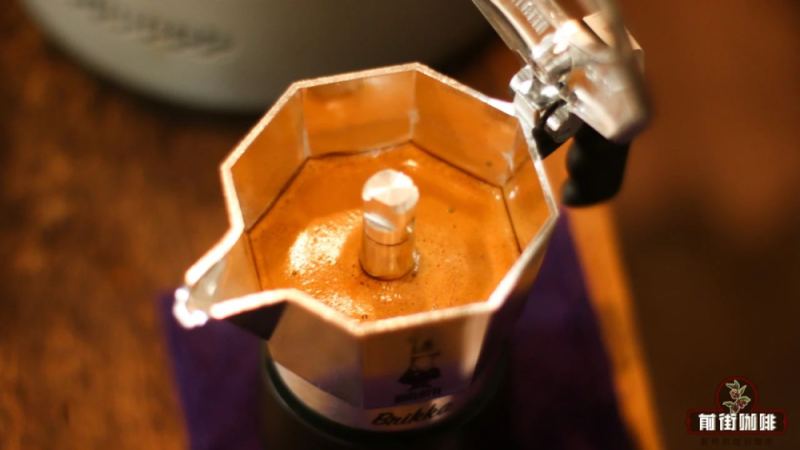
Although the moka pot has a simple structure, extracting a consistently rich, well-balanced cup of coffee—from bean selection and grinding to filling and heat control—requires attention to every step. How coarse should the coffee grounds be? Should you buy coffee beans or ready-made grounds? Do you need to tamp when filling? This article addresses these common confusions by breaking down the key details of moka pot brewing one by one, explaining the causes and solutions for issues like spurting, no liquid output, and burnt-bitter flavors during extraction, and providing specific recommendations from Front Street Coffee on bean selection and grind settings, helping you make moka pot coffee close to espresso at home.
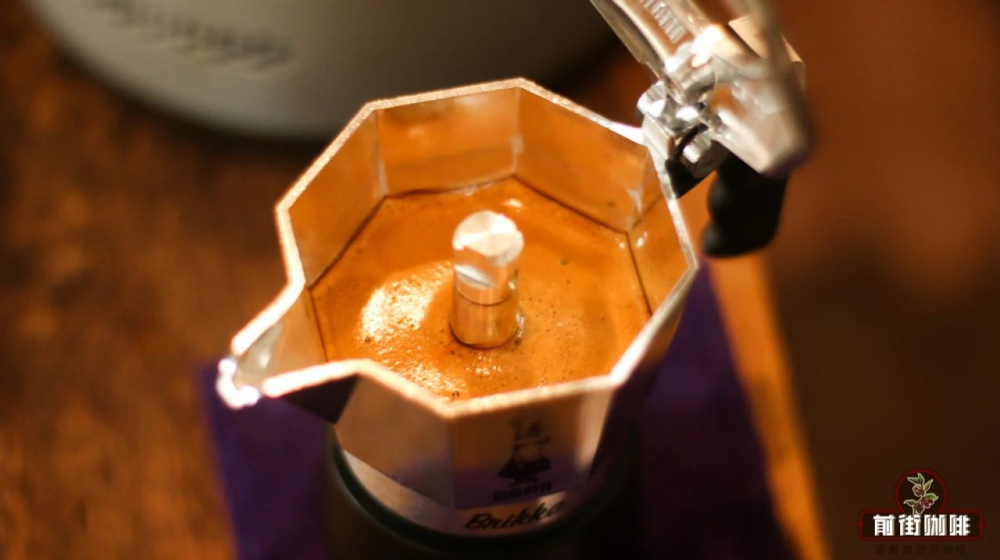
Many people new to the moka pot get stuck on the same question: how coarse should the coffee grounds be? And how should you fill the basket—do you need to tamp? Let's clear up these questions once and for all.
First, let's talk about the grind size requirement for moka pots.
The suitable particle size for moka pot coffee grounds is roughly between 0.3 and 0.55 millimeters. By feel, it's neither as noticeably gritty as sand nor as fine as the near-flour consistency used in espresso machines. There are two ways to judge: one is to buy a particle size ruler to measure directly, or purchase coffee grounds labeled specifically for moka pots as a reference; the other is to learn through repeated trial brews—usually three to five attempts will get you there. When the grind is too coarse, the coffee liquid will surge out quickly, even shooting upward like a fountain; when it's too fine, you'll first hear the water boiling with a whistling sound, but the coffee liquid won't come up for a long time—at this point, turn off the heat immediately. Always pay attention to safety during the adjustment process.
So should you use coffee beans or coffee grounds for a moka pot?
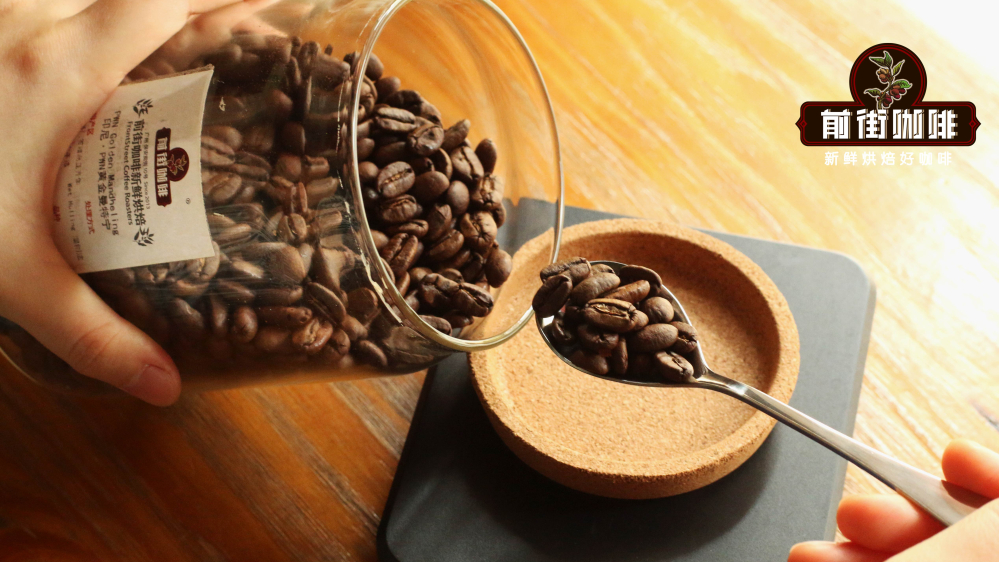
Roasted coffee beans have a peak flavor window of about 45 days; consuming them within this period gives the best aroma. Once ground, the aroma dissipates significantly, and using them for moka pot coffee not only compromises the taste but also results in noticeably less crema. So if you're after flavor, it's best to buy whole beans and grind them fresh right before brewing.
Does a moka pot require tamping?
After repeated testing, Front Street Coffee concluded that tamping is not necessary. The reason is that if you don't control the pressure well, it's easy to pack the grounds too tightly, preventing hot water from penetrating the puck—a rather dangerous operation. Of course, some worry that not tamping will cause "channeling," leading to coffee liquid splattering out.
The following filling method is one that Front Street Coffee endorses, effectively avoiding the above problems while producing a remarkably rich crema.
Cup the filter basket with your right hand and add grounds without applying pressure, keeping the coffee grounds loose and piled into a small mound slightly raised in the center—no need to level it, because the upper chamber's filter cap is itself convex upward. Then place the upper chamber on vertically and tighten, being careful to clean any coffee grounds left on the threads. (Make sure the coffee grounds fill all the gaps around the edges.) This way, after extraction, the spent puck will be firm and intact, not crumbling apart, and the extracted crema will be very thick.
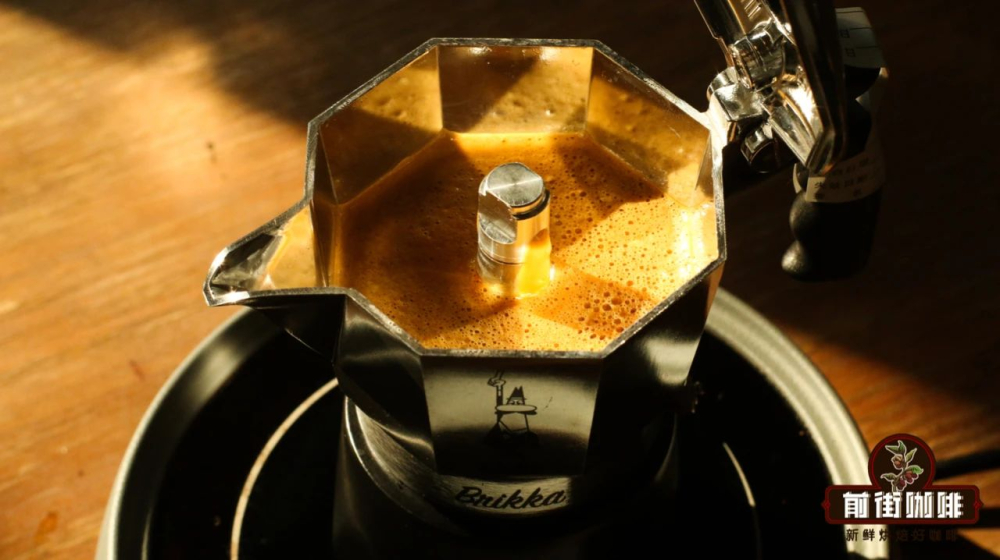
Brewed for a long time, but the coffee liquid never comes out
No liquid output usually has two causes: one is that the grounds are packed too tightly, and the other is that the grind is too fine, leaving no gaps between particles for water to pass through. Both situations cause the pressure in the lower chamber to rise rapidly, which can damage the moka pot. So if the water has already boiled and you've been brewing for a long time without seeing coffee liquid emerge, turn off the heat immediately and remove the pot from the heat source—you'll have to replace the grounds and start over. (Usually you'll smell a burnt odor at this point.)
Coffee liquid spurting out
Spurting is the most common extraction failure when using a moka pot, and it carries a relatively high safety risk. Once spurting occurs, it means something inside the pot is blocked, or the heat is too high, causing the liquid to rush out too violently and suddenly. The water added to the lower chamber must not exceed the standard mark line—it should be kept 0.5 centimeters below the safety valve line. This valve's purpose is to prevent excessive pressure from certain conditions (such as grounds that are too fine) causing an explosion. If water covers the valve, the pressure release function may fail, posing a risk of bursting.
Moka pot grind size is generally coarser than espresso grounds but much finer than pour-over. If the grind is too coarse, the contact area between water and coffee grounds decreases, resulting not only in under-extraction and a weak taste, but also in spurting due to too little resistance as the liquid flows upward—creating a risk of scalding from splatter. Front Street Coffee recommends a grind setting of EK-43s #3-3.5, which feels slightly finer than fine granulated sugar.
The coffee has no crema
The amount of crema is directly related to the roast level and freshness of the coffee beans. The darker the roast and the fresher the date, the easier it is to produce a rich layer of crema under high-temperature, pressurized conditions.
The moka pot uses pressure-based extraction. If you use a light roast, the beans are harder in texture and typically require a finer grind to increase extraction yield—but fine grinding under high temperature and pressure tends to make the coffee sour, astringent, and harsh, and the crema's aroma is difficult to bring out. Therefore, Front Street Coffee recommends choosing medium-dark roasted coffee beans, which ensures good flavor while making it easier to extract crema.
For those who want abundant crema, Front Street Coffee's Classic Espresso Blend is recommended. As a tribute to the once-popular "Mamba Coffee," this is an espresso recipe blending Indonesian Mandheling beans with Brazilian beans—combining the wild aroma of Mandheling with the smooth taste of Brazilian beans, the flavors complement and harmonize with each other. On this basis, Robusta is added to further enhance the coffee's crema, giving the espresso a stronger body. It's suitable for home brewing and can also be used for latte art.
Why is the coffee's burnt-bitter taste so strong?
Unlike professional espresso machines, the moka pot has no even dispersion screen (filter basket)—only a thin hollow column for liquid output. When the grind is too fine or the dose is too large, the output is obstructed, and coffee can only flow out from the looser areas around the edge of the basket. In this case, the center of the coffee puck in the basket is often dry, while the surrounding ring is continuously "washed" by hot water, constantly extracting. The coffee ends up both over-extracted and under-extracted, which is why the taste becomes unbearably burnt and bitter.
The above content is compiled by CoffeeHunters, a coffee news website.


