







The word Espresso comes from the Italian word Express, meaning fast, and this coffee can be produced in an extremely short time. From the initial steam pressure design at the end of the 19th century, to Luigi Bezzerra adding a pressure stabilization device and portafilter in the 20th century, to Gaggia improving the piston system in 1946 and bringing the golden Crema, espresso has gone through a history of continuous evolution. This article will sort out the birth and flavor standards of Espresso, and explain in detail Front Street Coffee's practical methods for espresso extraction parameters, dose, water temperature, and time, while also including a complete demonstration of making hot Americano and iced Americano with the Sunflower Warm Sun blend.
Espresso Espresso comes from the Italian word Express, originally meaning "fast." From the name alone, it is clear that this is a coffee that can be produced in a very short time. To make espresso, a dedicated espresso machine must be used.
The origin of espresso
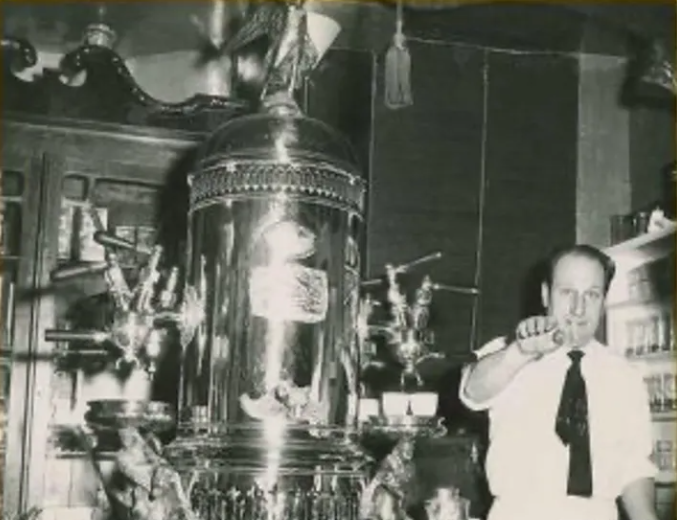
Early espresso machines worked by using two independent boilers to heat water to boiling and generate steam, then relying on the pressure produced by the steam to pressurize the hot water (about 1.5 bar), allowing the hot water to pass through the coffee bed and obtain a very concentrated coffee liquid. However, the espresso made this way did not taste ideal.
So at the beginning of the 20th century, an Italian named Luigi Bezzerra bought the patent for the early espresso machine and, on the original basis, added a device that could stabilize pressure, while also adding a coffee filter basket to filter and keep the thickness of the coffee bed even.
The whole process takes only a few dozen seconds. After being pressurized, the hot water quickly passes through the extremely finely ground and evenly distributed coffee bed. The extracted coffee tastes more balanced and has a more prominent mouthfeel, and the coffee liquid falls directly into the cup. This approach also formed the most basic design framework of today's espresso machines.
Although espresso coffee had already appeared when the espresso machine was introduced in 1884, almost all the people who went into coffee shops to drink coffee back then were male workers, and women were not allowed to enjoy coffee in cafes. So in that era, not all Italians had tasted espresso, and its taste could hardly be said to be liked by everyone.
The formation and flavor characteristics of modern espresso
With social changes, more and more Italians began to come into contact with espresso, and this strong coffee gradually became Italy's national drink. As more people drank it, they naturally placed higher demands on taste and quality. In 1946, a man named Gaggia further improved the piston pressure system, replacing manual pressure with spring pressure, so that a golden layer of coffee oil—Crema—floated on the surface of the brewed coffee.
Crema appeared for the first time in coffee history and was quickly accepted and loved by Italians. After that, when making espresso, whether it had coffee oil gradually became one of the requirements. Front Street Coffee (FrontStreet Coffee) believes that an ideal cup of espresso should be strong without being burnt or bitter, full-bodied and solid, with a clear sweet aftertaste and distinct layers, and that golden layer of oil can also bring a smooth and delicate mouthfeel.
How do you make espresso with golden crema?
The oil on the surface of espresso is essentially carbon dioxide in the coffee particles being unable to return to the atmosphere in a sealed and pressurized environment, so it combines with water and passes through the coffee particles, and is extracted together with the oils and soluble substances in the coffee. Because oil and water have different densities, after the coffee liquid falls into the cup, a golden layer of oil floats to the surface.
During roasting, coffee beans undergo structural changes, and the beans generate a large amount of carbon dioxide. After roasting is completed, as time passes, the carbon dioxide escapes on its own, taking with it the volatile aromatic substances in the coffee. So if you want espresso to be full of aroma and rich in crema, choosing freshly roasted coffee beans and grinding only before extraction are two especially critical points.
Front Street Coffee (FrontStreet Coffee) currently has 4 espresso coffee beans on sale, all shipped within 5 days after roasting, ensuring that every customer who places an order receives them in the freshest condition. The resting period of coffee is about 4-7 days, so when customers receive it, it is exactly at the stage with the best flavor.
The production process of espresso
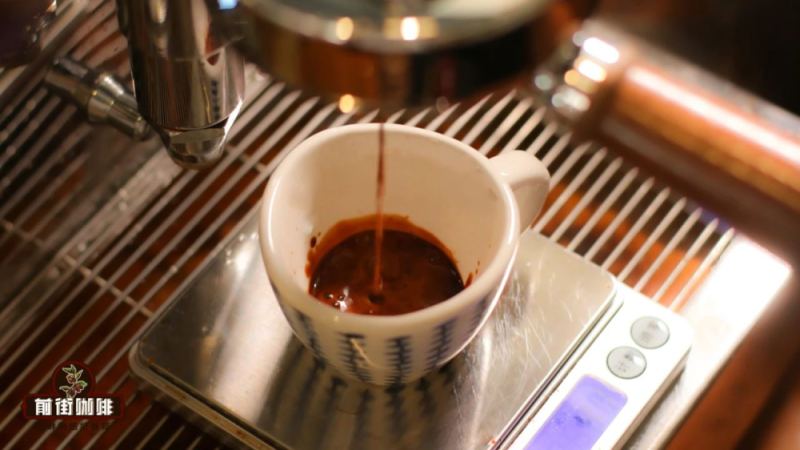
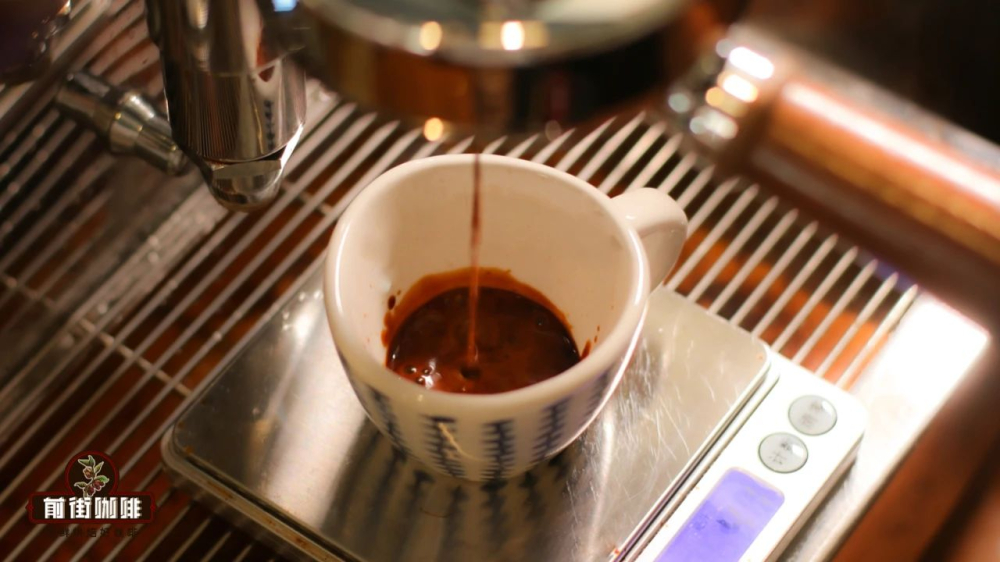
When Front Street Coffee (FrontStreet Coffee) stores produce a single shot of espresso, they use about 10 grams of coffee grounds and extract about 20 grams of coffee liquid; for a double shot, they use about 20 grams of coffee grounds and extract about 40 grams of coffee liquid. The extraction water temperature is 94 degrees Celsius, and the extraction time is controlled at 20-30 seconds.
A single shot of espresso is paired with a single filter basket and a single-spout portafilter, extracting one shot at a time; a double shot of espresso uses a bottomless filter basket, bottomless portafilter, or handle, extracting a double shot of espresso at one time.
First, prepare a dedicated espresso machine, then remove the portafilter and clean the coffee filter basket with a special cloth, confirming that the filter basket is clean and has no water stains.
Next, use a dedicated grinder to grind the coffee beans to be used into an extremely fine powder. (Note: before receiving the grounds, first place the portafilter on the electronic scale and tare it, then after receiving the grounds place it back on the electronic scale to ensure the weight of the coffee grounds is consistent each time.) During the process of receiving the grounds, pay attention to where the coffee grounds fall into the portafilter, so that the coffee grounds evenly cover every area of the portafilter.
Then use your fingers to level the coffee grounds in the filter basket as much as possible, keep your arm vertical, and use the tamper included with the coffee machine to tamp the coffee bed. Then gently lock the portafilter onto the coffee machine, avoiding bumping the portafilter against the machine. Excessive knocking will cause cracks in the puck inside the portafilter, which can then cause channeling and lead to under-extraction or uneven extraction.
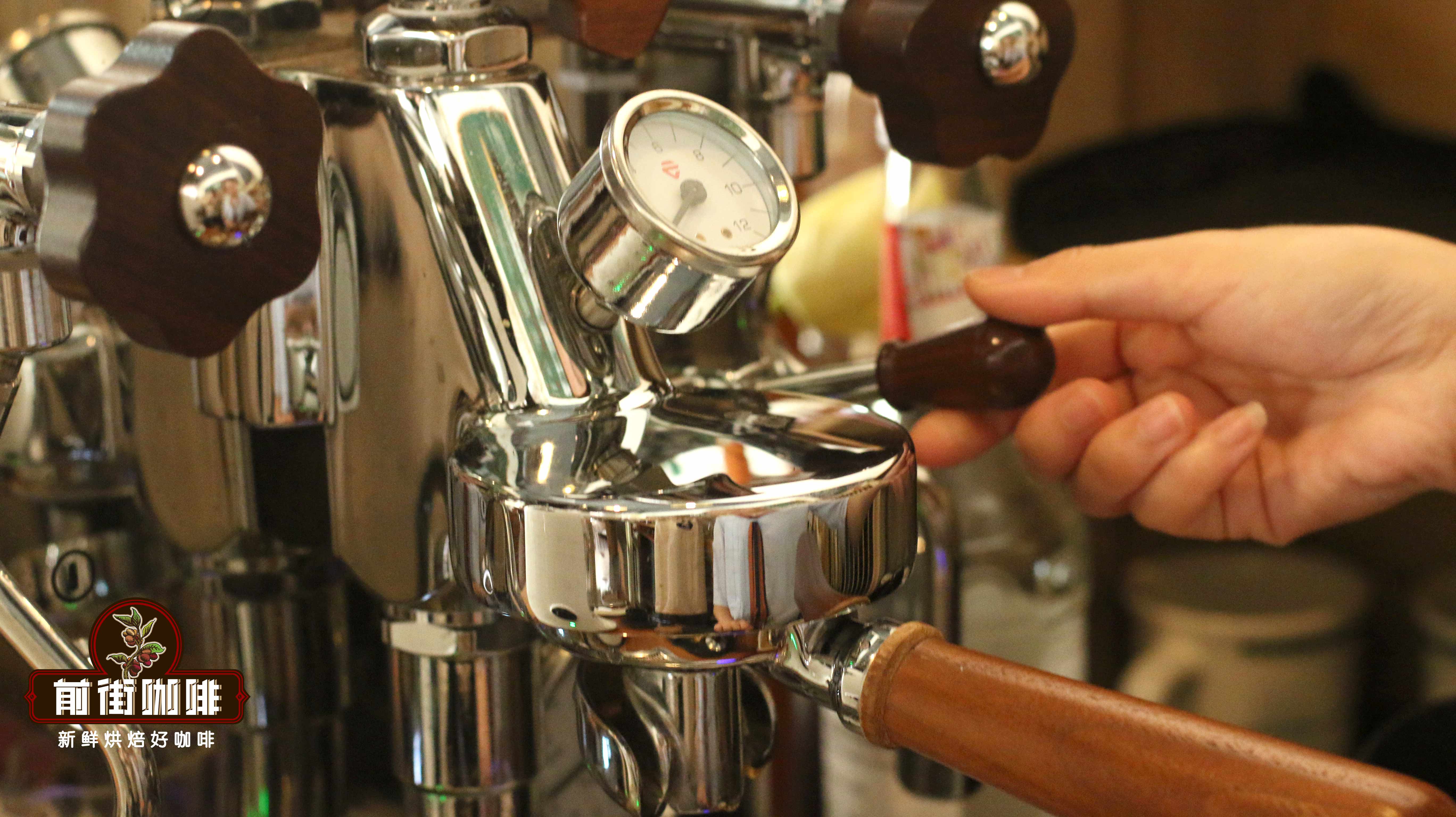
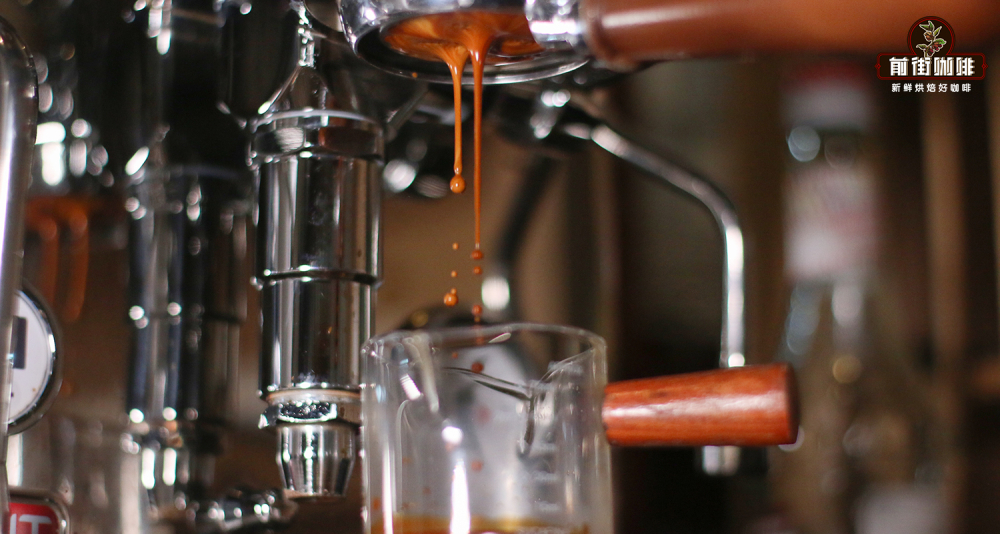
After locking the portafilter, immediately turn on the extraction switch and begin extracting the espresso. At the same time as extraction starts, use the electronic scale to weigh the espresso liquid, and at any time pay attention to the extraction time as well as the color and condition of the coffee liquid. After extraction ends, knock the puck out into the knock box, clean with a special cloth, and finally lock the portafilter back onto the coffee machine.
The coffee beans used by Front Street stores are the house-roasted "Sunflower Warm Sun Blend," composed of 70% Honduras Sherry coffee and 30% Yirgacheffe natural red cherry coffee. Sherry brings whiskey, vanilla, and cream flavors, while red cherry contributes tropical fruit and fermented notes. The combination gives the coffee in the cup rich aromatic layers and a soft mouthfeel.
However, compared with directly drinking the strong and bitter espresso, more people prefer the refreshing and comfortable-tasting Americano, and its method is extremely simple. Below, Front Street uses the store's Sunflower · Warm Sun as an example to briefly demonstrate the production process.
When producing Americano, Front Street first grinds the coffee beans into powder, extracts espresso at a 1:2 coffee-to-liquid ratio, and then pours it into water to dilute it, that is, using 20 grams of coffee grounds to extract 40 grams of coffee liquid. After many tests and adjustments by Front Street, a 1:6 ratio of coffee liquid to water best showcases the aroma of Warm Sun, that is, pouring 40 grams of coffee liquid into 240 grams of 88°C hot water, and the hot Americano is complete.
If making iced Americano, replace the hot water with 120 grams of ice cubes plus 120 grams of room-temperature water, and the taste is best before the ice melts. Front Street's iced Americano presents a fresh and pleasant sweet-and-sour flavor, and is very easy to accept even for people who do not usually drink coffee.
The above content is compiled by CoffeeHunters, a coffee news website.


