







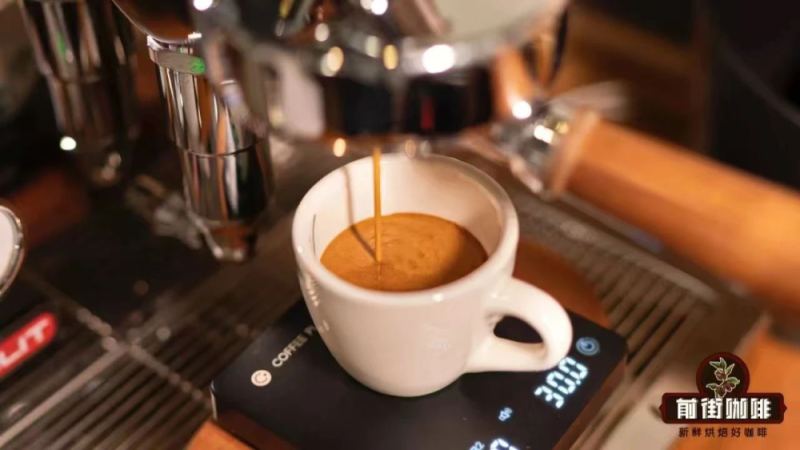
Espresso is both unfamiliar and challenging for most people, and the intense bitterness brought by its high concentration often deters beginners. However, as long as you master the correct tasting method, espresso can also reveal rich and captivating layers of flavor. From the perspective of Front Street Coffee, this article systematically sorts out the historical origins and evolution of espresso, explains in detail the three major tasting dimensions of aroma, mouthfeel, and aftertaste, and provides a complete set of operating steps from rinsing the mouth with ice water, stirring the crema, to taking a large sip, helping coffee lovers truly appreciate the unique charm of this classic Italian drink.
For more specialty coffee knowledge, please follow the WeChat public account: Front Street Coffee (FrontStreet Coffee)
For most consumers, the first impression of espresso is often too intense, since in daily life people rarely have the chance to encounter a coffee drink with such a high concentration. For this reason, in order to avoid light-flavored beginners accidentally ordering this "powerful" coffee, many cafes simply do not include espresso on their menus.
However, Front Street believes that everyone has more or less come across short videos online of coffee lovers downing a shot of espresso in one gulp. Seeing the satisfied expression on their faces after drinking it, many beginners cannot help but want to try it. But the actual result is often that, let alone finishing it in one gulp, just taking a small sip makes them involuntarily shudder, and afterward they silently put espresso on their "do not try again" list.
The root cause of this situation is the wrong tasting method. If the method is wrong, naturally you cannot appreciate the wonderful qualities of espresso, and what you feel stays only at the surface level of bitterness. Do not worry. In order to help beginners get rid of the trouble caused by espresso, today Front Street will talk about how espresso should actually be tasted.
The Birth and Evolution of Espresso In 19th-century Italy, Mr. Angelo Moriondo invented the first generation of the Italian coffee machine. After that, people continued to improve it around this invention, and eventually produced a pressurized model capable of extraction with pressure, which is the Italian coffee machine we are familiar with today. Because pressure assistance was added during extraction, coffee-making was freed from the lengthy conventional methods of the time and could instead quickly produce a small cup of extremely high concentration. Such a cup of coffee was given the name "Espresso," and thus espresso was born.
Espresso can be called the spiritual pillar of local Italians. It is quick to make and high in caffeine, and one cup can keep a person energetic all day. For Italians at that time, espresso was like a refreshing remedy. During work breaks, they would find time to order a cup and drink it quickly, then return to work with a full state of energy. At the same time, espresso at that time featured a strong, intense, roasty bitter flavor, so the "one gulp" drinking method fit the drinking habits of that era very well, saving time while also reducing the impact of the roasty bitterness. To mask the bitterness, people would also add various seasonings to neutralize it. It can thus be seen that at that time, people's demand for coffee was mostly only to obtain the refreshing effect of caffeine.
With the development of the times, the spread of the specialty coffee concept promoted the improvement of coffee quality, and roasting techniques also became increasingly refined. People's demands for coffee were no longer limited to refreshment, but placed higher requirements on the overall drinking experience, such as the taste and mouthfeel of the coffee. Since the demands have changed, we naturally no longer need to follow past habits to taste coffee.
Although espresso no longer needs to be downed in one gulp, it still should be finished within a short time. On the one hand, high-concentration coffee after cooling has an extremely strong impact in taste; on the other hand, the soul of espresso, Crema, will quickly dissipate within a short time. Therefore, if you want to taste the best mouthfeel of espresso, you need to finish it as soon as possible.
Because there is a time limit, we must perceive the deliciousness of espresso within just a few sips. Next, Front Street will share the main aspects on which espresso tasting focuses. Aroma: The aroma given off by coffee is like the title of an article, playing the important role of attracting people in. Simply put, it is the key factor that attracts people to drink coffee. So before drinking espresso, you can first bring your nose close and smell the fragrance it gives off. Generally speaking, dark-roasted espresso will present rich aromas like nuts and cream; slightly lighter roasts will give off lighter, more enticing floral and fruity aromas. For example, the espresso made from Front Street Strawberry Candy espresso blend coffee beans has rich candy aromas, sweet and soft, and is completely burden-free even when drunk directly.

Mouthfeel: Because of the presence of Crema, espresso not only tastes more full-bodied, but also brings a delicate, silky touch like cream. Therefore, when tasting espresso, mouthfeel is also an important direction of evaluation. Aftertaste: Unlike regular single-origin coffee, for espresso, compared with the taste felt while drinking, the aftertaste instead allows us to capture more flavor attributes. This is because espresso is too high in concentration and its flavors are highly concentrated, making it difficult to distinguish specific flavors during drinking. But after drinking espresso, the coffee substances remaining in the oral cavity will continue to give off sweet tastes and aromas. This is because the flavor substances hidden in the crema begin to volatilize. The taste and aroma experience we feel at this time is the aftertaste.
Next, Front Street will share how espresso should be drunk correctly. How to drink espresso? Before the formal tasting, it is best to first take a sip of ice water. Because the taste of espresso is indeed too concentrated, drinking a sip of ice water in advance can clean the mouth, thereby enhancing our perception of the coffee's flavor.
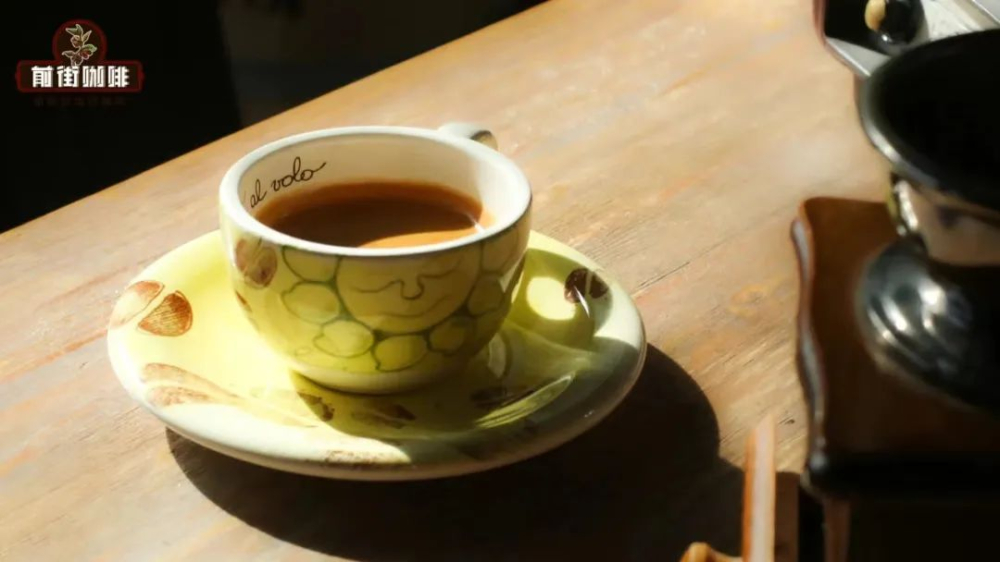
After drinking the ice water and rinsing the mouth, first take a spoon and stir the espresso. There are two reasons: first, the coffee is not uniformly concentrated during the dripping process, and stirring is needed to evenly disperse the concentration; otherwise, the coffee liquid at the bottom will be very thick, while the surface will be very thin; second, the crema needs to be integrated into the coffee. The reason many friends taste a very bitter flavor after just one small sip is that the crema contains fine particles. These fine particles not only make the coffee bitter, but also make it full-bodied. Through stirring, the advantages of the crema can be perfectly integrated into the coffee liquid, while also dispersing the bitterness brought by the fine particles.
Of course, not stirring is also acceptable, and this will provide a richer layered experience. But if you are a beginner who has just started, Front Street still recommends stirring to reduce the bitter stimulation from the crema.
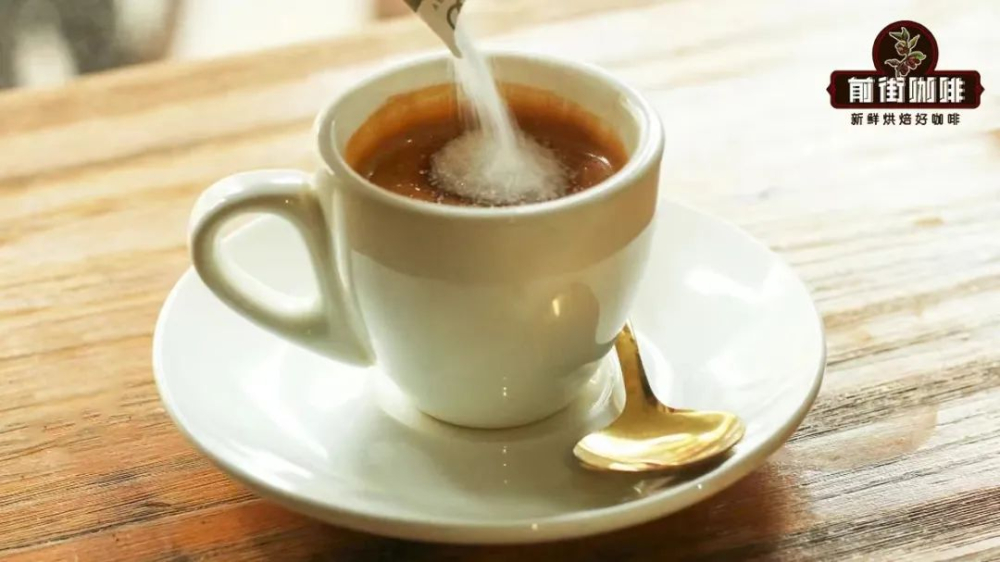
Then, we need to take a large sip, letting the evenly stirred espresso rush into the mouth, filling and wrapping around the tongue. In this way, you can fully feel the silky touch brought by the crema, which is very comfortable. If you are not using dark-roasted beans but a light-roasted SOE, then because the beans are roasted lighter and the extracted crema is thinner, the mouthfeel will be relatively lighter.
Next, begin to feel the aftertaste of the coffee. After swallowing, close your mouth and exhale, fully enjoying the flavor that comes back up from the throat, as well as the coffee aroma continually blooming in the oral cavity. Finally, take another sip of clear water and feel the coffee's sweet return on the taste buds. It is simply too pleasant.
If at this point you still think espresso does not taste good, that is fine too. After all, everyone has their own preferences, so just choose what you like.
- END -
The above content is compiled by CoffeeHunters, a coffee news website.


