







In recent years, cold brew coffee and ice drip coffee have continued to grow in popularity among coffee enthusiasts, and especially in summer, they have become almost star products among the iced drinks offered by cafés. This type of coffee has attracted a great deal of attention thanks to its unique flavor, which is difficult to replicate through hot brewing, as well as its limited-edition quality brought about by a longer production cycle. Although the wait is long, the actual process is not complicated. In this article, Front Street Coffee will guide you through the extraction principles and taste differences of cold brew and ice drip, and show you step by step how to easily make these two low-temperature coffees at home.
In recent years, cold brew coffee and ice drip coffee have been highly sought after among coffee consumers. Especially after summer arrives, the ice drip or cold brew coffee served in cafés often becomes the standout among iced coffee categories. On the one hand, they offer a taste experience that iced pour-over or iced americano cannot simulate; on the other hand, because production takes a long time, many shops can only offer them in limited quantities each day. Although the wait is not short, the process of making these two coffees is actually not cumbersome. Next, Front Street Coffee will explain in detail how to make ice drip and cold brew coffee at home.
When choosing coffee beans for making iced drinks, it is recommended to prioritize Front Street Strawberry Candy, Front Street Mozart, Front Street Sidra, and Front Street Huakui, which have prominent sweetness. These beans have a moderate roast level, are neither too bitter nor too sour, and are suitable for a variety of iced coffee methods such as cold brew, iced pour-over, and iced americano.

Although they both belong to the category of iced coffee, the extraction principles of cold brew and ice drip are completely different from those of pour-over and americano. Pour-over and americano usually rely on hot water to quickly dissolve the soluble components in coffee particles within a short time. The drawback of this method is that it easily brings out bitterness; once the water temperature, pouring speed, or grind size is not controlled properly and the extraction time is slightly longer, the overall balance and cleanliness of the coffee will suffer.
Low-temperature extraction can effectively avoid this problem, because the substances that cause bitterness are not easily released in a low-temperature environment, and what is extracted is mainly sweet and sour flavor. However, without heat to drive the movement of water molecules, the extraction process often takes 6 to 12 hours, so wanting to drink a cup does require patience.
However, deliciousness is often worth the wait. So, if both use low-temperature extraction, why are they divided into cold brew coffee and ice drip coffee? The reason is that cold brew relies on immersion to obtain flavor, and the only equipment needed is a clean, sealable container; ice drip extracts through dripping, and a dedicated ice drip pot must be used.
Ice Drip Coffee
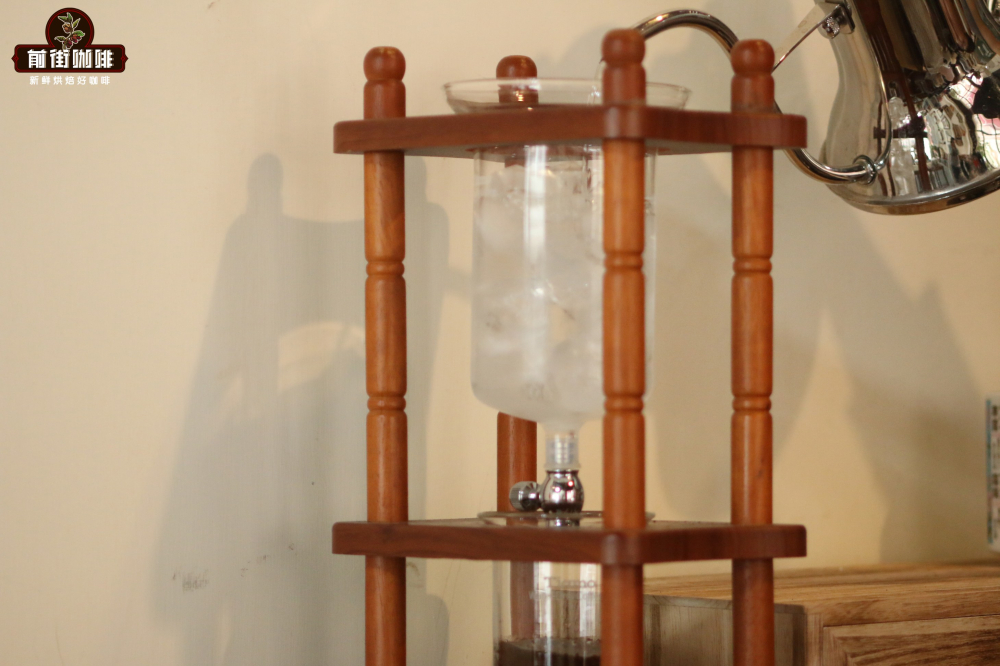
Use an ice-water mixture at below 5°C, let the ice melt naturally, and adjust it through a valve to control the rate at which ice water drips onto the coffee grounds. The ice water slowly passes through the layer of coffee grounds, gradually dissolving flavor substances, and the extract is collected drop by drop. The entire process lasts about 6 to 8 hours. For a better taste, it then needs to be refrigerated and "fermented" for another 8 to 12 hours.

Cold Brew Coffee
The principle is the same as cold-brewed tea. During extraction, first grind the coffee beans, pour in cold water, and soak in a low-temperature environment for at least 12 hours. Before drinking, filter out the coffee grounds. Because it is an immersion extraction, after filtering is complete there is no need for further refrigerated fermentation.
The two low-temperature extracted coffees each have their own strengths: ice drip coffee has richer flavor layers and a more delicate mouthfeel; cold brew coffee is fuller and more mellow. If you do not want the process at home to be too complicated, you can try cold brew coffee; if conditions allow, you might as well buy an ice drip pot to make ice drip coffee.
How to make cold brew coffee: Front Street recommends a coffee-to-water ratio of 1:13. Grind the coffee to the coarseness of fine granulated sugar, add ice water at a ratio of 1 gram of coffee to 13 grams of water, and stir evenly to ensure the coffee grounds are completely soaked. Then seal the container and place it in the refrigerator for 8 to 12 hours. Filter out the coffee grounds and it is ready to drink.
How to make ice drip coffee: Front Street Coffee also recommends a 1:13 ratio, but here it refers to the coffee-to-liquid ratio, meaning 1 gram of coffee drips out 10 grams of coffee liquid. After grinding the coffee to the coarseness of fine granulated sugar, put it into the powder chamber of the ice drip pot, gently shake to level the surface, and cover with a round filter paper of the appropriate size to ensure water droplets fall evenly on the coffee bed and do not concentrate in the middle.
Next, prepare an ice-water mixture in the upper pot at a 1:1 ratio. If the drip rate is adjustable, set it to 7 drops every 10 seconds. Once the target ratio of coffee liquid has been collected, pour it into a clean, oil-free, sealable container and refrigerate it for 8 to 12 hours before tasting.
Why does ice drip coffee need refrigerated fermentation? In fact, rather than calling it fermentation, it is better to say it is an oxidation process. Just like freshly roasted coffee beans, about 2% of their weight is carbon dioxide. These gases are gradually released depending on the storage environment, equipment, or method, causing the pressure inside the packaging to be higher than one atmosphere. Pressure helps aromatic substances combine with oils, bringing the aromatic components in the beans to a state where they are easy to extract.
The above content is compiled by CoffeeHunters, a coffee news website.


