







Espresso is famous worldwide for its rich, full-bodied taste and extremely high concentration, but many coffee lovers who try to make it at home often find it difficult to replicate the quality produced by coffee shops, and may even end up with burnt, bitter, or weak results. The key lies in the fact that operating an espresso machine is far more complex than general brewing methods, involving multiple variables such as boiler heating, steam pressure, grind size, and dose control. This article, from the perspective of Front Street Coffee, will systematically explain the extraction principles of espresso, how to judge whether extraction is on point, how to choose coffee beans suitable for making espresso, and the complete operational steps from grinding to serving, helping you consistently make a qualified espresso at home.
For more specialty coffee knowledge, welcome to follow: Front Street Coffee
Among all coffee categories, espresso has a relatively high barrier to entry. The reason is that it relies on precisely structured espresso machines with numerous operational steps, placing stricter demands on the user. Today Front Street has put together a detailed hands-on tutorial, hoping to help friends who want to improve their espresso skills systematically master the essentials.
Espresso is extremely well-known around the world, and its signature characteristic is its intense taste and outstanding body. Many people try repeatedly at home but still cannot achieve the concentration found in coffee shops, and sometimes even end up with a burnt flavor.
What is the extraction principle of espresso?
First, it must be made clear: espresso is not simply brewing coffee grounds with water, nor is it heating and concentrating ordinary coffee liquid. Making espresso requires a dedicated espresso machine—the kind of equipment in coffee shops that can eject steam.
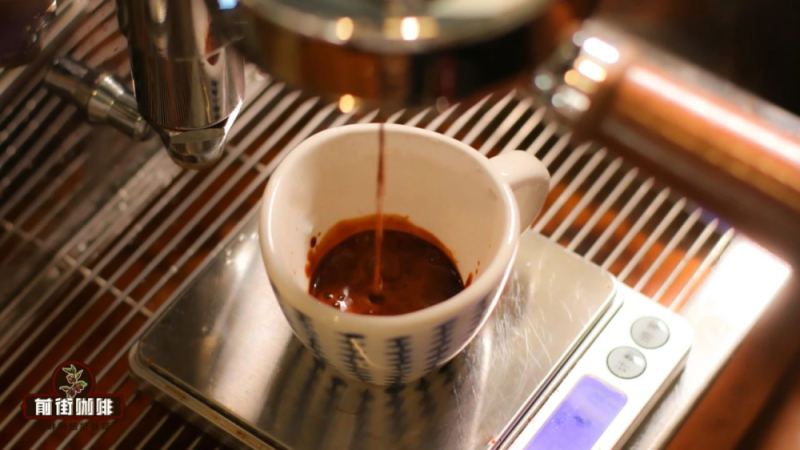
The working logic of an espresso machine is: first heat the water in the boiler to produce steam, then use the pressure formed by the steam to force hot water at about 94°C through a very finely ground layer of coffee at 9-10 bar of pressure, thereby extracting a coffee liquid with a texture as viscous as honey.
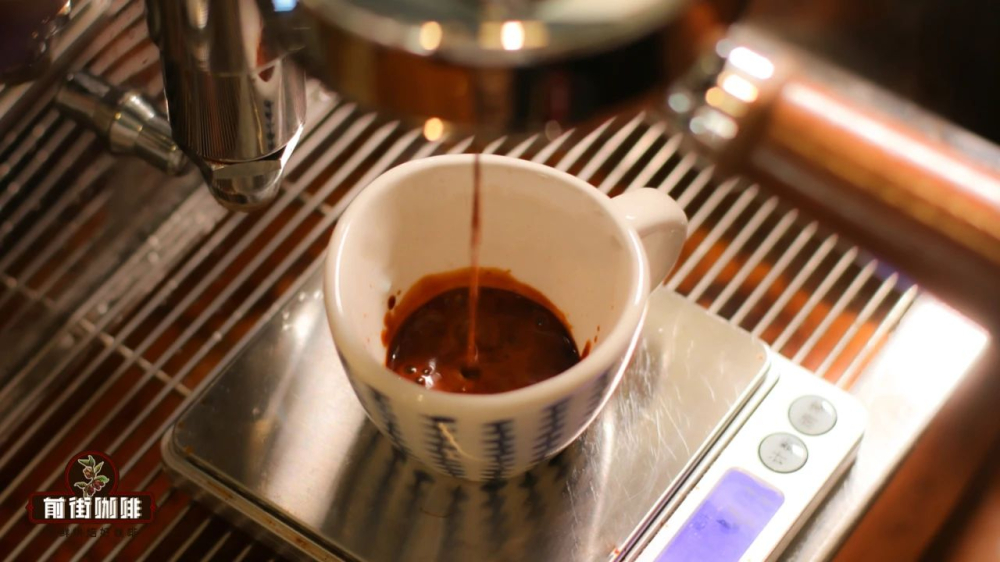
At the very beginning of extraction, the coffee liquid flowing out is brownish-red, thick and smooth. As time passes, the color of the liquid gradually turns golden yellow, and then further to a light golden yellow.
How do you judge whether espresso extraction is qualified?
The entire extraction process is extremely fast, usually completed in 25 to 30 seconds. However, because the performance of each coffee machine and grinder differs, espresso does not have a fixed, unchanging set of parameter standards.
Therefore Front Street Coffee only provides a starting reference value, and afterward fine-tuning is needed based on the flavor performance of the final product: (double basket) 20 g of grounds, at a 1:2 ratio, with 9 bar pressure and 94°C hot water, extract 40 g of coffee liquid; (single basket) 10 g of grounds, also at a 1:2 ratio, 9 bar pressure, and 94°C hot water, extract 20 g of coffee liquid. Extraction time should be controlled between 25-30 seconds in both cases.
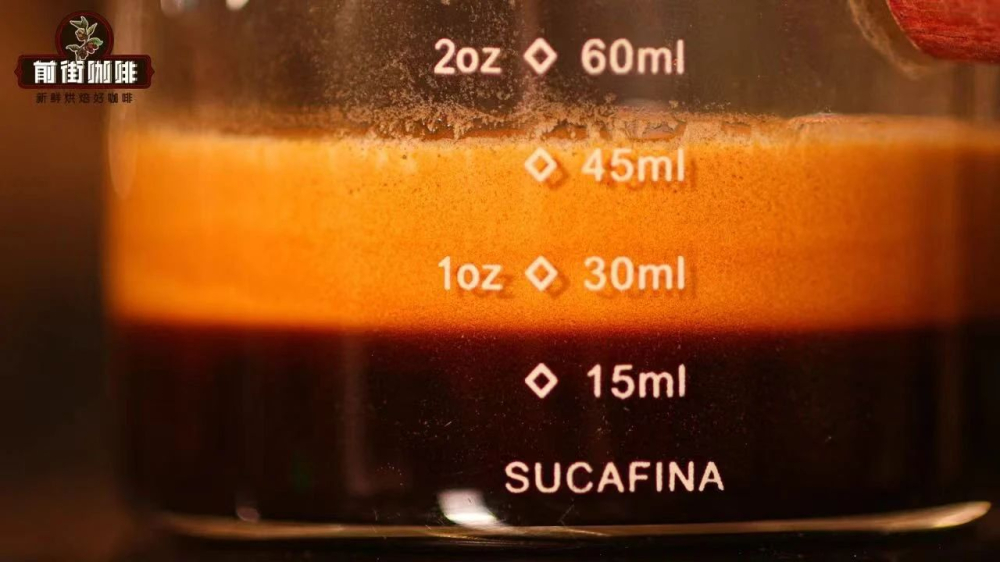
If the flow rate during extraction is too fast and the espresso tastes weak, you can choose to adjust the grind finer or increase the dose (choose one of the two); if the flow rate is too slow and the espresso shows a burnt, bitter taste, you can adjust the grind coarser or reduce the dose (also choose one of the two).
What coffee beans should be chosen for making espresso?
For friends who are just starting out with espresso, Front Street Coffee recommends prioritizing blend beans designed specifically for espresso. The greatest advantage of blends is stable output, and they are also more cost-effective. Through combinations of different origins and proportions, they can effectively avoid the flavor defects that single-origin beans tend to expose under high-concentration extraction conditions.
If you pursue espresso with a unique and richly layered aroma and taste, you might try the "Front Street Sunflower Warm Sun Blend Coffee Beans" used in Front Street Coffee stores, and the 227 g size is very suitable for daily home use. This coffee is blended from Ethiopian Yirgacheffe and Honduran coffee beans, with obvious vanilla and chocolate notes, a creamy smooth mouthfeel, and both berry-like sweet acidity and hazelnut-caramel-like sweetness in the finish.
If you prefer espresso that is full-bodied without acidity, rich in aroma, and with abundant crema, you can try Front Street Classic Espresso Blend Coffee Beans. It is very suitable for enthusiasts who like the smooth taste of Americano and who hope lattes can easily produce latte art. This coffee uses Arabica beans from the Cerrado region of Brazil and Sumatra Island in Indonesia, with a small amount of Robusta added. The extracted espresso gives off a rich roasted nut aroma, with the fullness of dark cocoa, caramel-like sweetness, and a sweet finish. Even more noteworthy is its beautiful layer of golden crema.
The specific extraction steps for espresso
Step one, turn on the coffee machine and wait for the machine to complete automatic heating. When the display temperature rises to 94°C, you can begin preparing for extraction.
Before extraction, first wipe the portafilter basket clean, start the grinder to grind a double shot's amount of coffee grounds, and place it on an electronic scale to adjust until it is exactly 20 g.
Then use a distribution tool to level the surface of the grounds, and then use a tamper to apply force vertically downward, pressing the coffee puck firmly and evenly. This is the key step to ensuring stable extraction.
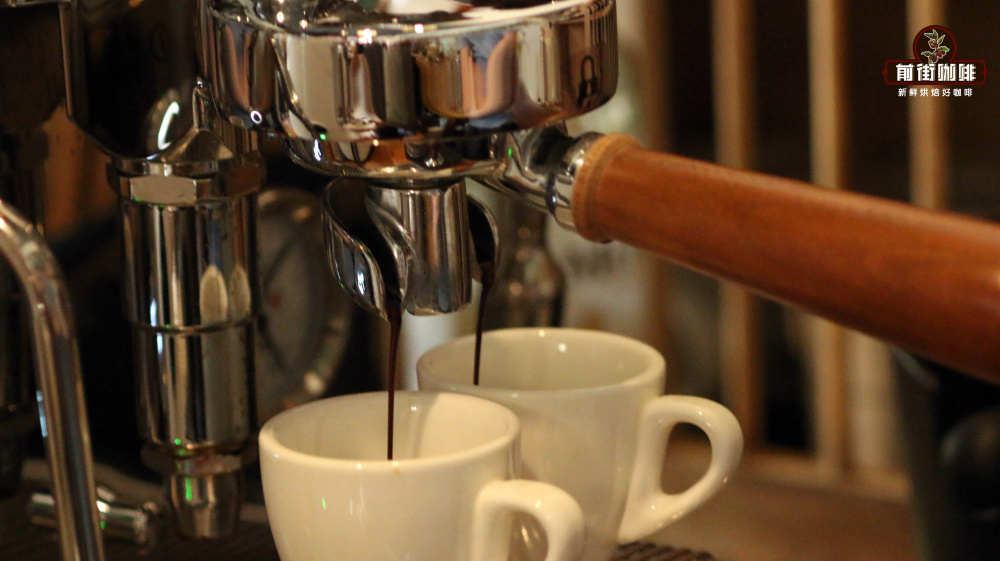
Next, turn on the extraction switch and let water run for 1 to 2 seconds, which both wets the group head and rinses away residual coffee grounds. Then place an electronic scale under the cup that will receive the espresso and tare it to zero, and place it under the group head during extraction.
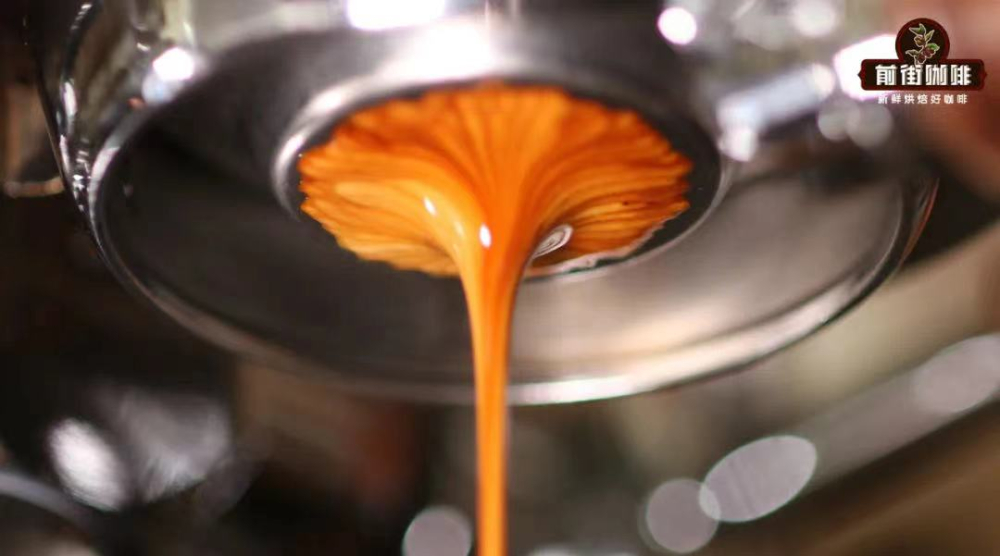
Lock the portafilter smoothly onto the group head and flip down the extraction switch. Pay attention to the state of the coffee liquid flowing out. When the electronic scale shows 40 g of extracted coffee liquid and the time is about 30 seconds, turn off the extraction switch.
If you want to make an Americano, take a 200 to 250 ml cup, first pour in 160 to 200 g of warm water, then pour the espresso into it, and a hot Americano is complete.
If you want to make a hot latte, prepare a 300 ml cup, first pour in the espresso, then add 220 ml of fresh milk to a milk pitcher, steam it to 55 to 60°C, making sure a layer of fine microfoam forms on the surface, fully integrate the milk and coffee, and incidentally pour a beautiful pattern.
It should be noted that brewing parameters will change subtly with factors such as daily air humidity and the condition of the coffee beans, so the dose, grind setting, and extraction yield all need to be adjusted flexibly.
The above content is compiled by CoffeeHunters, a coffee news website.


