







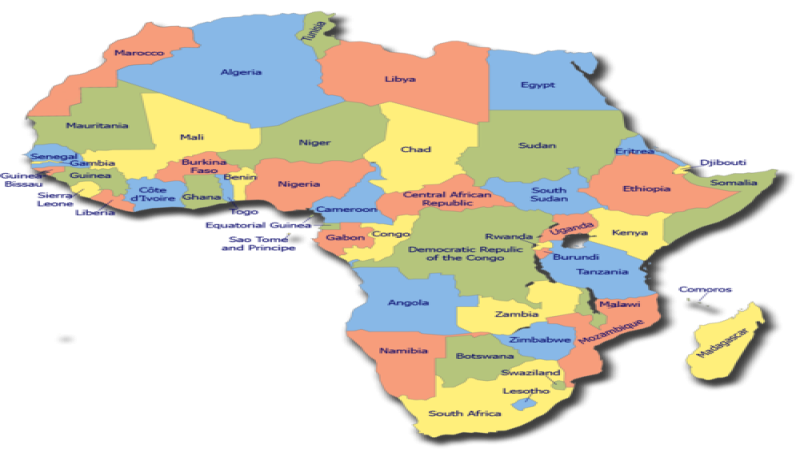
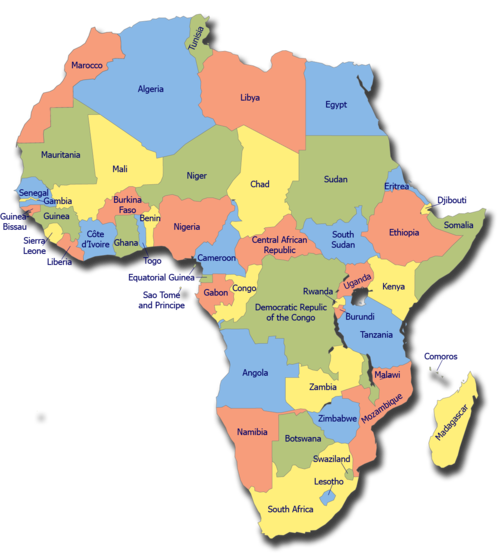
Where exactly in Africa does coffee originate? The answer points to Ethiopia—a genetic treasure trove of the Coffea genus and the starting point from which the two major varieties, Typica and Bourbon, spread across the world. This article begins with the legend of the shepherd Kaldi, then explores Ethiopia's coffee ceremony, the etymological roots of the place name Kaffa, and an industry model centered on smallholder farming and cooperative processing. You will also learn why Ethiopian coffee beans are often collectively referred to as heirloom varieties, and how Front Street Coffee, through its Yirgacheffe washed beans, lets beginners experience citrus acidity and a clean mouthfeel at an affordable price.
For more specialty coffee knowledge, please follow our WeChat official account: Front Street Coffee (FrontStreet Coffee)
As the birthplace of coffee, Ethiopia is also a natural treasure trove of coffee genetics. Countless coffee tree species grow on this land, among which the two major varieties, Typica and Bourbon, later spread throughout the world, directly driving the prosperity of today's specialty coffee industry.
What are the characteristics of Ethiopian coffee culture?
Located in East Africa, Ethiopia has a tropical climate, and its high-altitude terrain keeps temperatures pleasant throughout most of the year. Local residents make a living from farming and herding, with coffee being one of the most important cash crops. Legend has it that on the Ethiopian highlands, a shepherd named Kaldi noticed while grazing his flock that the sheep became unusually active after eating certain wild red berries. Out of curiosity, he picked some and took them home to try. After eating them, he felt energized and especially excited, so he told the people of his village. Word spread far and wide, and coffee beans were subsequently introduced to the Arabian Peninsula, where cultivation and trade gradually took off, beginning a centuries-long journey of global dissemination.
Legend aside, Ethiopians did indeed develop the habit of drinking coffee very early on. A cup of strong coffee in the morning is what it takes to start the day full of energy. No matter which corner of a village you walk to, the aroma of coffee is always in the air. Locals have preserved coffee's most simple and pure side: they pound charcoal-roasted coffee beans into powder with an iron pestle, put it into a coffee pot to brew, and as it boils, the unique aroma is slowly released. Spices and sugar are added along the way to adjust the flavor, and finally it is enjoyed with traditional bread.
Ethiopia also has a long-standing coffee ceremony: first, green beans are roasted on a flat iron pan, then crushed with a pestle and mortar, and then put into a clay pot called a "Jebena" with water to boil. When the water mixed with coffee grounds starts to bubble, it means the coffee is ready to drink. The whole ceremony is conducted in three rounds—the first cup is called Abol, during which elders offer blessings; the second cup is called Tona, when people begin to chat about everyday matters; the third cup is called Beraka, meaning joy. Only after finishing this cup does the ceremony come to a complete end.
In Ethiopian languages, coffee is called "bunn" or "buna," and the place where coffee originated is Kaffa, so coffee is sometimes also called "Kaffa bunn." In addition, the term "coffee bean" is generally believed to be an anglicization of "Kaffa bunn," and the English word coffee is derived precisely from the Ethiopian place name "Kaffa."
What coffee varieties does Ethiopia have?
Coffee cultivation in Ethiopia is mainly concentrated in the west and south, with more than half using a smallholder farming model, the so-called garden coffee, which is the main local production method. According to statistics, nearly 1.2 million households locally depend on coffee cultivation for their livelihood, with each household cultivating no less than 4 hectares. Garden coffee refers to farmers growing coffee trees mixed with other cash crops in their own backyards, usually together with banana trees, so that the front and back of every household form a unique green landscape.
Since smallholder-grown coffee has limited output, farmer cooperatives or processing stations of varying sizes have emerged locally, specifically responsible for green bean processing in their areas. Every harvest season, farmers pack the fruit from their own coffee trees and send it to processing stations (cooperatives) built near water sources for centralized processing, then sell it externally under the name of the processing station. For example, the Gedeb Cooperative coffee beans on Front Street's bean list collect coffee fruit grown in Yirgacheffe town; farmers deliver it to the town for unified washed processing, and it is ultimately produced under the cooperative's name and sold around the world.
The Arabica varieties available on the market today are actually all descendants of Typica and Bourbon, developed through natural genetic mutation, artificial genetic modification, and hybridization research. Even so, a massive wild coffee population still exists within Ethiopia, waiting to be studied and developed.
Because there are simply too many coffee types, local farmers mostly use mixed cultivation when planting, making it hard to distinguish them one by one. Therefore, most Ethiopian coffee beans are mixed varieties, collectively referred to as Ethiopian heirloom (Heirloom).
However, as long as coffee is grown in the same region or production area, it can be considered a single-origin coffee bean (single-origin does not mean a single variety, but a single production area). Because of mixed planting, beans produced by different varieties of coffee trees differ in size and flavor, so Front Street Coffee (FrontStreet Coffee) has noticed that coffee beans labeled as Ethiopian heirloom are not uniform in bean size and smell of citrus fruit acidity.
After medium-light roasting, Ethiopian coffee beans present a rich citrus fruity acidity, with balanced sweetness and acidity and a clean mouthfeel, overturning many people's preconceptions about coffee and thus winning the favor of most coffee consumers worldwide.
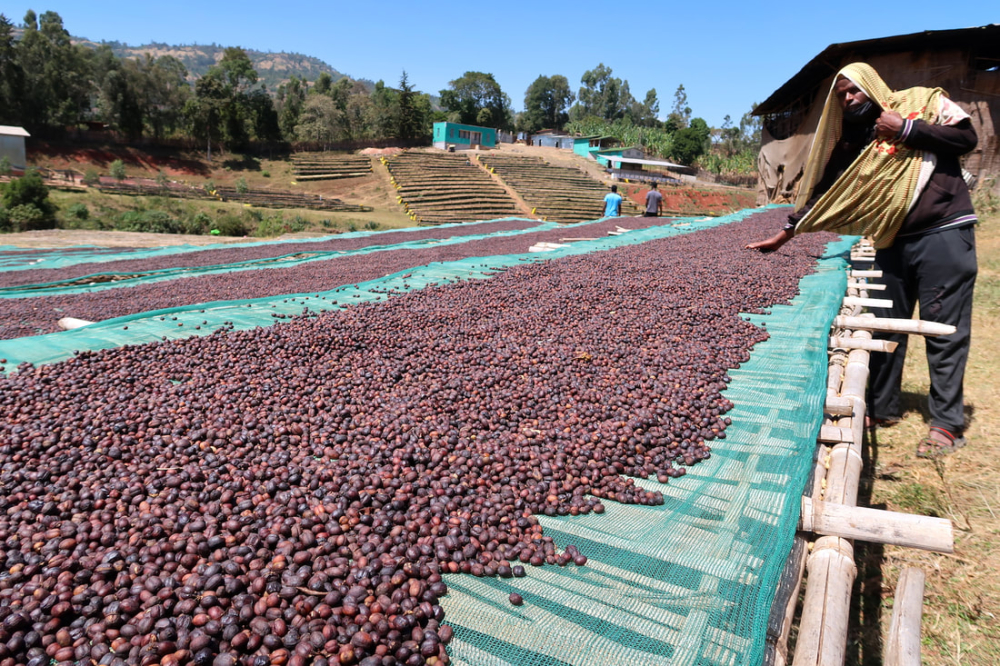
Ethiopia currently ranks first in coffee production in Africa and fifth in the world. Precisely because of this, Ethiopian coffee beans have become a must-have choice for many people starting out with coffee—cost-effective and without the bitterness of traditional coffee, they are very popular among beginners.
For this reason, a washed coffee bean from Ethiopia's Yirgacheffe production area has become part of Front Street Coffee's (FrontStreet Coffee) selected daily-bean series. This series focuses on high cost-effectiveness and small packaging, allowing consumers to appreciate the unique charm of Ethiopian coffee beans without spending too much.
To let everyone taste a richer coffee aroma, Front Street Coffee (FrontStreet Coffee) promises that all coffee beans are shipped within 5 days after roasting, ensuring that what you receive is 100% freshly roasted beans.
The above content is compiled by CoffeeHunters, a coffee news website.


