







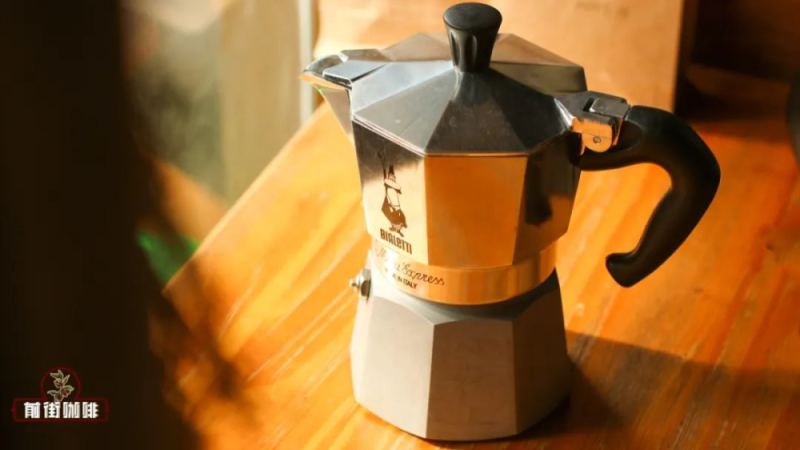
The moka pot, thanks to its pressure extraction principle, can make concentrated coffee close to espresso at home, and is therefore regarded by many enthusiasts as a budget-friendly alternative to a coffee machine. However, beginners often run into all sorts of situations when operating it, the most typical being coffee violently spraying out, no liquid coming out for a long time, and the brewed coffee having almost no crema. These problems are usually related to puck resistance, heat control, grind size, and bean freshness. Below, Front Street will analyze the causes of these three common faults one by one, offer corresponding adjustment solutions, and also recommend espresso beans suitable for use with a moka pot.
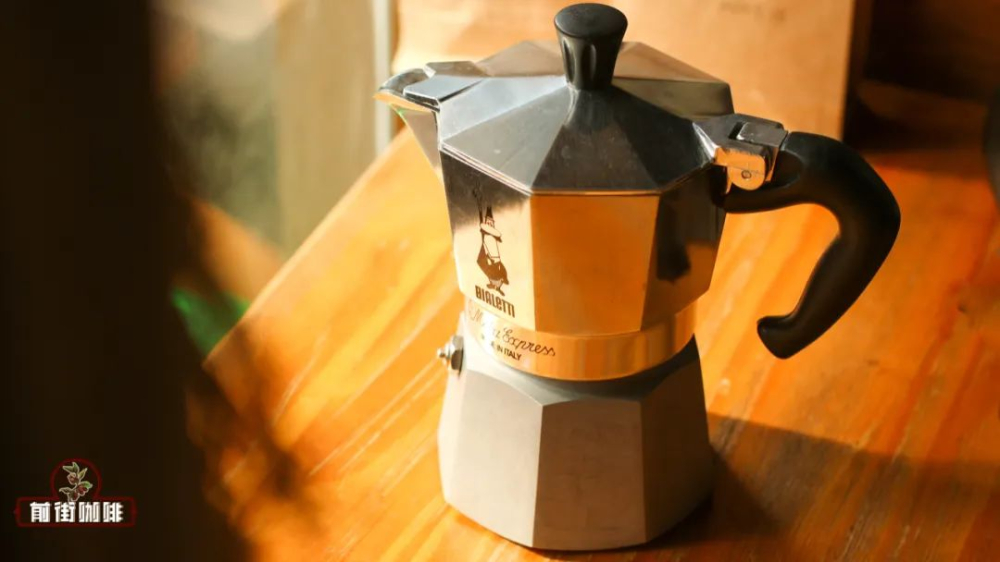
The moka pot, like an espresso machine, uses pressure extraction, so the coffee it makes is fairly close to espresso in strength. Precisely for this reason, many enthusiasts treat it as an economical alternative to an espresso machine, trying to make moka pot espresso at home.
Although the overall operation is not complicated, for beginners with no extraction experience, running into problems is almost unavoidable. Today Front Street will sort through the three most typical problems encountered in daily moka pot use, along with the corresponding solutions.
1. Coffee violently sprays out
Under normal conditions, the coffee from a moka pot should flow out at a gentle, even pace, without any force behind it. But if you find the coffee shooting out in a powerful column, or even splitting into two streams, that indicates some deviation in your technique or parameter settings.
This situation can be further divided into two types: one where the coffee shoots straight out from the very beginning; the other where, midway through extraction, the flow rate suddenly goes from slow to fast, with the stream so violent it forms a "twintails" shape.
Let's start with the first type. The root cause is insufficient resistance provided by the puck, causing high-pressure steam to push hot water straight out.
One possible factor is choosing a light-roasted single-origin bean. This type of bean has been heated for a short time, is relatively hard in texture, and releases little gas (its crema is thin too), so hot water passes through the coffee bed extremely quickly, and the coffee naturally gushes out in an instant. For coffee beans used in a moka pot, it is recommended to choose medium-dark roast types, which not only ensure abundant crema but also give the coffee a richer taste.
If you are trying a moka pot for the first time, you can buy an espresso bean that works for both home and commercial use—Front Street. Front Street Classic Blend (butter, rich crema, toasted bread), suitable for making Americano or latte; if you want to recreate the flavor of a café, you can choose a commercial-grade espresso bean—Front Street. The espresso bean recommended by many baristas—Front Street Dark Cocoa Blend (mixed nuts, cream, caramel, chocolate).
If the coffee bean factor is ruled out, then you need to increase puck resistance by adding more coffee, making the grind finer, or tamping the coffee bed.
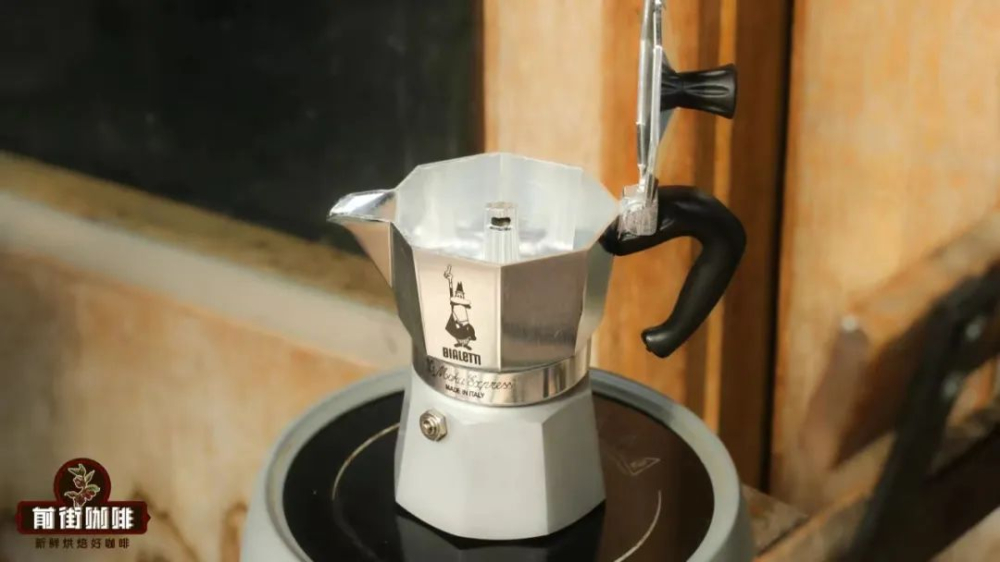
The second type, the mid-extraction acceleration, is caused by the heat being too strong throughout the entire extraction. Once the coffee breaks through the puck and flows out, the puck's ability to block hot water gradually decreases. As extraction progresses, you should promptly remove the moka pot from the heat source; otherwise the puck will no longer be able to impede the hot water's penetration, and the coffee will suddenly rush out in a column. When the flow rate is too fast, it can also easily cause burns, so be sure to pay attention.
2. Coffee takes a long time to come out
Exactly the opposite of the previous situation, this one shows as the moka pot being heated for a long time with still no liquid appearing. A special reminder here: if the moka pot produces no liquid for a long time and the water level exceeds the safety valve when filling, it is best to stop extraction immediately, because this situation can very easily cause the pot to explode.
There are many causes of no liquid coming out. Grinding too fine, using too much coffee, tamping too tightly, and other such actions will sharply increase puck resistance, and the gaps through which water can pass become fewer and narrower, so even after brewing for a long time the coffee still won't emerge.
Even if liquid eventually comes out, it is most likely a bitter, over-extracted cup, because the extraction time is simply too long. So once the problem appears, it is best to adjust the parameters promptly.
3. The brewed coffee has no crema
Since the moka pot also uses pressure extraction, it can likewise produce crema similar to that of an espresso machine. Strictly speaking, it is actually a layer of foam held up by carbon dioxide. Because the moka pot's pressure is lower than a coffee machine's, the crema it produces is not as fine and lasting, and dissipates relatively quickly, but it should never be completely absent.

If the moka pot coffee you brew has almost no bubbles at all, then the "culprit" is most likely one of the following three: grinding too coarse, coffee beans roasted too long ago, or using pre-ground coffee.
Of course, the most fundamental cause is still insufficient pressure. So when you find that the coffee from your moka pot has no bubbles, it is recommended to first adjust the grind size, or increase the amount of coffee, and at the same time judge by observing the seepage speed of the coffee whether the problem lies in the freshness of the beans or the ground coffee.
The above content is compiled by CoffeeHunters, a coffee news website.


