







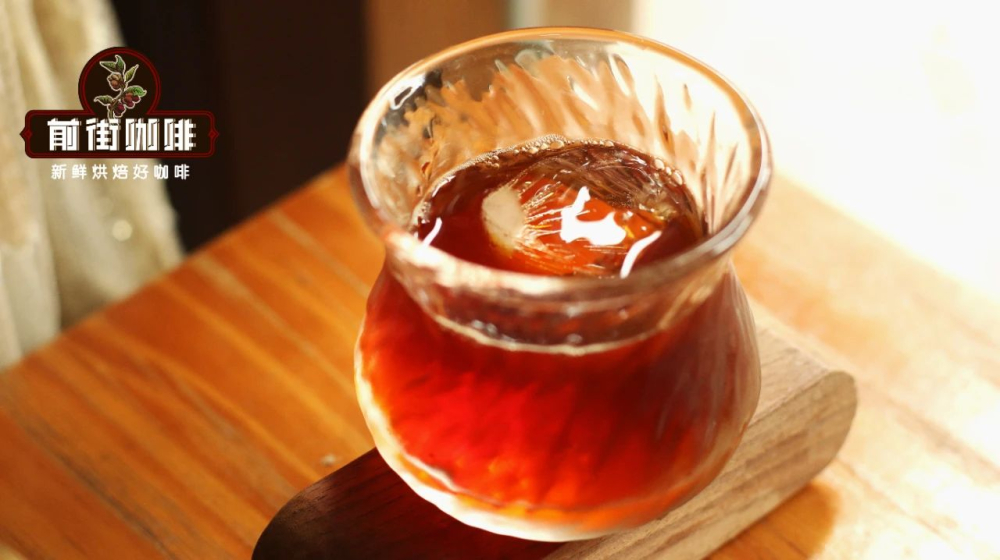
For more specialty coffee knowledge, please follow: Front Street Coffee (Frontsteet Coffee)
The cicadas in the distance chirp nonstop, and the dog days of summer have only just begun. Heat waves roll through the streets, and the tap water at home comes out scalding hot. No sooner had the barista at Front Street opened the door than a friend walked in right after to ask if there was any cold brew coffee. To get through the remaining forty days—the hottest stretch of the entire year—a cup of ice-cold coffee is truly the only way to survive.
Cold Brew CoffeeJust hearing it sounds refreshing and invigorating. But once the barista at Front Street Coffee (FrontStreet Coffee) asks friends what the difference is between ice drip coffee and cold brew coffee, they can't answer. Next, Front Street Coffee (FrontStreet Coffee) will explain to everyone what ice drip coffee is, what cold brew coffee is, and how to make a cup of iced coffee at home.

As summer arrives, more and more cafés are putting ice drip coffee back on their menus. What is ice drip coffee? So-called ice drip coffee uses a mixture of ice and water, dripping ice water drop by drop onto coffee grounds. Because the extraction process of ice drip coffee is extremely slow, usually taking 6 to 12 hours, ice drip coffee is relatively expensive.
On the menu at Front Street Coffee (FrontStreet Coffee), due to equipment limitations, the only cold brew option available is ice drip coffee. At the same time, because the equipment for making ice drip coffee is too complicated, many friends are discouraged from the idea of making ice drip coffee at home.
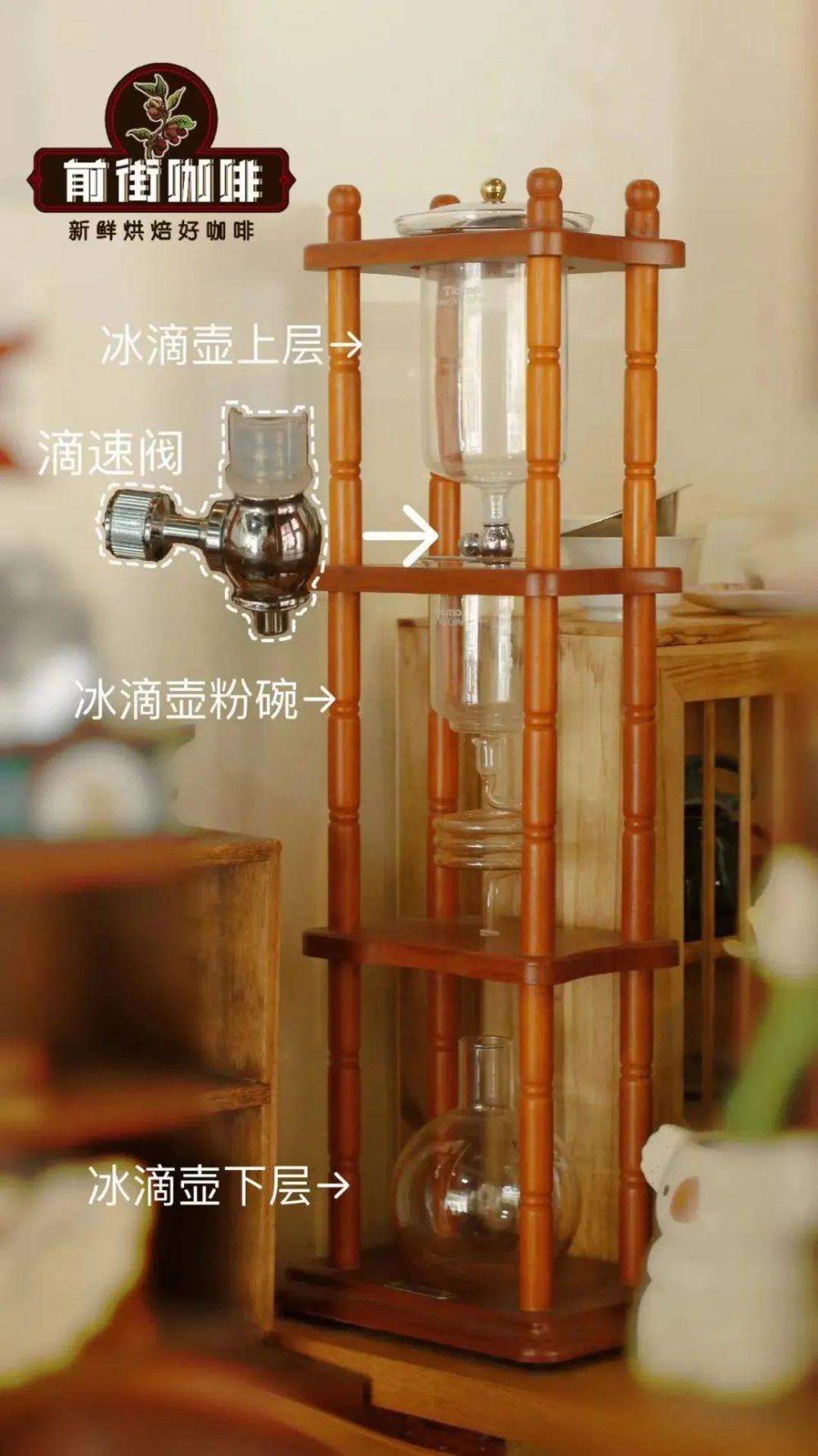
The equipment Front Street Coffee (FrontStreet Coffee) uses to make ice drip coffee is placed next to the espresso machine. The setup mainly consists of five parts: a water container, a regulating valve, a powder cup, a serpentine tube, and a coffee liquid container. Each part has its own role—the water container holds the ice-water mixture, the regulating valve controls the dripping speed, the powder cup holds the coffee grounds, the serpentine tube makes it easy to observe the color of the coffee liquid, and the bottom container is used to collect the extracted coffee liquid.
The specific steps for making ice drip coffee at Front Street Coffee (FrontStreet Coffee) are as follows:
Dose: 60g
Coffee-to-water ratio: 1:10
Grind size: 85% passing through a Chinese standard No. 20 sieve
Time: 6–8 hours
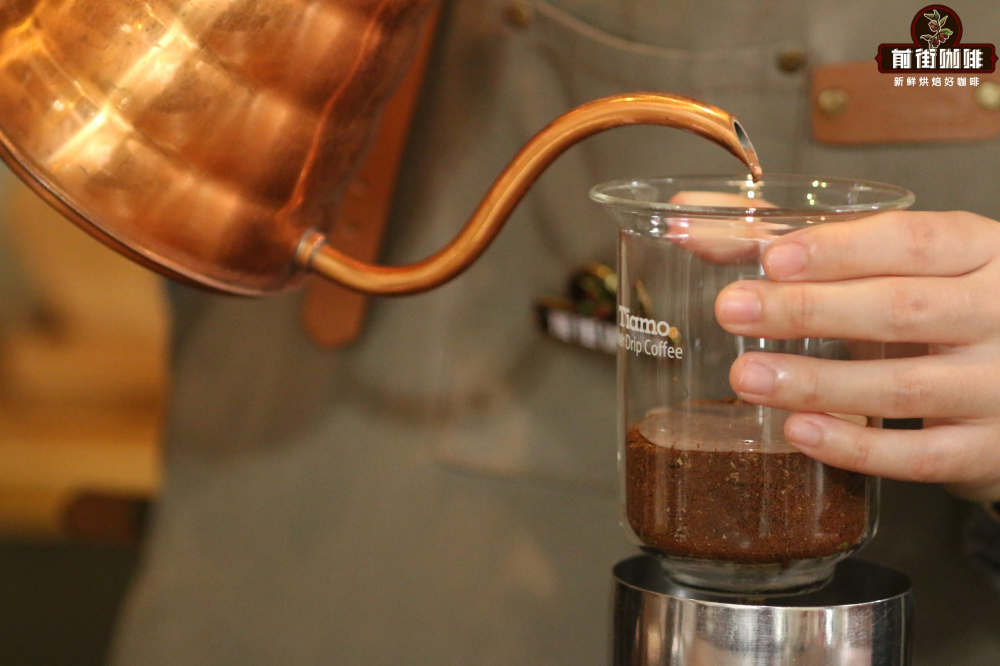
1. Take out the powder cup, wet the bottom and place a filter paper so it adheres tightly
2. Pour the 60g of ground coffee into the powder cup, level the surface, and place a round filter paper on top
3. Pour in a small amount of ice water or room-temperature water to wet the coffee grounds
4. Add an appropriate amount of ice-water mixture to the water container
5. Adjust the regulating valve to a speed of 5 drops per 10 seconds
6. After extraction is complete, put the coffee liquid into a sealable container and place it in the refrigerator's cold storage compartment to ferment overnight before drinking
Because ice drip coffee equipment is expensive and the time cost is relatively high, friends at home are not very willing to make ice drip coffee. However, this is not a reason why cold brew coffee cannot be made at home.

Even if there is no equipment at home for making ice drip coffee, that cannot be an excuse for not being able to make cold brew coffee at home. Literally understood, cold brew coffee is coffee obtained by extracting coffee grounds with low-temperature water. Understood this way, ice drip coffee is one type of cold brew coffee, and cold steeped coffee is also one type of cold brew coffee.
So, wanting to enjoy refreshing iced coffee at home is something extremely simple to achieve. Next, Front Street Coffee (FrontStreet Coffee) will introduce to everyone the method for making cold steeped coffee.
The specific steps for making cold steeped coffee at Front Street Coffee (FrontStreet Coffee) are as follows:
Dose: 60g
Coffee-to-water ratio: 1:10
Time: 8–12 hours
Grind size: 85% passing through a Chinese standard No. 20 sieve
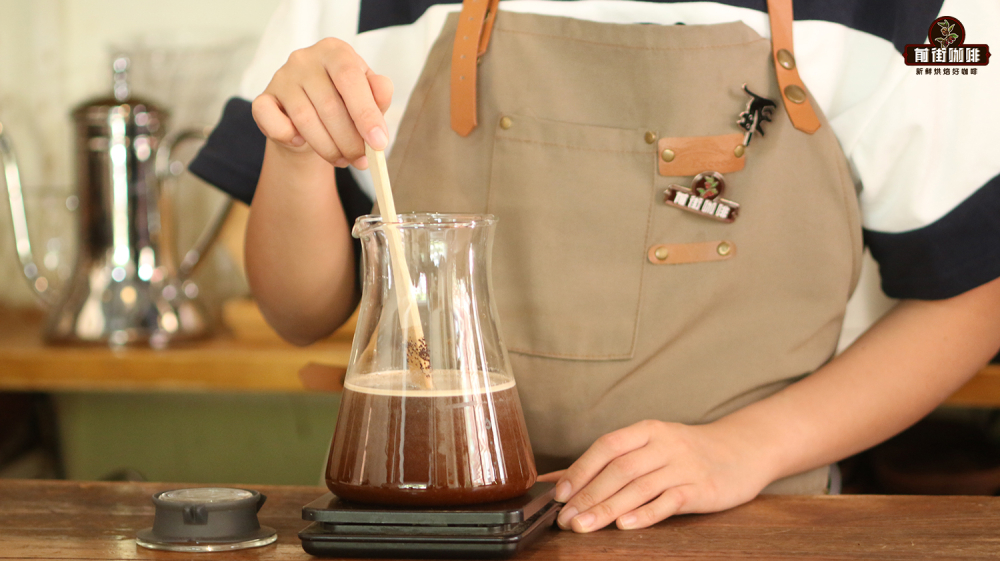
1. Choose a sealable container
2. Pour the ground coffee into the container
3. Pour in room-temperature water at a coffee-to-water ratio of 1:10
4. Refrigerate for 8–12 hours
5. Take it out and filter it
6. Seal the filtered coffee liquid and refrigerate for 12 hours before drinking
[About Grind Size]
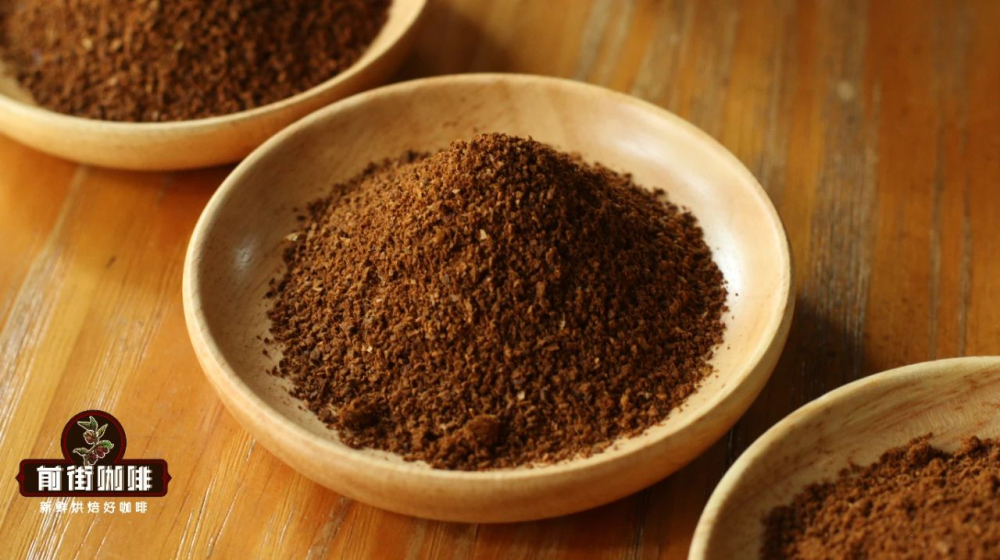
Because cold brew coffee uses a relatively low water temperature, quite different from the roughly 90°C used for everyday pour-over coffee, when low-temperature water extracts coffee grounds, the rate of substance exchange is greatly slowed. Therefore, in addition to extending the extraction time, the grind size of the coffee beans also needs to be made finer, increasing as much as possible the surface area where water contacts the coffee particles, so that as much of the ideal flavor substances in the coffee grounds as possible can be extracted.
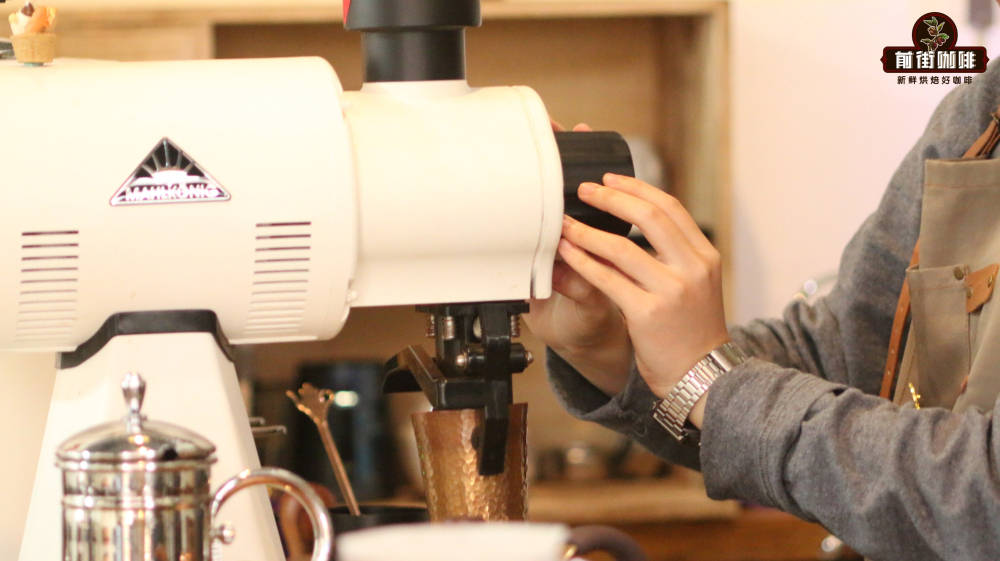
However, if the coffee particles are too fine, too many flavor substances will be extracted, including some unpleasant bitter notes; if the coffee particles are too coarse, the final result will be unclear flavors and a mouthfeel that is too thin. Through many experiments, Front Street Coffee (FrontStreet Coffee) found that a grind size with 85% passing through a Chinese standard No. 20 sieve is relatively ideal.
[About Coffee-to-Water Ratio]
Every vegetable has its own lover. Because each coffee drinker's need for coffee strength is different—some like it strong, some like it light—Front Street Coffee (FrontStreet Coffee) generally uses a 1:10 coffee-to-water ratio when making ice drip coffee, then adds ice cubes when serving. Those who want it strong can drink it as soon as possible, while those who want it light can wait for the ice cubes to slowly melt; as the ice melts, the coffee's strength decreases accordingly.
[About Coffee Beans]
Because cold brew coffee is extracted at low temperature over a long time, more small-molecule substances in the coffee beans, such as floral aromas and fruity acidity, are extracted, while large-molecule substances such as tannic acid and other bitter compounds are difficult to extract. In addition, after extraction is complete, it still needs 12 hours of low-temperature refrigerated fermentation, so the flavor has an obvious fermented quality along with the coffee beans' own sweet aroma, and the mouthfeel is viscous, smooth, and refreshing.
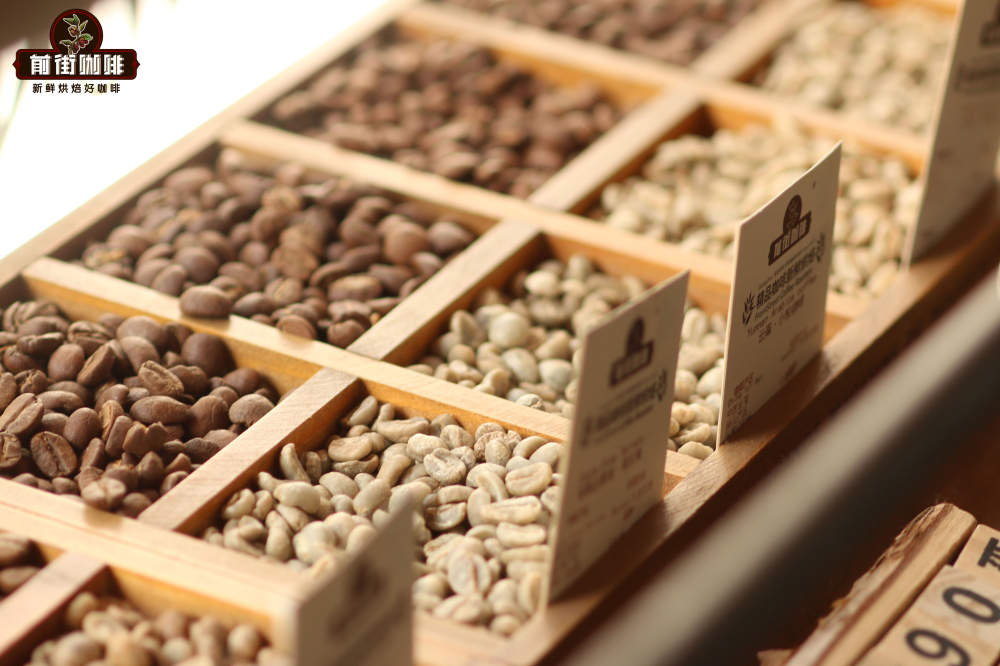
Therefore, when Front Street Coffee (FrontStreet Coffee) selects coffee beans for cold brew coffee, it generally chooses beans with better acidity or unique flavors. Among them, Kenyan coffee beans and Honduras Sherry coffee beans are good choices.

Front Street Coffee (FrontStreet Coffee): Kenya Little Tomato Coffee Beans
Region: Thika, Kenya
Processing Station: Asali Honey Processing Station
Altitude: 1550m–1750m
Variety: SL28, SL34
Processing Method: K72 Washed Process
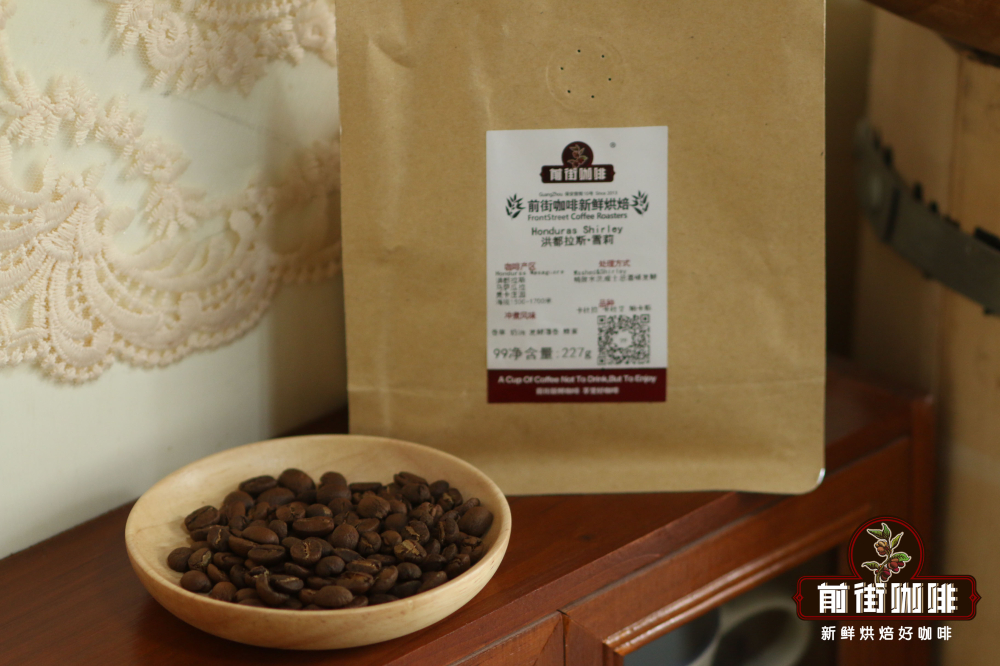
Front Street Coffee (FrontStreet Coffee): Honduras Sherry Coffee Beans
Region: Marcala, Honduras
Estate: Mocha Estate
Altitude: 1500m–1700m
Variety: Caturra, Catuai, Pacas
Processing Method: Fine Washed & Whiskey Barrel Fermentation
The ice drip coffee made from Front Street Coffee (FrontStreet Coffee) Kenyan coffee beans has flavors of smoked plum, cherry tomato, and caramel. It is overall sweet and sour, very refreshing, and suitable for quenching thirst and cutting richness in the scorching summer.

The ice drip coffee made from Front Street Coffee (FrontStreet Coffee) Sherry coffee beans has rich flavors of vanilla, cream, and oak barrel. Supported by low-temperature, long fermentation, the overall impression is like Sherry whiskey entering the mouth—very unique.
The above content is compiled by CoffeeHunters, a coffee news website.


