







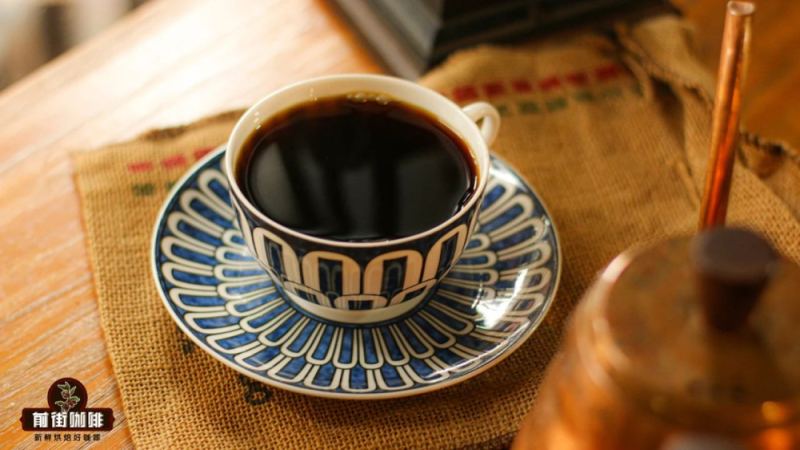
Blue Mountain coffee has long been known as the "Emperor of Coffee," but its high price is not sustained by legend alone. From the Caribbean island microclimate and volcanic ash soil, to the legally defined appellation and strict grading set by the CIB, to the three-decade quota agreement with the Japanese market starting in the last century, the high price of Jamaican Blue Mountain coffee rests on a complete set of geographical, historical, and commercial logic. From the perspective of Front Street Coffee, this article sorts out what truly makes Blue Mountain No. 1 special, distinguishes "Blue Mountain flavor" blends from authentic Blue Mountain, and reviews how the Blue Mountain quota moved from Japanese monopoly to the global market, ultimately allowing domestic consumers to drink an authentic cup of Blue Mountain at a more reasonable price.
For more specialty coffee knowledge, welcome to follow our WeChat official account: Front Street Coffee (FrontStreet Coffee)
Many consumers outside the coffee circle feel that Blue Mountain coffee is famous entirely because the title "Emperor of Coffee" props it up, and that whether it tastes good has little to do with it. But in Front Street's view, the value of Jamaican Blue Mountain coffee is by no means just its name and the stories passed around; its performance across every dimension deserves this reputation. Next, let us look together at exactly where Jamaican Blue Mountain coffee gets its high value.
What makes Blue Mountain coffee unique?
Front Street repeatedly emphasizes the need to identify authentic Blue Mountain No. 1 because a type of blend called "Blue Mountain flavor" often appears on the market. This so-called "Blue Mountain blend" has no connection to the Blue Mountain production region; it usually uses beans from other origins roasted to approximate the taste of Blue Mountain. The root of this phenomenon lies in the early scarcity and high price of Blue Mountain coffee, which led operators to imitate Blue Mountain flavor with mixed bean varieties and dark roasting. Therefore, honest merchants clearly label such beans as Blue Mountain blend, blended Blue Mountain, Blue Mountain flavor, or Blue Mountain style coffee beans, rather than true Blue Mountain coffee.
Before the turn of the millennium, drinking a cup of Blue Mountain black coffee in China cost dozens or even over a hundred yuan, which by the consumption standards of the time was sheer luxury, and there was still a chance of drinking a counterfeit. Later, the Jamaican government released more Blue Mountain quotas to markets in various countries, and today authentic Blue Mountain is much easier to find in China. Front Street Coffee's Blue Mountain No. 1 coffee beans sell for 158 yuan per 100g bag, and a roughly 200ml cup at the Dongshankou store costs only 60 yuan. The Blue Mountain No. 1 purchased by Front Street comes from Jamaica's historic Clifton estate and is washed processed.
Rare things are precious
The high quality of Blue Mountain coffee is naturally inseparable from its growing environment. The Blue Mountain range is embraced by the waters of the Caribbean Sea, forming a unique island-type tropical rainforest microclimate, with concentrated rainfall in the rainy season and smooth drainage. Volcanic ash left by active volcanoes enriches the soil with nutrients, so the coffee trees do not need much irrigation or fertilization. The area has abundant sunshine year-round, is wreathed in thin mist, and the high-altitude growing zones are cool and pleasant, very suitable for all kinds of crops. Locals are accustomed to planting coffee trees together with banana trees on the Blue Mountains.
The CIB has demarcated a range of about 6,000 hectares in the Blue Mountain range and strictly stipulates that only Typica coffee produced within this area is eligible to be called "Blue Mountain coffee." Coffee from other areas can only be called High Mountain coffee. According to the CIB's division, the Blue Mountain coffee growing forest area lies at an altitude of about 910 to 1,700 meters, mainly distributed across St. Thomas, St. Mary, St. Andrew, and Portland, accounting for one third of the entire Blue Mountain growing area.
The variety of Blue Mountain coffee is Typica, and the higher the growing altitude, the more pronounced Typica's flavor expression becomes. But Typica has weak disease resistance and is highly susceptible to infection, and its yield per tree is also low, so it requires more manpower for careful tending. In addition, the high-altitude Blue Mountain terrain is rugged, making management and picking very difficult and demanding extremely high skill from pickers, which further constrains output. In recent years, less than 15% of the coffee beans produced in Jamaica can carry the Blue Mountain label, only about 900 tons. After picking, the coffee cherries are immediately sent to processing plants, where the skin and pulp are removed by washing and the beans are dried.
The "monopoly" of the Japanese market
Before the 1960s, Jamaican coffee beans were already quite popular in the specialty market. In 1969 Jamaica suffered a severe hurricane disaster, and many industries fell into difficulty, with the coffee industry unable to escape either. At this time, Japan's UCC company provided financial assistance to Jamaica's coffee industry and introduced scientific ecological cultivation methods. To express gratitude, the Jamaican government signed a 30-year contract with Japan, promising to supply 90% of the quota of high-quality Blue Mountain coffee to Japan, with the remaining 10% allocated to European and American countries.
During this period, the Japanese domestic market did not fully consume all this Blue Mountain coffee. They would resell part of the Blue Mountain at high prices to other countries and regions in Asia, and together with Japan's vigorous promotion, coffee professionals in many neighboring countries also began to pursue Blue Mountain coffee, such as Singapore, South Korea, Taiwan China, and Hong Kong China. Around 2000, the "Blue Mountain craze" gradually spread to China, creating a situation in which Blue Mountain coffee was expensive and hard to obtain.
When the global economic crisis broke out in 2008, Jamaica tried to sell Blue Mountain coffee to more countries, and it happened that the agreement with Japan had also expired, so it allocated more Blue Mountain quota to other countries. As demand in China's coffee market continues to expand, many domestic merchants are now able to import Blue Mountain coffee beans directly from Jamaica. This is why the Blue Mountain coffee drunk today is cheaper than in the past.
How high is the grade of Blue Mountain No. 1?
The CIB was the earliest institution to use a scientific and objective method to assess coffee quality grades, grading comprehensively based on green bean size, color, uniformity, defect rate, moisture content, and cupping performance.
Before export, Blue Mountain green beans are packed and sent for testing, then ranked by screen size and defect rate after processing into Blue Mountain No. 1, Blue Mountain No. 2, Blue Mountain No. 3, and Blue Mountain Peaberry. Bean size is determined by screens with different hole diameters; coffee beans that cannot pass through the holes meet the corresponding size standard. Top-grade Blue Mountain No. 1 green beans must meet a screen size of 17 or above, a defect rate below 3%, and a moisture content of about 13%, and in cupping must present rich coffee aroma, a smooth and balanced mouthfeel, low mild acidity, and a lasting sweet aftertaste.
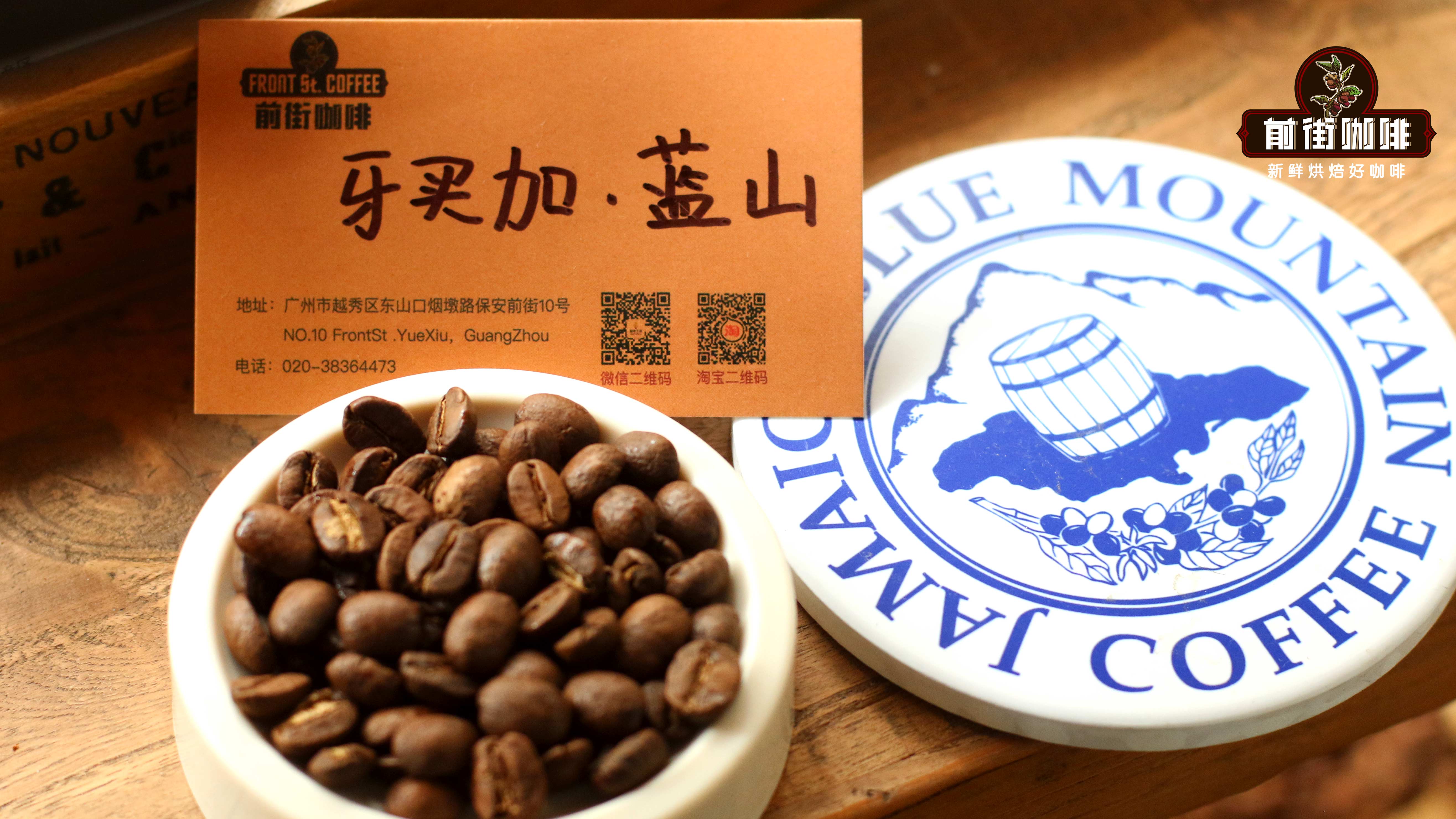
To ensure that Blue Mountain coffee beans always maintain good quality before roasting and to prevent moisture from seeping in during transport, Jamaicans insist on using handmade wooden barrels to hold Blue Mountain green beans, and the barrel has thus become one of the important symbols of Jamaican Blue Mountain coffee.
Front Street's roasting philosophy is to present coffee's most classic flavor profile, such as the bright lemony acidity of Yirgacheffe, the rich toasty mellow mouthfeel of Indonesian Mandheling coffee, and Blue Mountain naturally must also highlight the classic Blue Mountain flavor. Front Street uses a medium-dark roast to bring out the coffee's chocolate and nutty aromas to the greatest extent while retaining soft acidity and sweetness, keeping the overall mouthfeel balanced.
The above content is compiled by CoffeeHunters, a coffee news website.


