







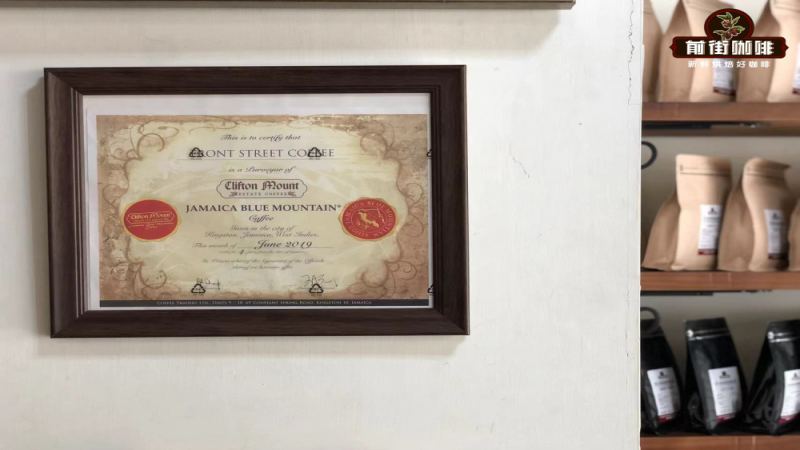
Jamaica Blue Mountain coffee has long been regarded as a classic representative of specialty coffee, but do you know how its strict grading system operates? From the microclimate conditions of the Blue Mountains, to the altitude thresholds set by the Jamaica Coffee Industry Board, to the classification of NO.1, NO.2, NO.3 and PB Peaberry, every step determines the final flavor in the cup. This article will systematically sort through the core knowledge of Jamaica Blue Mountain coffee—from growing region geography, variety characteristics, processing methods, historical trade background to actual brewing parameters—and share Front Street's roasting and brewing approach for Blue Mountain No.1, helping coffee lovers fully understand the value of this legendary coffee.
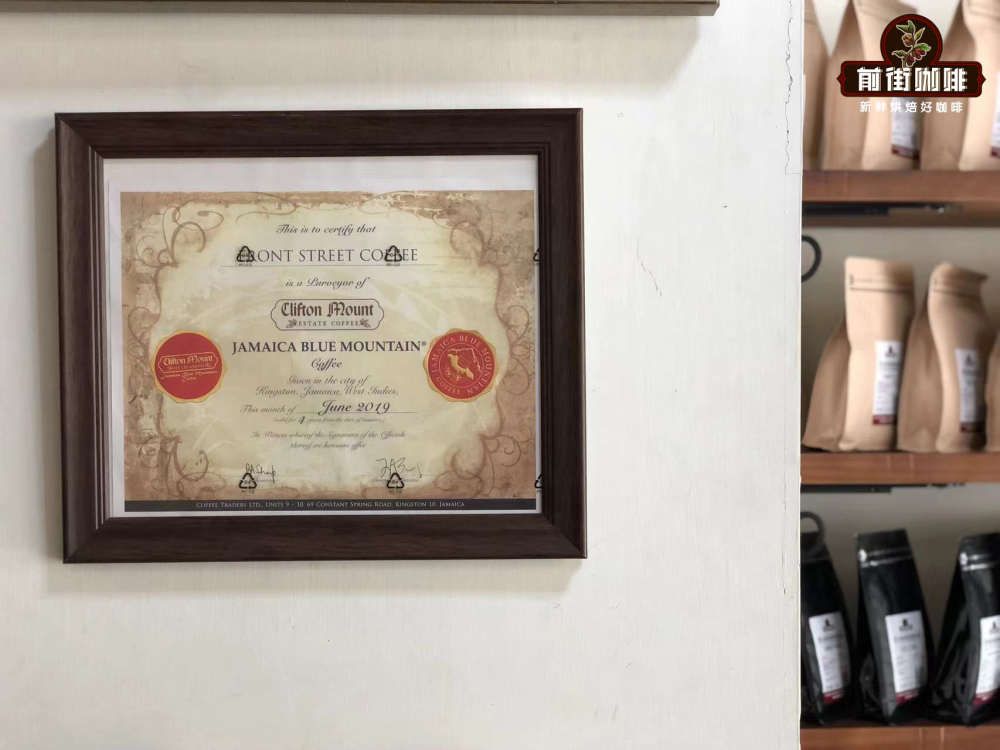
When it comes to Jamaica, many people may first think of the astonishingly fast Bolt on the track, but for coffee professionals like Front Street, what comes to mind first is undoubtedly Jamaica Blue Mountain coffee.
Where are Jamaica's coffee-growing regions distributed?
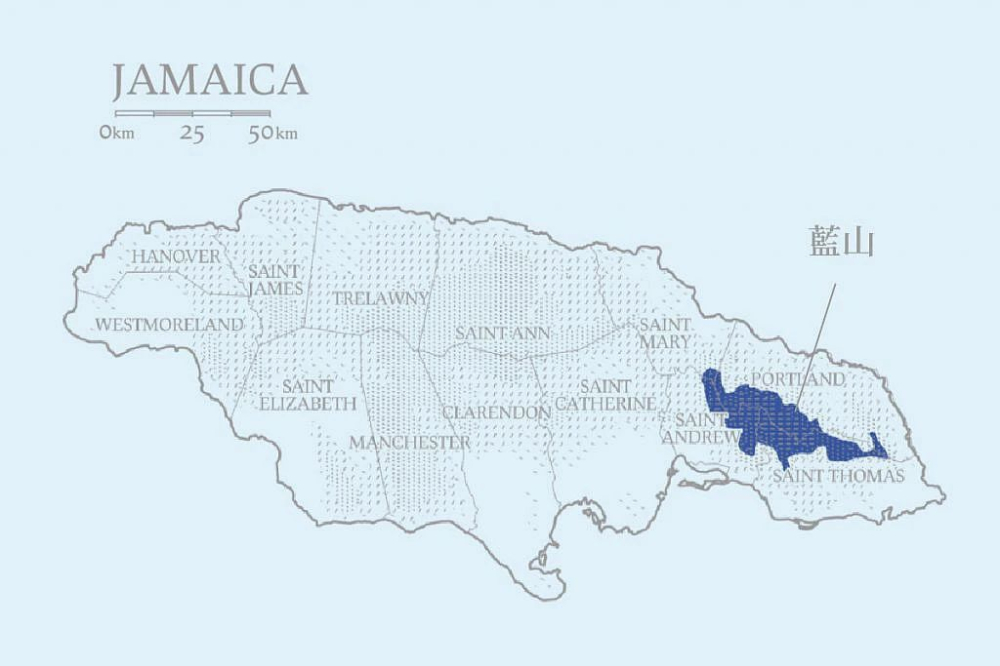
Open a world map and you'll find that Jamaica is just a small island nation in the Caribbean. The entire territory can be roughly divided into three parts: the eastern mountain range, the central valley plateau, and the coastal plains. Among these, the Blue Mountains are Jamaica's highest-altitude region, and the rolling mountain terrain creates a unique microclimate. The tropical rainforest climate concentrates rainfall, and the volcanic ash soil itself is rich in mineral nutrients, so coffee trees growing here need almost no additional artificial irrigation or fertilization. Mist lingers year-round, and the cool, pleasant temperatures of the high-altitude growing areas are ideal for all kinds of crops—local farmers habitually plant coffee trees intercropped with banana trees.
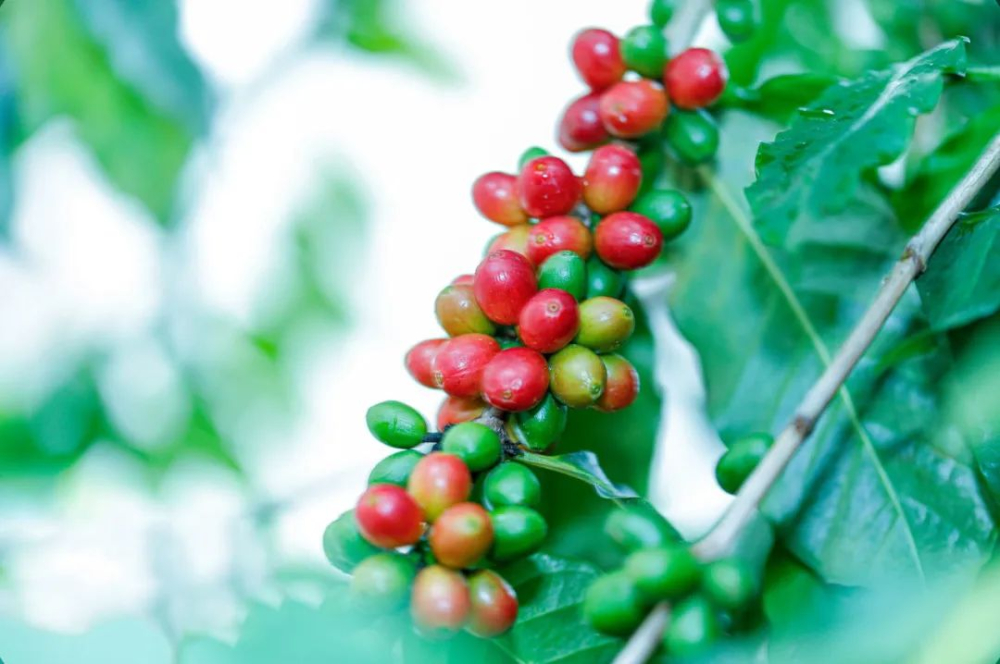
To ensure that Blue Mountain coffee quality always remains at a high standard, the Jamaica Coffee Industry Board explicitly stipulates: only Typica variety coffee grown at altitudes between 910 and 1,700 meters is eligible to use the name "Jamaica Blue Mountain coffee." Within this altitude range, the Blue Mountain terrain is steep, making daily management and harvesting quite challenging. When the coffee cherries ripen, local skilled female workers familiar with the terrain are organized to go up the mountain and pick only fully ripe red cherries, which are immediately sent to the processing plant.
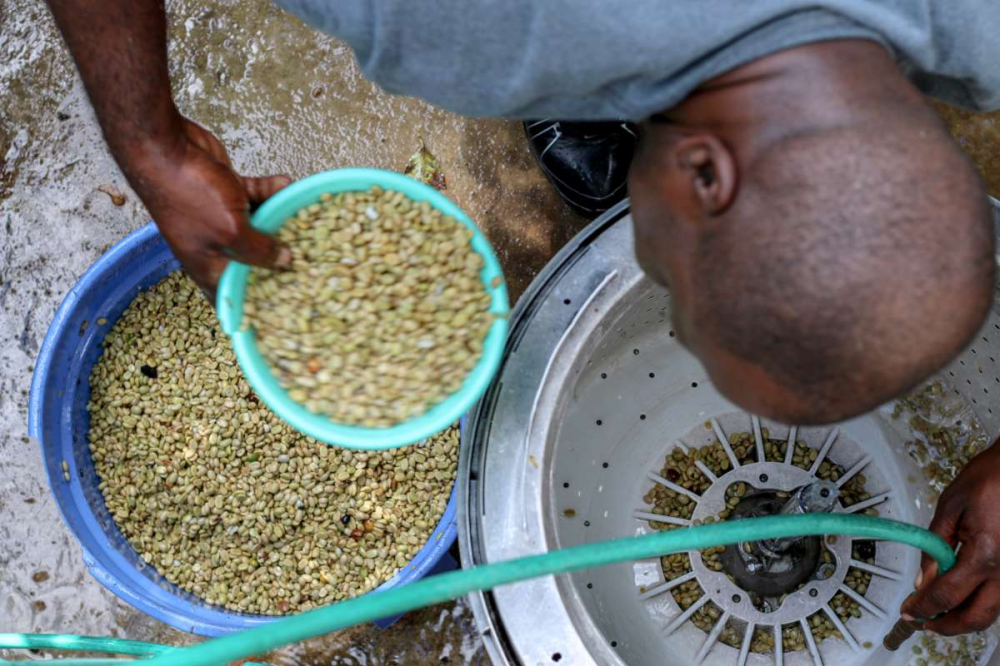
The vast majority of Blue Mountain coffee uses the washed processing method, removing the skin, pulp and mucilage through washing and fermentation. In operation, defective beans are first removed using the principle of buoyancy, then the skin and pulp are stripped off, allowing the beans to ferment for 12 to 18 hours. After fermentation is complete, the beans are moved into a water tank and pushed repeatedly, using friction between the beans and the scouring of water to make the coffee bean surface smooth and clean. After washing, the coffee beans are still wrapped in the parchment layer with a moisture content of about 50%, and must be dried to reduce the moisture content to 12% to 14%, otherwise the beans will continue to ferment and then mold and spoil. Every step must be strictly controlled—a slight lapse can affect coffee quality. Washed processing can highlight the coffee bean's own aroma, making the flavor layers more distinct, while also ensuring the stability of Blue Mountain coffee quality.
Typica is an
How are the grades of Blue Mountain coffee classified?
Based on different altitudes and growing regions, coffee produced in the Blue Mountain range can be classified into Jamaican Blue Mountain Coffee, Jamaican High Mountain Coffee, and Jamaican Supreme Coffee. Among these, the production area of Jamaican Blue Mountain Coffee is limited to only four administrative districts: St. Thomas, St. Mary, St. Andrew, and Portland. In other words, only coffee grown at specific altitudes within these four regions can be labeled as "Jamaican Blue Mountain Coffee."
Based on the quality of green coffee beans, Blue Mountain coffee is graded from high to low as follows: NO.1, NO.2, NO.3, and PB, where PB stands for Peaberry. The assessment of coffee quality grades involves multiple indicators, including bean size, green bean color, roasting quality, aroma performance, cup quality, and screen size. What Front Street Coffee selects is precisely the highest grade, NO.1, which is what we commonly call Jamaican Blue Mountain No.1.
Is Blue Mountain coffee expensive?
There used to be a saying that Blue Mountain coffee was monopolized by Japan, and the origin of this rumor can be traced back to the coffee trade agreement signed between Jamaica and Japan in the 1970s.
As early as before the 1960s, Jamaican coffee beans were already widely favored in the specialty coffee market. In 1969, Jamaica suffered a severe hurricane disaster, and multiple industries fell into hardship, with the coffee industry naturally unable to escape unscathed. At that time, the Japanese company UCC provided financial assistance to the Jamaican coffee industry and brought scientific ecological planting methods. Grateful for this help, the Jamaican government signed a 30-year contract with Japan, promising to supply 90% of high-quality Blue Mountain coffee to Japan, with the remaining 10% allocated to European and American countries.
After the contract between the two parties expired, it coincided with the global economic crisis. Japan's economy remained sluggish, purchasing power declined significantly, and Jamaica was no longer willing to let Japanese merchants monopolize the market, so it substantially raised the price of green coffee beans. To this day, Japan's purchases of Jamaican Blue Mountain coffee have dropped from the original 90% to less than 60%.
In today's flourishing coffee culture, we are already able to import Blue Mountain coffee beans directly from Jamaica. As Front Street Coffee summarized earlier, high-quality Blue Mountain coffee beans are indeed hard to come by, so their price will still not be too low. If you see so-called Blue Mountain beans selling for just a few dozen yuan a bag on a shopping platform, they are most likely counterfeit. You may refer to the pricing on Front Street Coffee's bean list. Front Street Blue Mountain No.1 is sold at 158 yuan per 100 grams, and tasting it directly in-store as pour-over is 60 yuan per cup, which is a relatively affordable price.
Brewing suggestions for Blue Mountain coffee
Once we have bought a bag of excellent-quality Blue Mountain coffee beans, the first thing to think about, of course, is how to brew it deliciously. Below, Front Street Coffee will discuss its brewing approach based on the Jamaican Blue Mountain No.1 coffee on its bean shelf.
Front Street Coffee recommends choosing coffee beans within their optimal flavor period. If the roast date is more than a month ago, some of the aroma may have already dissipated, and a woody taste may even appear. The coffee beans shipped by Front Street Coffee are all roasted within 5 days, so that when you receive them, they are exactly at the peak flavor stage with the fullest aroma.
The classic Blue Mountain flavor profile features rich aromas of chocolate and roasted nuts, with soft acidity and a mellow mouthfeel. To recreate this classic taste, Front Street Coffee's roaster chose a medium-dark roast level, highlighting the roasted aroma while retaining some acidity. When cupping Blue Mountain No.1 coffee beans, Front Street Coffee experienced a balanced expression of acidity, sweetness, aroma, bitterness, and body, so the baristas at Front Street Coffee also formulated the corresponding brewing plan around this flavor direction.
Front Street Coffee's brewing parameters are: KONO dripper, grind size with 75% passing through a No. 20 standard sieve, water temperature 88°C, combined with Front Street Coffee's usual three-stage pouring method. Coffee powder dosage is 15 grams, with a coffee-to-water ratio of 1:15.
The specific operation of the three-stage pouring: first use 30 grams of water to evenly wet the coffee bed and bloom for 30 seconds, then in the second stage pour 95 grams of water in a steady circular motion from the inside out, and when the water level drops to two-thirds of the coffee bed in the dripper, begin pouring the third stage of 100 grams of water. Throughout the process, be careful to maintain a small stream of water, and after dripping is completed in about 2 minutes, remove the dripper. Finally, gently swirl the coffee liquid to make it even, and it is ready to drink.
During the brewing process of Blue Mountain coffee, you can already smell rich aromas of roasted nuts and caramel. On the first sip, you can feel the sweetness of dark chocolate and nuts, with various flavors interweaving and blending, a mellow mouthfeel, and a clear finish.
For professional coffee knowledge exchange and more coffee bean information, please follow Coffee Workshop (WeChat public account: cafe_style).
For more specialty coffee beans, please add the private WeChat of Front Street Coffee (FrontStreet Coffee), WeChat ID: qjcoffeex
The above content is compiled by CoffeeHunters, a coffee news website.


