








To enjoy a rich, fragrant cup of coffee at home, the moka pot is the entry-level choice for many enthusiasts. It is affordable and easy to operate, yet it can extract a bold coffee liquid with crema. However, there are clear gaps between the moka pot and professional espresso machines in terms of extraction pressure and grind size. Can the coffee it brews really be called espresso? This article will break down the moka pot's structure and principles, usage steps, and safety points in detail, and compare the operational differences between pour-over and the moka pot. At the same time, for different flavor preferences, several Front Street Coffee espresso blends and SOE beans will be recommended one by one to help you find the one best suited to the moka pot.

Coffee made to order in cafés has an inviting aroma and a pleasing taste, but if you go to the shop every day to drink it, both time and expenses become hard to bear. The most practical solution is still to brew it yourself at home. Friends with a generous budget will go straight for an espresso machine, while those with less to spare will mostly choose a moka pot. The moka pot is inexpensive and can still brew a strong, mellow coffee liquid, which is why it has attracted a large number of coffee lovers.
In the eyes of many enthusiasts, the moka pot is an affordable alternative for making espresso. Although the extraction pressure it generates is far lower than that of a professional espresso machine, and the resulting coffee liquid is slightly inferior in viscosity, considering that espresso machines are expensive and take up a lot of space, you can buy a good-quality moka pot set for just a few hundred yuan, giving it a very obvious cost-performance advantage.
The history of the moka pot can be traced back to the 1930s. At that time, an aluminum craftsman who had lived in France for more than ten years returned to Piedmont, Italy, and opened his own workshop, specializing in making and selling aluminum household goods. One day, Alfonso Bialetti stared at the washing machine at home, lost in thought, and with a flash of inspiration, the prototype of the moka pot was born.
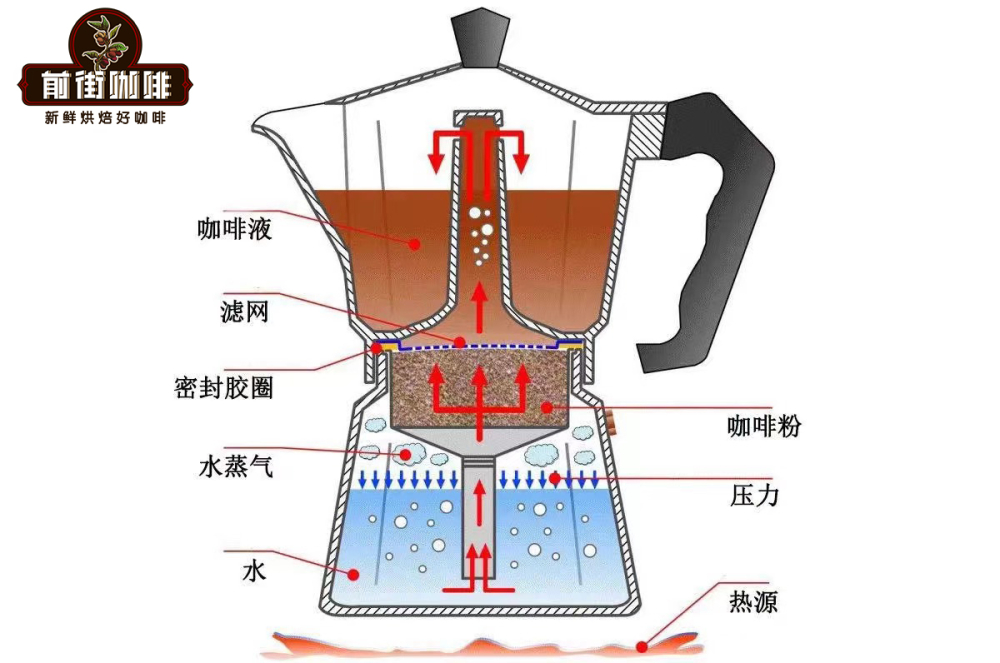
The structure and operating logic of the moka pot are somewhat similar to that washing machine from back then. It consists of three main parts: the lower chamber is used to hold water, the middle filter basket holds the coffee grounds, a metal tube connects the upper and lower parts, and the upper chamber is responsible for collecting the extracted coffee liquid.
After the lower chamber is heated, the water temperature rises, steam continuously accumulates in the sealed space, and the hot water is forced upward along the central metal tube, passing through the finely ground coffee in the filter basket, and finally gushing into the upper chamber like a small fountain. The espresso liquid with crema is thus left in the upper chamber. This is the complete extraction process of the moka pot.
Steps for making coffee with a moka pot
1. Pour an appropriate amount of hot water into the lower chamber
2. Put the coffee grounds into the filter basket and level them
3. Place the filter basket into the lower chamber and screw the upper chamber on tightly
4. Heat the moka pot
5. When you hear a "whooshing" sound and the coffee liquid begins to flow out, turn off the heat immediately
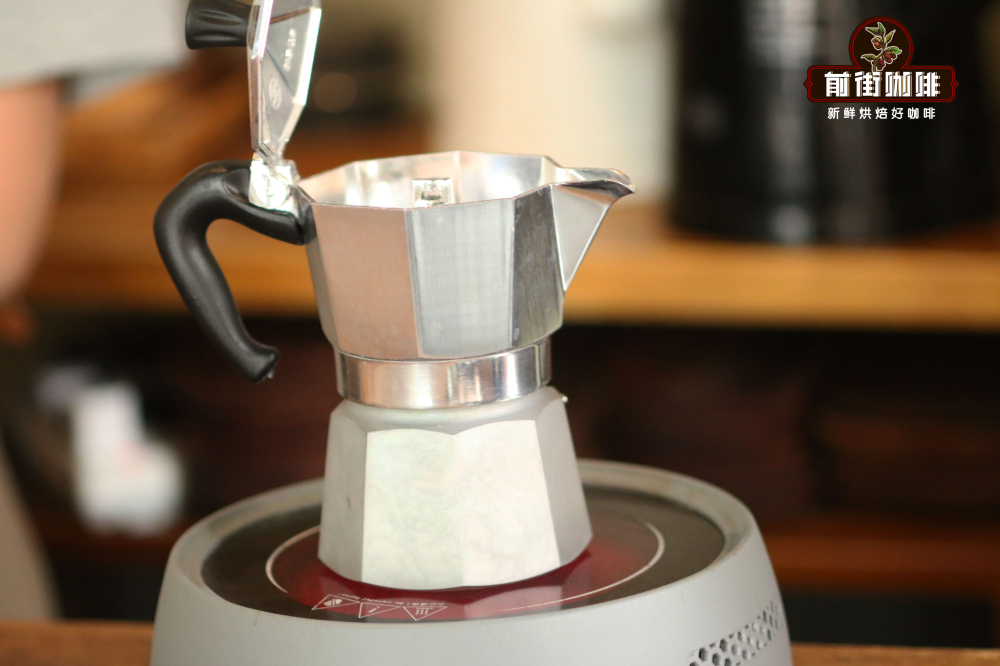
The internal pressure of the moka pot rises while it is working, which means there is a certain risk in operation, and safety must be paid attention to at all times throughout the process.
The particle size of coffee grounds is usually controlled between 0.3 millimeters and 0.55 millimeters. It is difficult to judge with the naked eye whether the coarseness is suitable, so you can buy moka pot-specific grounds, or use a grind size ruler for comparison, or otherwise determine the best grind setting through repeated trial brews. When adding water to the lower chamber, note that the water level must not exceed the safety valve; filling to about 0.5 centimeters below the safety valve is sufficient.
If the coffee liquid spurts out too quickly during brewing, it means the coffee grounds are ground too coarse; if you hear a "whooshing" sound but the coffee liquid does not rise for a long time, Front Street recommends immediately cutting off the heat source and taking safety measures.
Many people buy a moka pot so that they can still make espresso liquid without an espresso machine. Espresso emphasizes being thick and smooth, with rich crema and strong aroma, so it needs medium-dark roasted espresso beans to support it, and the moka pot follows the same principle.
① If you want rich crema, you can try Front Street classic espresso blend coffee beans
② If you prefer spice and mellow sweetness, the medium-dark roasted Front Street PWN Golden Mandheling SOE is recommended
③ If you are looking for value for money, Front Street basic espresso blend is a good choice
④ If you do not like bitterness but still want floral and fruity notes, Front Street Strawberry Candy espresso blend is worth considering
Can coffee brewed with a moka pot be considered espresso?
Front Street has already briefly mentioned above that professional espresso machines rely on high-pressure extraction to obtain espresso with a viscous mouthfeel and abundant crema. The moka pot has both advantages and disadvantages: it has a low operating threshold and is convenient to use, but its extraction pressure is only around 1.5 bar. You should know that the extraction pressure of standard espresso is generally above 9 bar. In addition, the metal filter mesh of the moka pot's filter basket has a relatively large pore size, so the grind it requires is much coarser than that of an espresso machine.
For this reason, the crema of coffee brewed with a moka pot is far less rich than that of an espresso machine, and the taste is also thinner than the coffee liquid made by an espresso machine. In other words, the output of the moka pot cannot be regarded as true espresso, and can only be classified as a distinctive strong coffee.
The above content is compiled by CoffeeHunters, a coffee news website.


