







The moka pot is one of the first pieces of equipment many coffee lovers encounter when getting started. It is simple in structure and affordable, yet it can brew a coffee liquid with a concentration close to espresso. This article will begin with the three-part construction and working principle of the moka pot, compare the differences between single-valve and dual-valve models, analyze how it differs from a standard espresso machine in terms of pressure and flavor, and break down in detail the complete operating process from adding water, distributing the grounds, to heating and extraction. It will also explain the advantages and disadvantages of the moka pot, the roast levels of coffee beans that suit it best, and recommended choices from the Front Street Italian-style bean series.
Many friends who have just stepped into the world of coffee are often bewildered by the dazzling array of equipment and beans, and Front Street felt exactly the same way when first getting started. Today let's talk about the classic moka pot—what exactly it is, and how to use it to brew coffee.
The Appearance and Construction of the Moka Pot
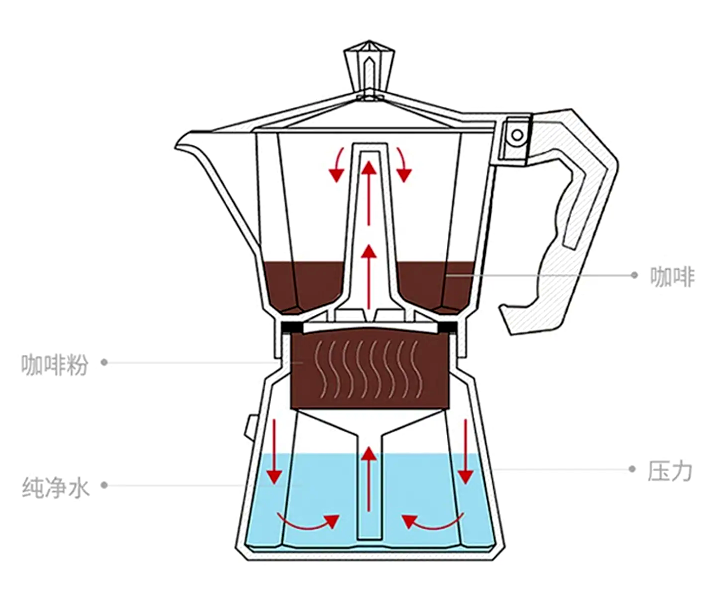
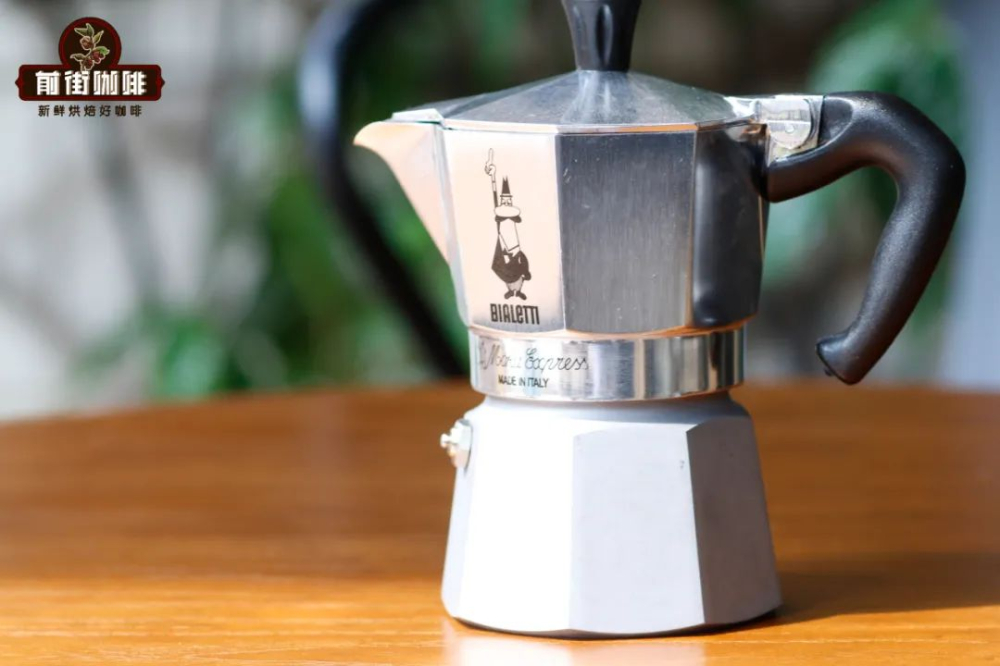
The overall shape of the moka pot is very minimalist. When disassembled, it has only three core parts: the upper chamber that holds the brewed coffee, the middle funnel basket that holds the coffee grounds, and the lower chamber where water is added and heated.
During heating, the water in the lower chamber rises in temperature first, gradually vaporizing into steam and building up pressure. This force pushes the hot water upward along the channel. After the hot water passes through the coffee grounds and completes extraction, the continuously rising pressure sends the brewed coffee liquid into the upper chamber, ultimately giving us the rich, full-bodied coffee we want.
In terms of extraction method, the moka pot is quite similar to the common pressure-driven espresso—after the water in the lower chamber boils, it produces steam, and as the steam accumulates it forms pressure, forcing hot water through the coffee grounds, dissolving out flavor compounds, and then surging forcefully upward with the coffee liquid into the upper vessel. The internal pressure of a moka pot is roughly between 1.2 and 3 atmospheres. The presence of pressure makes the coffee flavor more concentrated, so the resulting coffee also has a particularly rich mouthfeel.
Currently, moka pots on the market mainly come in two styles: single-valve and dual-valve. The dual-valve moka pot adds an extra pressure-regulating valve to the original structure. With increased pressure, the coffee concentration also rises, and it can bring out more coffee crema. Although a moka pot cannot reach the level of a standard espresso machine at 9 atmospheres or more, if you just want a cup of rich coffee at home in your spare time, Front Street thinks the moka pot is a choice well worth considering.
The Advantages and Shortcomings of the Moka Pot
The most prominent advantage of the moka pot is that it is easy to carry and has a low barrier to operation. It is not as complicated in steps as espresso, and its price is also quite friendly. However, its shortcomings are also obvious: the extraction water temperature of an espresso machine is usually controlled at 90 to 94 degrees Celsius, while a moka pot pushes the water temperature directly to the boiling point of 100 degrees Celsius. Too high a temperature extracts bitter large-molecule substances along with everything else, and the coffee can easily become scorched, bitter, heavy, and hard to drink.
One more thing to note here: although the coffee brewed by a moka pot is relatively concentrated, it still differs noticeably from common espresso. What we now call espresso is extracted using 9 atmospheres of pressure or more, and the coffee liquid is rich, thick, delicate, and full. The maximum pressure of a moka pot, however, is no more than 2 atmospheres, far below the pressure value of a commercial espresso machine, so the resulting coffee liquid is relatively thin, and the layers of flavor and mouthfeel are not as full as espresso. Of course, if you are at home seeking a quick cup of rich, full-bodied coffee, Front Street still believes the moka pot is a good choice.
Precisely because the coffee produced by a moka pot is on the stronger side, choosing medium-dark roasted coffee beans can better complement its rich body. Coffee beans accumulate a large amount of carbon dioxide during the roasting process, which is released when they meet water during extraction. So the darker the roast and the more gas there is, the easier it is to extract a fine foam. At this point, you should avoid light-roasted beans first, because light-roasted beans have prominent acidity and also release relatively limited oils.
If home beginners want better value for money, they can give priority to the Front Street Italian-style bean series, including Front Street Dark Cocoa Blend, Front Street Classic Blend, Front Street Commercial Blend, and Front Street Specialty Blend. These are all medium-dark roasts and naturally carry caramelized aromas, producing rich crema in the strong coffee they make.
Brewing a Cup of Moka Pot Coffee by Hand
Front Street's approach is to first remove the base of the moka pot and pour warm water into the lower chamber. This shortens the brewing time and also prevents the coffee grounds from heating up too quickly and developing a scorched, bitter taste.
The water level should be kept below the pressure relief valve line. The purpose of the safety valve is to prevent excessively fine coffee grounds from clogging the extraction channel and thereby causing an explosion. If the safety valve is submerged in water and the extraction channel is also blocked, the consequences of the lower body exploding under high temperature are unimaginable.

To extract a rich black coffee, the grind size should be finer than regular pour-over but coarser than espresso. Front Street uses its own roasted "Front Street Sunflower Warm Sun Blend Coffee Beans" here. Grinding too coarse will lead to insufficient extraction, splattering, and other problems, while grinding too fine makes over-extraction easy, giving the coffee a heavy scorched bitterness that is hard to drink. Front Street stores use an EK-43s grinder with the setting adjusted to a fineness of 0.5.
Pour the ground coffee into the funnel basket, spread it flat and fill it up, smooth the surface with your finger, then put it back on the base. There is no need to press it down hard; a coffee bed pressed too tightly can easily block the upward flow of water and thereby affect extraction. If there is not enough coffee powder, when the water in the lower chamber enters the middle coffee bed under steam pressure, it cannot extract fully, which then causes violent splattering into the upper chamber.
Then screw the upper chamber and lower chamber tightly together and place it on a gas stove or induction cooker to heat. When using an open flame, be careful that the flame does not extend beyond the base of the moka pot as much as possible. There is actually no strict time rule for brewing. After the moka pot heats up and you hear a hissing sound, turn the heat to low, and the coffee liquid and crema will slowly flow out.
When you see the coffee in the upper chamber is half full, you can turn off the heat source, move the pot to the table with a wet towel, and use the residual heat and remaining pressure inside the pot to continue extracting the rest of the coffee liquid.
Finally, pour the brewed coffee into a cup and drink it directly. On the palate there is a rich whiskey-like aroma, vanilla, cream, and the sweet-tartness of berries, along with the aroma of roasted nuts. Adding an appropriate amount of hot water brings out a fresh fruity sweet-tartness, while pairing it with milk gives it even more of a chocolatey sweetness.
The above content is compiled by CoffeeHunters, a coffee news website.


