







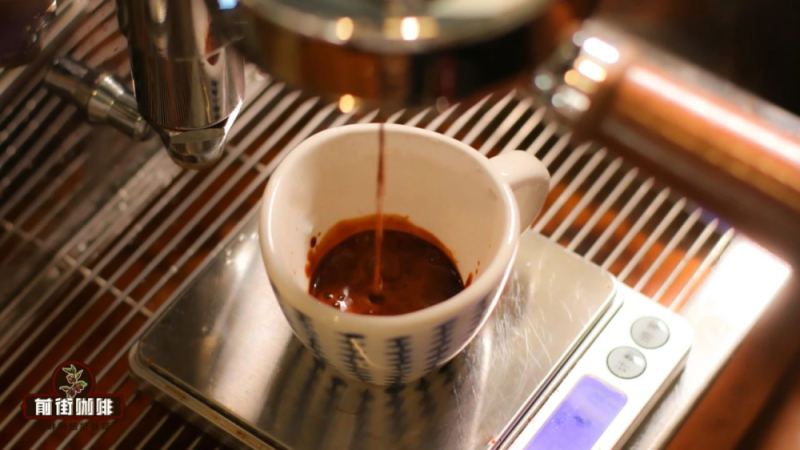
Want to make a rich, full-bodied espresso with thick crema at home? Espresso machines may seem complicated, but once you grasp the core principles and basic parameters, they are not hard to get started with. From the perspective of Front Street Coffee, this article systematically explains the extraction principles of espresso, how to judge whether extraction is proper, suitable coffee bean choices, and the complete operating steps from grinding, distributing, tamping to the final cup, with additional key points for making Americano and latte. Whether you are a beginner just getting into espresso or an enthusiast looking to fine-tune parameters, you can find practical references here.
For more specialty coffee knowledge sharing, please follow: Front Street Coffee
When Italian coffee is mentioned, Espresso is undoubtedly the classic that cannot be avoided. And to get a cup of Espresso, the espresso machine is the core equipment. Coffee made with an espresso machine is rich and full-bodied, but for most ordinary enthusiasts, the operating process is rather cumbersome, and without systematic practice, it is difficult to stably produce high-quality Espresso. Today Front Street Coffee will talk about the basic methods of using an espresso machine.
Espresso is a highly recognizable coffee category worldwide, known for its high concentration and heavy mouthfeel. Many friends wonder: why is it that no matter how they brew at home, they cannot achieve the concentration found in coffee shops, and it even has a burnt bitter taste?
How to extract es presso?
First, one point must be made clear: espresso is not made by directly boiling coffee grounds in water, nor by heating and concentrating ordinary coffee liquid. Making espresso requires specialized equipment, namely the espresso machine in coffee shops that can shoot out steam.
The extraction logic of an espresso machine is: heat the water in the boiler to form steam, then use the pressure generated by the steam to force hot water at about 94 degrees Celsius, under 9-10 bar of pressure, to quickly pass through extremely finely ground coffee, thereby obtaining a coffee liquid with a texture close to honey-like viscosity.
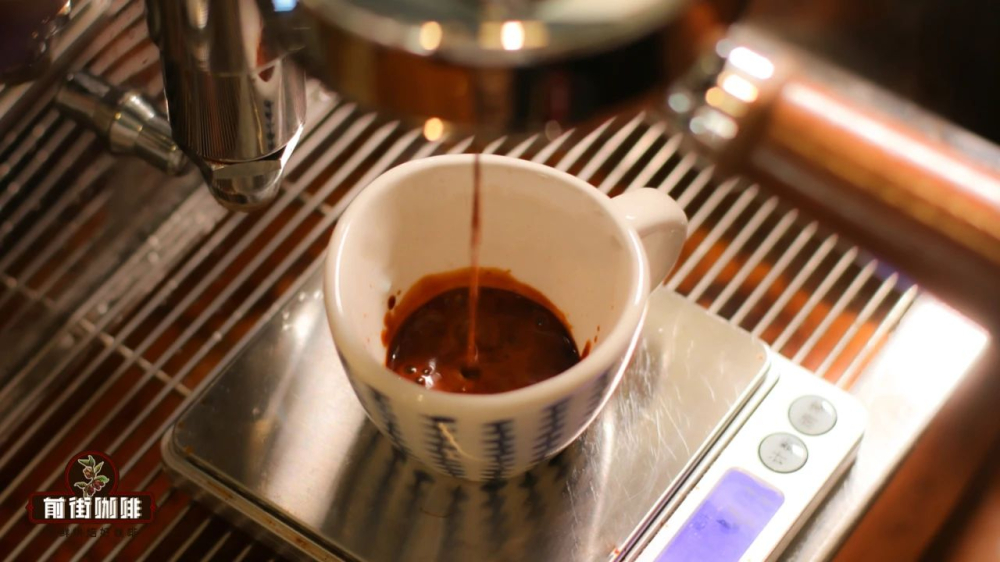
At the very beginning of extraction, the flowing coffee liquid is brownish-red, with a thick and smooth texture. As extraction progresses, the color gradually turns golden yellow, then light golden yellow.
How to tell whether espresso has been extracted properly?
A single espresso extraction is very fast, usually completed within 25-30 seconds. However, every coffee machine and grinder has different performance, so espresso does not have a fixed set of parameters that applies universally.
Therefore Front Street Coffee can only provide a starting parameter, and everyone can then fine-tune based on the taste of the final espresso: (double basket) 20g grounds, at a 1:2 ratio, with 9 bar pressure and 94 degrees Celsius hot water, extract 40g of coffee liquid; (single basket) 10g grounds, also at a 1:2 ratio, 9 bar pressure and 94 degrees Celsius hot water, extract 20g of coffee liquid. Extraction time is controlled between 25-30 seconds in both cases.
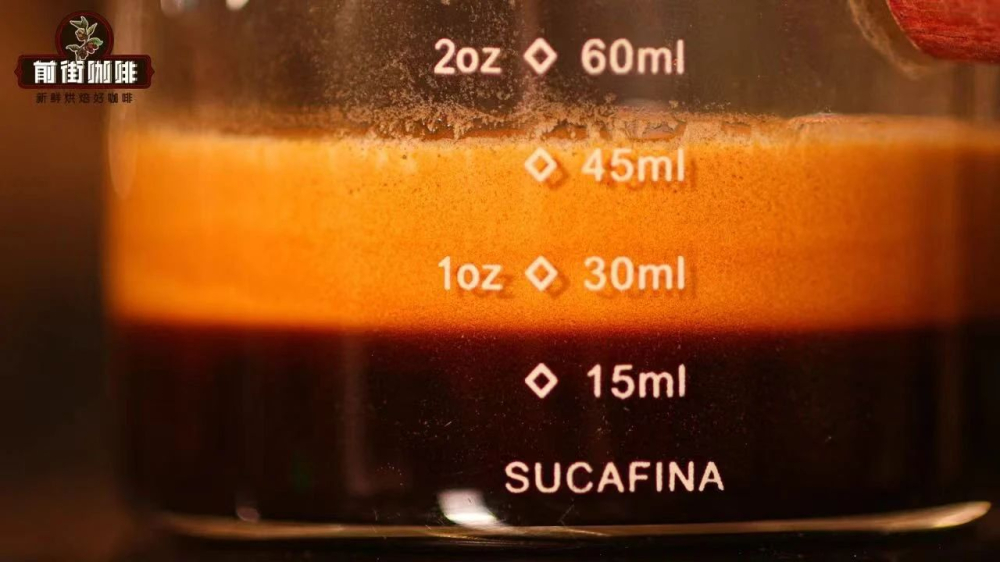
If the flow rate during extraction is too fast and the espresso tastes thin, you can adjust the grind finer or increase the dose (choose one of the two); if the flow rate is too slow and the espresso tastes burnt and bitter, you can adjust the grind coarser or reduce the dose (also choose one of the two).
What coffee beans to use for extracting espresso?
If you are just getting into espresso, Front Street Coffee suggests starting with a blend designed specifically for espresso. The biggest advantage of a blend is stability, and it also offers good value for money. By combining different origins in different proportions, it can avoid the shortcomings that single-origin beans (from a single region) may expose when concentration is high and extraction yield increases.
If you want your espresso to have a unique and rich aroma and flavor, you can try the "Front Street Sunflower Warm Sun Blend Coffee Beans" used in Front Street Coffee stores, whose 227g packaging is very suitable for home use. This bean consists of Ethiopian Yirgacheffe natural beans and Honduras Mocha Estate Sherry beans, with an obvious whiskey-like fermented aroma, vanilla cream-like smoothness, berry-like sweet acidity, and hazelnut caramel-like sweetness.
If you prefer espresso that is rich and not sour, with abundant aroma and thick crema, you can try Front Street Classic Espresso Blend Coffee Beans, which is very suitable for friends who like the mellow taste of Americano and those who want to easily pour latte art in a latte. This bean uses Arabica beans from the Cerrado region of Brazil and Sumatra Island in Indonesia, with a small amount of Robusta added. The resulting espresso has a rich roasted nut aroma, dark cocoa-like richness, caramel-like sweetness and a sweet aftertaste, and can also present a beautiful golden crema.
Espresso extraction steps
First turn on the coffee machine power and wait for the machine to heat automatically. When the display temperature reaches 94 degrees Celsius, you can begin preparing for extraction.
Before extraction, wipe the portafilter basket dry, start the grinder, grind the amount for a double shot, place it on the electronic scale and adjust until it is 20 grams.
Next, use a distribution tool to level the coffee grounds, then use a tamper to press vertically downward with force to compact the puck, so that extraction will be more stable.
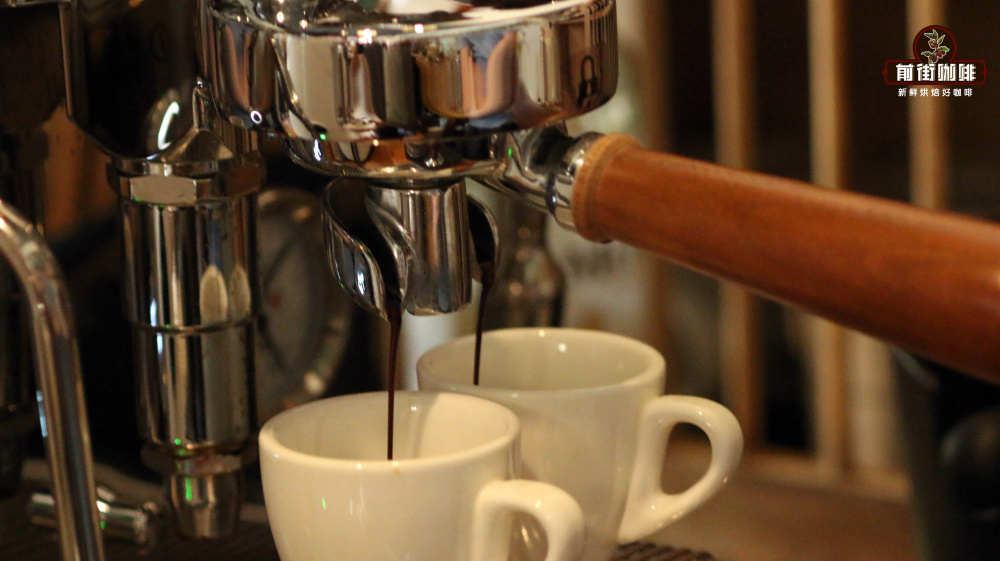
Then turn on the extraction switch and let water run for 1-2 seconds to wet the group head and rinse away any residual coffee grounds on it. After that, place an electronic scale under the cup that will receive the Espresso and tare it to zero, and place it together under the group head during extraction.
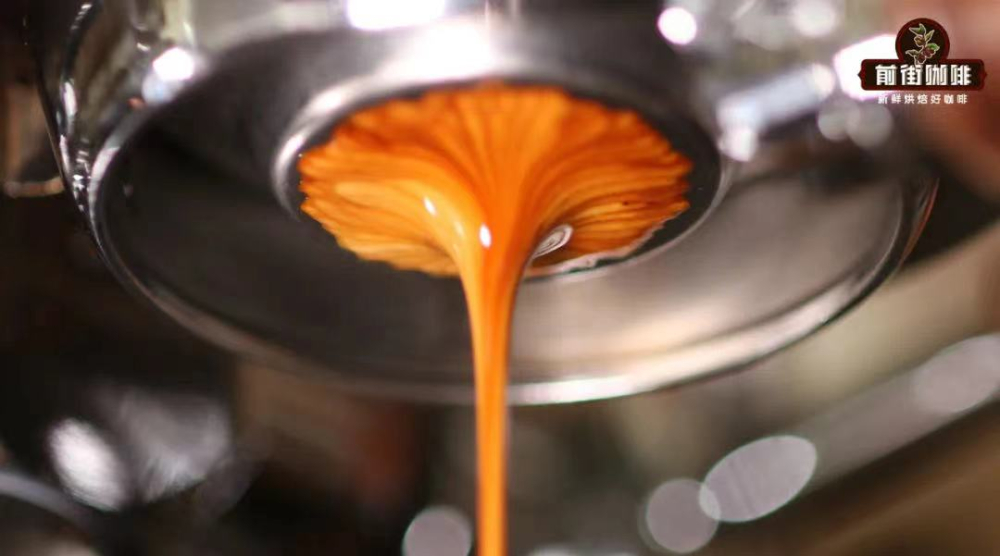
Lock the portafilter smoothly onto the group head and flip down the extraction switch. Watch the changes in the extracted liquid. When the electronic scale shows the coffee liquid has reached 40 grams and the time is about 30 seconds, flip the extraction switch down.
If you want to make Americano, prepare a 200-250ml cup, pour in 160-200g of warm hot water, then pour in the espresso, and a cup of hot Americano is complete.
If you want to make a hot latte, you need a 300ml cup. First pour in the espresso; then add 220ml of fresh milk to the milk pitcher, steam it to 55-60 degrees Celsius, making sure there is a layer of smooth milk foam, then blend the two evenly, and pour a nice pattern along the way.
It should be noted that brewing parameters will change slightly with daily air humidity and the condition of the coffee beans, so you need to adjust the dose, grind setting, and espresso extraction amount accordingly.
The above content is compiled by CoffeeHunters, a coffee news website.


