







Blue Mountain Coffee is one of the most famous coffees in the world, and its reputation is so well-known that it has become the starting point for many people to learn about coffee. However, precisely because it is so famous and expensive, the market is flooded with various counterfeit products using "Blue Mountain flavor" as a gimmick. This article will start from the production area certification standards, variety characteristics, and practical methods of identifying authenticity of Blue Mountain Coffee to help coffee lovers recognize what authentic Blue Mountain Coffee looks like. At the same time, we will also discuss the source of Blue Mountain Coffee's unique flavor, suitable brewing methods, and take the Clifton Mount Estate Blue Mountain No. 1 sold by Front Street Coffee as an example to share specific pour-over parameters and tasting experience, so that you can buy with clarity and drink with discernment.
\n\nFor more specialty coffee knowledge, please follow the WeChat public account: Front Street Coffee (FrontStreet Coffee)\n\nThe reputation of Blue Mountain coffee beans is truly well known, and their price has always been high. For this reason, many merchants take advantage of Blue Mountain's popularity and label beans not from the Blue Mountains, coffee grown in the lower-altitude areas of the Blue Mountains, instant or ready-to-drink products, and even blended coffees all as "Blue Mountain flavor" for sale.\n\n
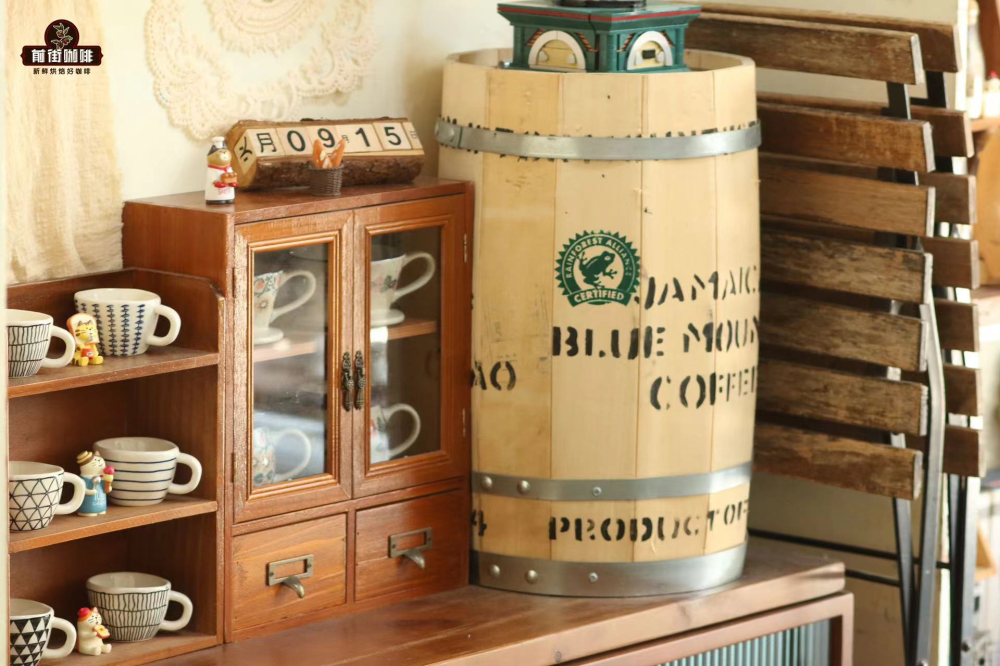
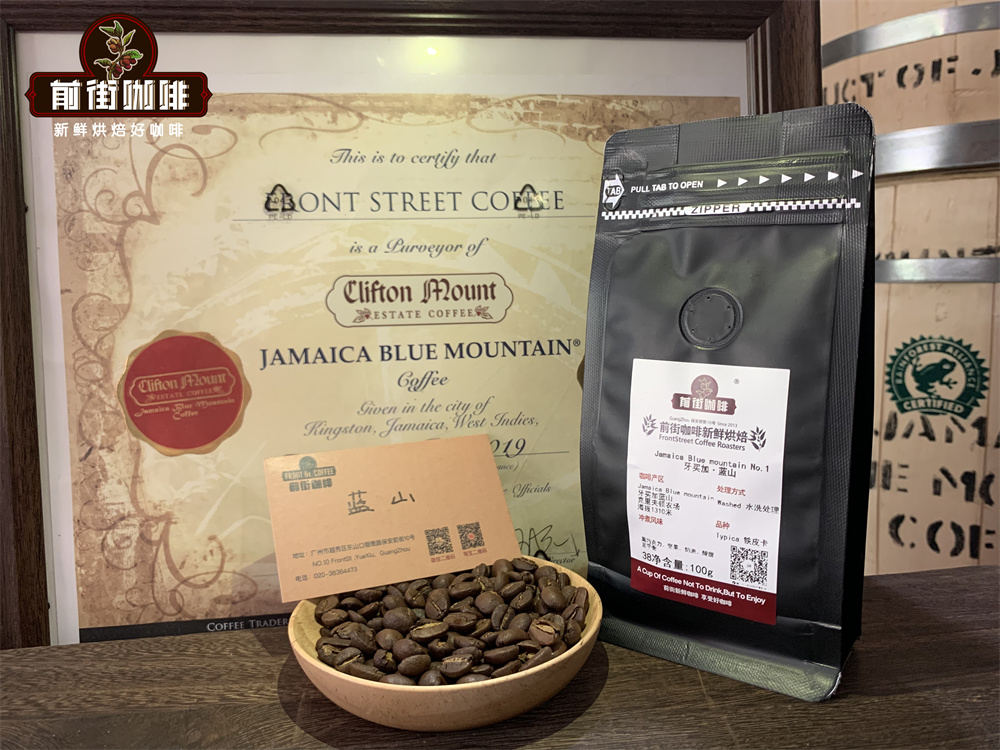
\n\nFaced with a market of mixed quality, how should consumers judge whether Blue Mountain coffee beans are authentic? Which brands of Blue Mountain coffee beans are more trustworthy? Around these questions, Front Street has summarized several key features for identifying Blue Mountain coffee beans.\n\n1. Authentic Blue Mountain No. 1 coffee beans are all exported in whole barrels using wooden barrels as the packaging unit. When purchasing, pay attention to whether the seller can provide a complete Blue Mountain wooden barrel. This can effectively prevent coffee beans from other origins from being passed off as Blue Mountain beans.\n\n
\n\n2. First-hand green bean buyers can apply to the Jamaican CIB or a specific estate for a Blue Mountain coffee bean certification certificate. This document is also strong evidence of the beans' authentic origin.\n\n
\n\n3. Currently, most Blue Mountain single-origin beans sold in China are of the Blue Mountain No. 1 grade. The green bean inspection requirements for this grade are: beans of 17 screen size or above must account for more than 96%, and the proportion of defective beans must not exceed 2%. Therefore, authentic Blue Mountain No. 1 beans are generally uniform in shape, oval, and plump.\n\n
\n\nAs for the brand choice of Blue Mountain Coffee, it is actually not the key point. This is because any brand selling authentic Blue Mountain coffee beans sources its goods from the four processing plants authorized by the Jamaican CIB and several independent farms, and there is no situation where one brand obtains better-quality beans than another. The core is to ensure that what you buy is genuine Blue Mountain; on that basis, choose according to cost-effectiveness. As a reference, Front Street lists Blue Mountain No. 1 in a small 100-gram package at 158 yuan, which is relatively affordable.\n\nBlue Mountain Coffee's global fame is second to none. It can be said that for most people, their first exposure to the word coffee began with Blue Mountain. Especially in the Asian market, Blue Mountain Coffee was long regarded as the best-quality and most expensive coffee bean, and thus was labeled the "most expensive coffee in history."\n\n
\n\nOf course, that is already in the past. Over the past decade or so, specialty coffee culture has become increasingly widespread, and planting techniques and variety research in various production areas have made great progress. The most expensive coffee beans currently known come from Panama, the Geisha variety with charming floral and fruity aromas and rich fruity sweetness and acidity. A custom micro-lot Geisha auctioned by a local estate once reached an astonishing price of 40,000 USD per kilogram.\n\n
\n\nAlthough coffee lovers' taste preferences are gradually shifting toward the fresh and bright profile of Geisha, Blue Mountain coffee beans still occupy an irreplaceable position in the hearts of senior coffee drinkers in Asia. What exactly makes Asians so fond of Blue Mountain? Perhaps it is precisely its rich and solid mouthfeel, as well as the exquisite balance among acidity, sweetness, and bitterness, bringing a calm and restrained coffee experience.\n\nWhere is Blue Mountain Coffee grown?\n\nBlue Mountain Coffee is produced in the Blue Mountains of eastern Jamaica. This mountain range is shrouded in clouds and mist all year round and shows a blue glow under the sunlight, which is how the name Blue Mountain came about. But not all coffee grown in the entire Blue Mountain range can be called "Blue Mountain Coffee."\n\n
\n\nThe authentic Blue Mountain Coffee production areas officially certified by Jamaica cover four administrative districts: St. Andrew, St. Thomas, St. Mary, and Portland, and the growing altitude must be between 910 and 1,700 meters to be allowed to bear the Blue Mountain mark.\n\n
\n\nCoffee grown at altitudes between 500 and 900 meters is graded as Jamaica High Mountain Coffee; coffee grown below 500 meters is classified as Jamaica Supreme Coffee.\n\nIs Blue Mountain Coffee a variety name?\n\nNo. The internationally renowned name "Blue Mountain" is actually the highest mountain range in the Caribbean Sea. It is famous worldwide because of the outstanding quality of the coffee produced there, and "Blue Mountain Coffee" got its name from this. The variety of Blue Mountain Coffee belongs to one of the oldest representatives of the Arabica line—Typica. This variety was introduced to the Blue Mountain region for cultivation in the eighteenth century. After two hundred years of adaptation and evolution, Blue Mountain Typica has developed into a stable variety with relatively strong disease resistance, is highly adapted to the local terroir, and has formed a refined flavor that is difficult to replicate elsewhere.\n\n
\n\nFlavor and mouthfeel characteristics of Blue Mountain Coffee\n\nBlue Mountain is located in a volcanic and seismic zone and has a large amount of fertile volcanic soil; the high altitude creates a significant temperature difference between day and night in the mountains, the forest is shrouded in clouds and mist all year round, and rainfall is abundant throughout the year, allowing the coffee cherries to fully absorb nutrients.\n\n
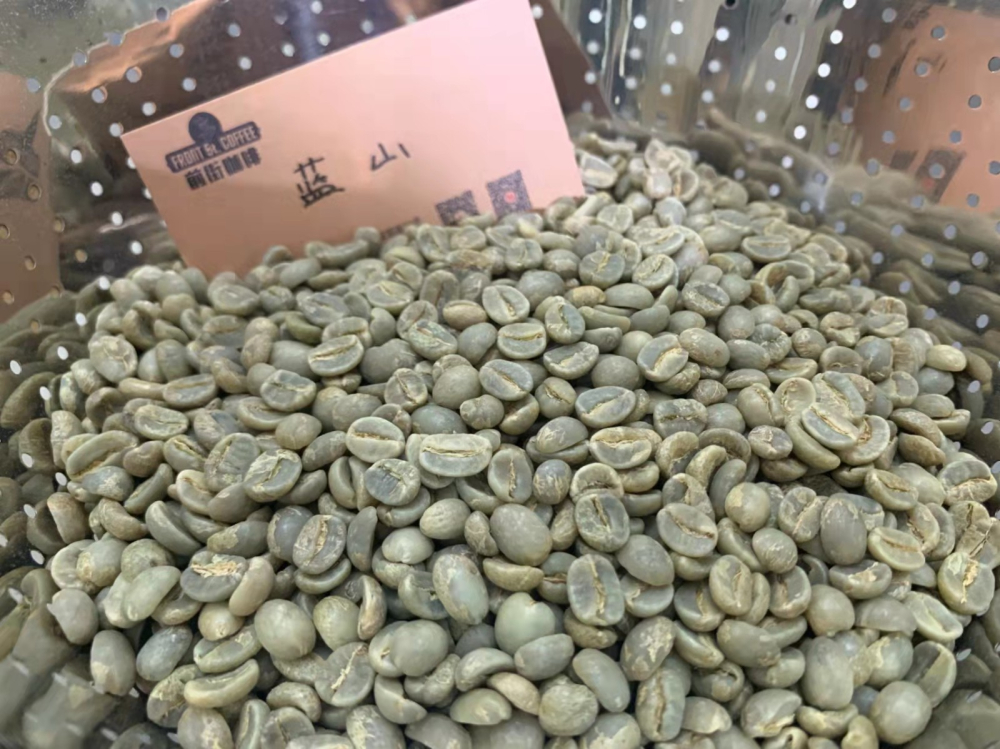
\n\nTypica coffee beans grown in such an environment can display the variety's quiet, clean flavor characteristics and distinct sweetness. Front Street has noticed that although the entire Blue Mountain range grows Typica, only beans produced in high-altitude production areas have the characteristic balance of acidity, sweetness, and bitterness. Those grown at low altitudes often lack balance and are slightly inferior in cleanliness.\n\nHow should Blue Mountain Coffee be brewed to taste good?\n\nOne Blue Mountain No. 1 coffee bean currently sold by Front Street comes from Jamaica's oldest coffee plantation—Clifton Mount Estate—at a growing altitude of 1,310 meters. This estate is also the only estate in Jamaica to obtain Rainforest Alliance environmental certification. Coffee beans produced by estates or regions with this certification all have the green frog logo printed on the packaging. At the physical store of Front Street Coffee (FrontStreet Coffee), you can see green bean wooden barrels printed with the green frog logo as well as Clifton Mount Estate's Blue Mountain Coffee certification certificate.\n\n
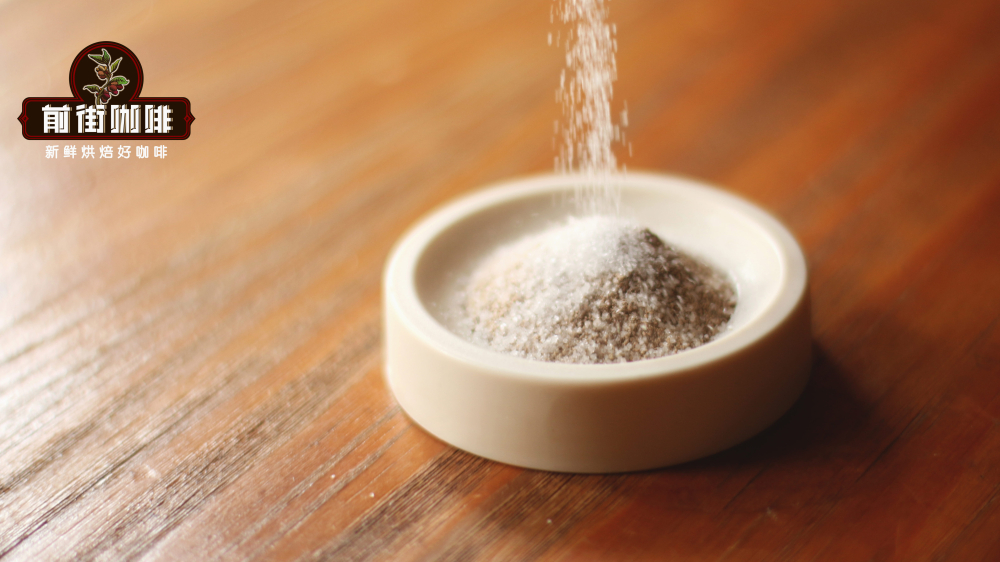
\n\nFor specialty-grade coffee beans such as Blue Mountain No. 1, Front Street believes that extracting black coffee by pour-over is the best way to appreciate Blue Mountain's unique aroma. The Blue Mountain Coffee sold by Front Street Coffee (FrontStreet Coffee) is roasted on the darker side, with a rich and full-bodied flavor profile. Therefore, it is recommended to use a KONO dripper. By making use of the tight fit between the filter paper and the dripper, an immersion-style extraction is formed during brewing, resulting in a higher coffee concentration. At the same time, to avoid over-extraction leading to heavy bitterness, Front Street uses a slightly lower water temperature and a slightly coarser grind setting.\n\nThe brewing parameters for Blue Mountain Coffee served at Front Street Coffee (FrontStreet Coffee) stores are as follows: water temperature 88°C, coffee-to-water ratio 1:15, coffee powder 15 grams, grind size coarse granulated sugar (75% passing through a No. 20 standard sieve), with a three-stage pour.\n\n
\n\nFirst pour 30 grams of hot water and let it bloom for 30 seconds, then slowly pour in a thin stream in circles from the center point to 125 grams. When the water level in the dripper drops to the point where the coffee bed is about to be exposed, continue pouring in circles to 225 grams. The total extraction time is about 2 minutes. After extraction is complete, swirl the coffee liquid to mix it evenly, and then begin tasting.\n\n
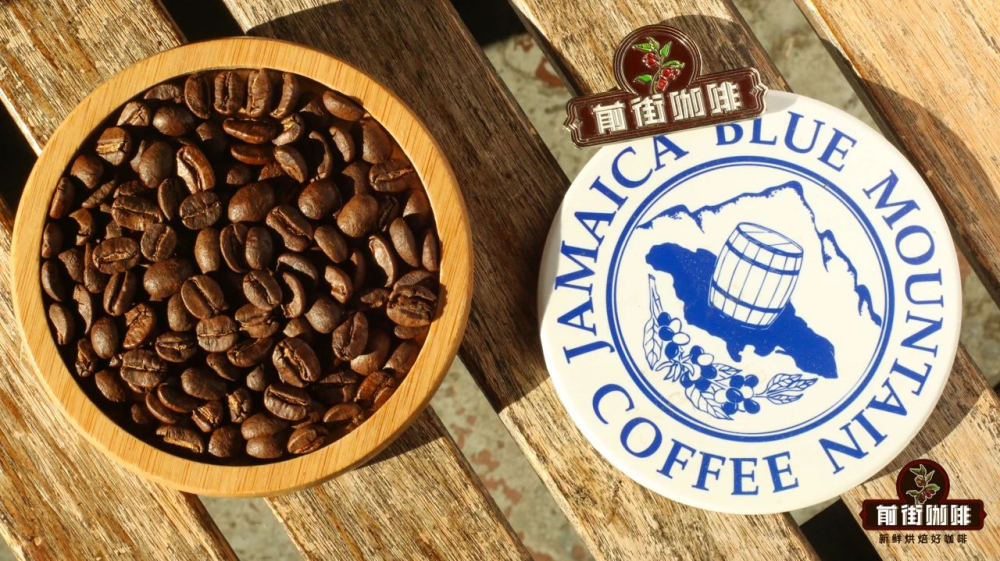
\n\nPour-over flavor of Blue Mountain Coffee No. 1: caramel aroma can be smelled during the blooming stage; on the palate, rich nuts and dark chocolate flavors can be tasted; the overall mouthfeel is full, with a sweet and clear finish.
The above content is compiled by CoffeeHunters, a coffee news website.


