







Geisha's journey from the wild forests of Ethiopia to the pinnacle of the world's specialty coffee owes much to Panama's Boquete region. This article traces Geisha's varietal origins and spread, analyzes its delicate growing requirements and low yield, and highlights Hacienda La Esmeralda's Red, Green, and Blue Label grading system, as well as Elida Estate's outstanding performance. It also covers how processing methods—natural, washed, and anaerobic slow-dry natural—affect flavor, and includes Front Street Coffee's recommended brewing parameters, offering coffee lovers a complete guide from origin to cup.
The Geisha Variety
Geisha originates from Ethiopia, coffee's birthplace. It was first discovered in Ethiopia's Geisha forest in 1931, then sent to the Kenya Coffee Research Institute, and later introduced to Uganda, Tanzania, Costa Rica, and other places, arriving in Panama in 1970. Geisha was initially overlooked in Panama because its yield could never be increased, and it was even used as a windbreak. It wasn't until the owner of Hacienda La Esmeralda separated it out to compete in the Best of Panama competition and won the 2004 BOP championship that Geisha truly came into the public eye.
The Geisha coffee tree is extremely demanding about growing conditions, requiring high altitude, a misty or shaded environment, no direct sun exposure, and fertile soil. The higher the growing altitude, the longer the coffee fruit's ripening cycle, and the more complex and distinctive the flavor becomes.
Unlike other coffee varieties, Geisha has a very thin leaf system, resulting in low photosynthetic efficiency, and its root system is also relatively fragile, absorbing water and nutrients slowly, which leads to extremely low yields. Combined with the high-altitude growing environment, the fruit also ripens late. A single Geisha coffee tree produces only half the fruit of a Caturra variety, which is one of the important reasons for Geisha's high price.
Today, Geisha is grown in many regions around the world and can be called the new king of specialty coffee, with the standout quality coming from Latin American countries such as Panama, Guatemala, and Colombia, and Panama Geisha being the crème de la crème of specialty coffee.
Panama Geisha
Panama is located at the southernmost tip of Central America, with coffee cultivation mainly concentrated in the west, near Costa Rica and the Pacific Ocean. Panama can be roughly divided into four producing regions, among which the Boquete region in Chiriqui Province is the most famous. Adjacent to Baru Volcano, it has fertile volcanic soil, and the unique microclimate in the mountains gives the coffee aromatics and a ripe-fruit-like sweetness and acidity with a long finish.
The Hacienda La Esmeralda we often hear about is located in the Boquete region. It can be said that without Hacienda La Esmeralda's persistence and efforts, there would be no stunning Geisha coffee today.
In 1964, the first-generation owner of Hacienda La Esmeralda, Rudolph Peterson, bought an estate in Boquete, initially focused on dairy products. In 1973, his son Price Peterson resigned from his doctoral position to help his father manage the farm, introduced coffee varieties such as Caturra and Catuai, and established a wet mill, officially beginning coffee bean production.
Hacienda La Esmeralda has three estates growing Geisha: El Velo, Canas Verdes, and Jaramillo, with the finest Geisha lots coming from Canas Verdes and Jaramillo.
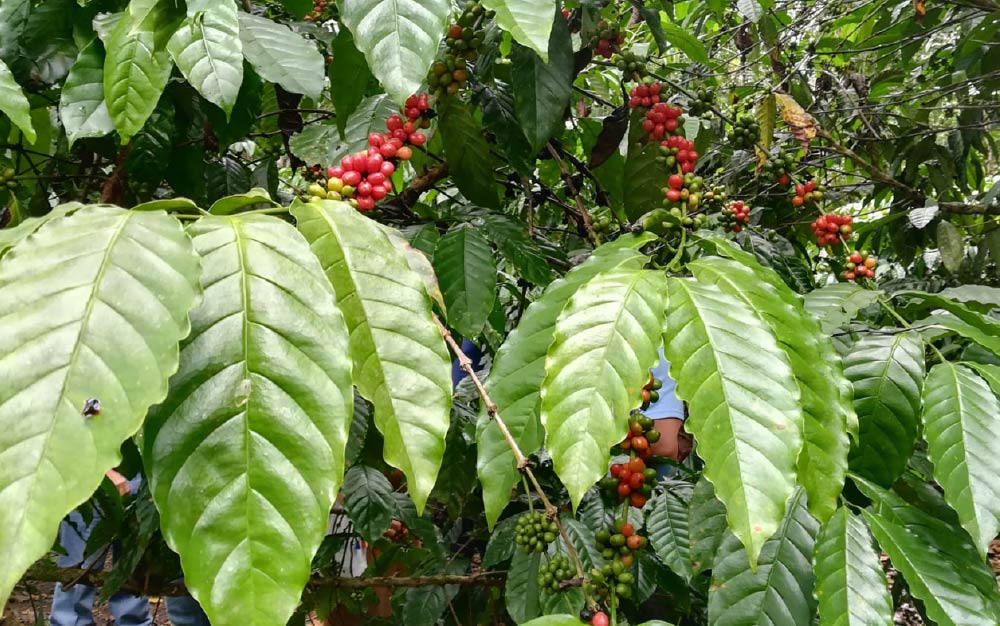
After Hacienda La Esmeralda purchased the ideally situated Jaramillo estate, third-generation owner Daniel discovered through cupping that the Geisha coffee beans had an extremely unique flavor, so he cupped other areas of the farm one by one, recording and comparing the flavors of different lots. After years of experimentation, he found that only Geisha grown above 1,400 meters possessed the unique flavor, and the Peterson family then divided the planting plots according to altitude, giving rise to the Red, Green, and Blue Labels we know today.
The Red Label, or Esmeralda Special, is Geisha grown between 1,600 and 1,800 meters with a cupping score above 90, and is also Hacienda La Esmeralda's highest-quality Geisha bean. The Green Label, also known as Private Collection, is grown at the same altitude as the Red Label; because it is harvested as a blend of beans without detailed plot designation, its flavor sometimes shows floral-fruity notes and sweet-tart juiciness similar to the Red Label. The Blue Label is Geisha grown at 1,400 to 1,500 meters. Starting in 2021, the Blue Label series was discontinued, and Hacienda La Esmeralda sold the Geisha produced in that area externally, becoming Volcanic Rock Geisha coffee beans.
It is worth mentioning that the Red Label of the Esmeralda Special series has a notable characteristic: all the coffee beans in each lot come from the same plot. For example, the Red Label purchased by Front Street comes from the Jaramillo plot, which provides buyers with a more refined purchasing option.
FrontStreet Coffee: Red Label Geisha Coffee Beans
Region: Boquete
Estate: Hacienda La Esmeralda, Canas Verdes
Altitude: 1700+ meters
Variety: Geisha
Processing Method: Natural
Flavor: Citrus, Complex Fruit, Rose Tea, Honey
Of course, when it comes to high-quality Geisha, there are many other renowned estates on Front Street's bean list that are equally worth trying. For example, Elida Estate, which has won awards at the Best of Panama competition multiple times, has also been added by Front Street to its regular lineup, giving everyone a chance to taste it.
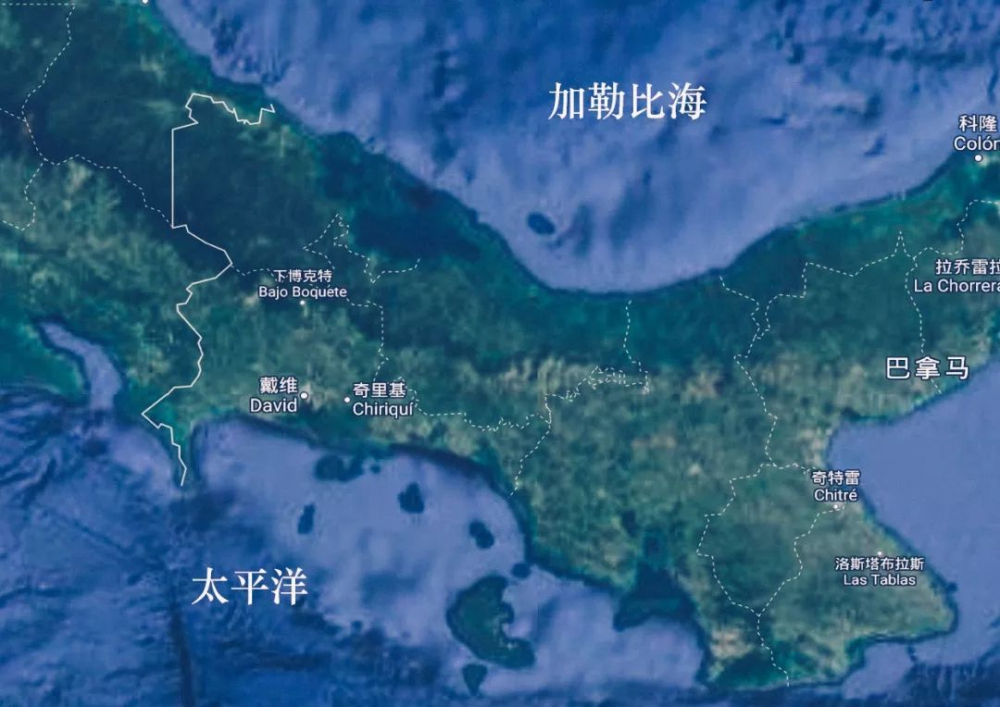
Elida Estate has a century-long history of coffee cultivation, founded by the Lamastus family in 1918, and the estate has now passed down to the fourth generation of owners. More than half of Elida's growing area lies within the boundaries of Baru Volcano National Park, the highest in Central America. The microclimate brought by the volcano and the high-altitude growing environment allow plants to thrive; besides coffee, many rare high-altitude fruit varieties are also grown here.
Elida's owner has extremely high standards for coffee harvesting and green bean processing, picking only the ripest coffee cherries. The mucilage layer is high in sugar, expressed in the flavor as a complex fruity sweetness and acidity, which has also led Elida's Geisha to achieve repeated success in numerous competitions.
FrontStreet Coffee: Elida Estate Geisha Coffee Beans
Region: Boquete
Estate: Elida Estate
Altitude: 1900 meters
Variety: Geisha
Processing Method: Anaerobic Fermentation Low-Temperature Slow Natural
Flavor: Fermentation Aroma, Rose, Citrus, Green Tea, Cream, Nuts
Processing Methods
For high-quality Geisha coffee, local Panamanian estates typically use two processing methods after harvesting ripe coffee cherries: natural and washed.
Natural Processing
The ripest coffee cherries, after strict selection, are spread flat on patios, ideally not too thickly, and need to be turned manually at regular intervals to maintain even, slow drying. Because they are dried with the fruit, the green coffee beans carry a berry-like sweetness, with a more intense floral-fruity aroma and a stickier, fuller mouthfeel.
Anaerobic Fermentation Low-Temperature Slow Natural
There is also a special processing method based on the natural method—anaerobic fermentation low-temperature slow natural, or NATURAL-ASD, which is the method used for the Geisha produced by Elida Estate. The harvested coffee cherries are placed in a sealed container to ferment for 4 to 5 days, then spread in a thick layer on drying beds to dry slowly, bringing out the coffee cherry's flavor even better. Because the ASD processing method requires precise and strict control of every detail, it demands a great deal of time and effort.
Washed Processing
Before drying, the coffee fruit is stripped of its skin and pulp, and the acidic substances produced by fermentation remove the mucilage clinging to the outer layer of the beans. The coffee beans' surface is cleaner, and the final cup is crisper with brighter acidity. The washed process requires large amounts of clean water to wash the green coffee beans, so the cost of using the washed process is relatively higher.
Brewing Reference
Having said all this, how do you brew a cup of Geisha coffee with excellent flavor? Front Street believes freshly roasted coffee beans are the first requirement. The aroma of coffee beans changes with storage conditions and time; once past its optimal flavor period, the coffee's aroma is lost at an accelerated rate. Front Street well understands the importance of coffee freshness, so all shipped coffee beans are freshly roasted within 5 days, so that when you receive them, they are just right to open and brew.
Front Street has found that some customers find grinding for pour-over coffee troublesome. If you don't have a grinder, Front Street can provide grinding service both online and at physical stores. Since coffee beans lose aroma more easily once ground, they should be drunk as soon as possible. If you want to taste the coffee's complete flavor, Front Street recommends having grinding tools and grinding fresh for each brew.
Regarding grind size selection for pour-over coffee, Front Street's brewing parameters are all based on the Chinese standard sieve No. 20. For medium-light roasted coffee like Geisha, an 80% passing rate is chosen. Because each grinder's installation, use, and maintenance condition differ, even the same setting may produce different coffee particle sizes. Front Street recommends keeping a standard sieve if possible to calibrate your grinder, so you can adjust grinding parameters more clearly.
Front Street chose the most popular Hacienda La Esmeralda Red Label Geisha. Considering that Geisha coffee beans are light-roasted, and light-roasted beans have a lower extraction rate than dark-roasted ones, Front Street used a higher water temperature for brewing to ensure full extraction of Geisha's flavor, while also choosing a finer grind size.
Dripper: V60
Water Temperature: 90-91°C
Grind Size: No. 20 standard sieve, 80% passing rate
Coffee-to-Water Ratio: 1:15
Dose: 15 grams
Pour the coffee grounds into the V60 dripper, wet the coffee bed with twice the coffee's weight in water, forming a dome, and let it bloom for 30s. Then pour in a thin stream in circles from the inside out until 125g, pause, wait for the coffee bed to drop to half the dripper's height, then continue with the same thin stream for the third pour up to 225g, until all the coffee liquid has filtered through. Remove the dripper; the time is about 2 minutes.
The ground Red Label Geisha has a captivating rose and citrus aroma. It tastes of berries, apricots, complex fruit, and honey, with a rich, juicy body, layered flavors, and pronounced sweetness.
The above content is compiled by CoffeeHunters, a coffee news website.


