







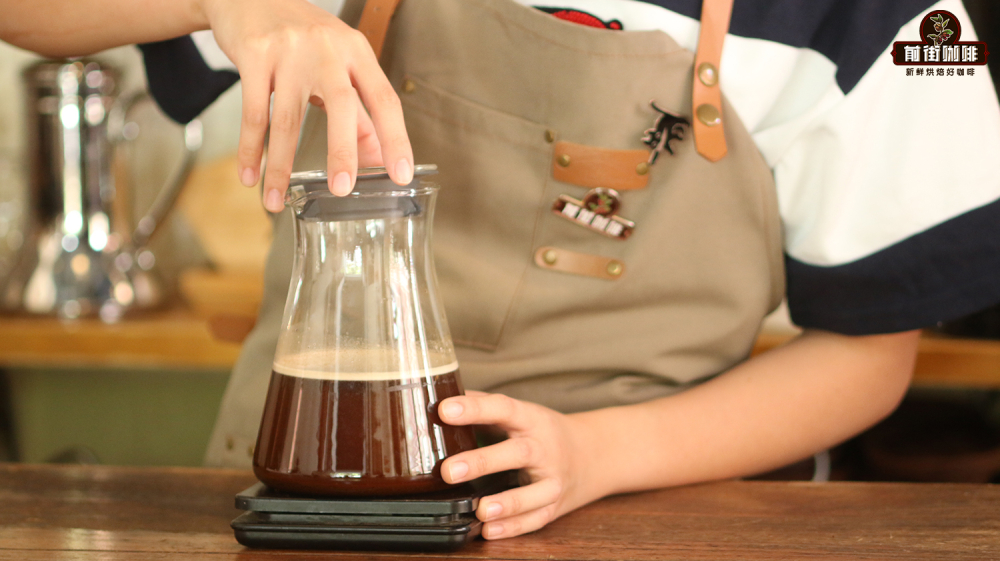
As the days pass, it's already June, and the weather has started to heat up. Friends in the south say they can't stay outdoors for more than 2 minutes. On hot days, one can't help but crave a refreshing glass of iced coffee—and the one coffee you absolutely must drink every year is none other than cold brew.
What is cold brew coffee?
Cold brew coffee, known in English as Cold Brew Coffee, is made by steeping ground coffee beans in cold water for more than 8 hours, then filtering out the coffee grounds with a filtration device. Making cold brew is very simple—as long as you get the parameters right, you can easily make delicious iced coffee. So, how do you choose the grind size, coffee-to-water ratio, and other parameters for making cold brew?
Grind Size
Since cold brew uses ice water for immersion extraction, the extraction efficiency is extremely low. In other words, there's no need to worry about over-extraction at all. Compared to the grind size for pour-over, you can choose a slightly finer grind, with a reference standard of 85% passing through a No. 20 standard sieve, and as few fines as possible.
Front Street found through testing that a lot of fines not only prolongs the filtration time, but even after filtering, more oils and fines float on the surface of the coffee liquid, affecting the mouthfeel.
Coffee-to-Water Ratio
So how much water is most suitable for steeping? Front Street's standard ratio of coffee to water to ice is 1:8:4, meaning the actual coffee-to-water ratio is 1:12. Ice is added to ensure the water temperature is low enough, keeping the extraction efficiency at a stable level.
Temperature
Generally, cold brew needs to be extracted at low temperature in the refrigerator, and low-temperature extraction requires 24 hours. So can cold brew be extracted at room temperature? Of course it can, but the corresponding extraction time is shortened. However, when extracting at room temperature, Front Street Coffee recommends shortening the extraction time to 8 to 12 hours.
How Front Street Coffee Makes Cold Brew
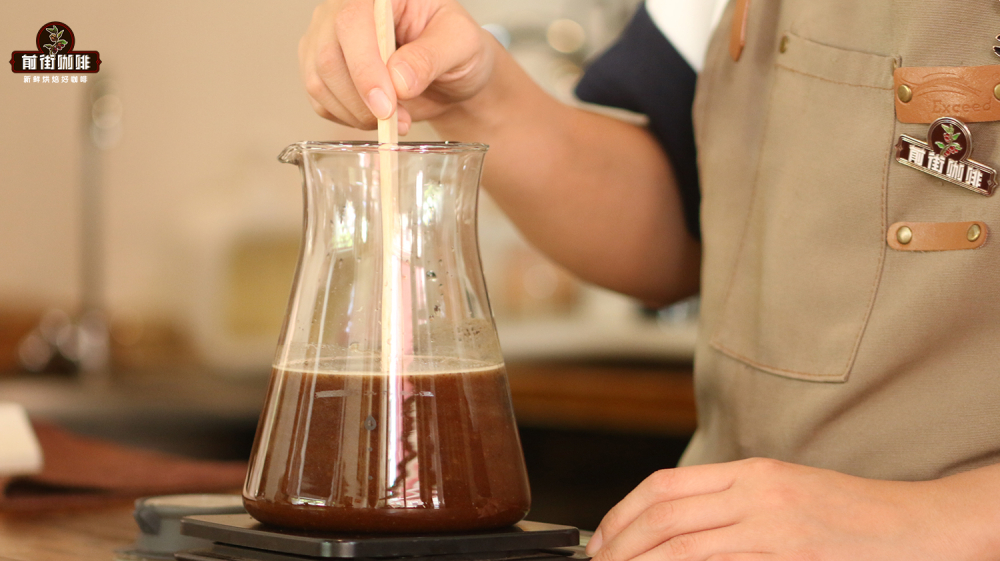
Cold brew is a very easy method to master. Front Street Coffee's cold brew method is based on 50 grams of coffee grounds, ground to a coarseness with 85% passing through a No. 20 standard sieve. Put the coffee grounds into a glass jar, then add 400 ml of room-temperature water and 200 grams of hard ice cubes (totaling 600 grams of ice-water mixture), giving a coffee-to-water ratio of 1:12. Then use a stirring rod to mix the coffee grounds and water evenly, seal it, and place it in the refrigerator.
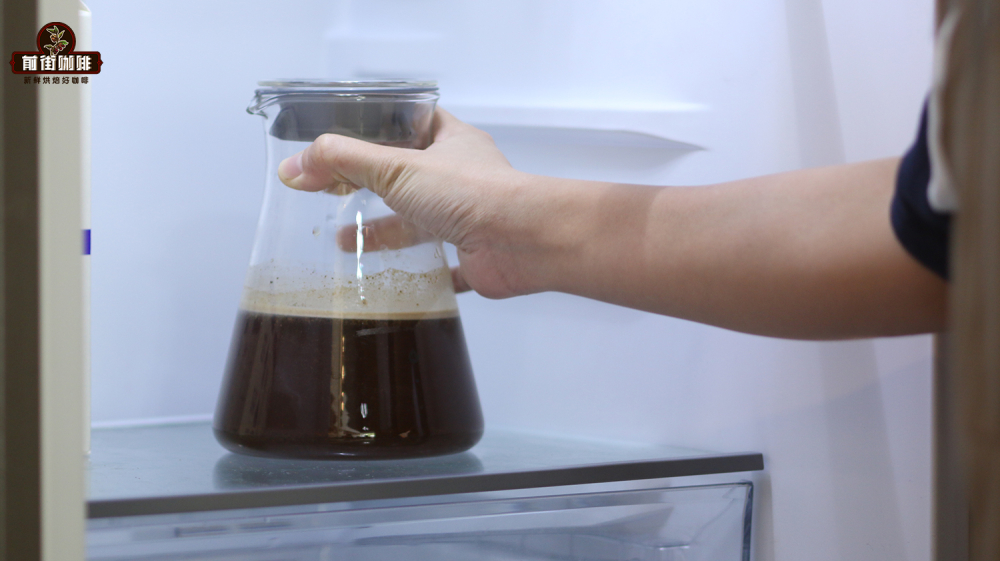
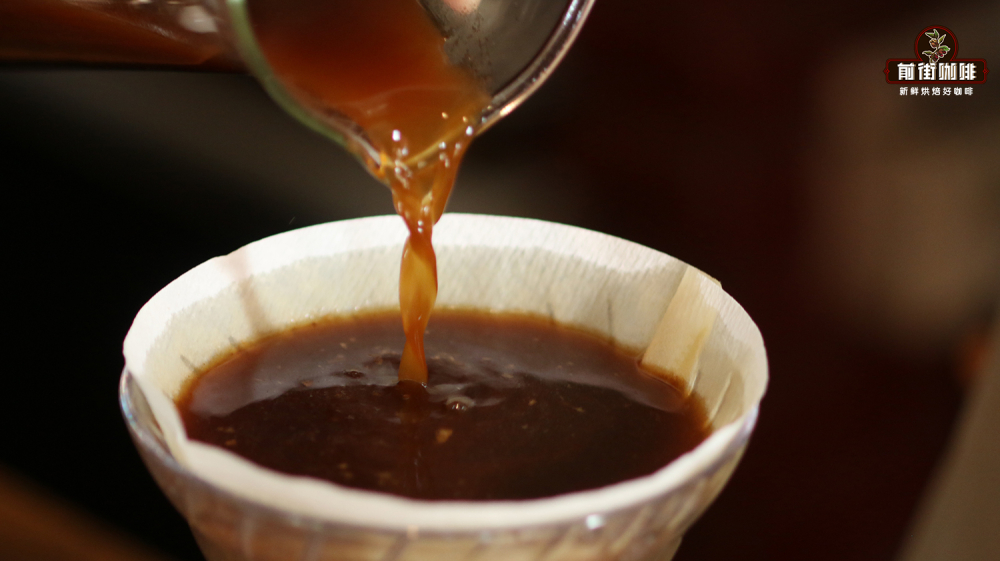
After 12-24 hours in the refrigerator, use filter paper to remove the coffee grounds and obtain a clean coffee liquid. Then pour the coffee liquid into a clean sealed bottle and refrigerate for about 4 more hours before drinking.
In fact, compared to the strict parameters of other coffee extraction methods, cold brew is highly forgiving. From the choice of coffee beans to the sealed container, to the coffee-to-water ratio, grind coarseness, and steeping time, it has a wide range of adjustability. In other words, as long as the parameters aren't particularly extreme, you can make a decent iced coffee.

But some friends have encountered problems while trying: even though they used the same coffee beans and "copied" the parameters, the cold brew they made just isn't as rich and sweet as what they drank in the shop. Why is that? Here Front Street has summarized a few key details. Those making it at home might want to check against these to see if the problem lies here.
Steeping time should not be less than 8 hours or more than 18 hours
In pour-over, we pay special attention to water temperature and time, because water is the main medium for brewing, and temperature directly affects the coffee's extraction efficiency—too high or too low will change the coffee's taste. Since cold brew only contacts low-temperature water of 4-10°C throughout, the extraction efficiency is very slow, so a certain extended steeping time is needed to release more aromatic substances, allowing sugars and organic acids and other compounds to be extracted more fully, resulting in a coffee that is more balanced in acidity, sweetness, and body. Generally, the steeping time for cold brew is usually recommended to be controlled at 8-18 hours.
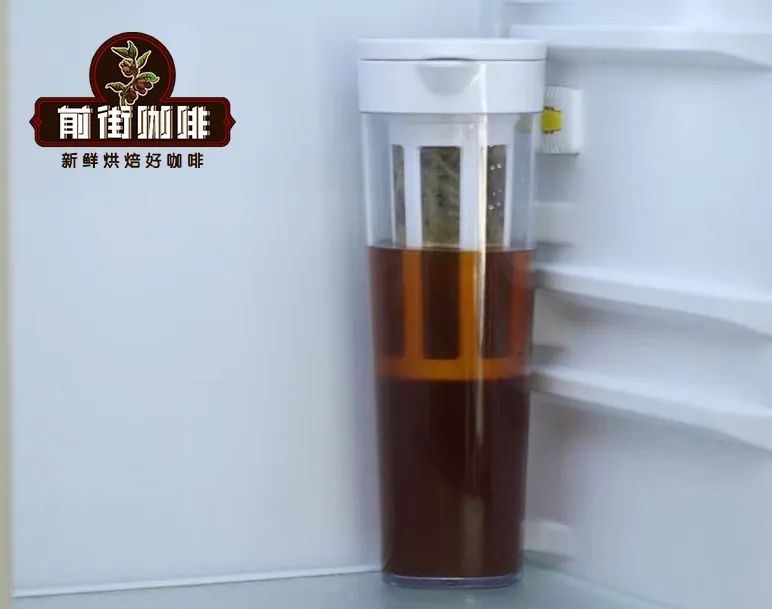
Front Street once conducted a cold brew experiment with time as the variable, steeping the same coffee for 6 hours, 10 hours, 16 hours, and 24 hours respectively. In the end, it was found that the 6-hour coffee tasted too thin with a flat aroma, the 24-hour cold brew was noticeably bitter with signs of over-extraction, and the 10-hour and 16-hour batches performed best, with rich aroma and a full-bodied taste.
Coffee beans that are too fresh also affect extraction
In many high-temperature brewing methods, freshness of the roast is often the first factor people consider. For one, beans not in their peak flavor period will have a greatly reduced aroma—this is a consensus everyone has reached. Secondly, the release of gas allows us to intuitively judge whether beans are fresh or not, such as the crema of espresso or the bubbling during blooming, which also indicates that the coffee is at its peak aroma stage.

As coffee beans are continuously heated in the roaster, freshly roasted beans contain a large amount of carbon dioxide. To extract the aromatic compounds inside, these gases need to be released first. Cold brew itself is a relatively static extraction state, and the low-temperature water to some extent inhibits the release of these gases, so the brewed coffee can easily become bland. Therefore, Front Street recommends choosing coffee beans that are more than 10 days past the roast date to make cold brew, which helps us make a more aromatic coffee.
Stir thoroughly both before and after extraction
Many newcomers, eager to save time, seal the lid and put it in the refrigerator right after adding water. The surface of the coffee grounds may look wet, but some areas actually haven't come into contact with water, so that dry portion clearly hasn't participated in the extraction. In addition, after sitting overnight, most of the particulate matter sinks to the bottom of the container. If you pour it out to filter directly at this point, there's a high chance you'll only get the lighter-colored liquid from the top layer, and the taste will presumably not be good either.

Based on Front Street's experience, if you're using a larger-capacity jug, before extraction you can use a stirring rod or a long spoon to mix the coffee grounds and water evenly before putting it in the refrigerator. After taking it out, stir a few more rounds before filtering. If you're using a sealed water bottle, after capping it, just gently shake it up and down to mix.

Filter out the grounds thoroughly for a better cold brew taste
There are also many choices of equipment for filtering out coffee grounds, such as the built-in filter mesh of a cold brew pitcher, metal filters, filter paper, and flannel filter cloth. Different pore structures can effectively block different sizes of particulate matter.
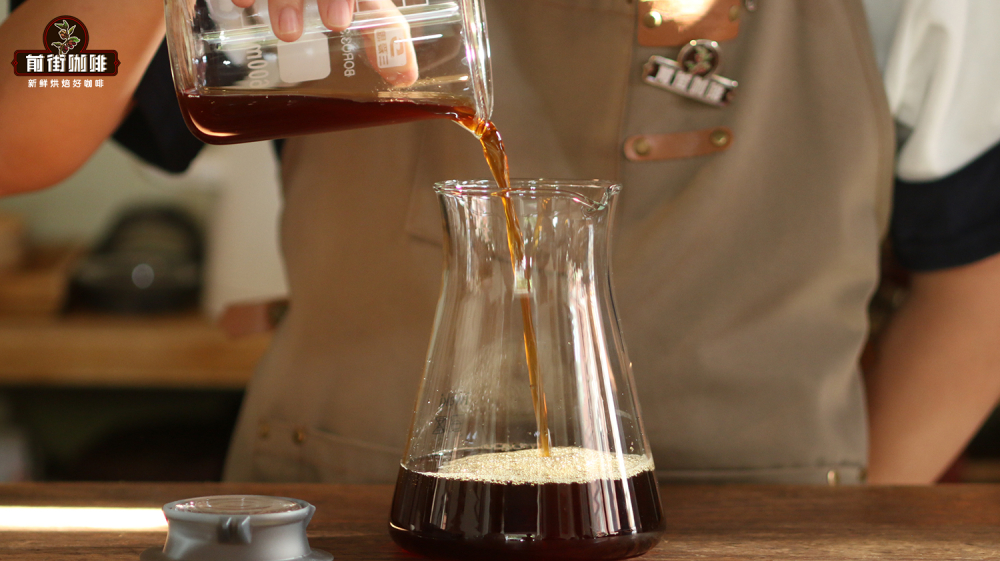
Take the cold brew pitcher Front Street uses as an example: the filter mesh has a pore size of 245 mesh, which is a relatively fine type, but there are still cases where fines and very fine particles pass through. Without a second filtration, a layer of flocculent oil sheen will float on the surface. The flavor when drinking is not much different from after filtering, but the roughness left on the tongue when swallowing is relatively noticeable, and after finishing, some visible grounds settle at the bottom of the cup.

For a better drinking experience, Front Street uses a higher-density filter paper for a second pass, which not only effectively filters out extremely fine coffee particles but also blocks more than 80% of the oils. After filtering out the grounds, Front Street also puts the cold brew liquid into the refrigerator sealed and refrigerated for 3-4 hours, allowing the flavor substances to further settle and mature. This way, the cold brew tastes very full-bodied, with a clearer mouthfeel and more transparent acidity.
For more specialty coffee beans, please add the private WeChat of Front Street Coffee, WeChat ID: kaixinguoguo0925
The above content is compiled by CoffeeHunters, a coffee news website.


