







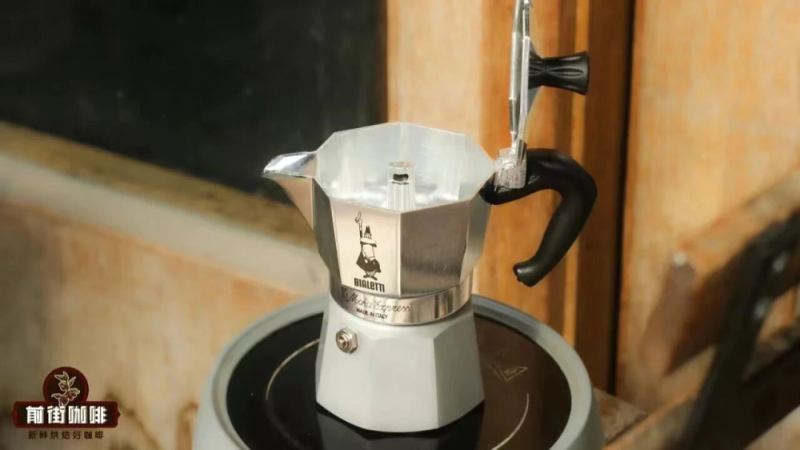
Although the moka pot is not as commonly seen in cafés as commercial espresso machines, it plays an irreplaceable role in Italian households. Some call it an Espresso Pot, while others question whether it can make true espresso, but its pressure-extraction principle and unique construction are enough to make every cup worth taking seriously. From Front Street's perspective, this article systematically sorts out the moka pot's three-part structure, its pressure-extraction mechanism, and the approach to choosing suitable beans and grind size, and provides a complete set of operating steps from filling water and loading grounds to heating and cooling, helping coffee lovers reliably recreate a rich, full-bodied moka pot coffee at home.
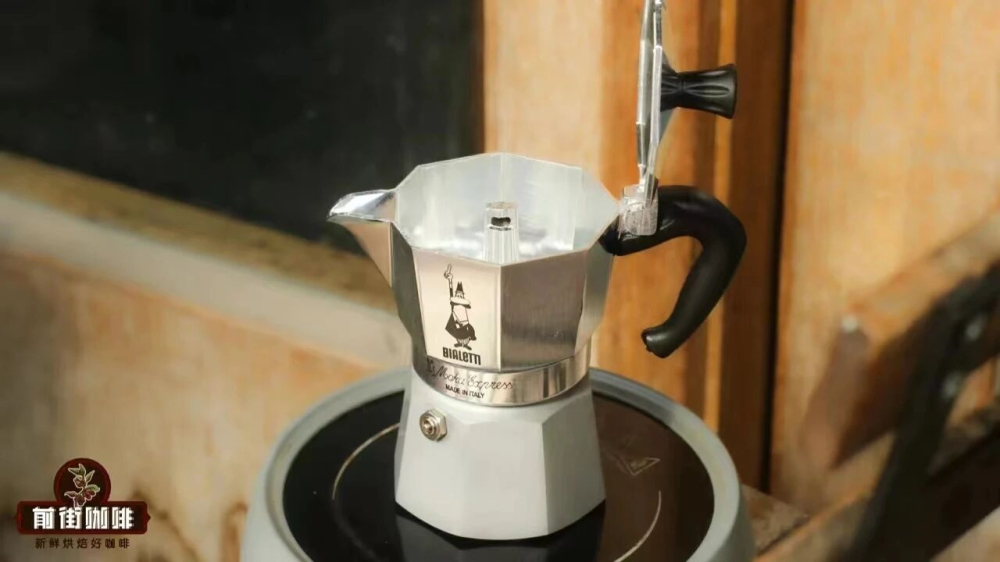
Espresso coffee has long been part of daily life—names like americano, latte, and cappuccino roll off the tongue even for people who don't drink coffee. The moka pot's situation, however, is a bit special: it rarely appears in commercial serving scenarios and is more often a regular in home kitchens, so many friends mistakenly assume it doesn't belong to the Italian coffee system. Today, Front Street will help everyone get reacquainted with this pot that is extremely popular in Italian households.
Europeans don't call it a moka pot; they call it an Espresso Pot. Judging by the name alone, the coffee produced by a moka pot should fall into the espresso category—it's just that its method of serving appears classical and plain. Some friends, because the moka pot lacks the high-tech feel of an espresso machine and because you don't see a thick layer of crema in the cup when it's served, conclude that what it makes isn't espresso. Such doubts actually don't hold up.
The Moka Pot's Construction and Principle
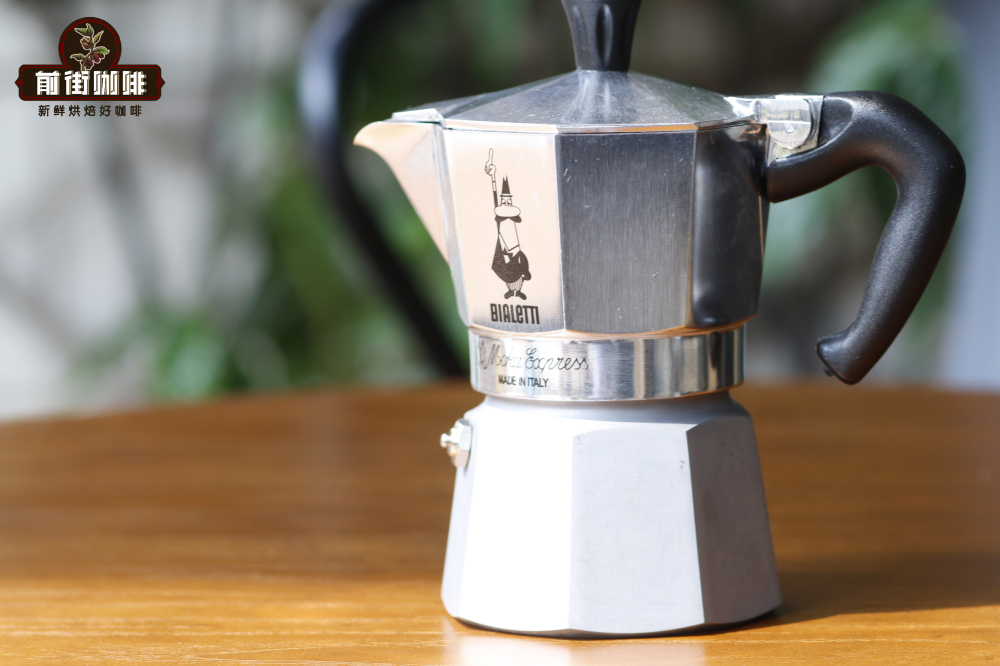
The moka pot consists of three parts: the upper chamber, the filter basket, and the lower chamber. The lower chamber holds water, the filter basket is used for holding relatively finely ground coffee, and the upper chamber receives the extracted coffee liquid.
If we temporarily set aside the lower water chamber and use our hands to fix the filter basket to the bottom of the upper chamber, we can see more intuitively how extraction occurs.
The metal tube at the tail of the filter basket is coaxial with and the same diameter as the metal tube at the center of the upper chamber. This design is meant to let water flow in a straight line. When the water temperature in the lower chamber rises to a certain level, driven by pressure, hot water is pushed upward from the metal tube at the tail of the filter basket, passes through the coffee grounds in the filter basket, then goes through the filter screen at the bottom of the upper chamber, and finally the coffee liquid surges out through the metal tube at the center of the upper chamber under pressure. A complete coffee extraction is thus completed.
The safety valve above the lower chamber alone is enough to determine that the moka pot is a pressure vessel. When the filter basket is correctly and firmly screwed onto the lower chamber and then placed on a heat source for heating, the hot water gains pressure. Therefore, the entire extraction process takes place in a pressurized environment.
Coffee Beans Suitable for the Moka Pot and Grind Fineness
People who play with coffee in China are especially particular about beans—origin, variety, and roast level all need careful consideration. But abroad, many consumers buy coffee beans or ground coffee from supermarket shelves; they pay more attention to brand, the beans' intended use, and flavor performance.
In Italy, many brands specifically launch ground coffee for moka pots. Returning to the question of what beans to use for a moka pot, because the development path of China's coffee industry differs from Italy's, apart from being able to buy imported ground coffee in large shopping malls, people basically still rely on domestic single-origin coffee brands.
The moka pot is generally suitable for medium-dark roasted coffee beans. Beginners can first try the Front Street Italian blend series, such as the Front Street Classic Blend with rich crema and buttery sweetness, and the Front Street Black Cocoa Blend—a balanced, extremely cost-effective espresso bean recommended by many baristas. They both have nutty and chocolatey flavors and are suitable for both espresso machines and moka pots.
If you've already advanced and want to find some moka pot coffee beans with unique flavors, then choose Front Street Brazil Queen's Estate SOE and Front Street Golden Mandheling SOE.
Front Street Brazil Queen's Estate SOE coffee beans: If you prefer the unique taste of single-origin coffee, this medium-dark roasted Front Street Queen's Estate SOE is worth trying. The rich creamy peanut flavor is unforgettable, accompanied by the fresh sweetness of sugarcane, with cocoa aroma in the finish; it is also suitable for pour-over, moka pot, and home coffee machine preparation.
Front Street PWN Golden Mandheling SOE coffee beans: As one of Asia's most famous specialty coffees, Front Street Golden Mandheling SOE undergoes three rounds of hand sorting plus one round of machine sorting during production, making the coffee beans uniform and translucent. After medium-dark roasting, the beans are large and carry intense aromas of spices, caramel, cedar, and dark chocolate. Extracting moka pot coffee with it gives a rich, full-bodied taste and good crema performance, making it very suitable for friends who don't like acidic coffee.
How to Use a Moka Pot
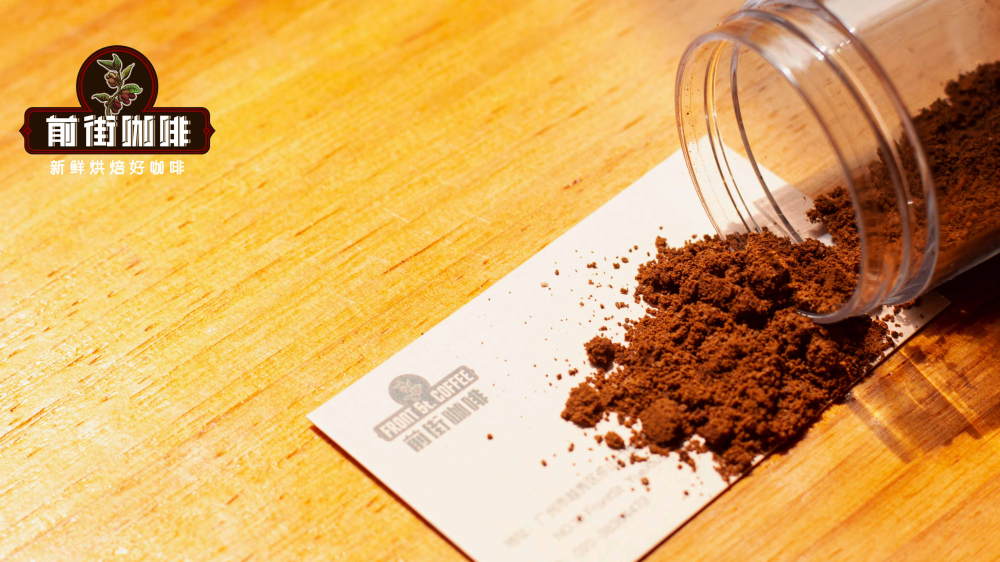
Among the various parameters, the grind size of moka pot coffee grounds is especially critical; it not only determines the coffee's concentration but also affects whether the final flavor is aromatic or bitter.
The particle size of moka pot coffee grounds can be judged in two ways: first, buy a grind size ruler or use moka-specific ground coffee as a reference; second, through several adjustments—testing three to five times is basically enough to figure it out. If the grind is too coarse, the coffee liquid will gush out rapidly, even like a fountain; if the grind is too fine, you'll hear the bubbling hum of boiling water while the coffee liquid is slow to come up—at this point it's advisable to turn off the heat quickly. During the adjustment process, remember to take safety precautions.
How to Use a Moka Pot
1) Pour hot water into the lower chamber of the moka pot; the water level must not exceed the lower edge of the safety valve. The safety valve marks the maximum water level for every moka pot.
Cold water is not recommended, because it increases the time the water soaks the coffee grounds, making the extracted coffee burnt-bitter and murky.

2) Load the grounds. This step affects the coffee's serving result and involves three elements: water amount, loading grounds, and extraction timing. Many friends have obvious misunderstandings at this stage, summarized as follows:
a. Not enough grounds. If you choose the maximum water level in the lower chamber, then the grounds should also completely fill the filter basket. Otherwise, depending on the degree of shortage of coffee grounds, the coffee's taste will gradually become weaker.
b. Using a tamper to press the grounds. Many friends borrow an espresso-machine tamper to press the moka pot's filter basket, which is actually thankless effort. If you press too firmly and the coffee grounds are too fine, it will be very difficult for the coffee to be drawn up. The key to loading grounds in a moka pot is: fill as much as possible rather than press firmly. You can add grounds in batches and tap the edge of the filter basket with your hand so that it spreads as fully as possible without leaving gaps.
After the coffee grounds are loaded, you can tap the filter basket vertically against the table a few times to ensure the coffee grounds are fully filled and settled.
3) After placing the filter basket correctly on the lower chamber, screw the upper chamber tightly onto the lower chamber. For safety and to prevent leaks, you can tighten it slightly more than usual.
4) Place the correctly assembled moka pot on a heat source to heat. To make observation easier, Front Street recommends brewing the moka pot with the upper lid open.
Soon the coffee liquid overflows from the central metal column of the upper chamber.
As extraction continues, the coffee liquid level will gradually rise. When crema appears on the surface, please note that extraction is nearing its end. When the crema's color changes from dark to light, the heat source should be cut off immediately to stop extraction; otherwise the coffee will enter an over-extracted state.
In particular, do not wait until a "whooshing" sound appears before stopping; coffee like that may even have a burnt-rubber taste.
6) If conditions permit, you can prepare a towel soaked through with cold water in advance and place it next to the heat source. After finishing step five, place the moka pot on the cold towel; this can greatly reduce the possibility of over-extraction.
The above content is compiled by CoffeeHunters, a coffee news website.


