







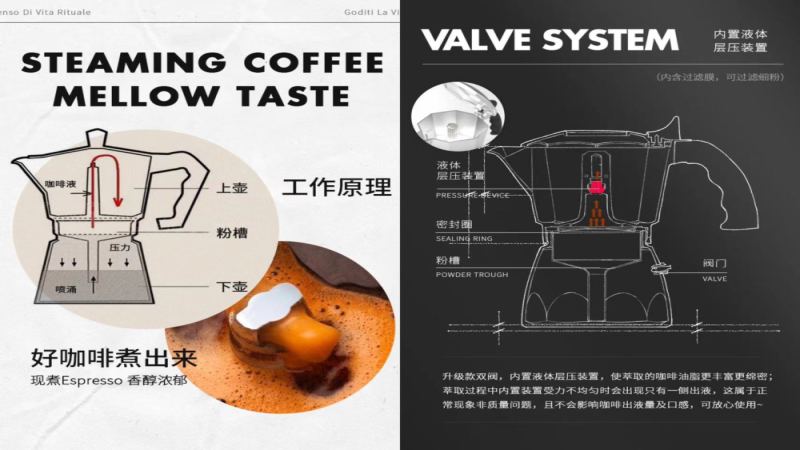
When the moka pot first came out, there was no distinction between single-valve and double-valve models. Its appearance brought steam-pressure espresso extraction into ordinary households and also broke the previous restriction that women could not enjoy coffee in cafés. In recent years, as people's demands for coffee flavor have increased, the double-valve moka pot has emerged. So should beginners choose single-valve or double-valve? And how should a single-valve moka pot be operated correctly? This article will sort through the structural differences between the two pot types, the difficulty of operation, and the key extraction points one by one, and provide coffee bean pairing suggestions suitable for moka pots, including specific choices such as Front Street Classic Blend, Queen Farm Brazil, and PWN Indonesia Golden Mandheling.

In the early days of the moka pot, there was no distinction between single-valve and double-valve models on the market. The reason it could become popular around the world for nearly a century is, on the one hand, that it broke the old rule that women were not allowed to enter cafés to drink coffee, and on the other hand, that it allowed ordinary people to quickly obtain extremely concentrated coffee at home with the help of steam pressure, with quality comparable to espresso produced by the expensive and bulky steam-style espresso machines of the time. The double-valve moka pot, by contrast, gradually appeared on the market only in recent years as everyone's requirements for coffee taste and flavor performance continued to rise.
Differences Between Single-Valve and Double-Valve Moka Pots
The most core difference between the two is reflected in the design of the outlet. The outlet of a single-valve moka pot has no obstruction at all, while a double-valve moka pot is equipped with a pressure valve at the outlet, which must accumulate greater pressure before it can be pushed open and allow the coffee liquid to flow out smoothly.
Should Beginners Choose Single-Valve or Double-Valve?
Precisely because higher pressure is required to push the valve open, the espresso extracted by a double-valve moka pot is superior in richness and fullness. However, it should be noted that the operating threshold of a double-valve moka pot is relatively high, with stricter requirements for detail control and parameter accuracy. Front Street Coffee therefore does not recommend that beginners start with a double-valve, since controlling the extraction of a double-valve moka pot properly is not as easy as imagined.
By comparison, a single-valve moka pot has a large margin for error and is very suitable for beginners trying it for the first time. There is no need to agonize too much over parameter adjustments, and the risk level is also lower than that of a double-valve. After you become proficient with it, you can absolutely list it on a second-hand platform for resale, then buy a double-valve, and save quite a bit on the price as well.
How to Operate a Single-Valve Moka Pot
When using a single-valve moka pot to extract coffee, there are several key points to keep in mind: the water level in the lower chamber must not exceed the pressure relief valve (that is, the position resembling a nut); the coffee grounds should be ground as finely as possible, but the fineness still needs to ensure they can pass through the holes at the bottom of the filter basket; before heating, be sure to confirm that the upper and lower chambers have been tightened; when heating reaches the point where the coffee liquid begins to flow into the upper chamber, immediately turn off the heat source and place the pot on a wet cloth to cool down, using the temperature difference to encourage further release of the coffee liquid while reducing the risk of over-extraction.
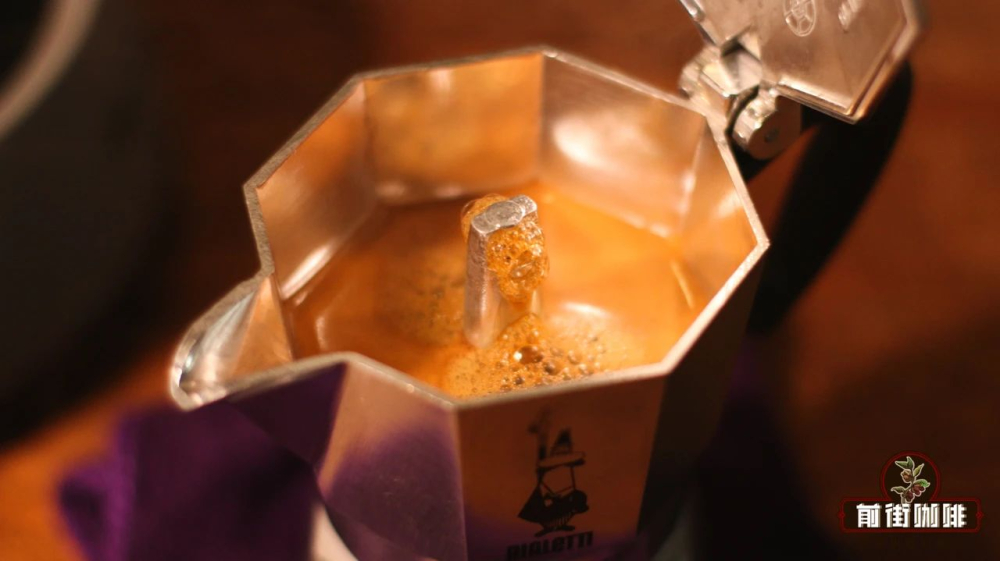
Front Street Coffee uses a 3-4 cup single-valve moka pot. During operation, first put 20g of ground coffee into the filter basket, then pour hot water into the lower chamber without exceeding the pressure relief valve, and afterward place in the filter basket. Take anti-scald measures, tighten the upper and lower chambers, open the lid of the upper chamber, and then begin heating. When the hot water boils and extraction starts, turn off the heat source. After extraction is completely finished, to avoid excessive steaming, the coffee should be poured out and drunk as soon as possible.
What Coffee Beans Are Suitable for a Moka Pot
Coffee extracted from a moka pot is known for being rich and full-bodied, so it is recommended to prioritize coffee beans designed specifically for espresso extraction. If you are unsure how to choose, you can directly buy espresso blends with guaranteed quality, or you can choose medium-dark roasted single-origin beans.
If you pursue rich crema and a smooth mouthfeel, you can buy Front Street Classic Blend. This recipe is intended as a tribute to the once-popular "Mamba Coffee," combining Indonesian Mandheling beans with Brazilian espresso beans. It has both the wild aroma of Mandheling and the smooth taste of Brazilian beans, with the flavors complementing and balancing each other. Front Street Classic Espresso Blend adds Robusta on the basis of the Mamba recipe, significantly improving the coffee's crema performance, making the body of the espresso more solid. It is suitable for home brewing and can also be used for latte art.
If you want moka pot coffee with nutty aromas, high body, but not prominent bitterness, Queen Farm Brazil Coffee Beans from Front Street is recommended. These beans are produced in a well-known specialty region of Brazil—Queen Farm in Mogiana, São Paulo State—at an altitude range of 1400-1950m. The variety is Yellow Bourbon, and it not only gives off a charming roasted nut aroma but also has an excellent yellow-sugar-like sweetness.
If you prefer a richer style with a more solid body, Front Street recommends Front Street PWN Indonesia Golden Mandheling Coffee Beans.
This coffee bean comes from the Gayo Mountain producing region in Aceh, Sumatra, Indonesia. After purchasing Mandheling coffee beans, PWN conducts one machine sorting starting from the fruit stage as well as more than three rounds of manual hand sorting, ensuring that the coffee bean size reaches 18 mesh or above. The flavor performance is therefore more balanced and clean, while retaining Mandheling's signature mellow notes of herbs, pine wood, and spices, as well as a more pronounced sweet aftertaste.
The above content is compiled by CoffeeHunters, a coffee news website.


