







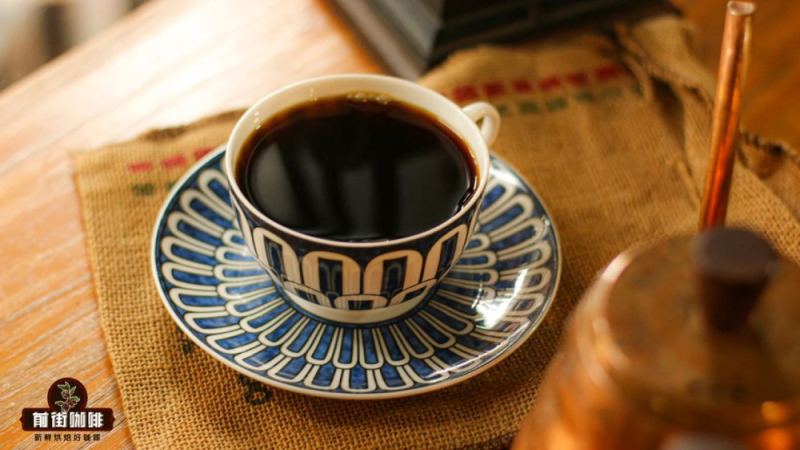
Blue Mountain coffee is one of the world's recognized top coffees, and its grading, variety characteristics, and flavor performance have always attracted much attention. This article will start with the growing environment of Blue Mountain coffee and provide a detailed overview of the grading system for Jamaican Blue Mountain coffee—including the specific standards for Blue Mountain No. 1, No. 2, No. 3, and peaberry—and compare the differences between High Mountain coffee and Jamaican coffee. At the same time, it will take a deeper look at the uniqueness of the Blue Mountain Typica variety, the differences between washed and natural processing methods, and Front Street Coffee's brewing parameters and flavor description, helping readers fully understand what makes authentic Jamaican Blue Mountain coffee so good.
For more specialty coffee knowledge, please follow the WeChat public account: Front Street Coffee (FrontStreet Coffee)
Nowadays, when Blue Mountain coffee is mentioned, how many people still find it unfamiliar? Front Street feels that it is no longer some little-known secret. The real question may be: do you know exactly what kind of Blue Mountain coffee you drink in daily life? Some friends may wonder—are there several kinds of Blue Mountain coffee? What Front Street wants to say is that it is not that Blue Mountain coffee itself has multiple types, but that every kind of coffee has its own grading system. What you drink may only be coffee with a Blue Mountain flavor, and not necessarily authentic Jamaican Blue Mountain No. 1. Next, Front Street will walk everyone through the Blue Mountain coffee grading system in detail, and you can also compare and see which grade what you drink belongs to.
Blue Mountain coffee is praised as the coffee with the richest, mellowest flavor in the world, with a full-bodied taste in which sweetness, acidity, and bitterness achieve a delicate balance. Bitterness is almost imperceptible, leaving only a just-right acidity. As lovers of wine often say, once this flavor is tasted, it is hard to forget. The reason Blue Mountain coffee ranks among the world's most expensive coffees is well founded. Blue Mountain coffee is the finest coffee in the world.
The growing environment of Blue Mountain coffee
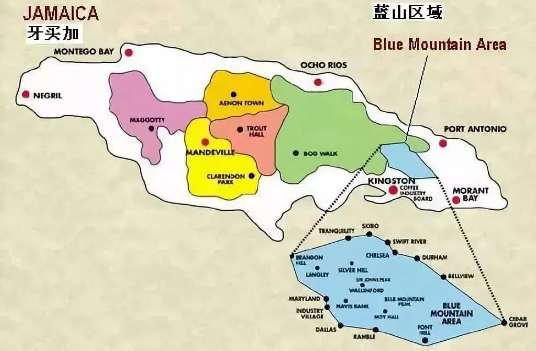
The Blue Mountains are located in the coffee-growing belt between 25 degrees north and south latitude, with an exceptionally favorable geographical position. Jamaica has a tropical rainforest climate, with abundant rainfall throughout the year, high air humidity, and mist and clouds shrouding the mountains all year round. The Blue Mountain range is located in eastern Jamaica and is surrounded by the Caribbean Sea. On clear days, sunlight shines directly on the azure sea, and the peaks reflect the sea's brilliant blue glow, which is how the Blue Mountains got their name. The main peak of the Blue Mountains is 2,256 meters above sea level, the highest peak in the Caribbean region and a well-known tourist destination. This place lies in the coffee belt, with fertile volcanic soil, fresh and pollution-free air, a humid climate, and fog and rain all year round. Front Street believes that it is precisely such natural conditions that gave rise to the world-renowned Jamaican Blue Mountain coffee and also created the world's most expensive coffee.
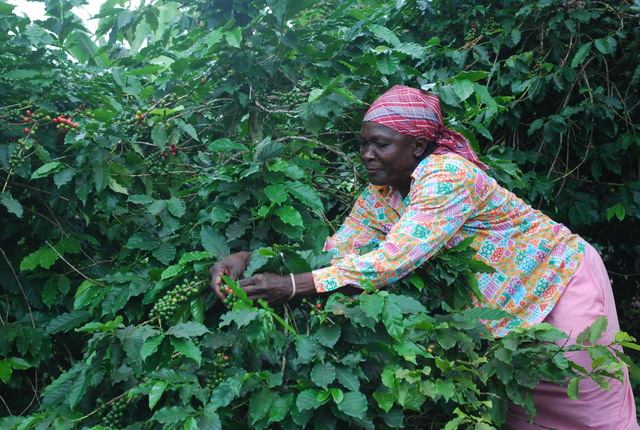
The coffee grown in the Blue Mountains usually ripens between June and November each year, and local women workers who are familiar with the terrain are arranged to go to the steep slopes to pick coffee cherries. The pickers need to have a certain amount of experience and be able to accurately judge the ripeness of the fruit, because underripe or overripe coffee cherries will affect the quality of the subsequent coffee. Precisely because Blue Mountain coffee is so precious and rare, it is usually presented as a single origin.
The grading of Blue Mountain coffee beans
Every kind of coffee bean has its own grading standard, and Blue Mountain coffee beans are graded according to altitude and bean size. In addition to specific requirements for the growing region and altitude, the Jamaican authorities have also established a more refined grading system for Jamaican Blue Mountain coffee. In 1953, Jamaica established the Coffee Industry Board (CIB for short) and adopted coffee export grade standards, which set strict regulations on the size, color, defect rate, and flavor of exported green beans. On the premise that the defect rate of green beans is below 3%, according to the bean size of Blue Mountain green beans, they are divided into Jamaican Blue Mountain No. 1 coffee, Jamaican Blue Mountain No. 2 coffee, Jamaican Blue Mountain No. 3 coffee, and Jamaican Blue Mountain peaberry coffee.
1. Jamaican Blue Mountain coffee
Blue Mountain coffee and High Mountain coffee are each further divided into four grades. In terms of quality, from top to bottom, they are: NO.1, NO.2, NO.3, and PB, and PB means peaberry. According to CIB standards, only coffee grown at an altitude of 1,000-1,700 meters is called Jamaican Blue Mountain coffee. It has low yield, large beans, excellent quality, and balanced flavor, while also possessing appropriate acidity, bitterness, aroma, body, and sweetness. It is recognized worldwide as a top-grade coffee, so the price of the national treasure Blue Mountain No. 1 is the highest among all Blue Mountain coffees.
(1) No.1 - 17/18 screen, defect bean ratio no more than 2%.
(2) No.2 - 16/17 screen, defect bean ratio no more than 2%.
(3) No.3 - 15/16 screen, defect bean ratio no more than 2%.
(4) Peaberry - 10MS, defect bean ratio no more than 2%.
2. Jamaican High Mountain coffee
Coffee produced at 500-1,000 meters in Jamaica's Blue Mountain area is called High Mountain coffee, and it is second only to Blue Mountain coffee in quality.
3. Jamaican coffee
Coffee grown outside the Blue Mountain range is called Jamaican coffee, and the growing altitude is below 500 meters.
From this it can be seen that Jamaican Blue Mountain No. 1 coffee is recognized worldwide as a top-grade coffee and is also the most expensive among all Blue Mountain coffees. So, which kind of Blue Mountain coffee are you drinking?
Jamaican Blue Mountain coffee is the only coffee among all producing regions that uses wooden barrels to hold green beans, while other regions generally use burlap sacks for packaging. The barrels are printed with the Rainforest Water Frog logo, meaning that Clifton Estate meets the standards of a "sustainable agricultural system" and has obtained Rainforest Alliance certification.
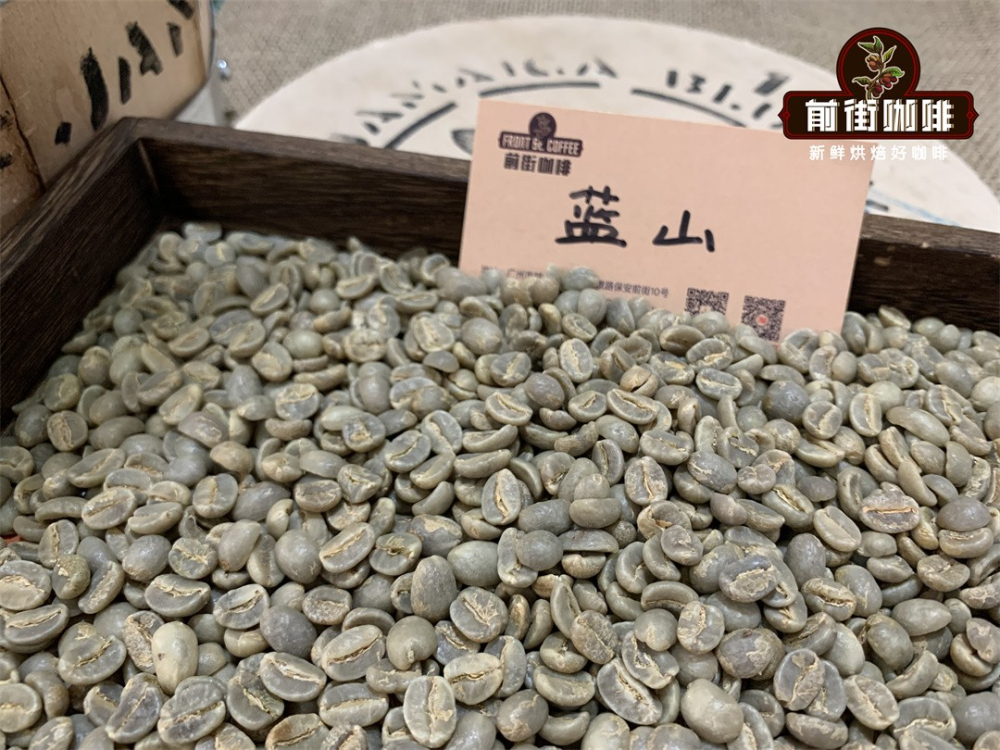
Front Street's Jamaican Blue Mountain coffee is sourced from Clifton Estate, an export company designated by the Jamaica Coffee Industry Board. The wooden barrels containing the green beans are printed with Clifton Estate's English logo and the green water frog mark. The basic standards for the Blue Mountain No. 1 green beans purchased by Front Street are: 17 screen or above, defect rate below 2%, moisture content about 13%, plump and uniform in appearance, and blue-green in color. In flavor, it combines pleasant acidity, sweetness, bitterness, aroma, and a rich body.
The Blue Mountain Typica variety
Typica is the oldest coffee variety of Arabica, with a long history of cultivation, and Jamaican Blue Mountain coffee is exactly the Typica variety. Typica Blue Mountain coffee carries a dark chocolate flavor—not milk chocolate, but dark chocolate with a purity above 92—and this flavor comes from the characteristics of the pure Typica variety itself. Typica coffee has very weak resistance to leaf rust. Typica, originally widely planted in Central and South America, was continuously replaced because of the rampant spread of leaf rust, but thanks to its own unique geographical advantages, Jamaica still mainly cultivates Typica, and the incidence of leaf rust there is very low.
Typica has a tall tree shape, and red-copper young leaves grow at the top, so it is also often called red-top coffee. Typica has a pure and elegant flavor, but the plant is relatively weak, has poor disease resistance, and yields very little per plant. This is also why there is less and less Typica coffee today. Since Typica was introduced to the Blue Mountains in the 18th century, it has been cultivated there for more than two hundred years. Blue Mountain Typica has also adapted to the local island terroir and evolved better disease resistance, among which its resistance to coffee berry disease is much stronger than that of ordinary Typica.
Blue Mountain coffee bean processing methods
It is often said that washed coffee beans better reflect the essence of coffee flavor, and Front Street agrees with this. Therefore, among Front Street's daily drink beans, almost all use the washed processing method. Blue Mountain coffee also used to be washed, but with the development of specialty coffee, in 2019 Clifton Farm tried for the first time to launch a naturally processed Blue Mountain batch. Of course, Front Street currently offers Blue Mountain coffee in both natural and washed processing methods for customers to choose from.
Front Street Coffee (FrontStreet Coffee) brewing suggestions
Whether green beans or roasted beans, Blue Mountain coffee looks very beautiful in appearance. Facing such beautiful coffee beans, one really cannot bear to waste even a single one. Of course, Front Street believes that no matter what kind of coffee beans they are, they should not be wasted as much as possible, and one must brew a delicious cup of coffee with care.
To brew a good cup of coffee, in addition to the coffee variety, the freshness of the coffee beans is also crucial. Front Street believes that the freshness of coffee beans is a very important part of brewing. The coffee beans shipped by Front Street Coffee (FrontStreet Coffee) are all within 5 days of roasting, because Front Street deeply understands that freshness has a great impact on flavor. Front Street's roasting principle is "freshly roasted good coffee," so that every customer who places an order can receive the freshest coffee when it arrives. The resting period for coffee is about 4-7 days, so when customers receive it, it is exactly at its best flavor.
Of course, some customers need Front Street to help grind the coffee, and that is no problem either, but Front Street needs to remind them: once coffee beans are ground into powder in advance, they no longer need to be rested, because during transportation the pressure produced by carbon dioxide inside the packaging can also make the coffee flavor rounder, so as soon as the ground coffee is received, one can immediately brew a cup and drink it. However, ground coffee needs to be brewed as soon as possible, because after coffee grounds come into contact with air, they oxidize quickly, the flavor also dissipates faster, and the coffee's mouthfeel becomes less good. Therefore, Front Street recommends buying whole beans and grinding fresh before brewing, so that the coffee's flavor can be better enjoyed.
Front Street's brewing parameters for Blue Mountain coffee:
When brewing these two Jamaican Blue Mountain coffee beans, Front Street Coffee (FrontStreet Coffee) uses a coffee-to-water ratio of 1:15 and a grind size with a 75% passing rate on a No. 20 standard sieve. Because Front Street Coffee (FrontStreet Coffee) aims to highlight Blue Mountain coffee's balanced, full-bodied, and gently fruity acidity, a water temperature of 88 degrees is sufficient. When choosing a dripper, KONO is considered first. Front Street took into account that both Blue Mountain beans use a relatively dark roast, and the darker the roast, the faster coffee substances dissolve. In order to avoid over-extraction, Front Street used a lower water temperature for extraction and also used the Kono dripper with a lower flow rate to ensure that as much coffee material as possible is extracted under low-temperature conditions.
The brewing parameters used by Front Street are: Kono dripper, 88C water temperature, 1:15 coffee-to-water ratio, 15g coffee dose, grind size (75% passing rate on a No. 20 standard sieve).
Front Street uses staged extraction, namely the three-stage pouring method, using 30g of water for blooming, with a blooming time of 30s. In the first stage, pour in a small stream in circles until 125g, then stop. When the liquid level drops to the point where the coffee bed is about to be exposed, continue pouring the second stage until 225g to end extraction. The total extraction time (including blooming) is 2'00.
Blue Mountain coffee flavor description
[Front Street natural Blue Mountain coffee flavor] A slight berry acidity, reminiscent of smoked plum and mulberry, with a good overall balance, rich dark chocolate and nutty flavors, and a slight fermented note.
[Front Street washed Blue Mountain coffee flavor] Rich dark chocolate and nutty flavors, a creamy and smooth mouthfeel, and balanced acidity, sweetness, and bitterness.
Although Blue Mountain coffee is excellent, Front Street also does not recommend drinking only one kind of coffee, as that would seem monotonous. You should taste more coffees from other producing regions or countries and experience more of the different coffee styles. Front Street has more than fifty single-origin coffees from different producing regions. Different regions have different flavors, and even different producing regions in Ethiopia have obviously different flavors. So when you come to Front Street, I believe it will bring you a completely different coffee experience.
For professional coffee knowledge exchange and more coffee bean information, please follow Coffee Workshop (WeChat public account: cafe_style)
For more specialty coffee beans, please add the private WeChat of Front Street Coffee (FrontStreet Coffee), WeChat ID: qjcoffeex
The above content is compiled by CoffeeHunters, a coffee news website.


