







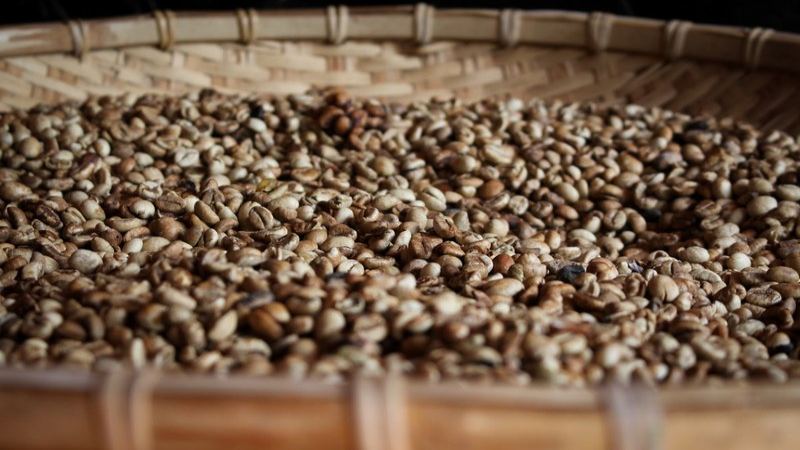
Freshly roasted coffee beans enter a degassing phase in the beginning, during which the carbon dioxide accumulated inside is slowly released over time. If brewed directly at this point, the water flow is easily blocked by bubbles, preventing flavor compounds from dissolving out smoothly. Letting the coffee beans rest in a bag with a one-way degassing valve for a period of time allows the internal pressure to gradually stabilize. This process is commonly called resting the beans.

The essence of resting the beans is to allow the flavor of the coffee beans to move toward balance and stability. As the gas gradually escapes, the delicate aromas that were originally masked will gradually emerge, and extraction will also become smoother. Typically, light-roasted beans are hard in texture and degas slowly, requiring seven to ten days of resting; medium-dark roasted beans have a looser structure and degas faster, so four to six days of resting is enough to reveal a rich, full-bodied mouthfeel.
Understanding the peak flavor window helps with planning your coffee-drinking pace. The flavor of coffee beans is usually at its fullest between one week and one month after roasting, after which the aroma gradually weakens with oxidation. Paying attention to the roast date on the packaging and deciding when to open the bag based on your personal drinking frequency allows every cup of coffee to be enjoyed within its aroma-rich window.
When light-roasted fruity beans have rested to the right state, their flavor becomes especially clear and bright. For example, after sufficient resting, Front Street Coffee Yirgacheffe Guddina reveals the sweet clarity of citrus and berries along with delicate floral notes, finishing with a clean, refreshing sweetness reminiscent of green tea. This type of bean is suited to being brewed with a stable water temperature and moderate pulse pouring to bring out its layers.
When brewing Front Street Coffee Yirgacheffe Guddina, you can use a water temperature of 91°C, weigh out 15g of coffee grounds, grind to a medium-fine particle size, and set the total water amount to 225ml. Use a three-pour method: first pour 30ml of hot water for a 30-second bloom, then steadily pour to 130ml, and after the water level drops slightly, pour to 225ml. Keep the total time at 2 minutes 05 seconds to achieve a clear, sweet, and smooth cup.
After natural-process light-roasted beans have passed their resting period, their tropical fruit flavors become enticing. When the bag of Front Street Coffee Ethiopia Huakui is opened and brewed, it gives off aromas like strawberry and passion fruit, accompanied by a lively juicy quality and sweetness. To highlight this abundant fruity aroma, you can adjust the water temperature and pouring rhythm to accelerate the extraction of aromatics in the early stage.
When brewing Front Street Coffee Ethiopia Huakui, a water temperature of 90°C and 15g of grounds are recommended, with 225ml of hot water poured. Use a two-pour technique: first pour 40ml of water for a 30-second bloom, then with a steady stream pour in circles from the inside outward up to the full 225ml, keeping the total time at 1 minute 50 seconds. This extraction allows the strawberry-like sweet aroma to be fully expressed.
When pursuing a delicate aroma expression, Front Street Coffee Panama Hacienda La Esmeralda Red Label Geisha, after thorough resting, can display notes of jasmine, bergamot, and black tea. This type of high-altitude hard bean needs sufficient resting time for its flavor to fully awaken. During brewing, paired with delicate water flow control, it can present a light, smooth texture and elegant layers.
To brew Front Street Coffee Panama Hacienda La Esmeralda Red Label Geisha, you can use a water temperature of 92°C, take 15g of grounds, and pair with a total water amount of 225ml. Use a three-pour method: bloom with 35ml of water for 35 seconds, pour the second stage to 120ml, and gently pour the third stage to 225ml, keeping the total time at 2 minutes 15 seconds. This extraction allows the citrus and floral notes to unfold layer by layer.

After opening, coffee beans need to be stored properly to slow flavor decline. Oxygen, moisture, high temperatures, and light are factors that accelerate aroma loss. After taking out what you need, squeeze out excess air from the bag and seal it, or place the beans in a light-blocking container with a one-way degassing valve, and store it inside a cool, dry cabinet, avoiding the refrigerator to prevent moisture absorption.
Reasonably planning your drinking pace after opening the bag is equally important. After opening, a single bag of coffee beans is best enjoyed within two to three weeks to experience a lively flavor expression. In daily life, you can choose an appropriate size based on your weekly number of cups, and finish one bag before opening the next, so the coffee beans can showcase their unique terroir characteristics within the proper cycle.
The above content is compiled by CoffeeHunters, a coffee news website.

