







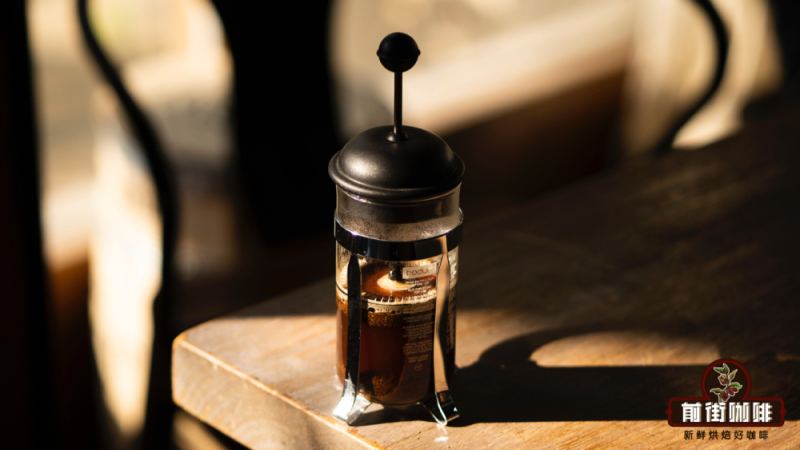
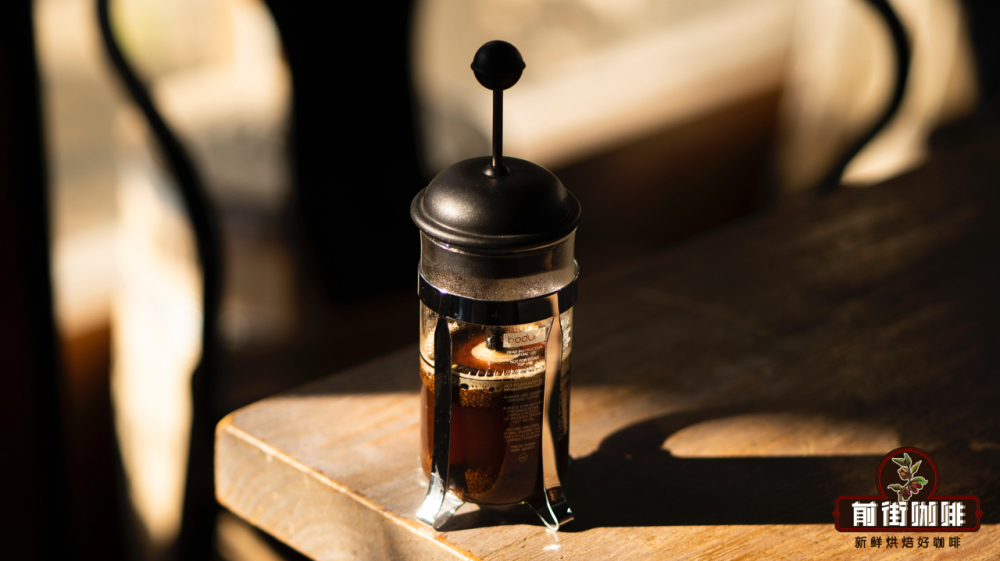
WBC World Barista Championship competitor Suzuki once said that the advantage of the French Press is its very simple brewing principle—anyone can use it, and differences in technique won't cause variations in coffee flavor. The French Press can very directly express the coffee's own flavors while not being affected by paper filters. As the simplest brewing device to operate, the French Press requires no rigorous pouring technique or complex variable control, making it often the top choice for "lazy" people brewing coffee at home. Today, Front Street Coffee will explain the extraction principle of the French Press and how to choose a good one!
French Press
The French Press, as the name suggests, originated in France. Its structure consists of a cylindrical container and a lid, with a metal filter in the middle of the lid that can be pulled up and down, used to separate coffee grounds from the coffee liquid to control extraction. The principle of the French Press is just like brewing tea—after soaking coffee grounds in hot water for a certain time, the plunger is pushed down to filter and obtain the coffee liquid.
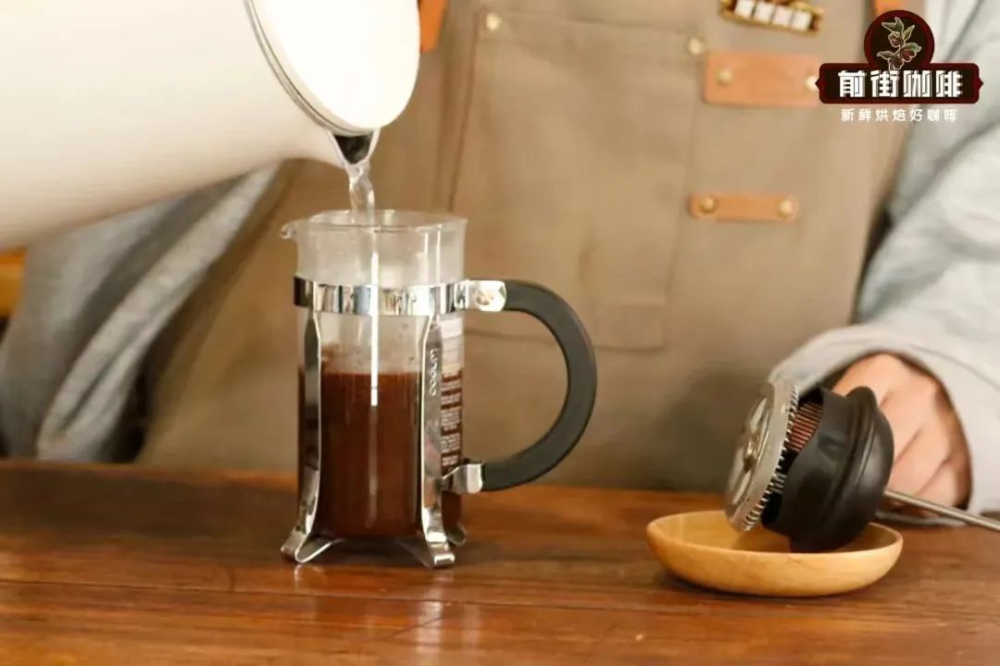
Unlike pour-over coffee, which involves many complex influencing parameters, the French Press's "one-pour" method is simpler, which also means there are only 4 factors affecting the coffee: coffee-to-water ratio, grind size, water temperature, and steeping time. Similar to cupping, the extraction is relatively stable, and the coffee's flavor better reflects its original taste. Because the French Press completes the pour all at once, the extraction temperature gradually drops over time, so it needs a slightly higher water temperature than pour-over. If brewing light-to-medium roasted acidic coffee, Front Street Coffee recommends 92–94°C; for medium-dark roasted beans, 89–90°C is recommended for steeping. In autumn and winter when room temperature is lower, Front Street also preheats the French Press with boiling water first to reduce heat loss during extraction.
Time is an important parameter that the French Press can freely adjust. Without the human stirring factor, steeping time is one of the keys affecting extraction yield. Under the same conditions, generally the longer the extraction time, the richer the mouthfeel—but it's also more prone to over-extraction, causing bitterness, astringency, and woody notes. Paired with a coarse grind, Front Street recommends a steeping time of about 4 minutes for light-to-medium roasted coffee; medium-dark roasted coffee more easily extracts bitterness, so 3 minutes 30 seconds is sufficient. This time allows positive flavor compounds to be fully released while avoiding the bitter, muddy taste from steeping too long.
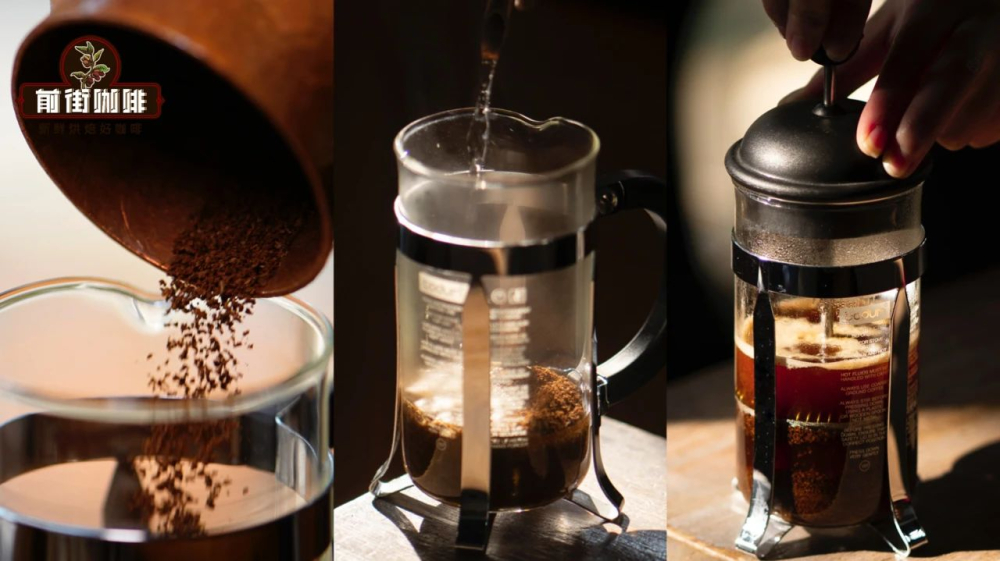
If asked whether Front Street's pour-over coffee or French Press coffee is better, Front Street believes there is no standard answer—whatever suits you is the best. If you want to taste coffee's richer, more diverse layers, choose pour-over; if you want simple operation and a cup of full-bodied, aromatic black coffee, choose the French Press.
The Historical Origins of the French Press
According to research by Front Street Coffee, the prototype of the French Press comes from a coffee brewing vessel designed in 1852 by two Frenchmen named Mayer and Delforge. They added a cloth filter layer on top of a metal plate, thus creating what is considered the earliest French Press, and applied for its patent.
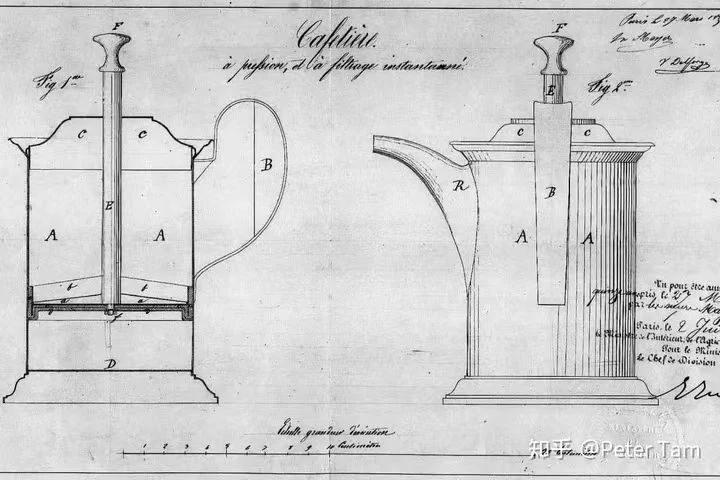
Later, as the French Press spread, this device was improved in 1935 and 1958 by Italians Bruno Cassol and Faliero Bondanin respectively, and once again became popular in France and elsewhere. By the 1990s, the French company Bodum officially brought the French Press to market, and before long its advantage of easy operation made it people's top choice, and this brand gradually became synonymous with this brewing vessel. The French Press Front Street uses is precisely from this classic brand—Bodum—good to use and not expensive, one could say it combines ultra-high cost-effectiveness.
Many customers, after choosing a coffee bean, ask Front Street whether it's suitable for French Press brewing. Theoretically, the French Press is suitable for all coffee beans that can be used for pour-over, but considering that its extraction principle is static immersion extraction, the oils give the coffee more body, and the flavor tends toward rich, mellow, and balanced—so it's more suited to the flavor expression of medium or darker roasts, such as chocolate, nut, caramel, fermented wine, cocoa and other aroma types. Taking Front Street Coffee's bean list as an example, Front Street Brazil Queen's Manor Coffee, Front Street Honduras Sherry Barrel Coffee, Front Street Jamaica Blue Mountain No. 1 Coffee, Front Street Indonesia Golden Mandheling Coffee and other beans are all very suitable for making French Press coffee.
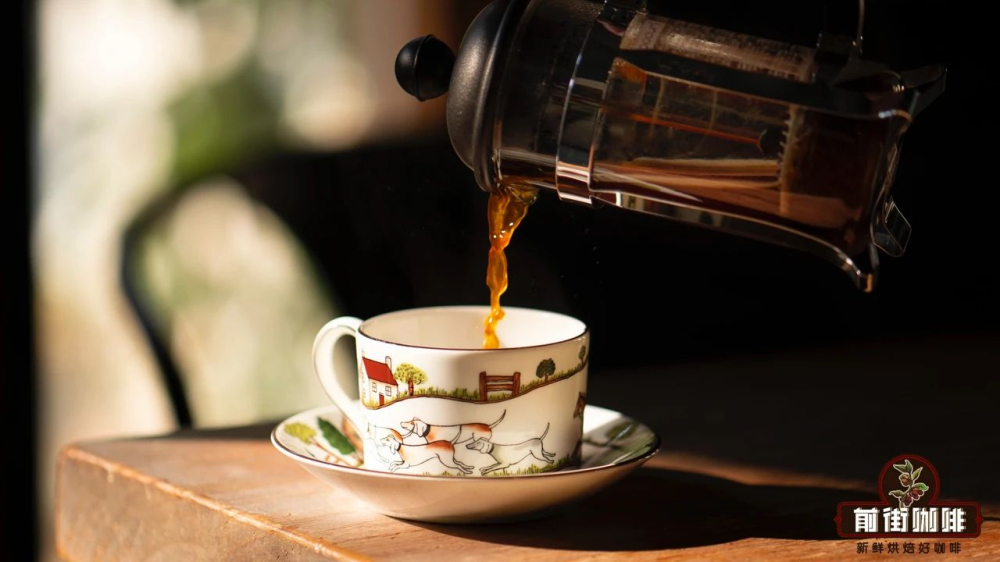
Finally, Front Street believes it's necessary to remind everyone of some small details when using a French Press. Since the French Press has a built-in metal filter, long-term use will cause it to absorb and accumulate the oils released by the coffee; residue left on the filter and plunger rod can easily oxidize and deteriorate, thus affecting subsequent use. So after using the French Press, we absolutely must remember to clean it promptly. When cleaning the French Press, all metal parts should be disassembled; both the container and the parts need to be washed with detergent and completely wiped dry, air-dried, and then put away.
For professional coffee knowledge exchange and more coffee bean information, please follow Coffee Workshop (WeChat public account: cafe_style)
For more specialty coffee beans, please add the private WeChat of Front Street Coffee: qjcoffeex
The above content is compiled by CoffeeHunters, a coffee news website.


